
Yumen Pass

The watch-outs are logistical and physical, not ticket games. This is a remote, exposed ruin far from the city on the 'West Line'; Dunhuang publishes no official drive time, so treat any promised trip length as an estimate, carry water, and plan fuel and daylight for the round trip if self-driving. Buy through the site's own channel and confirm whether the sightseeing-vehicle fee is included — the distance from parking to fort means you will likely need it. At the ruin itself, the key rule is preservation: these are rammed-earth structures, ancient and fragile — do not climb on, lean against or touch the walls, both for your safety and to keep a two-thousand-year-old landmark standing.
Taxi & Street Navigation Help
师傅,去【玉门关遗址】(敦煌西北,丝路西线),谢谢!
Opening Hours & Best Time
Opening and closing times are set by the site and are not fixed here — verify the current posted schedule before you travel, as desert heritage sites often shorten hours in the off-season and around the heat of the day. The practical rhythm is dictated by distance and sun rather than the gate clock: Yumen sits far out on the western route, the light is harshest and least photogenic at midday, and the ruin is best in raking morning or evening light, so most visitors time the West Line to avoid high noon even though the site itself is open through it.
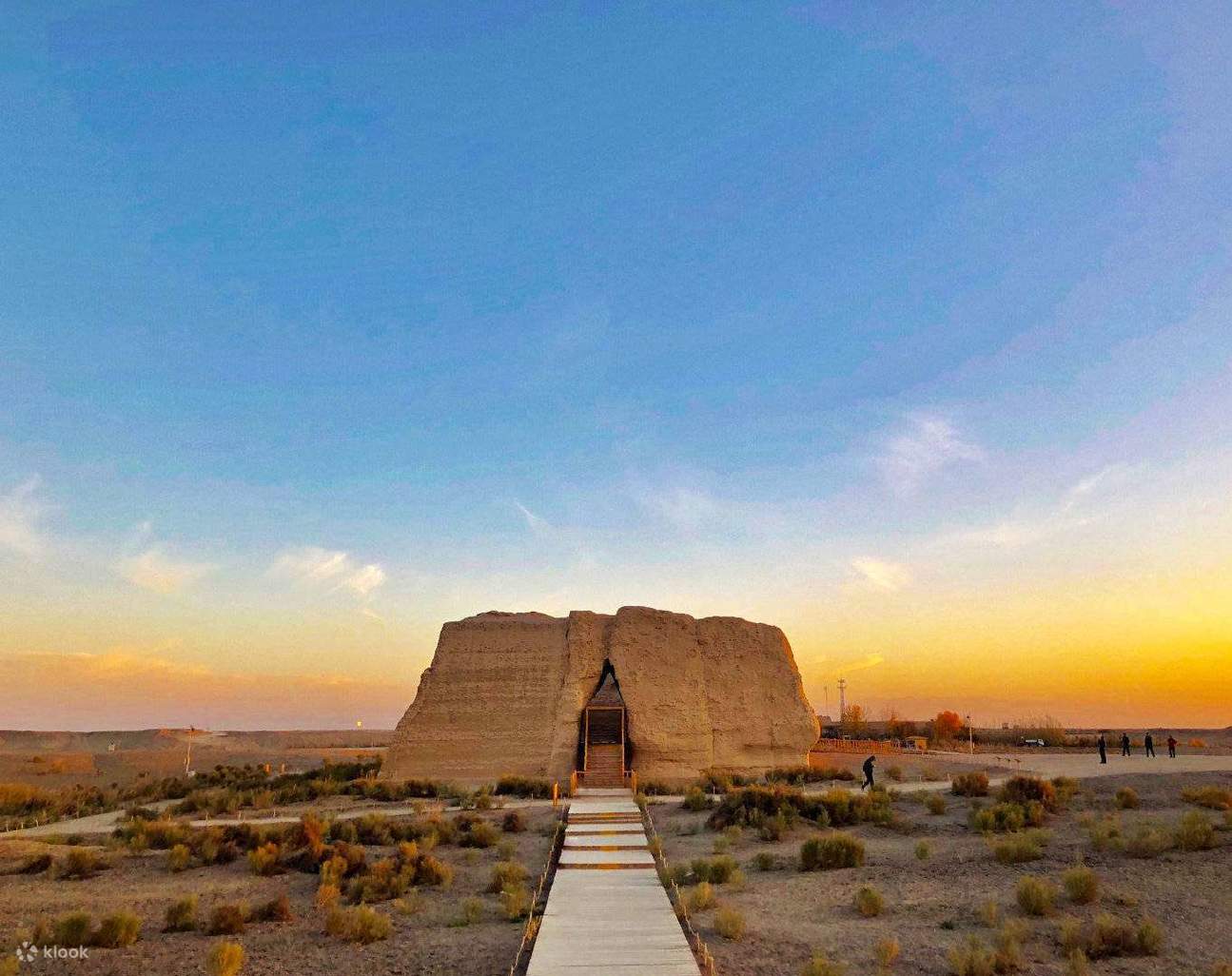
💡 Pro Tip: Yumen Pass — the 'Jade Gate Pass' — takes its name from the Khotan jade that once entered China through it from the west; together with nearby Yangguan it formed the twin frontier gates through which the Han-dynasty Silk Road left the Central Plains for the 'Western Regions'. Its deepest fame is literary: the Tang poet Wang Zhihuan's line that even the spring wind does not cross Yumen Pass made this the supreme image of the frontier's loneliness, and every Chinese reader comes looking for that vast, sorrowful emptiness. What survives today is stark and moving — the Little Square Fort (Xiaofangpan Cheng), a two-thousand-year-old rammed-earth cube squatting in the Gobi, beside the weathered traces of the Han Great Wall and the Granary City (Hecang Cheng) that provisioned the garrison. It is a UNESCO World Heritage component of the Silk Roads Chang'an–Tianshan corridor, and its power now is precisely its desolation: one small earthen square against an ocean of desert.
Accessibility & Luggage Lockers
Accessibility: ⚠️ Step thresholds, limited access
Open, level-but-rough Gobi with a long shuttle walk to an earthen ruin; viewing areas are unpaved desert ground with significant distance between car park and fort, and no accessible surfaced paths through the site — not wheelchair- or stroller-practicable.
🧳 Luggage Storage: Effectively none at this remote site beyond the gate area — leave luggage at your Dunhuang hotel before heading out on the West Line.
Nearby Landmarks
The 2 places within reach of this spot — each one opens straight into Apple Maps or Amap, with the Chinese name you can show a driver.
- The Han Great Wall and Granary City ruins, alongside Yumen PassLandmarkNearby
- Yangguan Pass, the southern twin gate, to the southLandmarkNearbyseparate ticket
Also worth pairing: Dunhuang Yadan 'Ghost City', further west on the same 'West Line' — real picks, just left off the grid so the cards stay in pairs.
Chinese names and pins are matched against each city's own map data at build time; a place only gets Directions once its pin has been verified, otherwise the button searches by name.
About Yumen Pass
1. Historical Origins: The Gate Where Jade and Sorrow Passed
When the Han Empire pushed its wall and garrisons west into the Hexi Corridor, it needed controlled gates through which the Silk Road’s traffic — and its taxes — could pass. Yumen Pass, the ‘Jade Gate’, was the northern of Dunhuang’s two great frontier gates (Yangguan was the southern), and it earned its name from the jade that came through it from Khotan, far to the west in the Tarim Basin. Beyond this point began the ‘Western Regions’: the desert, the oasis cities, and the unknown.
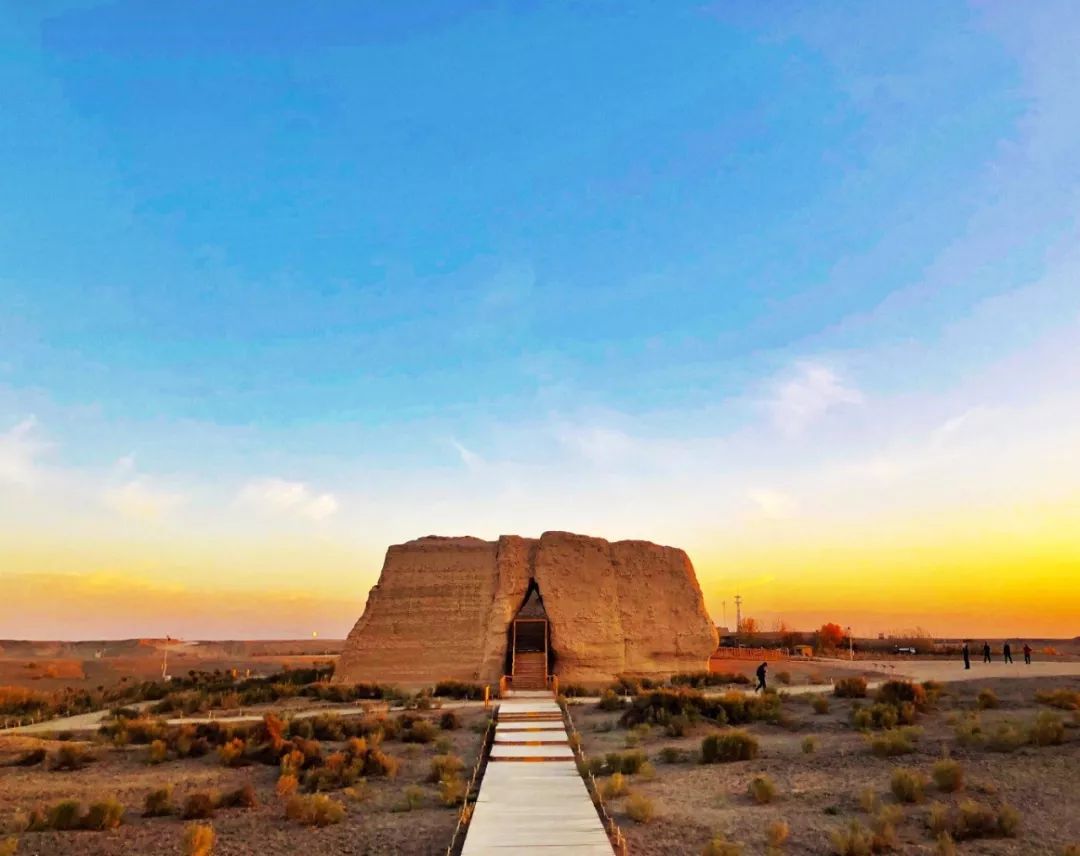
What survives is deceptively modest: a great cube of rammed earth called the Little Square Fort (Xiaofangpan Cheng), squatting in empty Gobi, with the low eroded traces of the Han Great Wall and the Granary City (Hecang Cheng) — the garrison’s storehouse — nearby. Yet its weight is cultural, not structural. The Tang poet Wang Zhihuan wrote of a frontier where even the spring wind does not blow, and that single line fixed Yumen Pass forever as the emblem of the soldier’s and traveller’s lonely farewell to home. UNESCO now lists it as part of the Silk Roads Chang’an–Tianshan corridor; the emptiness the poets praised is the very thing that has preserved the ruin.
2. What to Spot: The Little Square Fort, the Han Wall, the Granary City
🟫 The Little Square Fort
- The Story: The rammed-earth core of the Han frontier gate — the icon of Yumen Pass.
- What to Look For: Its stark cubic mass against the flat desert — do not touch or climb the fragile earth walls.
🧱 The Han Great Wall Traces
- The Story: Weathered remnants of the wall and watchtowers that guarded the corridor’s western end.
- What to Look For: The low earthen lines running into the distance — the visible edge of the old empire.
🌾 The Granary City (Hecang Cheng)
- The Story: The garrison’s storehouse, provisioned to hold the westward road.
- What to Look For: The ruined earthen walls that fed the soldiers who manned the gate — logistics as history.
3. Cultural Contrast: The Ruin That Lives in a Poem
In much of the world a monument’s power comes from its visible grandeur; Yumen Pass inverts that, because almost nothing stands — and its meaning is carried, intact, by literature. Every Chinese visitor arrives already knowing the line about the spring wind that stops here, so the ruin functions less as architecture than as a quotation made real: you come not to see a building but to stand inside a poem about parting, distance and the indifference of empire. The emptiness is not a failure of the site but the whole point.
That makes Yumen a lesson in how China reads landscape emotionally. Paired on the same West Line with the Yadan ‘Ghost City’, you get the frontier’s two registers side by side: here the human, historical pathos of the gate and the wall; there the planetary, impersonal sublime of wind-carved stone. Together, and with the Mogao’s devotional art nearby, they give Dunhuang its unique depth — the same handful of kilometres holding the Silk Road’s piety, its sorrow and its geology. To feel Yumen, stand long at the little fort and let the silence the poet described do the work no signage can.
4. Practical Essentials: Tickets, Transit & Preservation
Tickets & Passport Booking
- Price: official tariff not confirmed here — only OTA figures circulate, usually split into a site ticket plus a separate sightseeing-vehicle fare (the fort lies far from the car park); no amount is fixed, and you should confirm whether the shuttle is included. Foreign-visitor documents follow posted site policy.
- The vehicle reality: budget for and expect the on-site sightseeing bus to cover the long, exposed distance between parking and the ruin.
How to Get There
- Where it is: far to the north-west on the ‘West Line’, normally combined with the Han Great Wall, Granary City, Yangguan and (further west) the Yadan; Dunhuang publishes no official drive time, so treat any figure as an estimate and plan water, fuel and daylight for a long desert round trip, best by chartered vehicle or self-drive.
- Show Your Driver: 师傅,去【玉门关遗址】(敦煌西北,丝路西线),谢谢!
Inside Tips & Preservation Notes
- Go in early or late light — the Gobi is bleached and brutal at noon and the ruin photographs best low-angled. Never climb or touch the rammed-earth walls; they are ancient and fragile. Carry water and sun/wind protection and plan the return before dark. Confirm the vehicle fee and buy through the site’s own channel. Complaints / lost property: 12345, free from a local number.
Quick Answers
The 6 things visitors ask before setting out, answered from the same verified record used across this page.
- How much does it cost to visit Yumen Pass?
- OTA figures only — vehicle extra.
- What are the opening hours at Yumen Pass?
- Opening and closing times are set by the site and are not fixed here — verify the current posted schedule before you travel, as desert heritage sites often shorten hours in the off-season and around the heat of the day. The practical rhythm is dictated by distance and sun rather than the gate clock: Yumen sits far out on the western route, the light is harshest and least photogenic at midday, and the ruin is best in raking morning or evening light, so most visitors time the West Line to avoid high noon even though the site itself is open through it.
- Is Yumen Pass wheelchair accessible?
- Not fully. Open, level-but-rough Gobi with a long shuttle walk to an earthen ruin; viewing areas are unpaved desert ground with significant distance between car park and fort, and no accessible surfaced paths through the site — not wheelchair- or stroller-practicable.
- How do I tell a taxi driver to take me to Yumen Pass?
- Copy this line into DiDi or show it to the driver: 师傅,去【玉门关遗址】(敦煌西北,丝路西线),谢谢!
- Can I leave my luggage at Yumen Pass?
- Effectively none at this remote site beyond the gate area — leave luggage at your Dunhuang hotel before heading out on the West Line.
- Is there anything to watch out for at Yumen Pass?
- The watch-outs are logistical and physical, not ticket games. This is a remote, exposed ruin far from the city on the 'West Line'; Dunhuang publishes no official drive time, so treat any promised trip length as an estimate, carry water, and plan fuel and daylight for the round trip if self-driving. Buy through the site's own channel and confirm whether the sightseeing-vehicle fee is included — the distance from parking to fort means you will likely need it. At the ruin itself, the key rule is preservation: these are rammed-earth structures, ancient and fragile — do not climb on, lean against or touch the walls, both for your safety and to keep a two-thousand-year-old landmark standing.
Where to go next
Three short lists, recomputed at build time from the same coordinates and categories as the pages themselves — no paid placement, no hand-picked names. Every card is a published guide.
Next stop in Dunhuang
Straight-line distance from this spot, so you can judge what is walkable and what needs a taxi.


More like this, elsewhere in China
If landmark is what you came for, these are the closest equivalents you can reach in another city — ordered by distance, one city per card.


Change the subject
Deliberately a different category, for when one more temple or garden would blur into the last one.


Lists are derived from coordinates and category alone. Fix a wrong pin or re-tag a place and every list that mentions it moves with it.
Before you go · arrival essentials
Practical guides that pair with this kind of place — picked by category, not sponsored placement.