
Dunhuang Yadan National Geopark

The dominant risk here is not ticket fraud but remoteness and logistics. This is a long, empty-road excursion far from the city with little en-route service, so budget fuel, water and time honestly and, if driving yourself, plan the return before dark; do not trust casual claims about how quick the trip is, since Dunhuang publishes no official drive time. Buy tickets through the scenic area's own channel; be wary of third-party 'Ghost City' bundles whose vehicle inclusion is unclear. Inside, the real danger is wandering: the eroded labyrinth looks walkable but disorients fast, so stay on the sightseeing-bus route and marked boardwalks and never strike out into the formations alone — getting lost in open Gobi here is genuinely serious.
Taxi & Street Navigation Help
师傅,去【敦煌雅丹国家地质公园】(敦煌西北,丝路西线),谢谢!
Opening Hours & Best Time
Opening and closing times, and crucially the last sightseeing-bus departure, are set by the operator and are not fixed here — check the current posted schedule before you go. The practical constraint is distance and light: the park sits far to the north-west near the Lop Nur margin, most visits are a long day out-and-back from Dunhuang, and the signature sunrise/sunset windows mean early starts and late finishes, so you must reconcile your timing with the bus's final run rather than the gate clock alone.
💡 Pro Tip: Known to travellers as the 'Ghost City' (Mogui Cheng) — a name earned by the way wind moans through the rocks and the shapes seem to loom like walls and towers — the Dunhuang Yadan is a classic yardang landscape: over millions of years wind has planed the lake-bed sediments of an ancient sea into long, parallel ridges, castle-like pillars and fortified 'walls', so the desert floor reads as a ruined city. Its most celebrated formation is the 'West Sea Fleet' (Xihai Jiandui) — a squadron of rock 'ships' lined up on the horizon. This is a designated national geopark and a UNESCO Global Geopark landmark on the old Silk Road, and its surreal golden-at-sunset vistas have starred in films (notably Hero). It is almost always combined with Yumen Pass and the Han Great Wall as Dunhuang's 'West Line'; come for the low sun, when the raking light sets the ochre ridges blazing and the shadows turn the 'city' three-dimensional.
Accessibility & Luggage Lockers
Accessibility: ⚠️ Step thresholds, limited access
Open, windswept Gobi reached by a sightseeing bus with boardwalk viewpoints; the terrain is uneven, exposed desert with no level accessible paths through the formations, and long transfers — not wheelchair- or stroller-practicable.
🧳 Luggage Storage: Practically none in the park beyond the visitor centre at the gate — this is a day trip out of the city, so leave luggage at your Dunhuang hotel before heading west.
Nearby Landmarks
The 2 places within reach of this spot — each one opens straight into Apple Maps or Amap, with the Chinese name you can show a driver.
- Yumen Pass and the Han Great Wall, on the same 'West Line'LandmarkNearbyseparate tickets
- Dunhuang city, the distant service base for the whole west routeLandmarkNearby
Chinese names and pins are matched against each city's own map data at build time; a place only gets Directions once its pin has been verified, otherwise the button searches by name.
About Dunhuang Yadan National Geopark
1. Historical Origins: A City Carved by Wind from an Ancient Lake Bed
The Yadan ‘Ghost City’ is a landscape with a watery past and a windy present. Millions of years ago this was the bed of an enormous lake; as the climate dried and the lake vanished, it left thick, alternating layers of sediment that the relentless Gobi wind then sawed into the parallel ridges, furrows and free-standing pillars geologists call yardang — a word borrowed from the local ‘ya ‘dzang’ description of steep-sided dry earthen ridges. What you walk among is erosion slowed to geologic time.
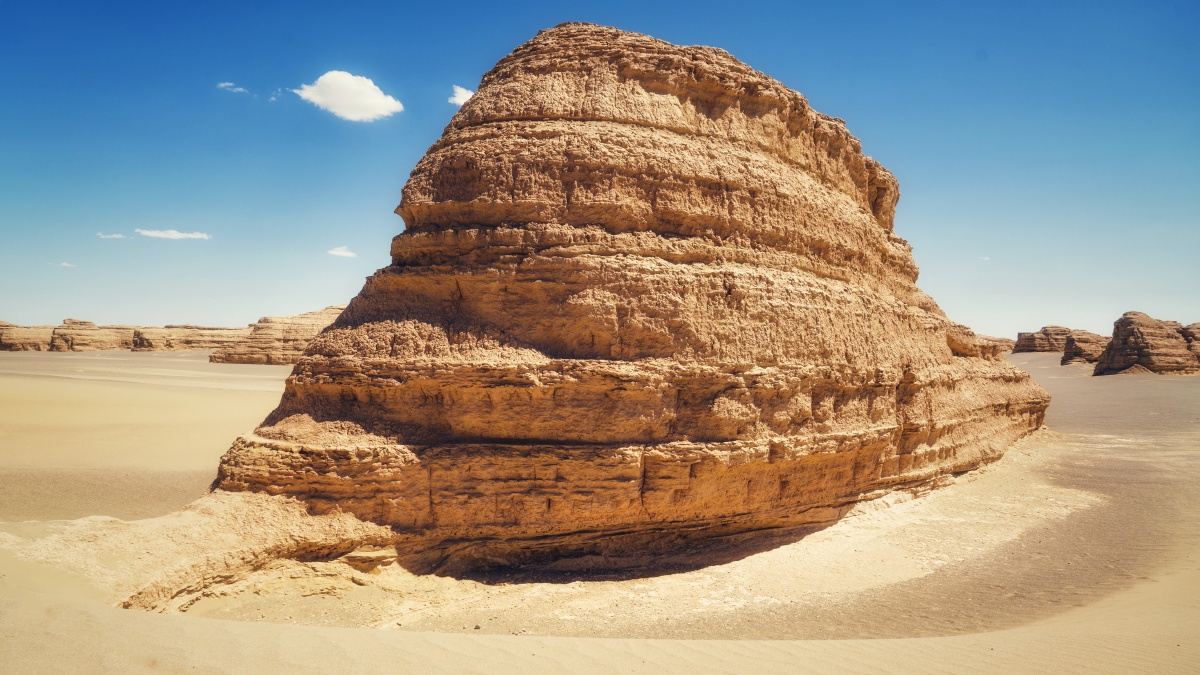
To travellers on the Silk Road that threaded toward Lop Nur, this uncanny stone city was a landmark of desolation, and its folk name — Ghost City — captures the sound and the sight: wind funnelling through the corridors moans, and at dusk the columns throw long, spectral shapes. Modern recognition has been formal rather than legendary — a national and UNESCO Global Geopark — and the site’s surreal vistas later became a film-set obsession, most famously for the desert sequences of the movie Hero. The formations continue to crumble, meaning every visit is to a slightly different city than the last.
2. What to Spot: The West Sea Fleet, the Castle Spires, the Golden Hour
⛵ The ‘West Sea Fleet’
- The Story: The park’s signature cluster — rock ‘ships’ in a squadron lined along the horizon.
- What to Look For: The fleet silhouette in low sun, when the ridges read as hulls and sails on a stony sea.
🏰 The Castle & Tower Pillars
- The Story: Wind-sculpted columns and buttresses that look engineered, like fortifications and pagodas.
- What to Look For: The ‘Lion’, ‘Towers’ and fortress-like masses the bus pauses at — pareidolia as geology.
🌇 The Two Light Windows
- The Story: Sunrise and, above all, sunset, when shadows make the flat city turn three-dimensional.
- What to Look For: The moment the sun skims the ridges and the corridors fill with long shadow — the photographers’ hour.
3. Cultural Contrast: Awe from Erosion, Not from Man
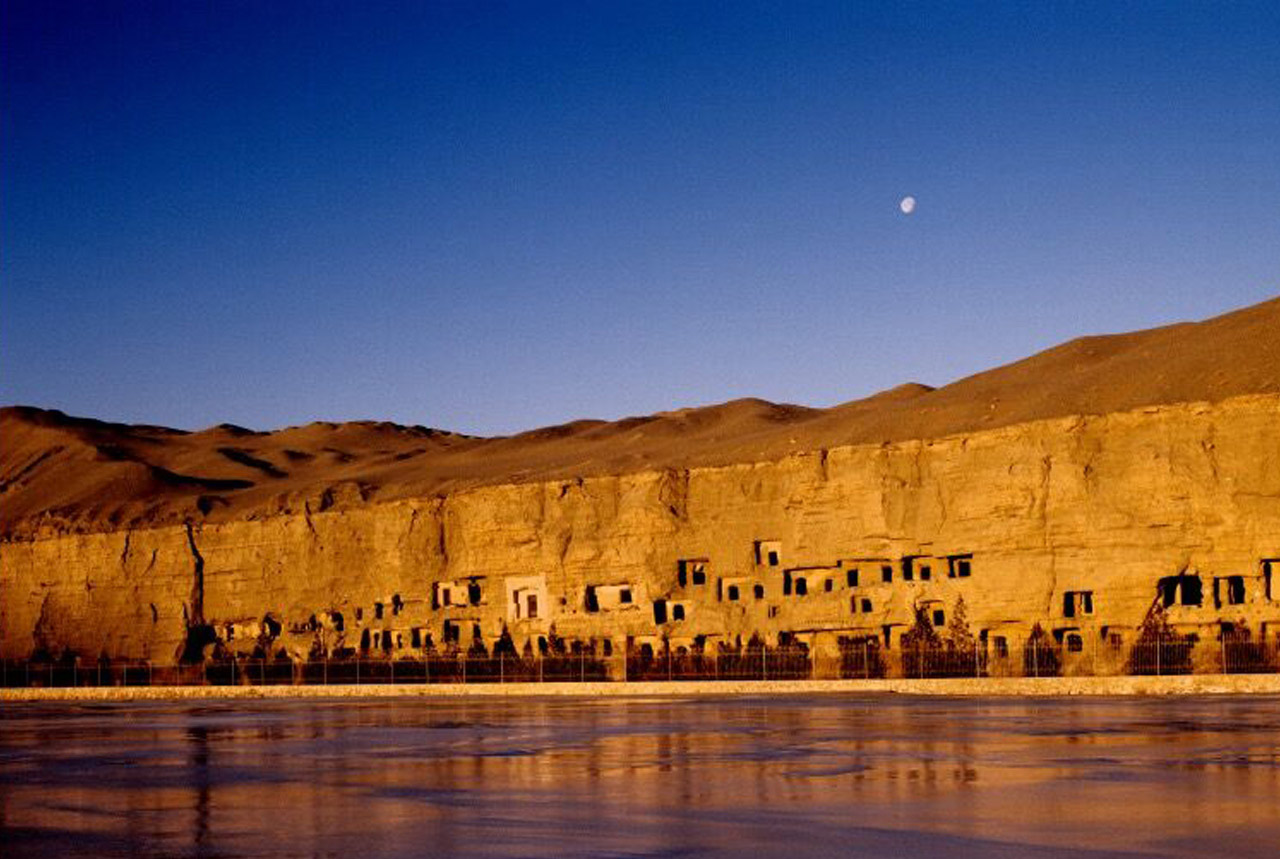
Chinese landscape reverence usually attaches to places shaped by people or piled with history — the caves at Mogao, the passes at Yumen and Yangguan. The Yadan asks for a different, older response: the sublime of deep time and impersonal force. There is no temple here, no poet’s inscription — the ‘city’ is entirely non-human, which is precisely why it lands so hard on a culture fluent in man-sculpted scenery. The imagination still does its work, though: naming it ‘Ghost City’ and the rock squadron a ‘fleet’ is the same act of pareidolia that gave Huangshan its pines, only here the maker is wind, not sentiment.
The contrast also shapes how you should visit. Where a heritage site rewards slow, contemplative looking, the Yadan rewards timing and endurance: the distance is punishing, the light window is brief, and the formations are best read from the bus-route viewpoints at dawn or dusk rather than roamed at random. It pairs, on the same West Line, with Yumen Pass — and the sequence is almost a lesson: first the human drama of the frontier (the wall, the gate, the poem), then the sheer planetary indifference that built the ground those poems were recited on. Together they give Dunhuang’s western desert both its history and its geology.
4. Practical Essentials: Tickets, Transit & Safety
Tickets & Passport Booking
- Price: official tariff not confirmed here — only OTA ballpark figures circulate, usually as a ticket-plus-sightseeing-bus package; no amount is fixed and the vehicle’s inclusion should be verified with the operator. Foreign-visitor documents follow posted scenic-area policy.
- The vehicle reality: the park is too large to explore on foot between viewpoints, so the scenic sightseeing bus is the practical spine of any visit — understand its schedule and last departure before you arrive.
How to Get There
- Where it is: far to the north-west near the Lop Nur margin, normally combined with Yumen Pass and the Han Great Wall as the ‘West Line’; Dunhuang publishes no official drive time, so treat any figure as an estimate and budget fuel, water and daylight for a long round trip, ideally by chartered vehicle or self-drive.
- Show Your Driver: 师傅,去【敦煌雅丹国家地质公园】(敦煌西北,丝路西线),谢谢!
Inside Tips & Scam Alerts
- Time it for sunrise or sunset and reconcile with the last sightseeing bus — missing it strands you in empty Gobi. Stay on the bus route and boardwalks; the labyrinth disorients and wandering off is genuinely dangerous. Carry water, sun and wind protection and expect a big day-night temperature swing. Buy through the scenic area’s own channel and confirm what a ‘combo’ actually includes. Complaints / lost property: 12345, free from a local number.
Quick Answers
The 5 things visitors ask before setting out, answered from the same verified record used across this page.
- What are the opening hours at Dunhuang Yadan National Geopark?
- Opening and closing times, and crucially the last sightseeing-bus departure, are set by the operator and are not fixed here — check the current posted schedule before you go. The practical constraint is distance and light: the park sits far to the north-west near the Lop Nur margin, most visits are a long day out-and-back from Dunhuang, and the signature sunrise/sunset windows mean early starts and late finishes, so you must reconcile your timing with the bus's final run rather than the gate clock alone.
- Is Dunhuang Yadan National Geopark wheelchair accessible?
- Not fully. Open, windswept Gobi reached by a sightseeing bus with boardwalk viewpoints; the terrain is uneven, exposed desert with no level accessible paths through the formations, and long transfers — not wheelchair- or stroller-practicable.
- How do I tell a taxi driver to take me to Dunhuang Yadan National Geopark?
- Copy this line into DiDi or show it to the driver: 师傅,去【敦煌雅丹国家地质公园】(敦煌西北,丝路西线),谢谢!
- Can I leave my luggage at Dunhuang Yadan National Geopark?
- Practically none in the park beyond the visitor centre at the gate — this is a day trip out of the city, so leave luggage at your Dunhuang hotel before heading west.
- Is there anything to watch out for at Dunhuang Yadan National Geopark?
- The dominant risk here is not ticket fraud but remoteness and logistics. This is a long, empty-road excursion far from the city with little en-route service, so budget fuel, water and time honestly and, if driving yourself, plan the return before dark; do not trust casual claims about how quick the trip is, since Dunhuang publishes no official drive time. Buy tickets through the scenic area's own channel; be wary of third-party 'Ghost City' bundles whose vehicle inclusion is unclear. Inside, the real danger is wandering: the eroded labyrinth looks walkable but disorients fast, so stay on the sightseeing-bus route and marked boardwalks and never strike out into the formations alone — getting lost in open Gobi here is genuinely serious.
Where to go next
Three short lists, recomputed at build time from the same coordinates and categories as the pages themselves — no paid placement, no hand-picked names. Every card is a published guide.
Next stop in Dunhuang
Straight-line distance from this spot, so you can judge what is walkable and what needs a taxi.


More like this, elsewhere in China
If park or garden is what you came for, these are the closest equivalents you can reach in another city — ordered by distance, one city per card.


Change the subject
Deliberately a different category, for when one more temple or garden would blur into the last one.


Lists are derived from coordinates and category alone. Fix a wrong pin or re-tag a place and every list that mentions it moves with it.
Before you go · arrival essentials
Practical guides that pair with this kind of place — picked by category, not sponsored placement.