
Dujiangyan Irrigation System (2,300-Year-Old Working Engineering)

Taxi & Street Navigation Help
师傅,请带我到都江堰景区离堆公园大门,谢谢!
Opening Hours & Best Time
8:00 - 18:00
💡 Pro Tip: Read the 30-second story before you go: in 256 BC the engineer Li Bing split the Min River with a man-made levee — no dam, just clever channels — ending 2,000 years of floods. It STILL irrigates 670,000 hectares today. Walk: Lidui Park → Erwang Temple (uphill, great view) → down to Anlan Bridge → cross and return along the water. Pair with Mount Qingcheng on the same HSR line for a full day.
Accessibility & Luggage Lockers
Accessibility: ⚠️ Step thresholds, limited access
Stepped paths along the cliffside; the core viewpoints (Yuzui, Anlan Bridge) involve stairs. The riverside flat route shows the levee from below — partially accessible.
🧳 Luggage Storage: Gate lockers plus lockers at Dujiangyan HSR station.
Nearby Landmarks
The 2 places within reach of this spot — each one opens straight into Apple Maps or Amap, with the Chinese name you can show a driver.
Chinese names and pins are matched against each city's own map data at build time; a place only gets Directions once its pin has been verified, otherwise the button searches by name.
About Dujiangyan Irrigation System (2,300-Year-Old Working Engineering)
1. Historical Origins: A River Fixed Without a Dam
In 256 BCE Li Bing, the Qin governor of this frontier region, was given a problem that had defeated everyone before him: the Min River came down out of the mountains in flood every spring, drowned the plain, then ran too low to irrigate in summer. Walls had failed. Dams had failed. Li Bing did not build a dam.
What he built was a system that splits the river and lets it sort itself out. A wedge-shaped levee of bamboo baskets filled with boulders — the Fish Mouth — divides the Min into an inner channel for irrigation and an outer channel for floodwater. The inner channel curves past a cut in the rock called the Bottle Neck, which throttles the flow; a spillway throws the excess back into the main river. No gate needs operating. The proportion of water entering the fields is set by the geometry of the channel itself.
It has run continuously for two thousand three hundred years. It still irrigates around 670,000 hectares, and it is the reason the Chengdu plain is farmland rather than a floodplain.

2. What to Spot: The Three Pieces of the Machine
🐟 The Fish Mouth Levee
- The Story: The wedge splits the river into two channels and, because of its shape, sends the silt-heavy flood water down the outer arm and the clearer water to the fields.
- What to Look For: Stand at the tip of the wedge where the water divides around you — the clearest demonstration of the whole system.
🌉 The Anlan Suspension Bridge
- The Story: The rope-and-plank bridge is the crossing point between the two banks, rebuilt many times over the centuries and still swaying underfoot.
- What to Look For: Cross it once in each direction; the view upstream to the Fish Mouth from mid-span is the site’s defining photograph.
⛩️ The Two Kings Temple
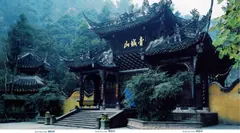
- The Story: The temple on the hillside honours Li Bing and his son, who were elevated to deity status for the achievement.
- What to Look For: The climb is worth it for the elevated view back over the whole system. Do this before the bridge, not after.


3. Cultural Contrast: Engineering as Ancestor Worship
Foreign visitors tend to arrive thinking about hydraulics. Chinese visitors arrive thinking about a man. Li Bing is not remembered here as a clever administrator — he is worshipped, with incense, in a temple built for him, and his son stands beside him. The site is a working shrine as much as a working irrigation scheme, and the two functions have never been separated.
That is why the plaques stress virtue and diligence as much as engineering. It is also why the place feels different from a Roman aqueduct: nobody prays to one. Walk the route in the order locals do — Lidui Park, up to the temple, down to the bridge, back along the water — and you are walking a pilgrimage route laid over a machine. Both readings are correct, and the site rewards knowing which one you are looking at.

4. Practical Essentials: Tickets, Transit & Scam Alerts
Tickets & Passport Booking
- Price: ¥80. Opening hours are 8:00 to 18:00. A combined ticket with Mount Qingcheng is available at the gate.
- How to Book: Buy at the ticket windows — passport counters are staffed — or through the official “都江堰景区” WeChat account.
How to Get There
- By Train: High-speed rail from Xipu or Chengdu West to Dujiangyan Station (30 minutes, ¥10–20), then bus 4 or 101, or a ¥10 taxi to the gate. Tourist coaches from the city take about two hours.
- Show Your Driver: 师傅,请带我到都江堰景区离堆公园大门。谢谢!
Inside Tips & Scam Alerts
- Follow the proper route. Lidui Park first, then the uphill climb to the Two Kings Temple for the overview, then down to Anlan Bridge, then back along the river.
- Skip the ¥100 guides pitched at the gate. They run a rushed Chinese-only tour. The English panels at each viewpoint explain the engineering better than any guide will.
- The suspension bridge closes in thunderstorms. It sways by design, but lightning shuts it. Check the weather before committing to the crossing.
- Go early. Peak-season crowds are heavy from mid-morning; the light on the water is better before nine anyway.
- Complaints: the national 12345 hotline is free to call from any local phone.
Quick Answers
The 6 things visitors ask before setting out, answered from the same verified record used across this page.
- How much does it cost to visit Dujiangyan Irrigation System?
- ¥80.
- What are the opening hours at Dujiangyan Irrigation System?
- 8:00 - 18:00.
- Is Dujiangyan Irrigation System wheelchair accessible?
- Not fully. Stepped paths along the cliffside; the core viewpoints (Yuzui, Anlan Bridge) involve stairs. The riverside flat route shows the levee from below — partially accessible.
- How do I tell a taxi driver to take me to Dujiangyan Irrigation System?
- Copy this line into DiDi or show it to the driver: 师傅,请带我到都江堰景区离堆公园大门,谢谢!
- Can I leave my luggage at Dujiangyan Irrigation System?
- Gate lockers plus lockers at Dujiangyan HSR station.
- Will English work at Dujiangyan Irrigation System?
- Yes — staff used to foreign visitors handle English, and the site scores 4/5 on our foreign-friendliness scale.
Where to go next
Three short lists, recomputed at build time from the same coordinates and categories as the pages themselves — no paid placement, no hand-picked names. Every card is a published guide.
Next stop in Chengdu
Straight-line distance from this spot, so you can judge what is walkable and what needs a taxi.


More like this, elsewhere in China
If historic district is what you came for, these are the closest equivalents you can reach in another city — ordered by distance, one city per card.


Change the subject
Deliberately a different category, for when one more temple or garden would blur into the last one.


Lists are derived from coordinates and category alone. Fix a wrong pin or re-tag a place and every list that mentions it moves with it.
Before you go · arrival essentials
Practical guides that pair with this kind of place — picked by category, not sponsored placement.
- Pay with Alipay & WeChat PayPayment · Set up Alipay or WeChat Pay on a foreign card — needed at almost every counter.
- Claim your tourist tax refundTax refund · Get 11% VAT back on what you buy here, at the airport on departure.
- Book China train tickets (12306)Trains · Buy high-speed rail tickets with a foreign passport, for getting here and back.