
Kunming Old Street

Free. The tea shops will invite you in for a 'free tasting' and then sell ¥600 pu'er cakes - that is the business model, so taste and leave. Jade and silver shops at the entrances are the most expensive in the city.
Taxi & Street Navigation Help
师傅,请带我到昆明老街(正义路),谢谢!
Opening Hours & Best Time
Open all day; shops and cafés about 09:00-22:00.
💡 Pro Tip: Two buildings make the walk worthwhile: the **胜利堂** (1946, a curved-fronted hall on a trapezoid site) and the **聂耳故居**, the tiny wooden house where the composer of China's national anthem was born in 1912. Then eat 烧饵块 from a street cart for ¥6.
Accessibility & Luggage Lockers
Accessibility: ♿ Wheelchair & Stroller Friendly
Level pedestrian lanes; some alleys have cobbles and a kerb step. Very crowded at night.
🧳 Luggage Storage: No storage.
Nearby Landmarks
The 2 places within reach of this spot — each one opens straight into Apple Maps or Amap, with the Chinese name you can show a driver.

Also worth pairing: Yunnan University (1.5 km north) — real picks, just left off the grid so the cards stay in pairs.
Chinese names and pins are matched against each city's own map data at build time; a place only gets Directions once its pin has been verified, otherwise the button searches by name.
About Kunming Old Street
1. Historical Origins: The Grid That Survived
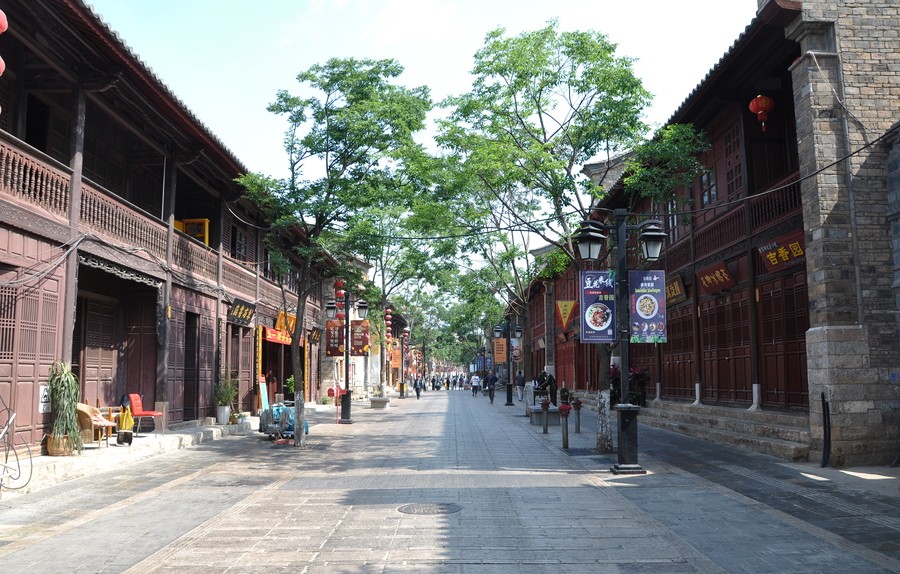
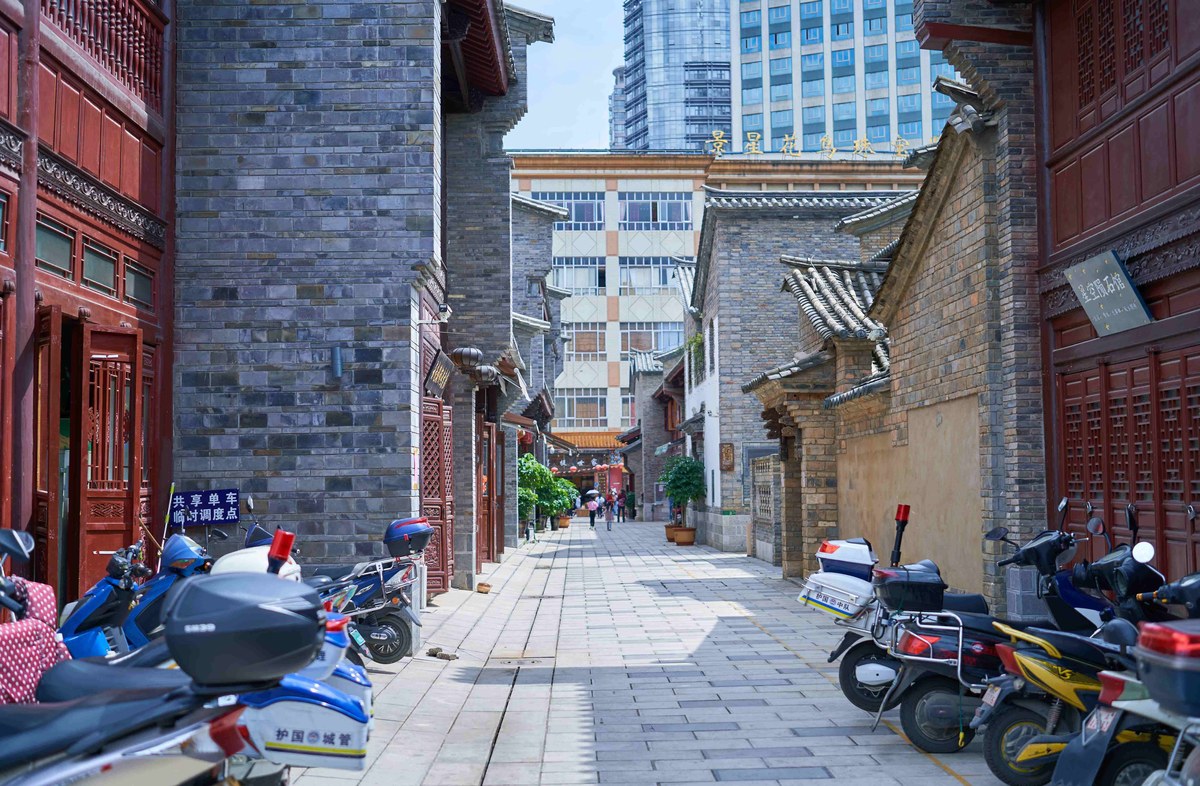
Most of old Kunming was rebuilt in the twentieth century, block by block, and very little of the street pattern is left. This quarter — around Wenming Street — is the exception: an intact run of commercial streets with the alignments still where they were, lined with arcaded shopfronts built in the Republican period.
The arcade is the signature. Upper floors overhang the pavement on columns, so you walk under the building rather than past it, and the ground floor opens straight onto the covered walkway. The form spread into China from the south-east coast and was adapted here for sun and sudden rain.
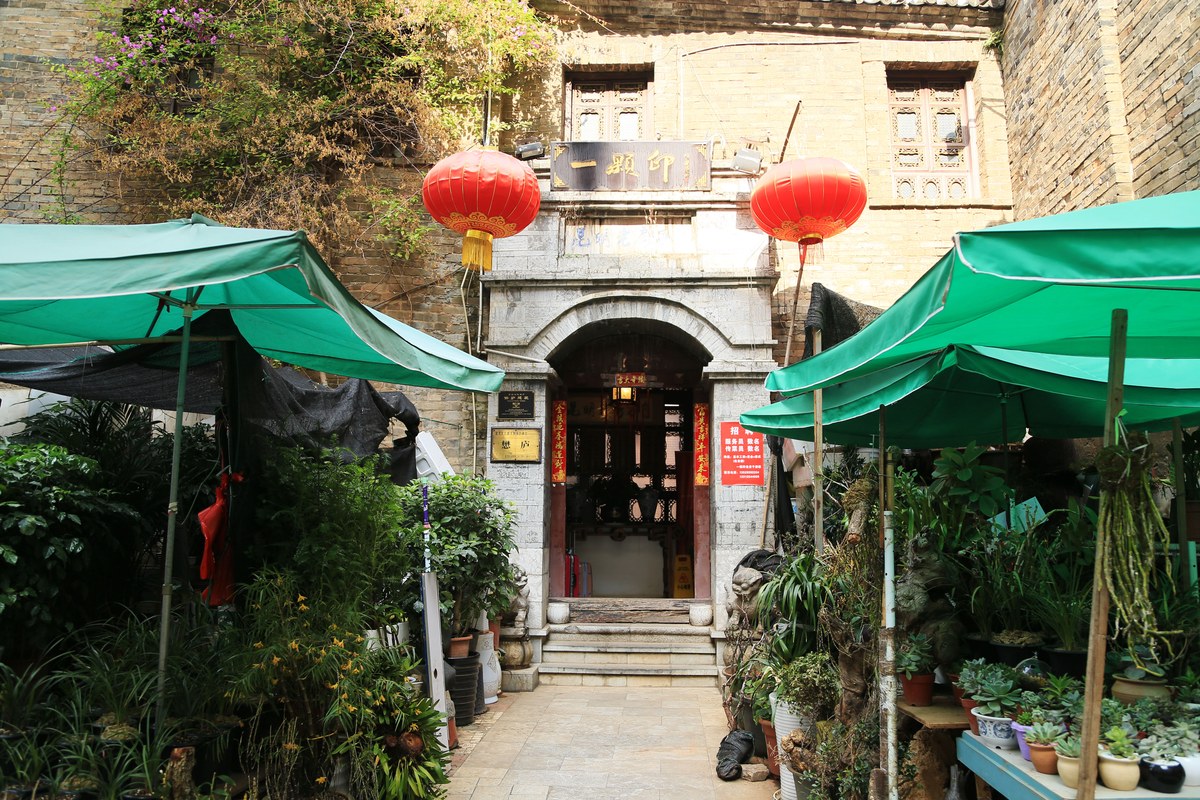
Two buildings are why the walk is worth the detour. Shengli Hall, finished in 1946, sits on an awkward trapezoid plot and answers it with a curved front. And a few lanes away is the wooden house where Nie Er was born in 1912 — the composer who wrote the march that became the national anthem.
2. What to Spot: Two Buildings and a Covered Pavement
🏛️ Shengli Hall
A curved facade on a trapezoid site, with a colonnade across the front — an exercise in solving an impossible plot by refusing to make it rectangular. It is a civic building rather than a temple or a shop, which is why it reads differently from everything around it.
- The Story: Finished at the end of the war it commemorates, and built as a civic hall rather than a commercial block — which is why it holds a whole street corner to itself.
- What to Look For: The curve. Stand at the corner of the plot and you can see how the front was bent to close the triangle left over by the roads.
🎻 Nie Er’s House
A small timber house, two rooms deep, on a lane behind the main street. He was born here in 1912 and died at twenty-three; the tune he wrote for a film in 1935 became the national anthem. The house is modest to the point of being easy to miss — which is part of the point.
🏮 The Street at Night
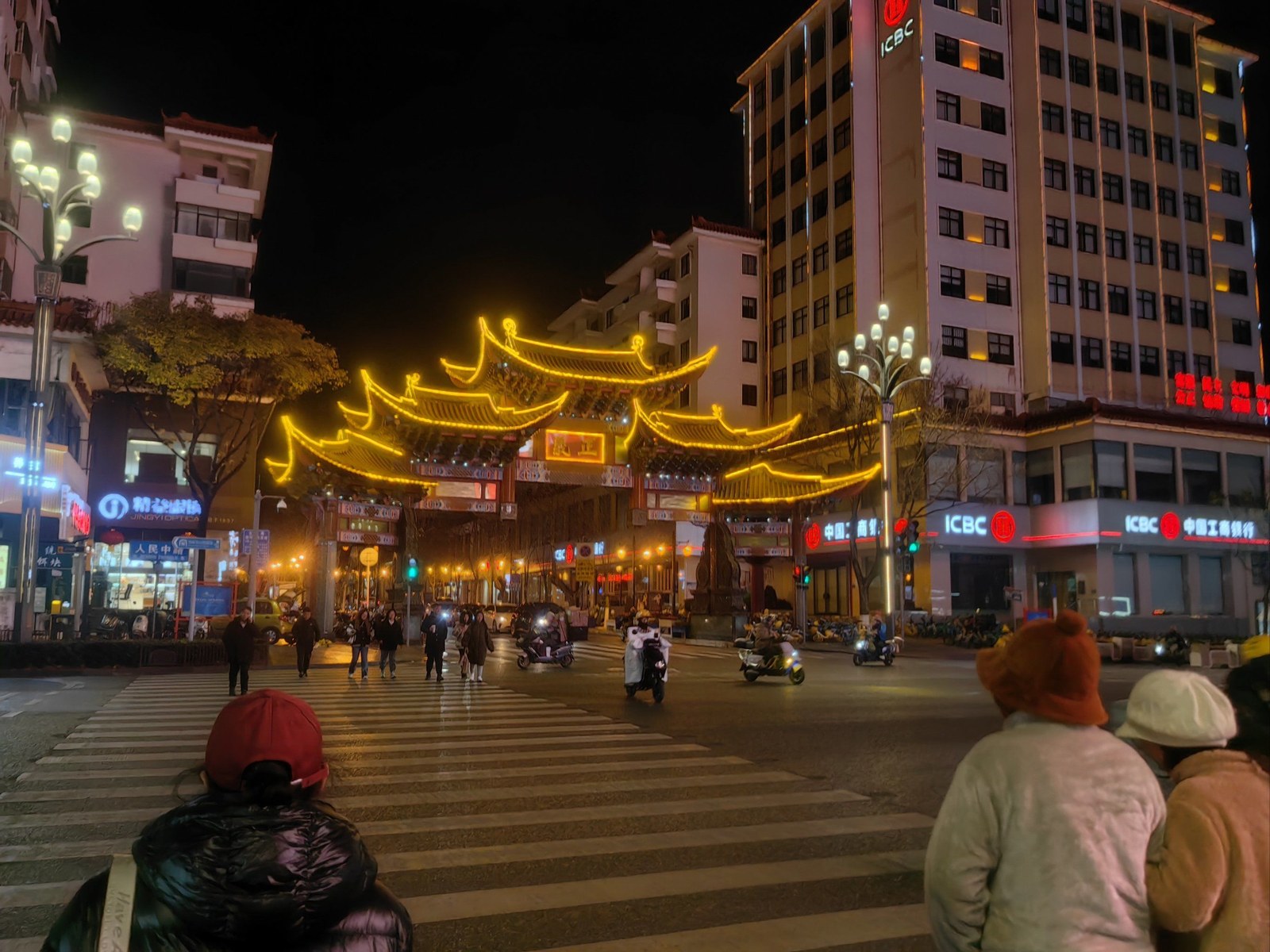
After dark the arcades light up from underneath and the quarter changes character: the snack carts come out, the tea houses fill, and the upper floors go dark. It is a better photograph than the daytime street and a worse time to see the architecture.
3. Cultural Contrast: A Shopping Street, Not a Set
There is no gate, no ticket and no reconstruction wall here — people buy medicine, eat lunch and get their shoes repaired on this street, and the heritage is the by-product rather than the product. That makes it less photogenic than a restored quarter and considerably more interesting.
- The shops are the attraction. Old pharmacies, rice-noodle restaurants and snack carts, in buildings that have not been gutted.
- The tea shops have a business model. The free tasting is the pitch; the cake they sell afterwards is priced accordingly.
- It is a fifteen-minute walk from Green Lake, which is why the two belong in the same afternoon.
4. Practical Essentials: Tickets, Transit & Scam Alerts
Tickets & Passport Booking
- The street is free and open all day. No ticket, no booking, no ID.
- Shop and café hours differ between sources, so none are quoted here; assume a late-morning start and a late-evening finish, and check on the day.
- The courtyard theatre in the Ma family compound runs performances, but the schedule and whether you pay are not published consistently — ask at the compound.
- A few small exhibition halls inside charge separately. Check the price at the door before going in.
How to Get There
- Location: Wenming Street and the lanes around it, in the old city core.
- Taxi: “师傅,去【昆明老街】(文明街),谢谢!”
- On foot: Green Lake, Yunnan University and Yuantong Hill are all within a walk; this is the old-town day.
- Bus and metro routes change often — look the street up by name in a map app on the day rather than relying on a fixed line number.
Inside Tips & Scam Alerts
- The free tea tasting is a sales technique. Taste, say thank you, and leave; there is no obligation and no need to feel awkward.
- Jade and silver shops at the entrances are the most expensive in the city. Look at the craftsmanship, not the price tags.
- Ask before ordering cooked food, including from carts; the local price and the visitor price are not always the same.
- Main street is paved and level; the older buildings have thresholds and steps at the doors.
- Day and night are different visits. Buy snacks in the afternoon, come back for the arcade lighting.
- Complaints or overcharging: call 12345. It is free from any local phone and has English-speaking operators.
Quick Answers
The 6 things visitors ask before setting out, answered from the same verified record used across this page.
- How much does it cost to visit Kunming Old Street?
- Free.
- What are the opening hours at Kunming Old Street?
- Open all day; shops and cafés about 09:00-22:00.
- Is Kunming Old Street wheelchair accessible?
- Yes. Level pedestrian lanes; some alleys have cobbles and a kerb step. Very crowded at night.
- How do I tell a taxi driver to take me to Kunming Old Street?
- Copy this line into DiDi or show it to the driver: 师傅,请带我到昆明老街(正义路),谢谢!
- Can I leave my luggage at Kunming Old Street?
- No storage.
- Is there anything to watch out for at Kunming Old Street?
- Free. The tea shops will invite you in for a 'free tasting' and then sell ¥600 pu'er cakes - that is the business model, so taste and leave. Jade and silver shops at the entrances are the most expensive in the city.
Where to go next
Three short lists, recomputed at build time from the same coordinates and categories as the pages themselves — no paid placement, no hand-picked names. Every card is a published guide.
Next stop in Kunming
Straight-line distance from this spot, so you can judge what is walkable and what needs a taxi.


More like this, elsewhere in China
If historic district is what you came for, these are the closest equivalents you can reach in another city — ordered by distance, one city per card.


Change the subject
Deliberately a different category, for when one more temple or garden would blur into the last one.


Lists are derived from coordinates and category alone. Fix a wrong pin or re-tag a place and every list that mentions it moves with it.
Before you go · arrival essentials
Practical guides that pair with this kind of place — picked by category, not sponsored placement.
- Pay with Alipay & WeChat PayPayment · Set up Alipay or WeChat Pay on a foreign card — needed at almost every counter.
- Claim your tourist tax refundTax refund · Get 11% VAT back on what you buy here, at the airport on departure.
- Book China train tickets (12306)Trains · Buy high-speed rail tickets with a foreign passport, for getting here and back.