
Yungang Grottoes

This is one of China's most-visited heritage sites, so the hustle is 'skip-the-line / insider access' sellers and unlicensed guides offering to 'get you in without booking'. Foreign visitors should buy through the official English site's Ticket Book entry or the official Ticket Center phone/email — not a touts' 'package'. Once you hold a valid timed ticket the entry is straightforward; nobody can sell you a faster one.
Taxi & Street Navigation Help
师傅,请带我到云冈石窟(大同西郊),谢谢!
Opening Hours & Best Time
A single daily window with ticket checking that stops well before the site closes for the day, so a late arrival can be turned away even while the grounds are still open. One official caveat matters for planning: the Yungang Museum on the grounds is listed as closed and must not be read as open — do not build the visit around it. Check the day's posted hours on the official channel.
💡 Pro Tip: The whole reason to come is the western section's great cave temples — the open-air Seated Buddha of Cave 20 and the 'Tanyao Five Caves' with their colossal, Greco-influenced faces are the masterpieces. Go early (the light is kinder and the crowds thinner), start at the west end where the big caves are, and — because the carving is meaningless without context — hire the official guide, which the site sells in an English version at a published rate. Photography is banned inside the caves.
Accessibility & Luggage Lockers
Accessibility: ⚠️ Step thresholds, limited access
The grounds along the cave facade are largely a level promenade, but entering the caves themselves involves steps and thresholds, and interior access is uneven. Step-free access to every cave is unverified this pass.
🧳 Luggage Storage: Use the visitor-centre facilities near the entrance rather than carrying bags into the cave galleries; exact locker provision is unverified — confirm on site.
Nearby Landmarks
The 2 places within reach of this spot — each one opens straight into Apple Maps or Amap, with the Chinese name you can show a driver.
Chinese names and pins are matched against each city's own map data at build time; a place only gets Directions once its pin has been verified, otherwise the button searches by name.
About Yungang Grottoes
1. Historical Origins: An Imperial Cave Cathedral in the Rock
The Yungang Grottoes were carved from the cliff starting in the mid-5th century under the Northern Wei dynasty, when the court had made nearby Pingcheng (today’s Datong) its capital. This was an imperial project, not a folk one: state workshops cut a whole mountainside into caves and colossal Buddhas, and the earliest and grandest of them — the five ‘Tanyao Caves’ named for the monk who directed the work — were modelled on the emperor himself. The result is one of the four great grotto complexes of China, alongside Mogao, Longmen and Maijishan, and a UNESCO World Heritage site.
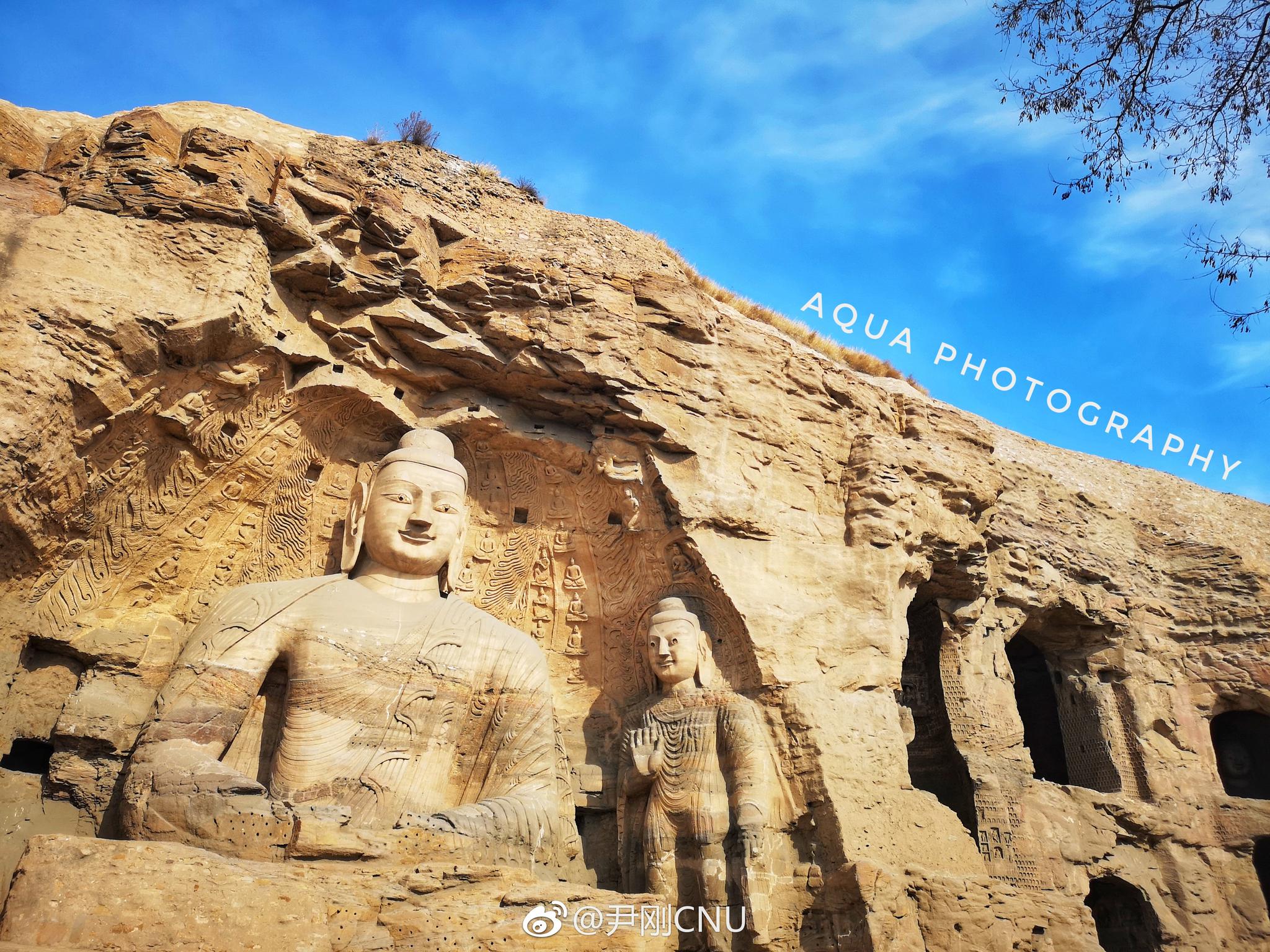
What makes Yungang distinct is the moment of collision it freezes. The Buddha faces are full-cheeked and broad-shouldered in a way that reads Gandharan and Central-Asian, yet the drapery and the compositional logic already lean Chinese — it is the earliest, boldest stage of Buddhism’s artistic Sinicisation. Later caves add multi-storey pagoda interiors and narrative reliefs, tracking how the imported religion softened and localised within decades.
2. What to Spot: The Great Buddha, the Tanyao Caves, the Relief Storytelling
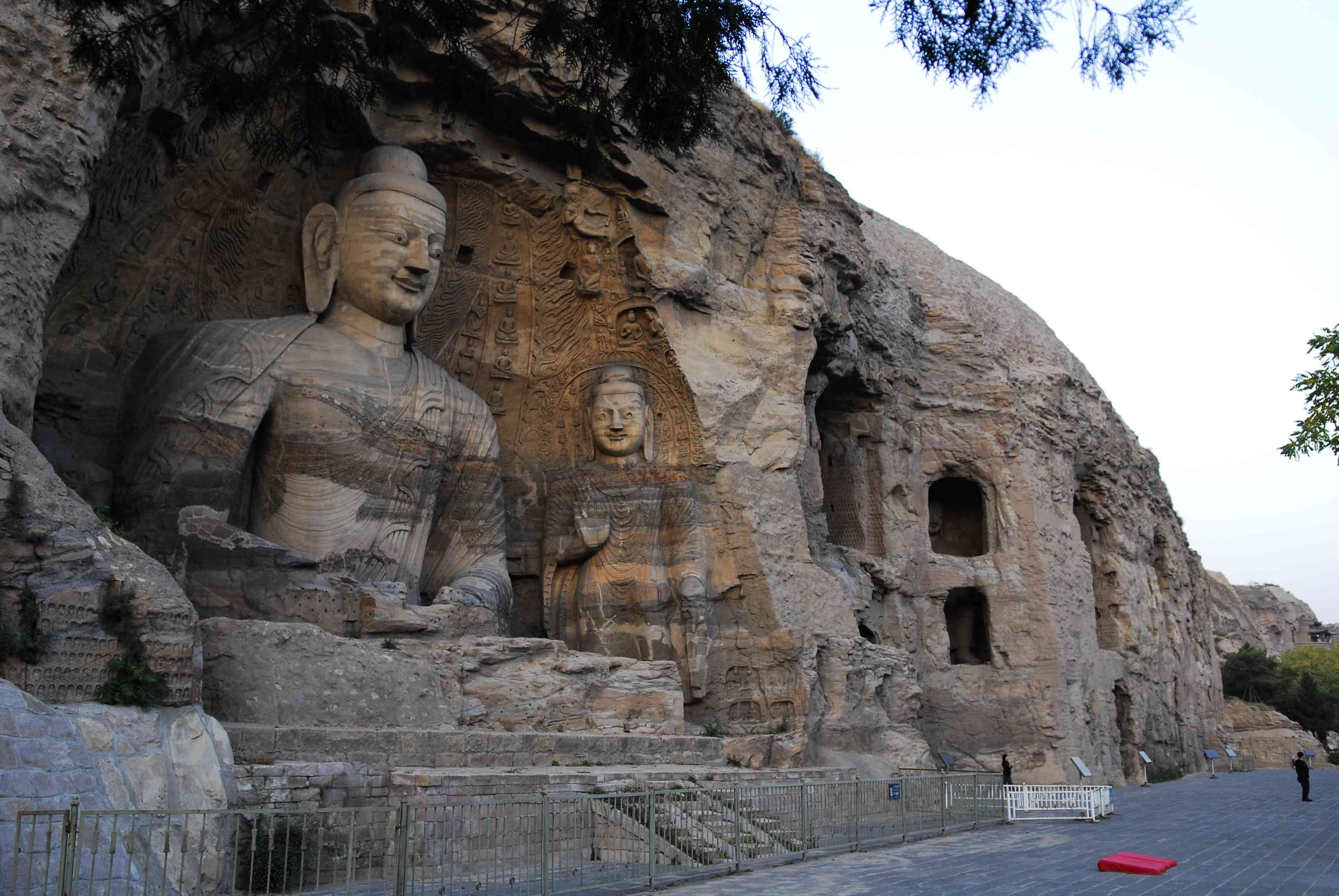
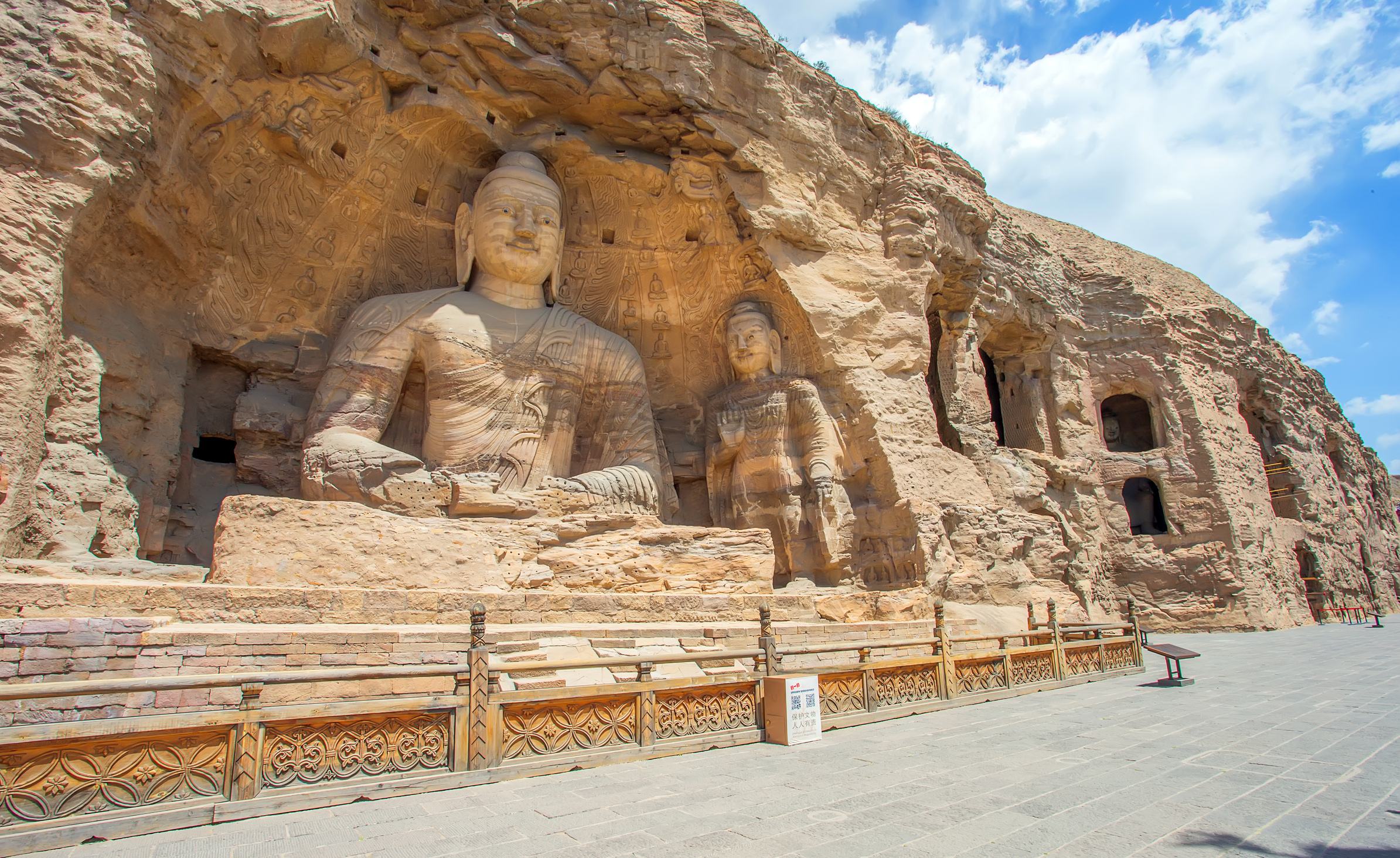
🗿 The Open-Air Seated Buddha (Cave 20)
- The Story: The cave’s outer wall collapsed centuries ago, leaving its monumental seated Shakyamuni exposed to the sky — the image that sells Yungang.
- What to Look For: The serene, heavy-lidded face and the fusion of ‘foreign’ mass with Chinese line; it is best-lit and least-crowded early in the day.
🏛️ The Tanyao Five Caves (16–20)
- The Story: The oldest, largest imperial caves, each a vaulted hall around a Buddha colossus that filled the space so completely you circle the statue inside a stone room.
- What to Look For: The sheer scale and the carved ceiling; hire the official English commentary here or the meaning of the iconography is lost.
📜 The Relief Panels & Minor Caves
- The Story: Dozens of mid-size caves line the facade with wall-to-wall relief — musicians, dancers, deer, and the life of the Buddha told as continuous picture-strips.
- What to Look For: The ‘musical celestial’ caves and the architecturally-carved interiors that mimic wooden temples in stone.
🧭 Caves 5 & 6: The Twin-Cave Pair Most People Rush Past
The open-air Buddha of Cave 20 gets the photographs, but Caves 5 and 6 are why art historians rate Yungang alongside Dunhuang. Cave 5 holds one of the largest seated Buddhas in the complex inside a timber-fronted hall; Cave 6 is carved floor to ceiling with the Buddha’s life story, including a monumental stupa column you walk around.
They sit near the middle of the east-west sequence, so most visitors pass them while moving toward the great caves. Slow down here: the carving is denser and better preserved than anything else on the site, and the interior is where the idea of a “stone temple” becomes literal.
The site is long and exposed. The west end takes the morning light, the middle caves read better in the afternoon. If you are pairing Yungang with the Hanging Temple, do Yungang first — the gorge road south-east is long, and the temple closes earlier in bad weather. Both are covered from Datong as a two-base trip rather than a single city day.
3. Cultural Contrast: A Stone Scripture for a Touring Public
Yungang is the rare Chinese site whose foreign-friendliness matches its fame: it runs an English-language official site with a Ticket Book entry, a named Ticket Center phone and email, and — unusually — a priced English guided commentary, because the state understood long ago that the carving is illegible without explanation. For the outsider it is comparatively navigable.
That said, the ticketing logic is a very Chinese one: concessions are keyed to mainland ID categories, so a foreign visitor simply pays the full tier and should stop looking for a discount that was never meant for them. And the whole complex rewards a slow, guided read rather than a selfie sprint across the facade — the point is 1,500 years of an idea changing hands, cut into a cliff.
4. Practical Essentials: Tickets, Transit & Scam Alerts
Tickets & Passport Booking
- Price: Seasonal full / half tiers, government-published and re-set twice a year; half-price is limited to mainland-ID categories so foreigners take the full fare. No amount is fixed here — confirm the day’s tariff on the official English site or Ticket Center.
- Passport route: Buy via the official Ticket Book entry, or call/email the Ticket Center; entry is real-name and timed. Do not assume online passport purchase works or that it is counter-only — verify on the official channel. The on-site Yungang Museum is closed; do not plan around it.
How to Get There
- Where it is: Datong’s western suburbs, roughly 16 km from the old city (the official figure). City bus route 3 runs out from the public-transport hub; from Datong South Station it is bus 68 transferring to route 3, and the airport has a shuttle-transfer link — the site publishes routes but no door-to-door travel time, so budget generously rather than trusting an estimate.
- Show Your Driver: 师傅,请带我到云冈石窟(大同西郊),谢谢!
Inside Tips & Scam Alerts
- Start at the west end (the great caves), go early for light and quiet, and hire the official English guide — the sculpture is meaningless without it. No photography inside the caves, no drones, no open flame. Buy from the official channel only; ignore ‘skip-line / insider ticket’ touts. Complaints / lost property: 12345, free from a local number.
Quick Answers
The 5 things visitors ask before setting out, answered from the same verified record used across this page.
- What are the opening hours at Yungang Grottoes?
- A single daily window with ticket checking that stops well before the site closes for the day, so a late arrival can be turned away even while the grounds are still open. One official caveat matters for planning: the Yungang Museum on the grounds is listed as closed and must not be read as open — do not build the visit around it. Check the day's posted hours on the official channel.
- Is Yungang Grottoes wheelchair accessible?
- Not fully. The grounds along the cave facade are largely a level promenade, but entering the caves themselves involves steps and thresholds, and interior access is uneven. Step-free access to every cave is unverified this pass.
- How do I tell a taxi driver to take me to Yungang Grottoes?
- Copy this line into DiDi or show it to the driver: 师傅,请带我到云冈石窟(大同西郊),谢谢!
- Can I leave my luggage at Yungang Grottoes?
- Use the visitor-centre facilities near the entrance rather than carrying bags into the cave galleries; exact locker provision is unverified — confirm on site.
- Is there anything to watch out for at Yungang Grottoes?
- This is one of China's most-visited heritage sites, so the hustle is 'skip-the-line / insider access' sellers and unlicensed guides offering to 'get you in without booking'. Foreign visitors should buy through the official English site's Ticket Book entry or the official Ticket Center phone/email — not a touts' 'package'. Once you hold a valid timed ticket the entry is straightforward; nobody can sell you a faster one.
Yungang Grottoes Photo Wall
1 / 1313 views of Yungang Grottoes from the visitor photo set: the name inscription, the Shantang Water Hall, painted sculptures, the wooden pavilion, the grottoes, rock inscriptions on the cave top, the open-air colossal Buddha.
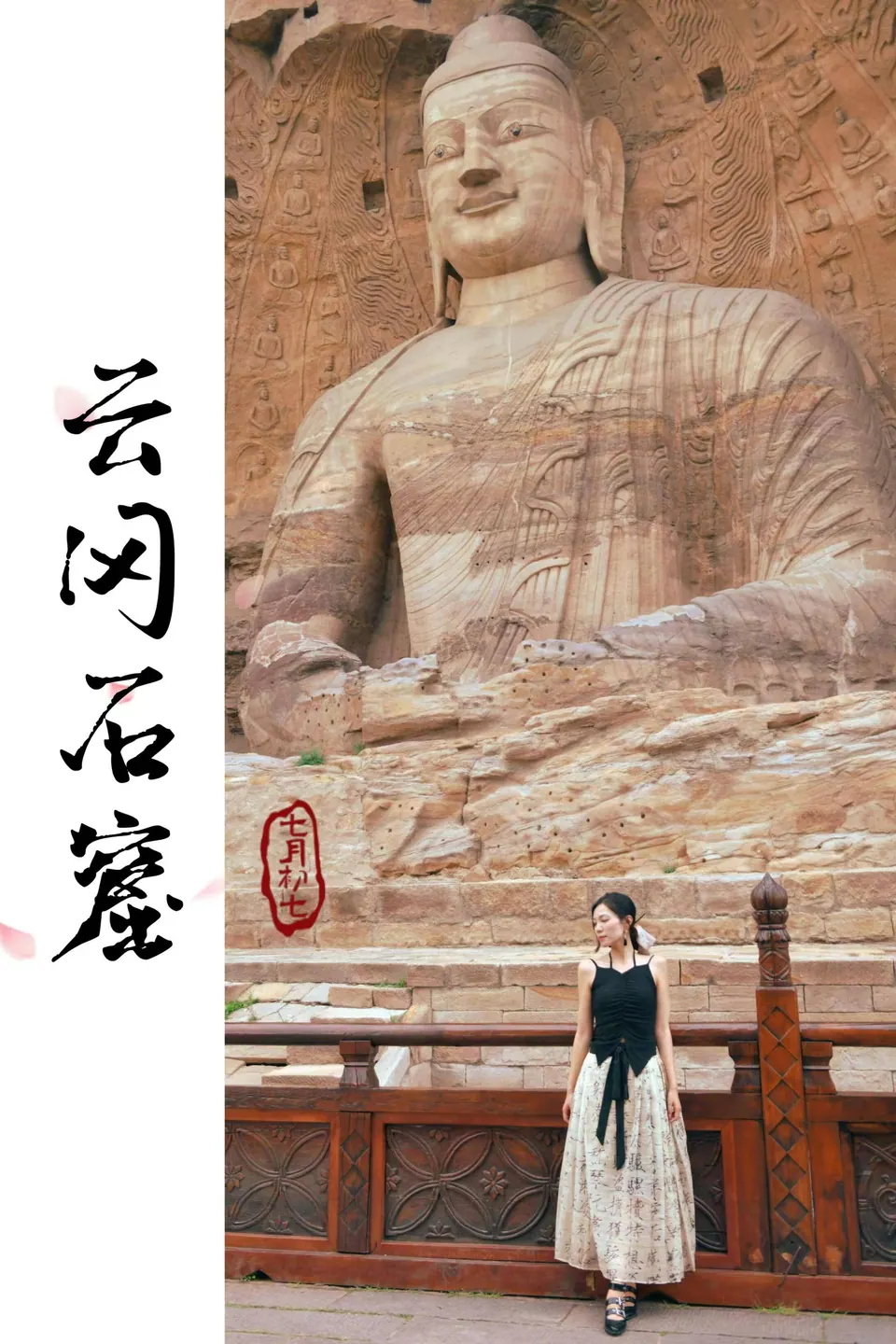
The name inscription.
Where to go next
Three short lists, recomputed at build time from the same coordinates and categories as the pages themselves — no paid placement, no hand-picked names. Every card is a published guide.
Next stop in Datong
Straight-line distance from this spot, so you can judge what is walkable and what needs a taxi.


More like this, elsewhere in China
If landmark is what you came for, these are the closest equivalents you can reach in another city — ordered by distance, one city per card.


Change the subject
Deliberately a different category, for when one more temple or garden would blur into the last one.


Lists are derived from coordinates and category alone. Fix a wrong pin or re-tag a place and every list that mentions it moves with it.
Before you go · arrival essentials
Practical guides that pair with this kind of place — picked by category, not sponsored placement.