
Huayan Temple

The main confusion is ticketing geography: Huayan Temple and nearby Shanhua Temple are separate admissions, and neither is included in a Yungang ticket — do not buy a vague 'Datong old city' bundle at the door expecting it to cover both. Buy at the temple's own counter or its official mini-program. Inside, treat it as an active religious site, not a museum you can photograph freely.
Taxi & Street Navigation Help
师傅,请带我到华严寺(大同古城,清远街),谢谢!
Opening Hours & Best Time
Daylight visiting hours set by the temple / old-city operator, typically a fixed daily window that shortens off-season; there is no single range to reserve against, so check the day's posted time. The Huayan Pagoda and its underground crypt may close for access control independent of the main halls.
💡 Pro Tip: This is a Liao- and Jin-dynasty wooden-architecture treasure, so look up as much as around: the Mahavira Hall is among the largest surviving Liao/Jin Buddha halls in China, and the Tripartite Sutra Hall (Bojiao Zangdian) holds original Liao polychrome sculpture — including the famous 'clasped-hands, tooth-showing' Bodhisattva nicknamed the 'Eastern Venus'. The tall new Huayan Pagoda is an all-wood mortise-and-tennon structure you can climb for a roof-level view of the old city. Understanding the Liao/Jin carving is far better with a guide or some background first.
Accessibility & Luggage Lockers
Accessibility: ⚠️ Step thresholds, limited access
A temple laid out across raised terraces, hall steps and (for the pagoda) a long internal stair; courtyard paths are paved but thresholds and stairs are frequent. Step-free access to the halls and tower is unverified.
🧳 Luggage Storage: No visitor lockers noted at the gate — the old city is walkable, so carry light or leave bags at your hotel.
Nearby Landmarks
The 2 places within reach of this spot — each one opens straight into Apple Maps or Amap, with the Chinese name you can show a driver.
Also worth pairing: Datong City Wall, walking distance — real picks, just left off the grid so the cards stay in pairs.
Chinese names and pins are matched against each city's own map data at build time; a place only gets Directions once its pin has been verified, otherwise the button searches by name.
About Huayan Temple
1. Historical Origins: A Liao Imperial Temple
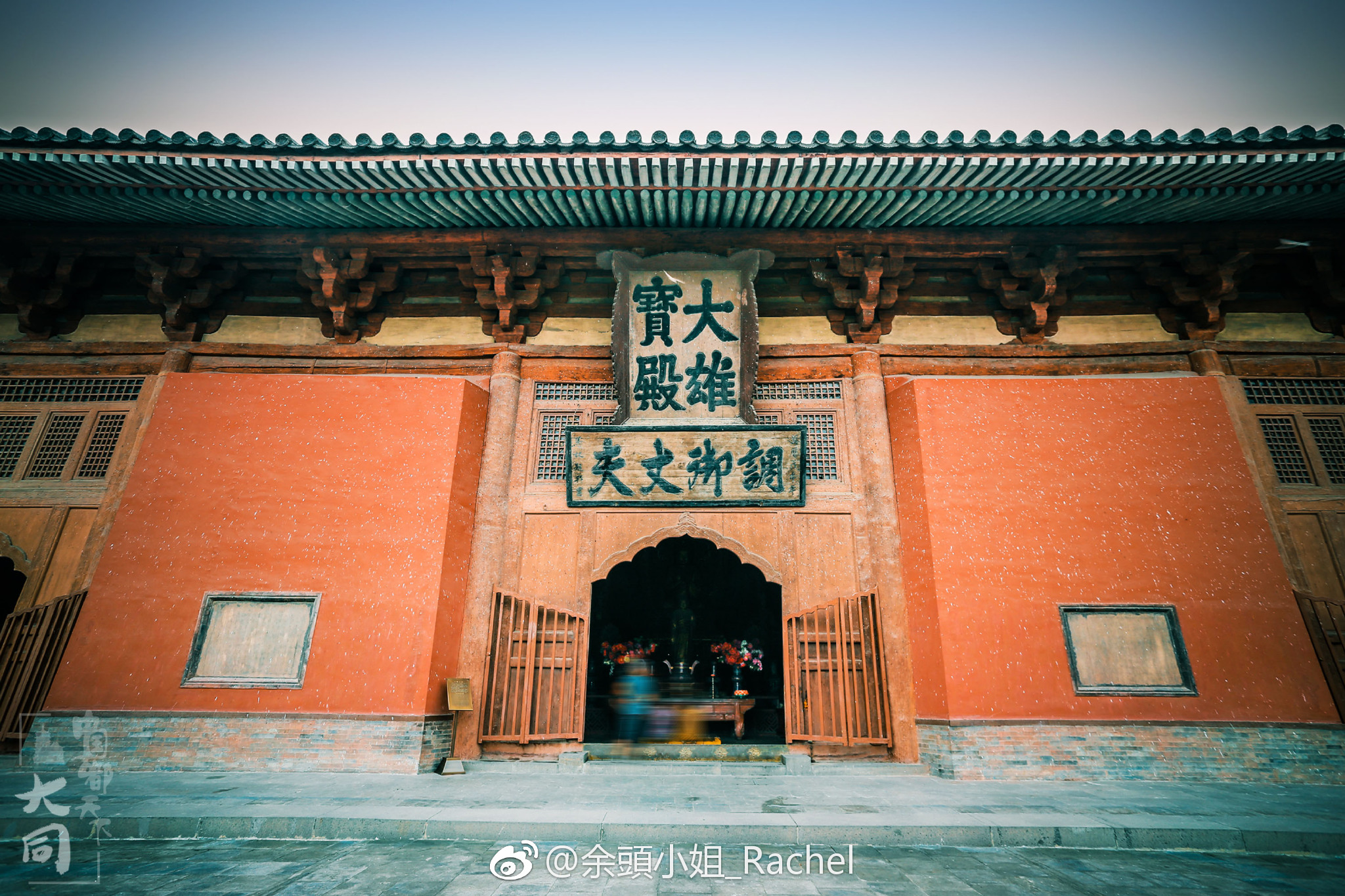
The Huayan (‘Flower Garland’) Temple takes its name from the Huayan (Avatamsaka) sutra and was first built in the Liao dynasty, when the Khitan-lruled court made Datong — then the ‘Western Capital’ — a centre of Buddhist patronage. Destroyed in the wars at the Liao-Jin transition and rebuilt under the Jin, it preserves one of China’s earliest and most complete ensembles of Liao-Jin temple architecture: enormous bracket-set eaves, deep verandas and a plan that still reads as imperial rather than parish.
Its true treasure is portable: the Tripartite Sutra Hall keeps an original Liao sculptural program, a whole retinue of clay figures in situ rather than in a museum case. Among them the ‘clasped-hands Bodhisattva’, lips parted to show a tooth, became a national celebrity — a rare, human, sensual face inside canonical austerity, long dubbed the ‘Eastern Venus’.
2. What to Spot: The Great Hall, the Liao Sculptures, the Wooden Tower
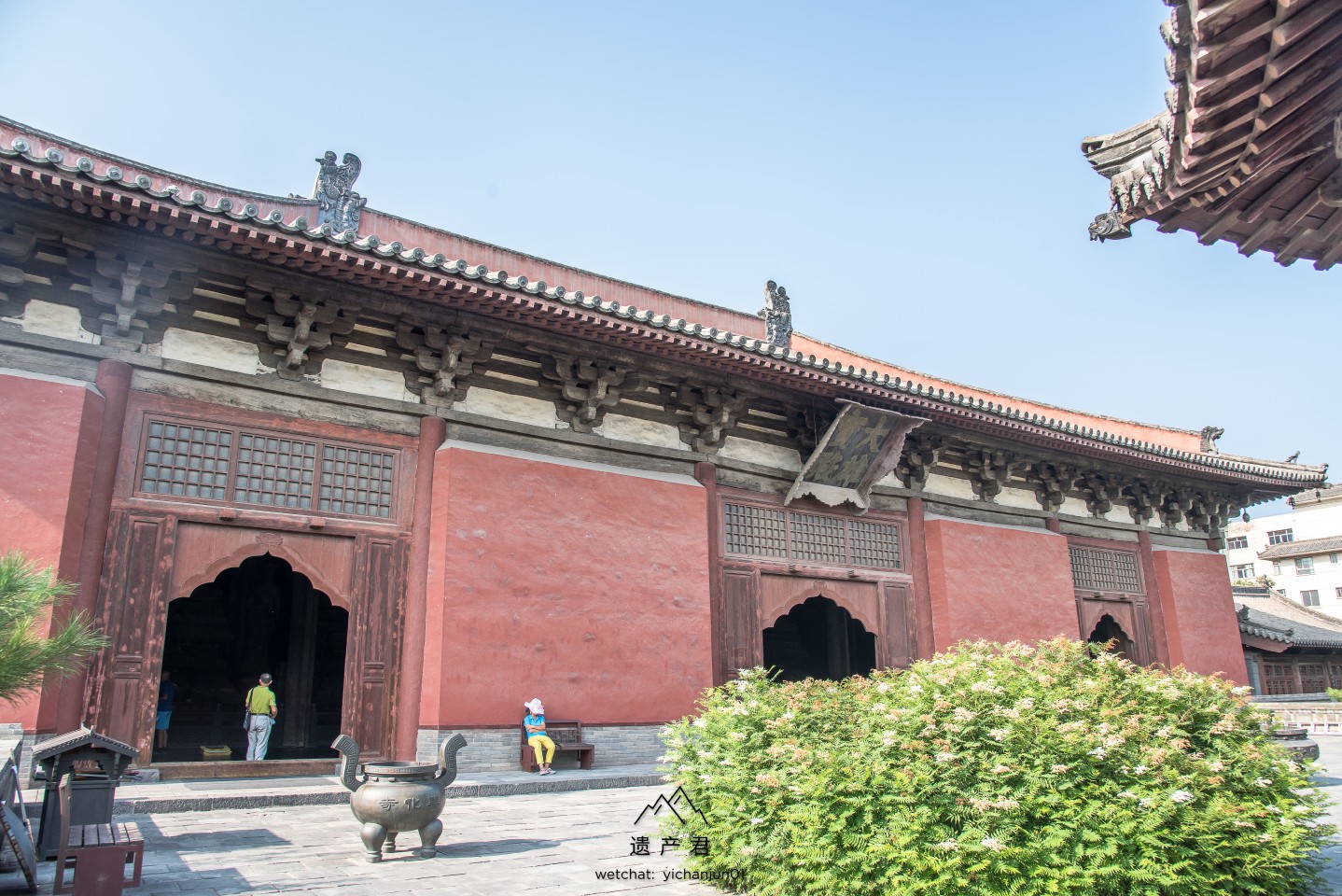
🏛️ The Mahavira Hall (Da xiong Bao dian)
- The Story: One of the biggest surviving Liao/Jin Buddha halls, its platform, columns and giant bracket-sets the point of the visit for architecture students.
- What to Look For: The scale of the bracketing under the eaves and the Ming polychrome figures and wall paintings inside.
🪷 The Tripartite Sutra Hall & the ‘Eastern Venus’
- The Story: A Liao hall built to house the sutra, its statuary original to the 11th century.
- What to Look For: The smiling, tooth-showing Bodhisattva and the surrounding Liao figures — the highlight no photograph quite conveys.
🗼 The Huayan Pagoda
- The Story: A modern reconstruction raised as an all-timber, nail-free tower with a solemn underground crypt below.
- What to Look For: The climb to the viewing levels for a near-eye view over the old city’s grey rooftops.
3. Cultural Contrast: Khitan Empire in Timber
Huayan Temple resets the assumption that ‘classical China’ means Han dynasties. Datong was a Liao and Jin capital — regimes of steppe-origin khans who took Buddhist architecture and pushed its structural drama further, into heavier brackets and wider halls. Standing before the Mahavira platform, a foreign visitor is looking at a distinctly non-Han imperial taste executed in the Chinese timber language.
Within the walled city it is also the anchor of a very walkable cluster: the Nine-Dragon Wall and the Daiwang Fu prince’s mansion sit a couple of minutes away and Shanhua Temple a short stroll south, each a separate ticket but all reachable on foot in an old-town half-day. Read Huayan as the grand opening act of that circuit, and hire guidance or pre-read the Liao-Jin story — the architecture gives most back only to those who know what they’re seeing.
4. Practical Essentials: Tickets, Transit & Scam Alerts
Tickets & Passport Booking
- Price: Separate old-city temple admission (gate / official mini-program), not bundled with Yungang or a general pass. No amount is fixed here — OTA listings are non-official; confirm the day’s price at the gate.
- Passport & booking: Walled-city sights increasingly sell real-name via WeChat mini-program; buy on-site or through the official channel with your passport document. Check whether the pagoda is open before planning on the climb.
How to Get There
- Where it is: On Qingyuan Street inside Datong’s restored old city, a short walk from the Nine-Dragon Wall, Daiwang Fu and the city wall; no metro, taxi or foot. There is no official drive time to the airport / south station — allow real time.
- Show Your Driver: 师傅,请带我到华严寺(大同古城,清远街),谢谢!
Inside Tips & Scam Alerts
- Look up at the brackets, then hunt the ‘Eastern Venus’ in the sutra hall. Photography rules inside halls vary — follow posted signs and dress respectfully (it is an active temple). Don’t assume one ‘old city’ ticket covers the neighbouring sights. Complaints / lost property: 12345, free from a local number.
Quick Answers
The 5 things visitors ask before setting out, answered from the same verified record used across this page.
- What are the opening hours at Huayan Temple?
- Daylight visiting hours set by the temple / old-city operator, typically a fixed daily window that shortens off-season; there is no single range to reserve against, so check the day's posted time. The Huayan Pagoda and its underground crypt may close for access control independent of the main halls.
- Is Huayan Temple wheelchair accessible?
- Not fully. A temple laid out across raised terraces, hall steps and (for the pagoda) a long internal stair; courtyard paths are paved but thresholds and stairs are frequent. Step-free access to the halls and tower is unverified.
- How do I tell a taxi driver to take me to Huayan Temple?
- Copy this line into DiDi or show it to the driver: 师傅,请带我到华严寺(大同古城,清远街),谢谢!
- Can I leave my luggage at Huayan Temple?
- No visitor lockers noted at the gate — the old city is walkable, so carry light or leave bags at your hotel.
- Is there anything to watch out for at Huayan Temple?
- The main confusion is ticketing geography: Huayan Temple and nearby Shanhua Temple are separate admissions, and neither is included in a Yungang ticket — do not buy a vague 'Datong old city' bundle at the door expecting it to cover both. Buy at the temple's own counter or its official mini-program. Inside, treat it as an active religious site, not a museum you can photograph freely.
Where to go next
Three short lists, recomputed at build time from the same coordinates and categories as the pages themselves — no paid placement, no hand-picked names. Every card is a published guide.
Next stop in Datong
Straight-line distance from this spot, so you can judge what is walkable and what needs a taxi.


More like this, elsewhere in China
If landmark is what you came for, these are the closest equivalents you can reach in another city — ordered by distance, one city per card.


Change the subject
Deliberately a different category, for when one more temple or garden would blur into the last one.


Lists are derived from coordinates and category alone. Fix a wrong pin or re-tag a place and every list that mentions it moves with it.
Before you go · arrival essentials
Practical guides that pair with this kind of place — picked by category, not sponsored placement.