
Yellow River Scenic Area

Distance is the real trap, not a rip-off: the area sits about 30 km northwest of the city centre and a one-way public-bus ride runs 1.5–2 hours, so a casual 'quick look' plan collapses without a half-day budgeted. Boat and cable car also hinge on the Yellow River's water level and weather, and in the summer flood season some near-water zones close on short notice — verify before setting out, and treat first/last-bus times as posted-day information rather than something to rely on from memory.
Taxi & Street Navigation Help
师傅,请带我到郑州·黄河风景名胜区(炎黄二帝塑像),谢谢!
Opening Hours & Best Time
A broad daytime window is quoted (roughly mid-morning to early evening) with a suggested 3–4 hour visit, but there is no official fixed timetable to reserve against and boat/cable-car operation depends on river level and weather — confirm on the day and allow generous travel time.
💡 Pro Tip: The 'Mother River' lesson most foreign visitors actually want: five loose zones make up the site — Wulong Peak (central, with a river-viewing pavilion and a 'Nurturing' mother statue), Yueshan Temple, Camel Ridge (a giant Yu the Great statue), the Yan-and-Huang Emperor colossus (a mountain-carved pair of legendary ancestors facing the river, a Chinese 'roots' landmark), and the Han–Chu rivalry walls. Don't try to do all five; prioritise the Yan-Huang statues plus Wulong Peak's viewing pavilion. Morning light puts the sun behind you for statue-and-river frames, and a Yellow River carp dish nearby rounds it off.
Accessibility & Luggage Lockers
Accessibility: ⚠️ Step thresholds, limited access
Mixed: the Yan-Huang Emperor plaza is flat and wheeled-friendly, but Wulong Peak requires climbing and the zones are spread across hilly riverbank ground — mobility-limited visitors are best served by sticking to the plaza area.
🧳 Luggage Storage: The visitor centre can advise on storage on a case-by-case basis; on a city day trip leave large bags at your hotel.
Nearby Landmarks
The 2 places within reach of this spot — each one opens straight into Apple Maps or Amap, with the Chinese name you can show a driver.
- Henan Museum (Yellow-River civilisation artefacts), city alternativeMuseumNearby
Chinese names and pins are matched against each city's own map data at build time; a place only gets Directions once its pin has been verified, otherwise the button searches by name.
About Yellow River Scenic Area
1. Historical Origins: Where Chinese Civilisation Began on the Water
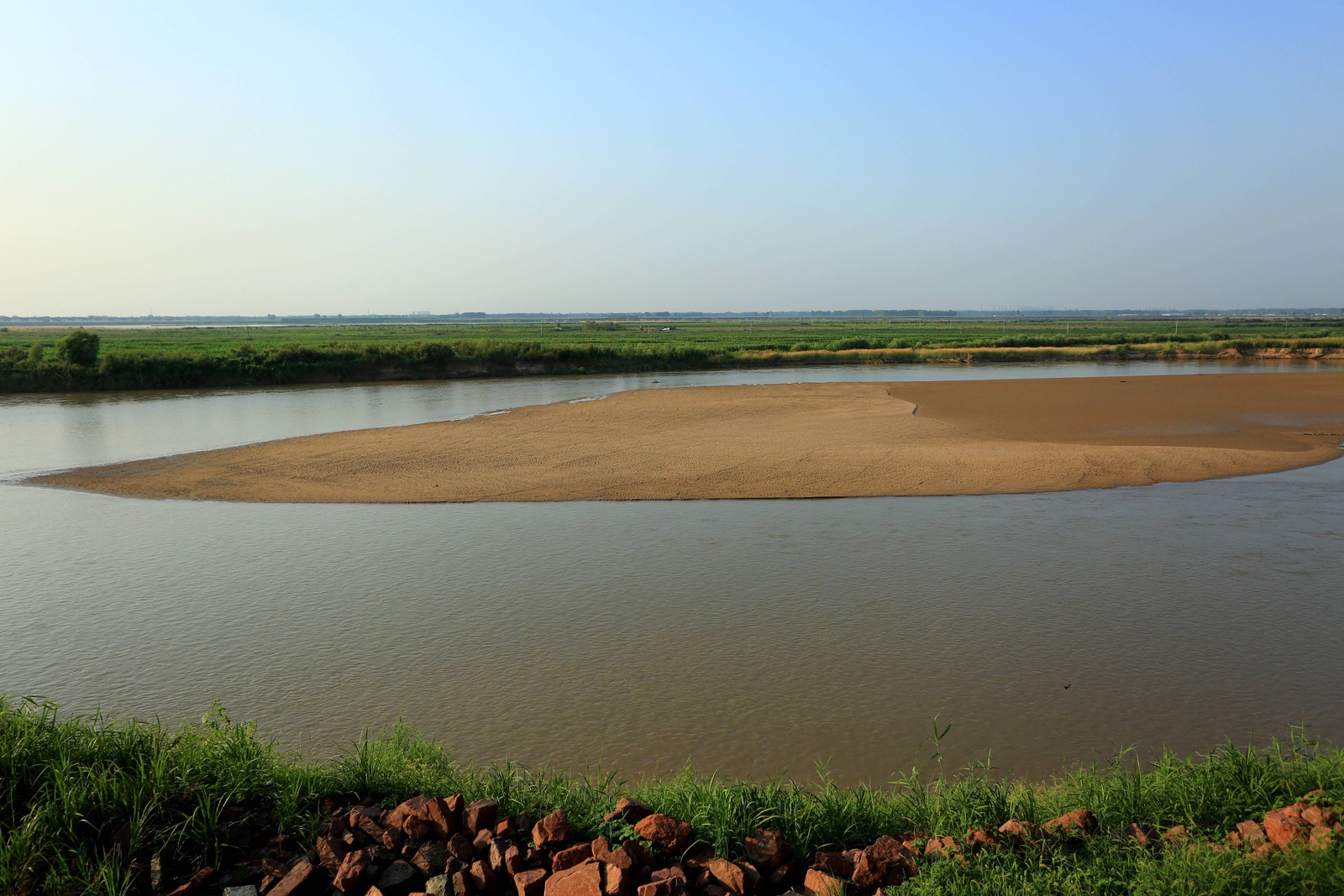
The Yellow River is the ‘Mother River’ of Chinese civilisation, and this scenic area on its south bank about 30 km northwest of Zhengzhou is the city’s answer to ‘go see the river’. Its monument cluster is built around the idea of origins: the colossal Yan-and-Huang Emperor statues carve two legendary ancestral forebears into the hillside facing the water, framing the site as a place of Chinese ‘roots’ identity as much as a park.
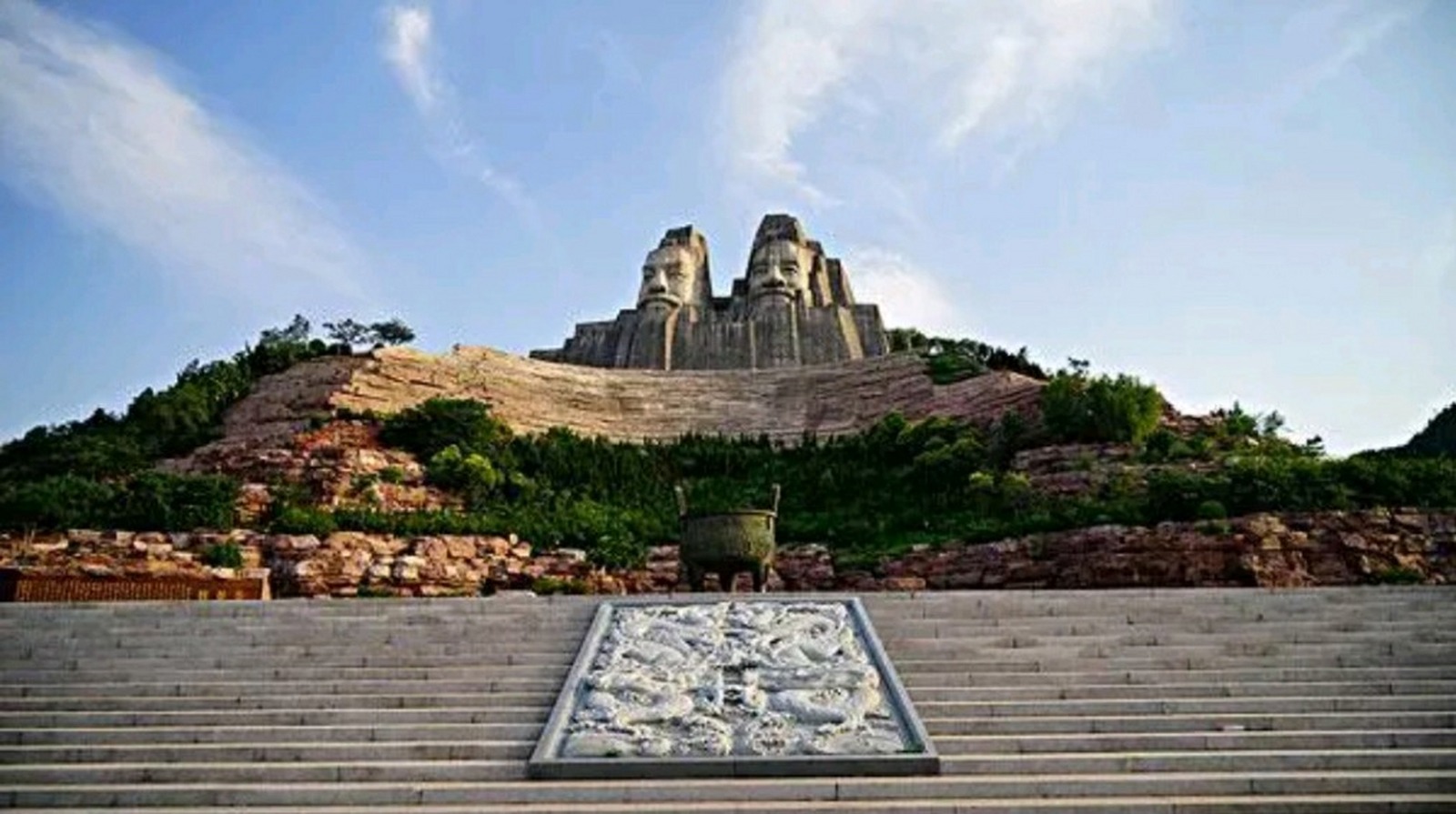
The ground gathers five loose zones: Wulong Peak (the central area with a river-viewing pavilion and a ‘Nurturing’ mother statue), Yueshan Temple, Camel Ridge with a giant Yu-the-Great statue, the Yan-Huang colossus fronted by bronze ding cauldrons, and the Han–Chu ‘Two Kings’ Walls recalling the rivalry between Liu Bang and Xiang Yu. Together they turn a stretch of riverbank into an open-air primer on mythic and early imperial China.
2. What to Spot: The Statues, the River, the Ruins
🗿 The Yan-and-Huang Emperor Colossus
- The Story: A mountain-face carving of the two mythical ancestors of the Chinese people, facing the river with bronze cauldrons before them.
- What to Look For: The scale against the water — the site’s signature photo, best shot in morning light with the sun behind you.
🏔️ Wulong Peak & the Viewing Pavilion
- The Story: The central zone, whose pavilion looks out over the broad Yellow River channel.
- What to Look For: The panorama of the silt-brown river and the ‘Nurturing’ mother sculpture; note it involves real climbing.
🐉 Camel Ridge, the Han–Chu Walls & the Hovercraft
- The Story: A Yu-the-Great statue, the Liu Bang–Xiang Yu battlefield legacy, and a ground-effect boat that skims the river surface.
- What to Look For: The warrior-and-horse sculpture groups; the boat and cable car run only when river level and weather allow — confirm first.
3. Cultural Contrast: A Monument to an Idea, Not a Nature Walk
Foreign visitors often arrive expecting a riverside park; the area is really a monument complex to a civilisational idea, and that mismatch shapes the experience. Its power for Chinese guests is devotional — saluting the ancestral emperors and the mother river — while a visitor without that framing may see large statues and a muddy river. The rewarding approach is to treat it as a lesson in why the river matters, not a scenic stroll.
Practically, the zones are spread out and you cannot casually do all five. Prioritise the Yan-Huang statues and the Wulong Peak pavilion, accept the long bus or taxi ride as the price of admission, and if time or transfers feel prohibitive, the city alternative — Henan Museum’s Yellow-River civilisation collections — delivers the same ‘where did China come from’ story without the commute. Taken as a half-day pilgrimage to the idea of the Mother River, it is worth the distance.
4. Practical Essentials: Tickets, Transit & Scam Alerts
Tickets & Passport Booking
- Price: Entry plus separately priced boat and cable-car add-ons; base-source figures come from one secondhand site with no official rate, so none are quoted — check the official page/gate and buy with a passport.
- Hours: Approximate daytime window only; boat/cable-car and near-water zones depend on river level, weather and flood-season closures — verify on the day.
How to Get There
- Where it is: Huiji District, about 30 km northwest of the centre on the south bank. A tourist bus (the ‘You-16’ line, plus others) runs from Zhengzhou Railway Station, but a one-way ride is 1.5–2 hours — budget a half-day and treat first/last-bus times as day-posted info, not something to assume.
- Show Your Driver: 师傅,请带我到郑州·黄河风景名胜区(炎黄二帝塑像),谢谢!
Inside Tips & Scam Alerts
- Budget for distance — the commute, not a scam, is what ruins visits. Don’t attempt all five zones; do the statues + Wulong Peak. Confirm boat/cable-car before heading down; morning light flatters the river-and-statue shots. Complaints / lost property: 12345, free from a local number.
Quick Answers
The 6 things visitors ask before setting out, answered from the same verified record used across this page.
- How much does it cost to visit Yellow River Scenic Area?
- Paid; boat and cable car extra.
- What are the opening hours at Yellow River Scenic Area?
- A broad daytime window is quoted (roughly mid-morning to early evening) with a suggested 3–4 hour visit, but there is no official fixed timetable to reserve against and boat/cable-car operation depends on river level and weather — confirm on the day and allow generous travel time.
- Is Yellow River Scenic Area wheelchair accessible?
- Not fully. Mixed: the Yan-Huang Emperor plaza is flat and wheeled-friendly, but Wulong Peak requires climbing and the zones are spread across hilly riverbank ground — mobility-limited visitors are best served by sticking to the plaza area.
- How do I tell a taxi driver to take me to Yellow River Scenic Area?
- Copy this line into DiDi or show it to the driver: 师傅,请带我到郑州·黄河风景名胜区(炎黄二帝塑像),谢谢!
- Can I leave my luggage at Yellow River Scenic Area?
- The visitor centre can advise on storage on a case-by-case basis; on a city day trip leave large bags at your hotel.
- Is there anything to watch out for at Yellow River Scenic Area?
- Distance is the real trap, not a rip-off: the area sits about 30 km northwest of the city centre and a one-way public-bus ride runs 1.5–2 hours, so a casual 'quick look' plan collapses without a half-day budgeted. Boat and cable car also hinge on the Yellow River's water level and weather, and in the summer flood season some near-water zones close on short notice — verify before setting out, and treat first/last-bus times as posted-day information rather than something to rely on from memory.
Where to go next
Three short lists, recomputed at build time from the same coordinates and categories as the pages themselves — no paid placement, no hand-picked names. Every card is a published guide.
Next stop in Zhengzhou
Straight-line distance from this spot, so you can judge what is walkable and what needs a taxi.


More like this, elsewhere in China
If park or garden is what you came for, these are the closest equivalents you can reach in another city — ordered by distance, one city per card.


Change the subject
Deliberately a different category, for when one more temple or garden would blur into the last one.


Lists are derived from coordinates and category alone. Fix a wrong pin or re-tag a place and every list that mentions it moves with it.
Before you go · arrival essentials
Practical guides that pair with this kind of place — picked by category, not sponsored placement.