
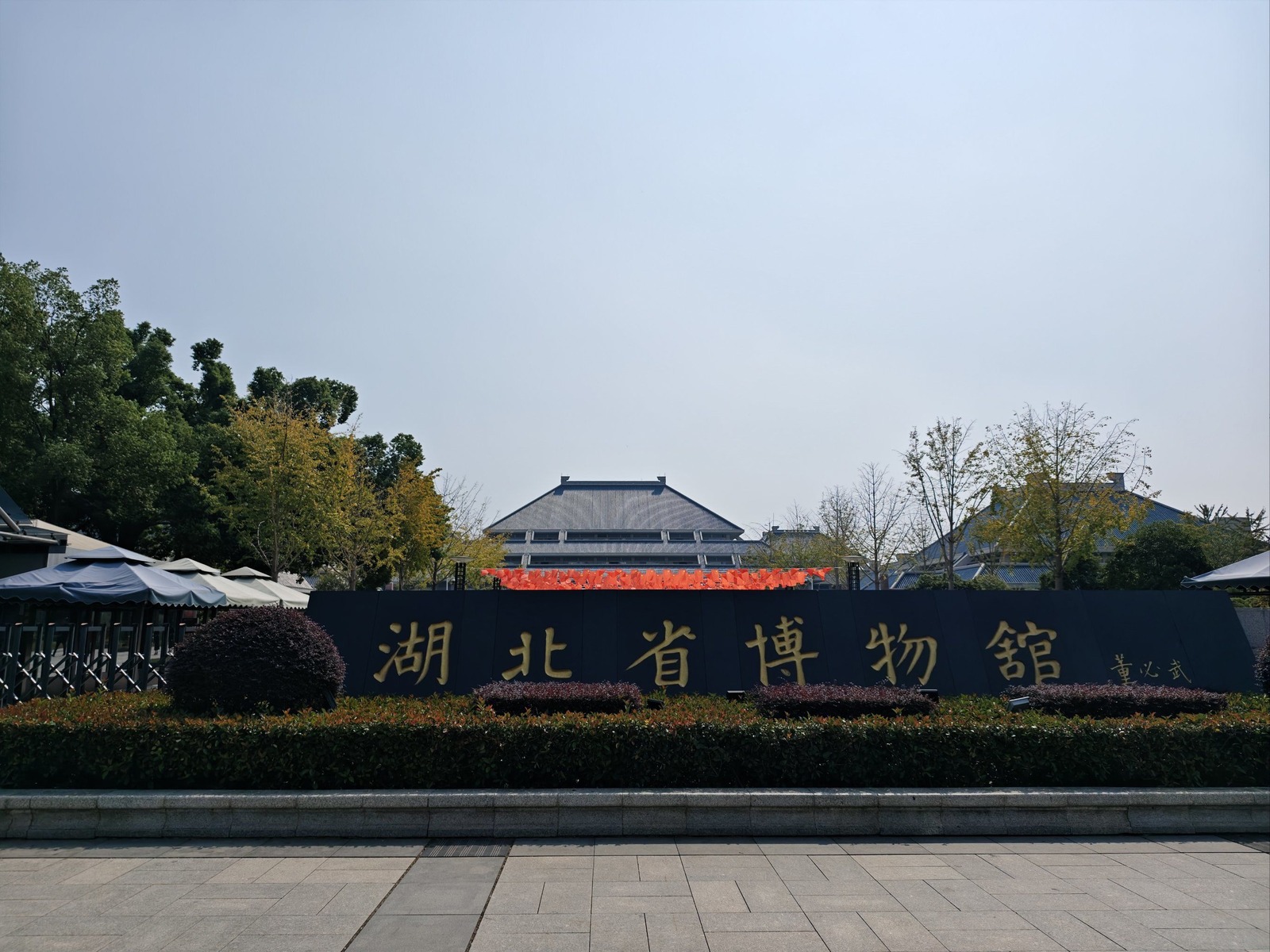
Hubei Provincial Museum
ℹ️ Free with a compulsory real-name reservation on the official WeChat account. Passport booking works; weekend slots run out 1-3 days ahead in high season.

Entry is free and never sold. Scalpers near the metro exit sell 'reserved entry' during peak weekends - book directly instead.
Taxi & Street Navigation Help
师傅,请带我到湖北省博物馆(东湖路160号),谢谢!
Opening Hours & Best Time
09:00-17:00, last entry 16:00. Closed Mondays except public holidays and New Year's Eve.
💡 Pro Tip: Check the performance times for the chime-bell orchestra (编钟乐舞) at the ticket desk on arrival and buy that first; the small concert hall seats about 100 and the mid-morning shows sell out. Then do the Zeng Hou Yi gallery.
Accessibility & Luggage Lockers
Accessibility: ♿ Wheelchair & Stroller Friendly
Lifts and ramps throughout, accessible toilets on each floor, free wheelchair loan at the service desk against a passport.
🧳 Luggage Storage: Free lockers at the entrance; bags larger than A4 must be checked.
Nearby Landmarks
The 2 places within reach of this spot — each one opens straight into Apple Maps or Amap, with the Chinese name you can show a driver.
Chinese names and pins are matched against each city's own map data at build time; a place only gets Directions once its pin has been verified, otherwise the button searches by name.
About Hubei Provincial Museum
1. Historical Origins: A Provincial Museum with Three Headline Objects
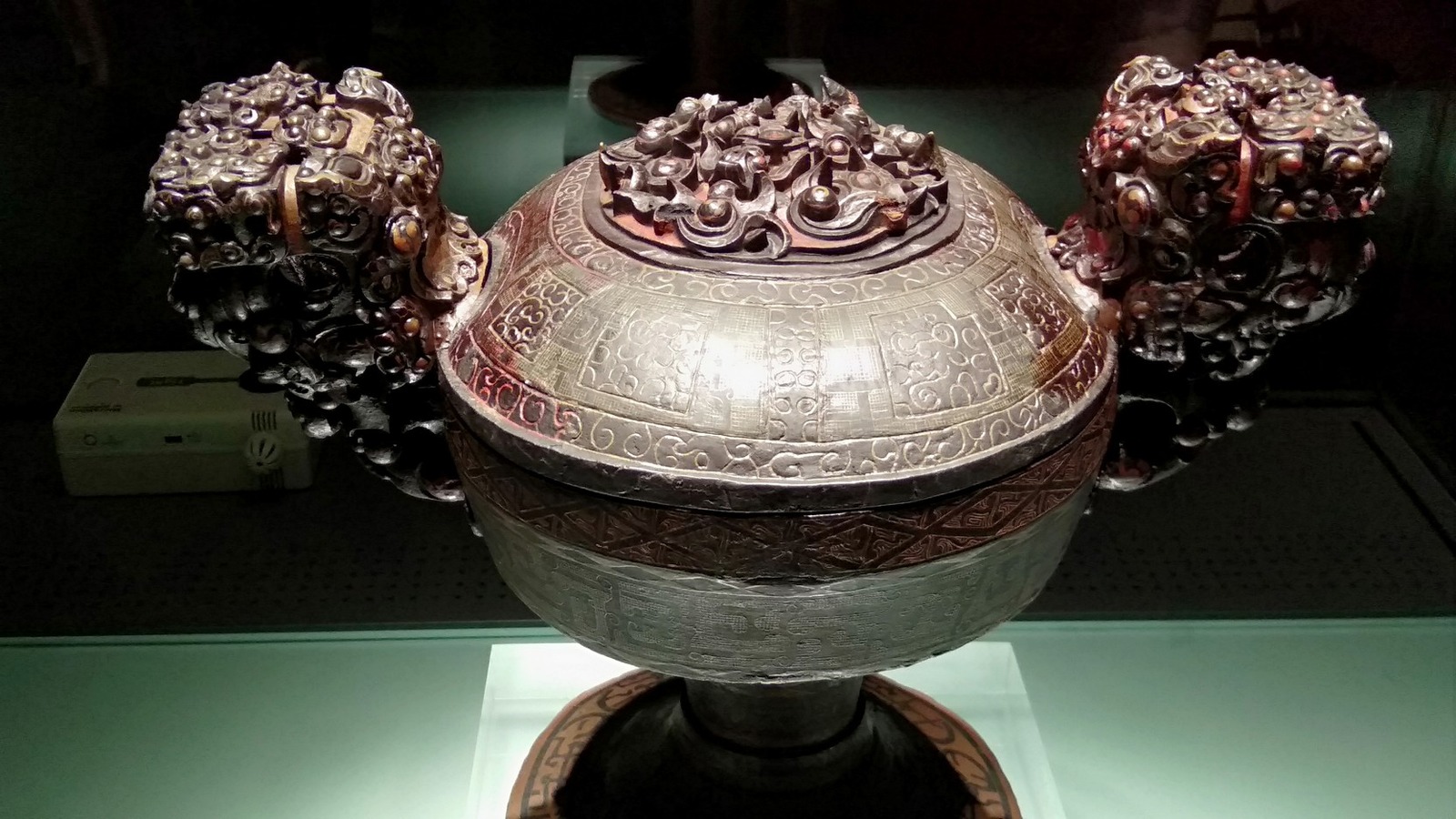
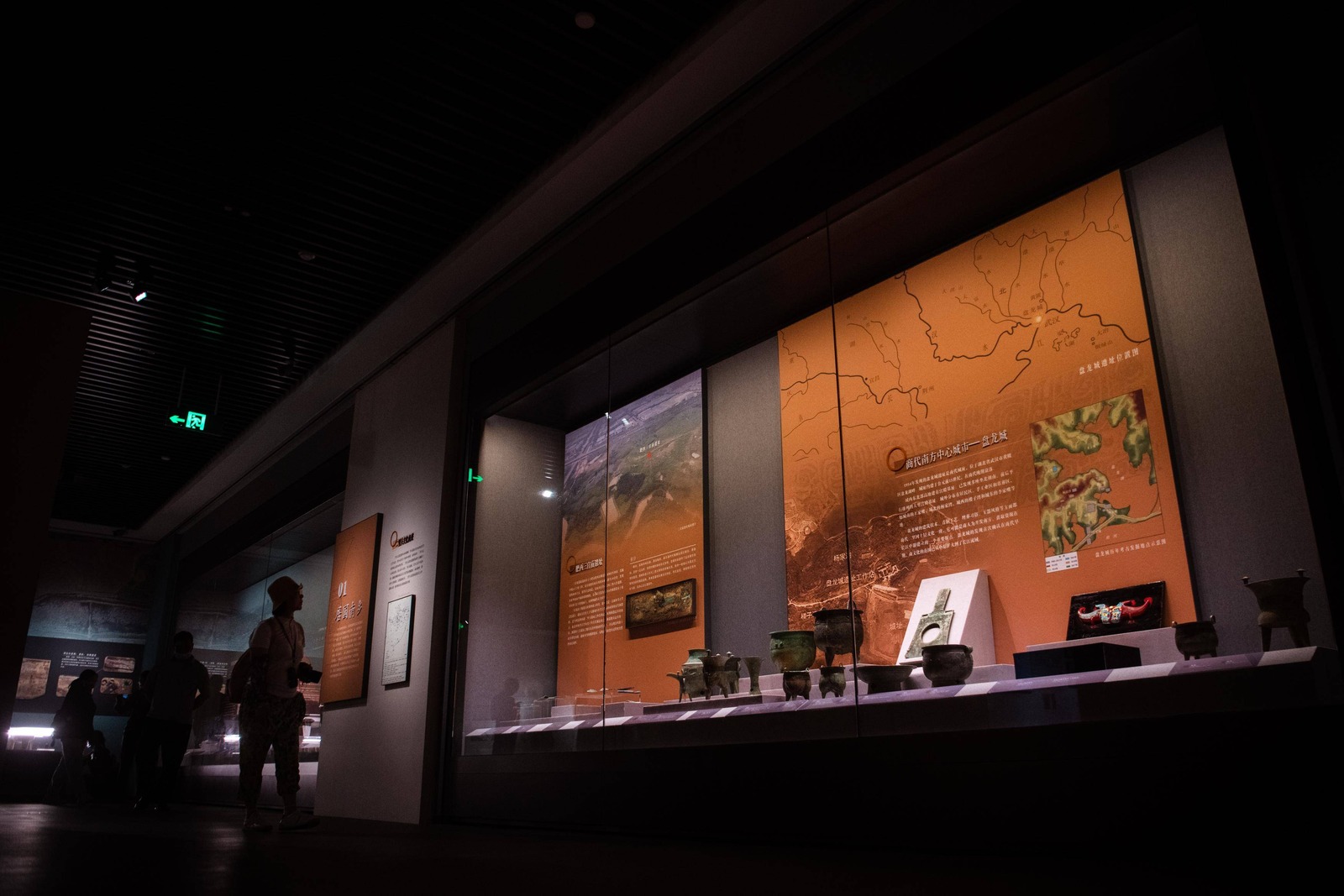
Most provincial museums in China are a tour through local dynasties, room after room of pottery and bronzes with labels nobody reads. Hubei Provincial Museum does that too, and then, at the end, produces three objects that stop people in their tracks: a sword that has not rusted in 2,400 years, a spear belonging to the king who lost to the sword’s owner, and a set of sixty-five bronze bells that changed what historians believed about music in the ancient world.
The bells are the reason the museum has an international reputation. When the tomb of Marquis Yi of Zeng was excavated at Suizhou in 1978, it contained a complete ritual bell set — sixty-five bells hung on a lacquered frame, each tuned to a different pitch, with the tuning inscriptions still legible on the bronze. Nothing comparable had survived anywhere. The instrument was not a ceremonial prop: it had been played, and the inscriptions record a musical system rather than a list of the owner’s titles.
The sword of Goujian, king of Yue, came from a different tomb and a different kingdom, and it is the object most visitors queue for. It came out of a waterlogged tomb with the blade still bright, and the museum displays it in low light because the alloy that kept it that way is sensitive to handling.
2. What to Spot: The Sword, the Bells, the Spear
⚔️ The Sword of Goujian
- The Story: A 2,400-year-old blade with a gold-inlaid inscription naming Goujian, king of Yue, one of the rulers of the Spring and Autumn period. The tomb it came from had filled with water, and those conditions preserved both the metal and the decoration.
- What to Look For: The inscription and the patterned surface of the blade. Photograph it without flash; the case glass reflects everything in the room and the guards will ask you to stop.
🔔 The Bells of Marquis Yi of Zeng
- The Story: Sixty-five bronze bells on a lacquered frame, each struck on a different point to produce two distinct pitches. The set was excavated at Suizhou in 1978 and the frame’s fittings, hook by hook, survived with it.
- What to Look For: The difference in size between the smallest and the largest bells, and the inscriptions cast into the bell bodies — pitch names and tuning notes, not praises of the king.
🗡️ The Spear of Fuchai
- The Story: The counterpart object, and the reason the gallery works as a story rather than a list: Fuchai of Wu was Goujian’s rival in the same century of the same war, and both kings’ weapons ended up in the same building.
- What to Look For: How much plainer it is than the sword. Fuchai’s spear is a working weapon; Goujian’s sword is a ceremony object and reads as one.
🏺 Everything Else Worth Your Time
- The Story: A skull fragment of Yunxian Man, one of the oldest human fossils found in China, and a Yuan-dynasty blue-and-white meiping vase painted with the Four Loves — scholars paired with the plants they cultivated.
- What to Look For: The lacquerware, which is displayed in quantity and is easy to walk past because it is dark and small.

3. Cultural Contrast: The Only Museum in China Where the Bells Play
Plenty of Chinese museums own bronze bells. This one has the whole set — the bells, the frame, the inscriptions and the research to reconstruct the music — and it puts a working replica in front of an audience several times a day, for ¥30 on top of free entry.
The concert is short, and it is not a theme-park show. The musicians play reconstructions of court pieces on a replica set, and the sound is stranger than a European carillon: the bells are struck on the flank rather than the mouth, and each gives two different notes depending on where it is hit. Hearing it in a hundred-seat hall is the difference between reading about a musical system and hearing one.
Which is why the practical advice matters more than the history here. Buy the concert ticket the moment you clear security, before you look at anything, because the hall is small and the mid-morning performances are the ones that fill. Then go and look at the original bells, which are silent and cannot be touched, with the sound still in your ears.
4. Practical Essentials: Tickets, Transit & Scam Alerts
Tickets & Passport Booking
- Price: Free. There is no paid entry, but a real-name reservation is compulsory for everyone, including foreign visitors.
- How to Book: Book on the museum’s official WeChat account (湖北省博物馆) or its official website. The interface is Chinese-only, and whether a passport number is accepted on the booking page changes from time to time, so check the page before you count on it — hotels in Wuhan routinely make these bookings for guests, and that is the most reliable route if the passport field refuses you. In high season weekend slots are gone one to three days ahead. The chime-bell concert is a separate ¥30 ticket, free for children under 1.4 m, bought inside the building rather than online.
- Opening Hours: 09:00–17:00, last entry 16:00. Closed Mondays except public holidays, and closed on New Year’s Eve. Arrive by 15:30 at the latest if you want the galleries rather than the lobby.
How to Get There
- By Bus: Buses 14, 402, 411, 552, 578, 701, 709 and 810 stop at the museum gate on Donghu Road.
- On Foot: The museum backs onto East Lake’s Tingtao scenic area, which is free. The sensible half-day is museum in the morning, lake in the afternoon — the gate between them is a few minutes’ walk.
- Show Your Driver: 师傅,去湖北省博物馆(东湖路),谢谢!
Inside Tips & Scam Alerts
- Monday is closed, and it is the single most common wasted morning in Wuhan. Plan the museum for your first non-Monday and build the rest of the city around it.
- Concert times change with the season. Roughly 10:30, 14:00 and 15:00 on weekdays from March to November, with an extra 11:30 show at weekends; fewer in December to February. Always check the day’s board at the ticket desk.
- The men near the metro exit selling “reserved entry” are selling free slots at a mark-up. Entry is never sold. Book yourself, or let your hotel do it.
- Go to the sword first, at opening. The Goujian case is the bottleneck of the whole museum, and it is a completely different experience at 09:05 than at 11:00.
- Accessibility is good: lifts, ramps and accessible toilets throughout, and wheelchairs on loan at the service desk.
- Complaints or booking problems: the 12345 hotline is free to call from any local phone and has English operators.
Quick Answers
The 7 things visitors ask before setting out, answered from the same verified record used across this page.
- How much does it cost to visit Hubei Provincial Museum?
- Free (mandatory reservation). Free with a compulsory real-name reservation on the official WeChat account. Passport booking works; weekend slots run out 1-3 days ahead in high season.
- What are the opening hours at Hubei Provincial Museum?
- 09:00-17:00, last entry 16:00. Closed Mondays except public holidays and New Year's Eve.
- How long should I spend at Hubei Provincial Museum?
- Two and a half hours, plus 30 minutes for the concert.
- Is Hubei Provincial Museum wheelchair accessible?
- Yes. Lifts and ramps throughout, accessible toilets on each floor, free wheelchair loan at the service desk against a passport.
- How do I tell a taxi driver to take me to Hubei Provincial Museum?
- Copy this line into DiDi or show it to the driver: 师傅,请带我到湖北省博物馆(东湖路160号),谢谢!
- Can I leave my luggage at Hubei Provincial Museum?
- Free lockers at the entrance; bags larger than A4 must be checked.
- Is there anything to watch out for at Hubei Provincial Museum?
- Entry is free and never sold. Scalpers near the metro exit sell 'reserved entry' during peak weekends - book directly instead.
Where to go next
Three short lists, recomputed at build time from the same coordinates and categories as the pages themselves — no paid placement, no hand-picked names. Every card is a published guide.
Next stop in Wuhan
Straight-line distance from this spot, so you can judge what is walkable and what needs a taxi.


More like this, elsewhere in China
If museum is what you came for, these are the closest equivalents you can reach in another city — ordered by distance, one city per card.


Change the subject
Deliberately a different category, for when one more temple or garden would blur into the last one.


Lists are derived from coordinates and category alone. Fix a wrong pin or re-tag a place and every list that mentions it moves with it.
Before you go · arrival essentials
Practical guides that pair with this kind of place — picked by category, not sponsored placement.
- Pay with Alipay & WeChat PayPayment · Set up Alipay or WeChat Pay on a foreign card — needed at almost every counter.
- Get online with a China eSIMConnectivity · Maps and messaging that work without a VPN, the moment you land.
- Book China train tickets (12306)Trains · Buy high-speed rail tickets with a foreign passport, for getting here and back.