
Yellow Crane Tower
ℹ️ ¥70. Children 1.2-1.4 m ¥35, under 1.2 m free. Book on the official 黄鹤楼 WeChat account; resale prices on OTA apps drift upward.

Anyone outside the gate offering a 'fast pass' or a 'tower + boat' combo is reselling ordinary tickets at a mark-up. Inside the park, the calligraphy stalls quote per character - agree a total before sitting down.
Taxi & Street Navigation Help
师傅,请带我到黄鹤楼公园(蛇山西山坡特1号),谢谢!
Opening Hours & Best Time
Peak (Apr-Oct) 08:00-18:00; off-peak (Nov-Mar) 08:00-17:00. Last entry 30-60 minutes before closing.
💡 Pro Tip: Go at 08:00 and climb straight to the top floor, then work downwards. The tour groups arrive around 09:30 and the lift queue becomes the slowest part of the visit.
Accessibility & Luggage Lockers
Accessibility: ♿ Wheelchair & Stroller Friendly
The park is on a hill with a lift inside the tower to the top-floor gallery. The approach from the west gate is stepped; the east gate road is ramped and is the accessible entrance. Ask staff at the east gate.
🧳 Luggage Storage: No lockers. Left luggage at Wuchang railway station, two metro stops away.
Nearby Landmarks
The 2 places within reach of this spot — each one opens straight into Apple Maps or Amap, with the Chinese name you can show a driver.
Chinese names and pins are matched against each city's own map data at build time; a place only gets Directions once its pin has been verified, otherwise the button searches by name.
About Yellow Crane Tower
1. Historical Origins: A Tower That Has Burned Down Twenty-Seven Times
Yellow Crane Tower is the most famous building in China that is not the building you are looking at. The first one went up in 223 AD, when a warlord of the Three Kingdoms period built a watchtower on the Yellow Crane Ridge of Snake Hill. Since then the site has been destroyed and rebuilt twenty-seven times, most of them by fire.
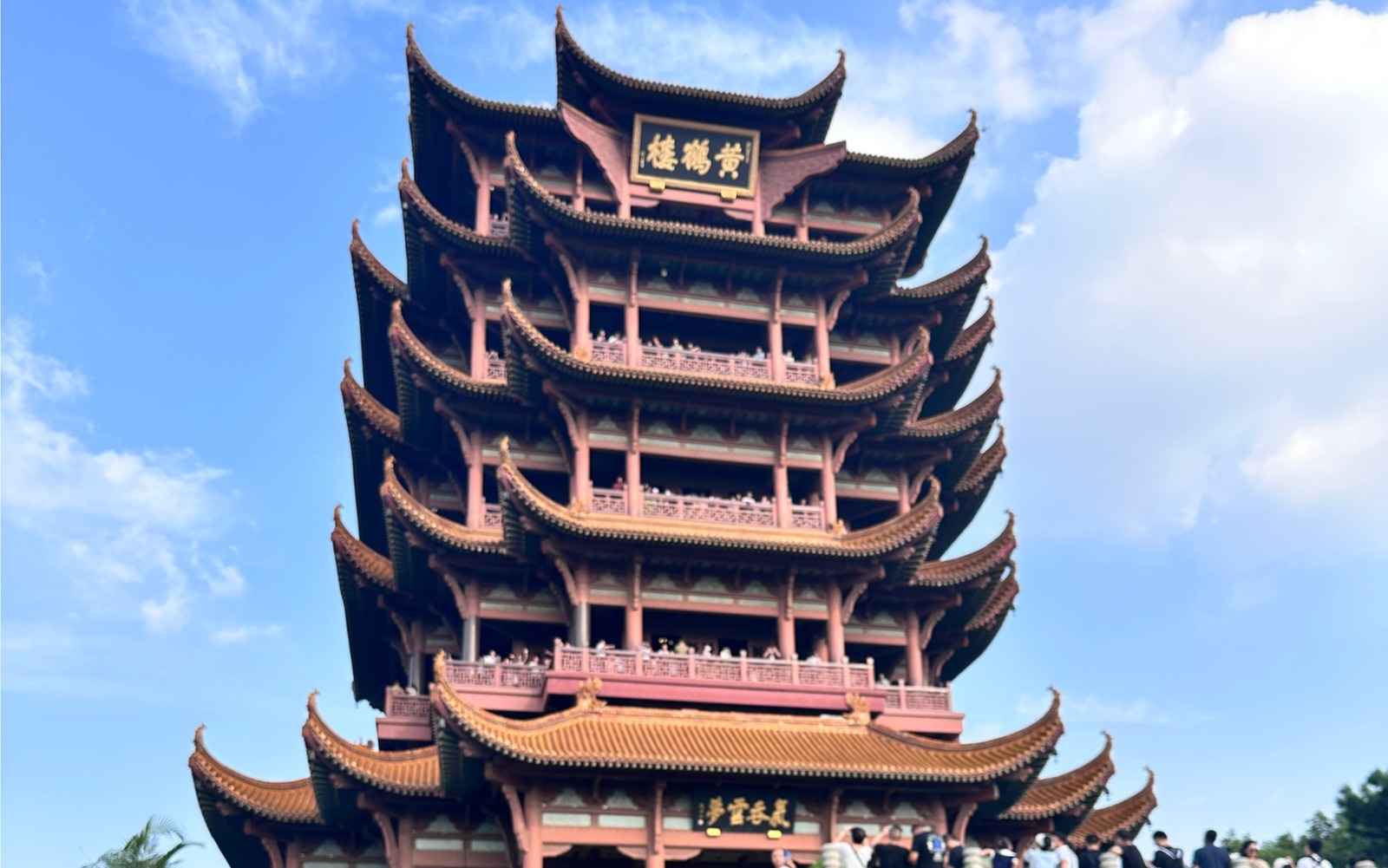
What stands there now was rebuilt from 1981 and completed in 1985, modelled on the Tongzhi-era tower of the Qing dynasty. It is 51.4 metres tall, five storeys, and clad in roughly 100,000 yellow glazed tiles that catch the light from the far bank. Nobody pretends it is ancient, and the ticket price does not pretend either. Chinese visitors come anyway, in numbers that fill the stairwells by mid-morning.
Because the building was never really the point. The point is the hill, the river, and two poems that made this particular bend of the Yangtze the most quoted landscape in Chinese literature. You are paying to stand where the poems were written about.
2. What to Spot: The Tower, the Poems, the River
🏯 The Tower You Actually Climb
- The Story: Five storeys built in the 1980s to look like a Qing wooden tower, with a lift serving some floors and stairs serving all of them. It heads the Jiangnan Three Great Towers — alongside the Pavilion of Prince Teng in Nanchang and Yueyang Tower in Hunan — and Chinese rankings put it first among the three.
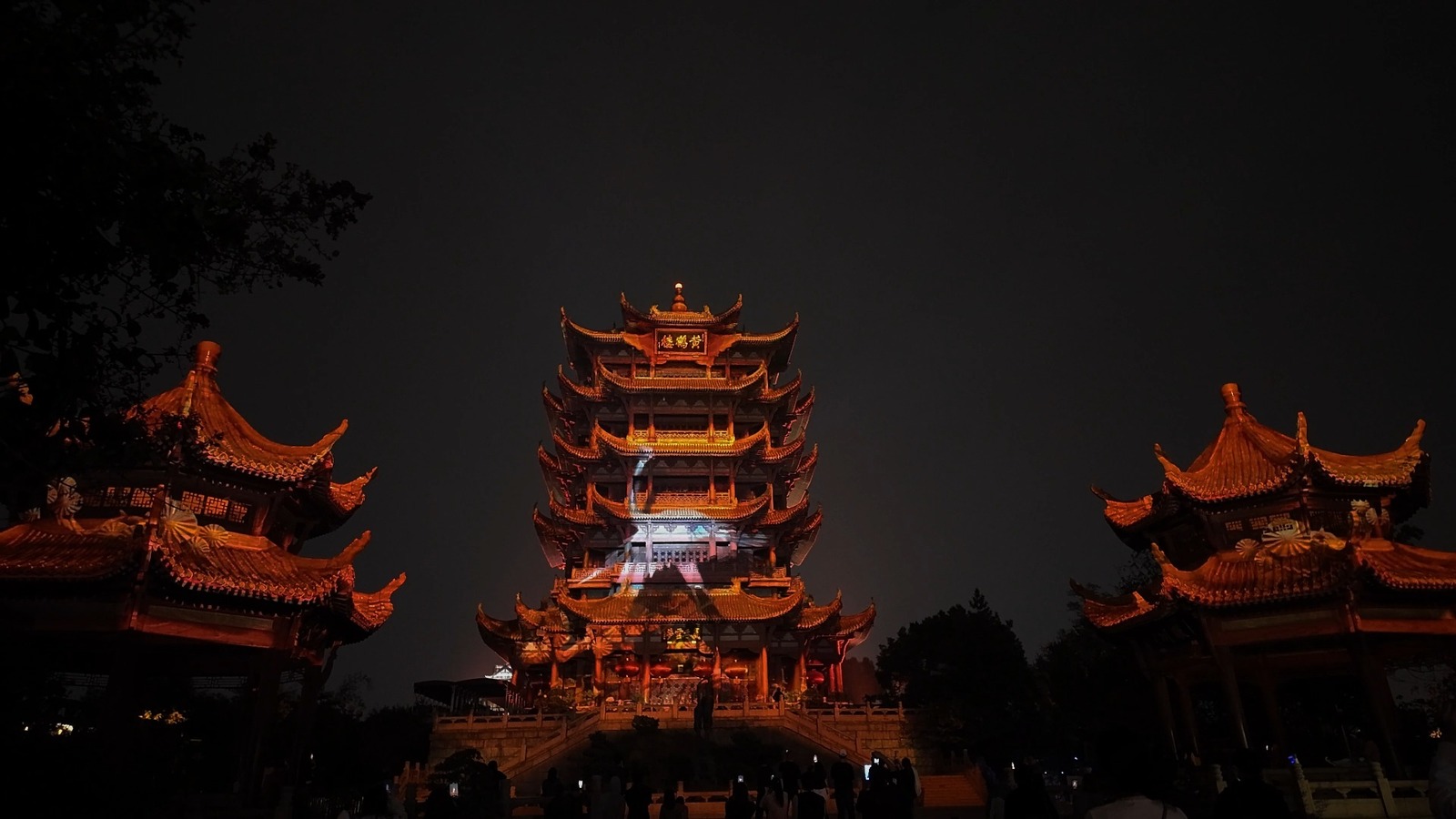
- What to Look For: The roof line — the upturned eaves all capped in yellow glaze, and the whole structure lit from underneath after dark. From a distance it reads as a single object; get close and you see how much of it is modern structure dressed as timber.
📜 The Two Poems That Made It Famous
- The Story: Cui Hao wrote the poem that made the place — the immortal rides off on the yellow crane, the crane never returns, and the river goes on without him. Li Bai, arriving later, wrote his own line about a lone sail vanishing into the empty blue while the Yangtze ran on to the horizon. Between the two of them they fixed this hill in the national imagination for more than a thousand years.
- What to Look For: The river they were describing is directly below you, and on a clear day it looks exactly as advertised. That is the rare thing about this site: the literature and the landscape still match.
🌊 The View from the Top Floor
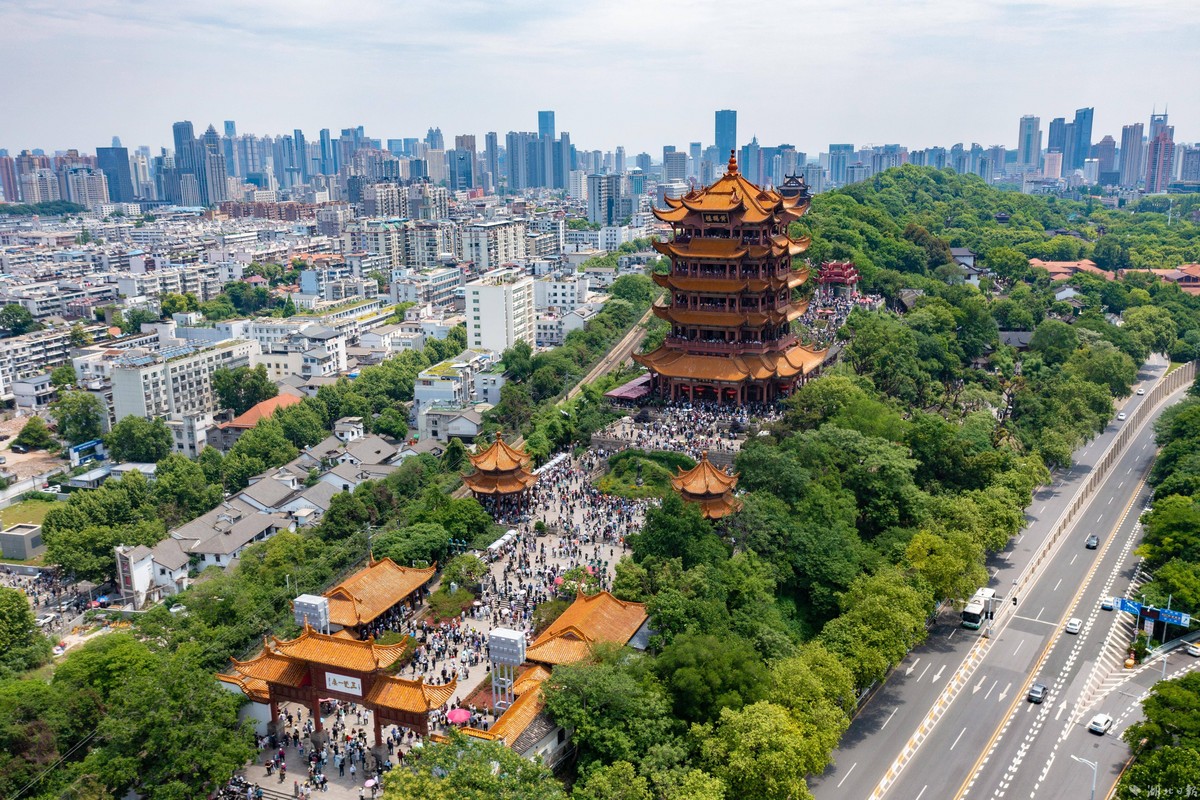
- The Story: The top gallery looks down on the First Yangtze River Bridge, built in 1957 and still carrying road traffic on its upper deck and the Beijing–Guangzhou railway underneath. Beyond it the river splits the city into its three historic parts — Hankou, Hanyang and Wuchang.
- What to Look For: Weather permitting, the whole confluence. On a hazy day you get the bridge and the near bank and very little else, which is still worth the climb. Go early; by 11:00 the top gallery is a slow-moving queue of selfie sticks.
🧱 Snake Hill and the Turtle
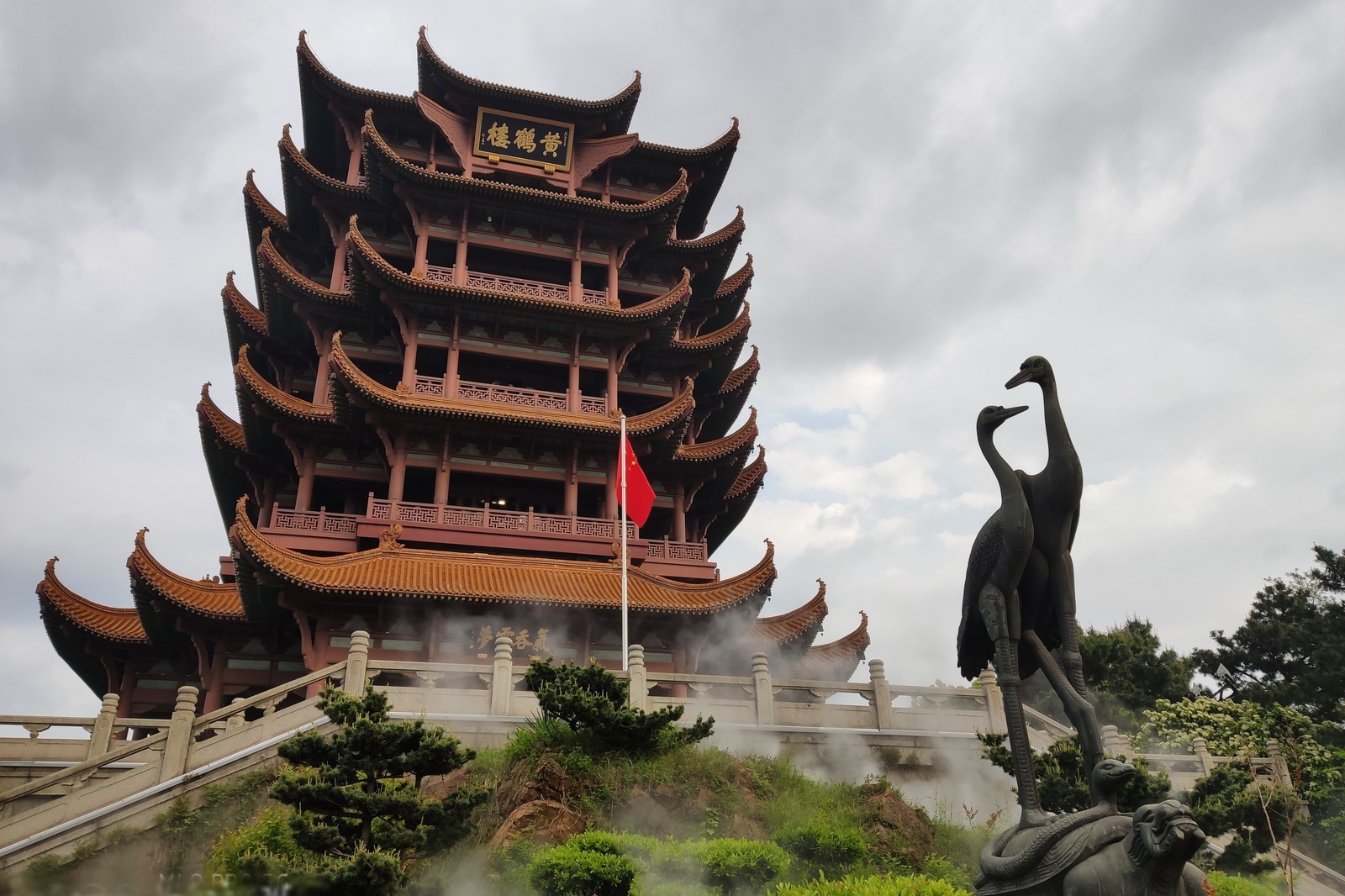
- The Story: The tower sits on Snake Hill on the Wuchang bank; directly across the water is Turtle Hill in Hanyang. Chinese visitors call the pairing 龟蛇锁大江 — the turtle and the snake locking the great river — and it is one of the oldest landscape metaphors in the city.
- What to Look For: Stand at the eastern railing and line the two hills up. The bridge runs between them, which is not an accident of engineering: the crossing was chosen here precisely because both banks rise.
3. Cultural Contrast: Why People Pay ¥70 for a 1985 Building
Europe preserves its ruins and puts a fence around them. China rebuilds the poem. All three of the great river towers have burned and been replaced, several times over, and Chinese visitors do not experience that as a fake — they experience it as continuity. The building is the least important part of the site; the name, the verses and the view are what carry the weight.
This is worth knowing before you buy a ticket, because it changes what to look at. If you arrive expecting a Ming-dynasty structure you will spend the visit disappointed and take photographs of concrete. If you arrive knowing that the tower is a stage set and the river is real, the ¥70 buys you the best vantage point in central Wuhan and a very good hour.
The honest comparison is with the view, not the architecture: from the top gallery you can see the Yangtze bridge, the colonial waterfront at Hankou and the bulk of the Wuchang bank all at once. Very few Chinese cities let you read their whole history from one balcony.
4. Practical Essentials: Tickets, Transit & Scam Alerts
Tickets & Passport Booking
- Price: ¥70 for adults, and there is no seasonal discount — the price is the same in January and in July. Children between 1.2 m and 1.4 m pay ¥35; under 1.2 m, free.
- How to Book: Buy at the ticket office at the gate with your passport, or through the tower’s official WeChat account (search 黄鹤楼). The WeChat interface is Chinese-only, so the window is the simpler option for a foreign visitor, and passports are accepted there as ID. Do not buy from resale listings on OTA apps — prices there drift upward, and any offer described as a “discount” or “off-season half price” is not a rate the tower publishes. Cards are hit and miss at the window; carry cash or set up Alipay with a foreign Visa or Mastercard before you arrive.
- Opening Hours: April–October 08:00–18:00; November–March 08:00–17:00. Last entry is posted at the gate and typically falls 30–60 minutes before closing.
How to Get There
- By Bus: Trolleybus 4 and buses 10, 61, 401 and 402 all stop a few minutes’ walk from the tower on Snake Hill.
- On Foot: From Hubu Alley (户部巷) it is about 20 minutes uphill. From the Wuchang end of the First Yangtze River Bridge it is about 10 minutes to the bridge approach — the two are close enough to do in one afternoon, and most people do.
- Show Your Driver: 师傅,去黄鹤楼(武昌蛇山),谢谢!
Inside Tips & Scam Alerts
- Be at the gate for 08:00 and go straight to the top floor, then work downwards. The tour groups arrive around 09:30 as a block, and after that the lift queue is the slowest part of the visit — often slower than the stairs.
- Golden Week and cherry-blossom season are brutal. Queues for the top floor start at an hour and go up from there. If your dates are fixed, come at opening and leave by 10:30.
- Anyone outside the gate selling a “fast pass” or a “tower plus boat” combo is reselling ordinary tickets at a mark-up. There is no fast-track ticket. Say no and walk to the window.
- The “Yellow Crane Tower day tour” touts at the entrance are selling a two-hour site as a half-day product. You do not need a guide to climb a five-storey tower.
- Inside the park, the calligraphy stalls quote per character, not per piece. Agree the total before you sit down, or you will be quoted for a poem.
- The lift does not serve every floor, and which floors it reaches changes with crowd control. The park paths are ramped and usable with a wheelchair; the tower itself is stairs and queues.
- If ¥70 is too much for a rebuilt tower, the tower’s silhouette is free from the public paths on Snake Hill and from the Wuchang bridgehead of the Yangtze bridge. You lose the view from the top and keep the photograph.
- Complaints or overcharging: the 12345 hotline is free to call from any local phone and has English operators.
Quick Answers
The 6 things visitors ask before setting out, answered from the same verified record used across this page.
- How much does it cost to visit Yellow Crane Tower?
- ¥70 adult; ¥35 child. ¥70. Children 1.2-1.4 m ¥35, under 1.2 m free. Book on the official 黄鹤楼 WeChat account; resale prices on OTA apps drift upward.
- What are the opening hours at Yellow Crane Tower?
- Peak (Apr-Oct) 08:00-18:00; off-peak (Nov-Mar) 08:00-17:00. Last entry 30-60 minutes before closing.
- Is Yellow Crane Tower wheelchair accessible?
- Yes. The park is on a hill with a lift inside the tower to the top-floor gallery. The approach from the west gate is stepped; the east gate road is ramped and is the accessible entrance. Ask staff at the east gate.
- How do I tell a taxi driver to take me to Yellow Crane Tower?
- Copy this line into DiDi or show it to the driver: 师傅,请带我到黄鹤楼公园(蛇山西山坡特1号),谢谢!
- Can I leave my luggage at Yellow Crane Tower?
- No lockers. Left luggage at Wuchang railway station, two metro stops away.
- Is there anything to watch out for at Yellow Crane Tower?
- Anyone outside the gate offering a 'fast pass' or a 'tower + boat' combo is reselling ordinary tickets at a mark-up. Inside the park, the calligraphy stalls quote per character - agree a total before sitting down.
Where to go next
Three short lists, recomputed at build time from the same coordinates and categories as the pages themselves — no paid placement, no hand-picked names. Every card is a published guide.
Next stop in Wuhan
Straight-line distance from this spot, so you can judge what is walkable and what needs a taxi.


More like this, elsewhere in China
If landmark is what you came for, these are the closest equivalents you can reach in another city — ordered by distance, one city per card.


Change the subject
Deliberately a different category, for when one more temple or garden would blur into the last one.


Lists are derived from coordinates and category alone. Fix a wrong pin or re-tag a place and every list that mentions it moves with it.
Before you go · arrival essentials
Practical guides that pair with this kind of place — picked by category, not sponsored placement.