
Dr. Sun Yat-sen's Mausoleum (Zhongshan Ling)

Entry is free - anyone selling a 'Zhongshan Ling ticket' outside the metro is selling nothing. Electric carts quote per-seat and per-trip; agree the price before boarding and keep small notes ready.
Taxi & Street Navigation Help
师傅,请带我到中山陵景区,谢谢!
Opening Hours & Best Time
08:30-17:00. Closed Mondays except public holidays and Sun Yat-sen's birth/death anniversaries. The inner vault is open Tuesday-Friday only.
💡 Pro Tip: Take the 08:30 opening slot. By 10:30 the staircase is a slow single file in full sun, and the vault queue doubles. Combine the visit with Ming Xiaoling on foot - the 1.2 km wooded path between them is the best part of the mountain.
Accessibility & Luggage Lockers
Accessibility: ⚠️ Step thresholds, limited access
392 granite steps in a single flight from the gate to the hall, with no lift and no ramp. Benches sit every 40 steps. The Blue Pavilion forecourt is flat and reachable by the park road.
🧳 Luggage Storage: No lockers at the gate. Left-luggage counters exist at the metro station and at the visitor centre 600 m downhill.
Nearby Landmarks
The 2 places within reach of this spot — each one opens straight into Apple Maps or Amap, with the Chinese name you can show a driver.
 明孝陵Ming Xiaoling MausoleumHistoric districtShort ride away1.32 km1.2 km west
Chinese names and pins are matched against each city's own map data at build time; a place only gets Directions once its pin has been verified, otherwise the button searches by name.
About Dr. Sun Yat-sen's Mausoleum (Zhongshan Ling)
1. Historical Origins: A Tomb Shaped Like a Bell
Sun Yat-sen died in 1925, and the mausoleum on the south slope of Purple Mountain was built between 1926 and 1929. He had asked to be buried here, above the city he had made the capital of a republic, and the site was chosen so that the whole of Nanjing lies in front of the steps.
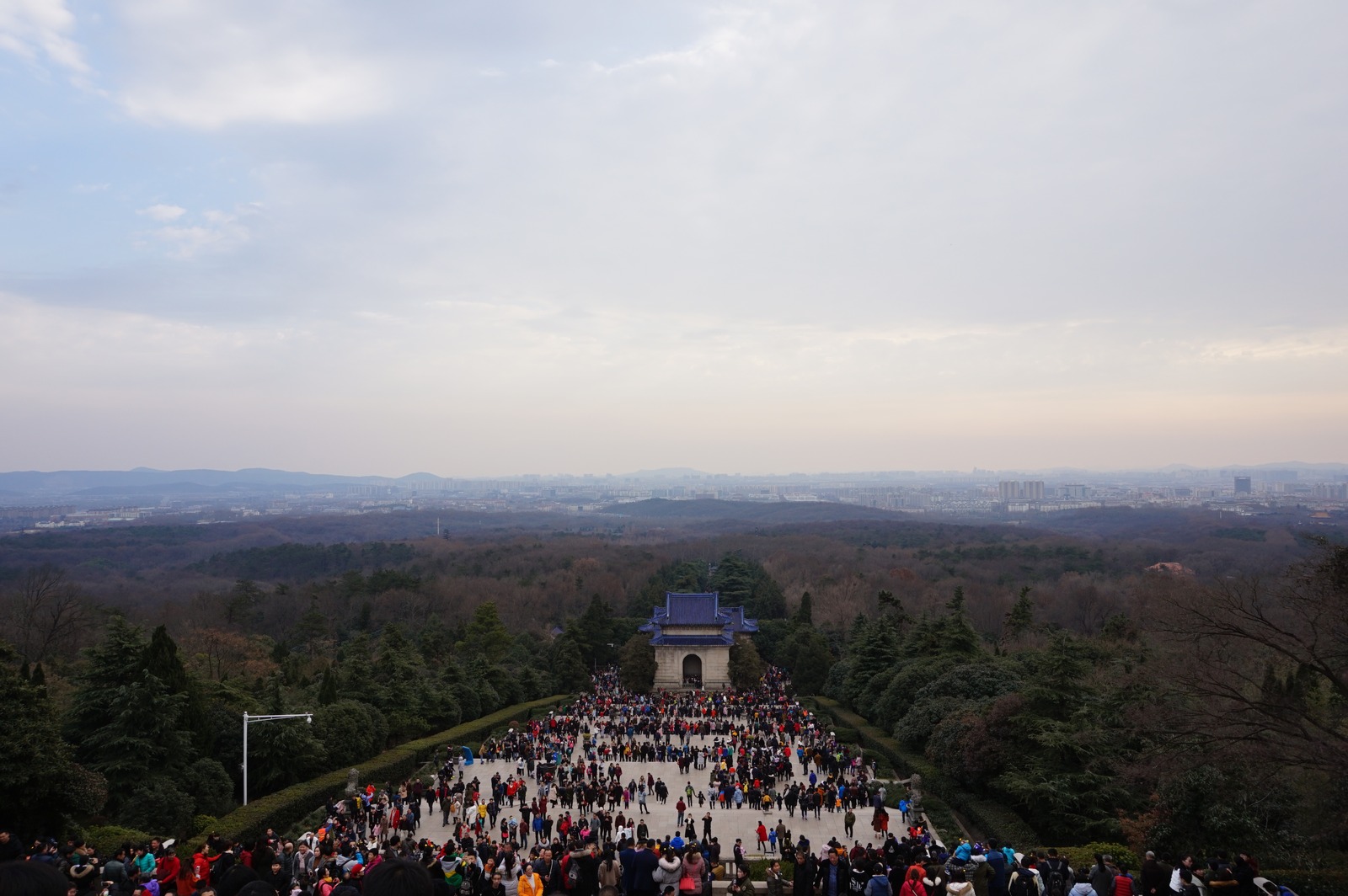
The plan is the thing to understand before you climb. Seen from the air, the layout is a bell: the arch at the bottom is the handle, the long stair is the body, and the hall at the top is the rim. It was drawn as a warning bell, and the climb is the clapper.
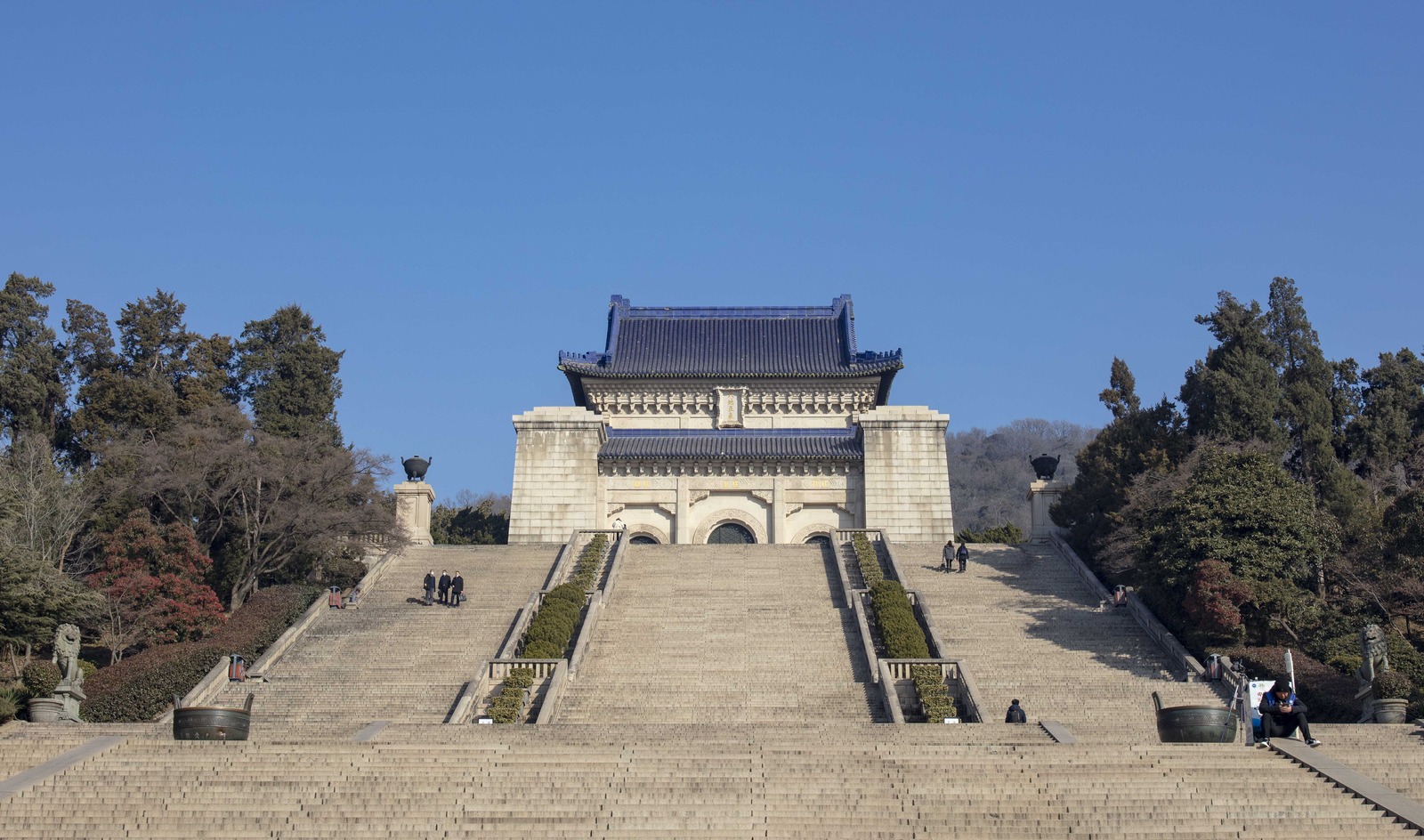
Three hundred and ninety-two steps carry you from the arch to the hall, and they are deliberately unbroken — no landings to rest on, because the ascent was meant to cost something.
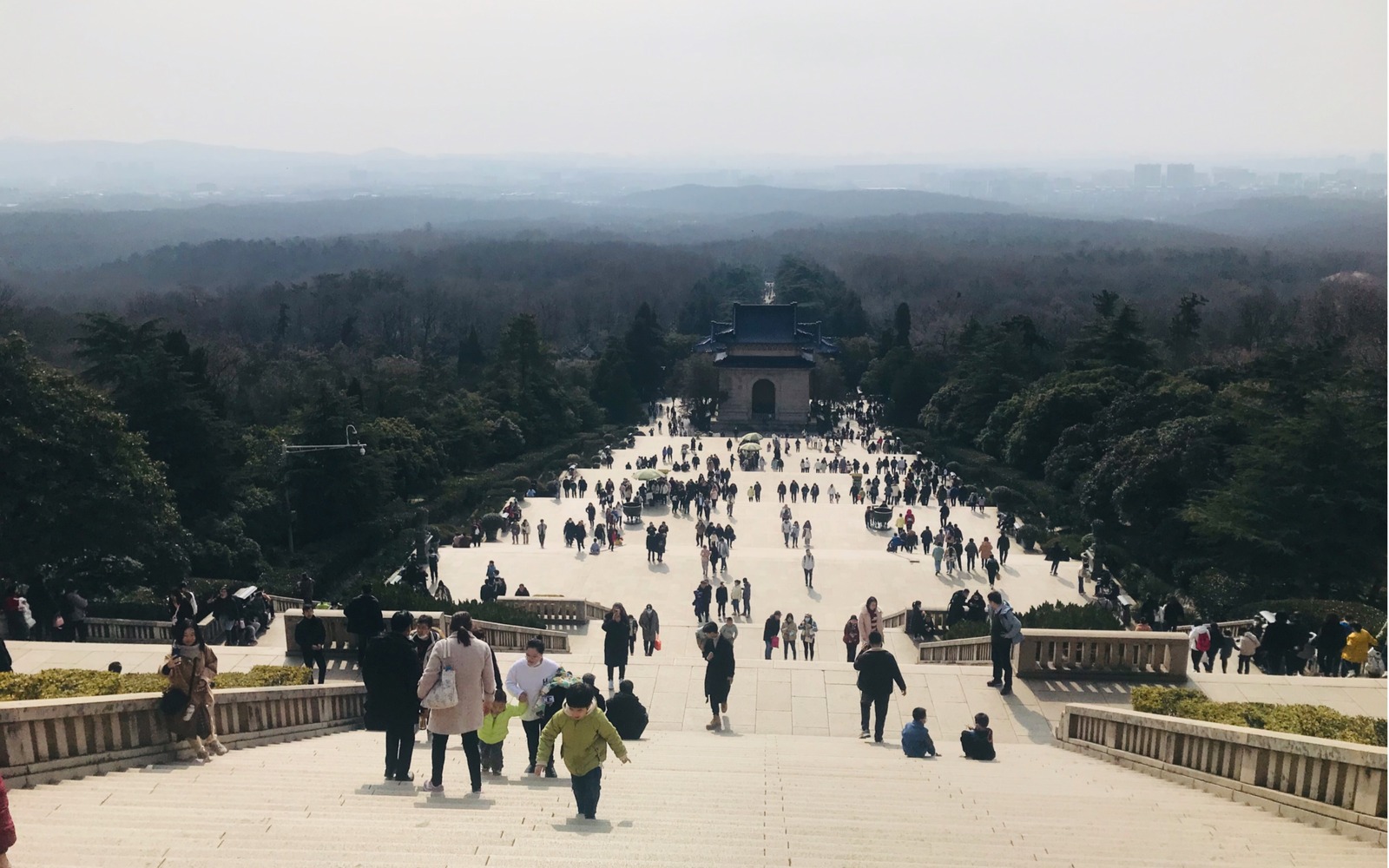
2. What to Spot: The Stair, the Hall, the Vault
🏛️ The Sacrificial Hall
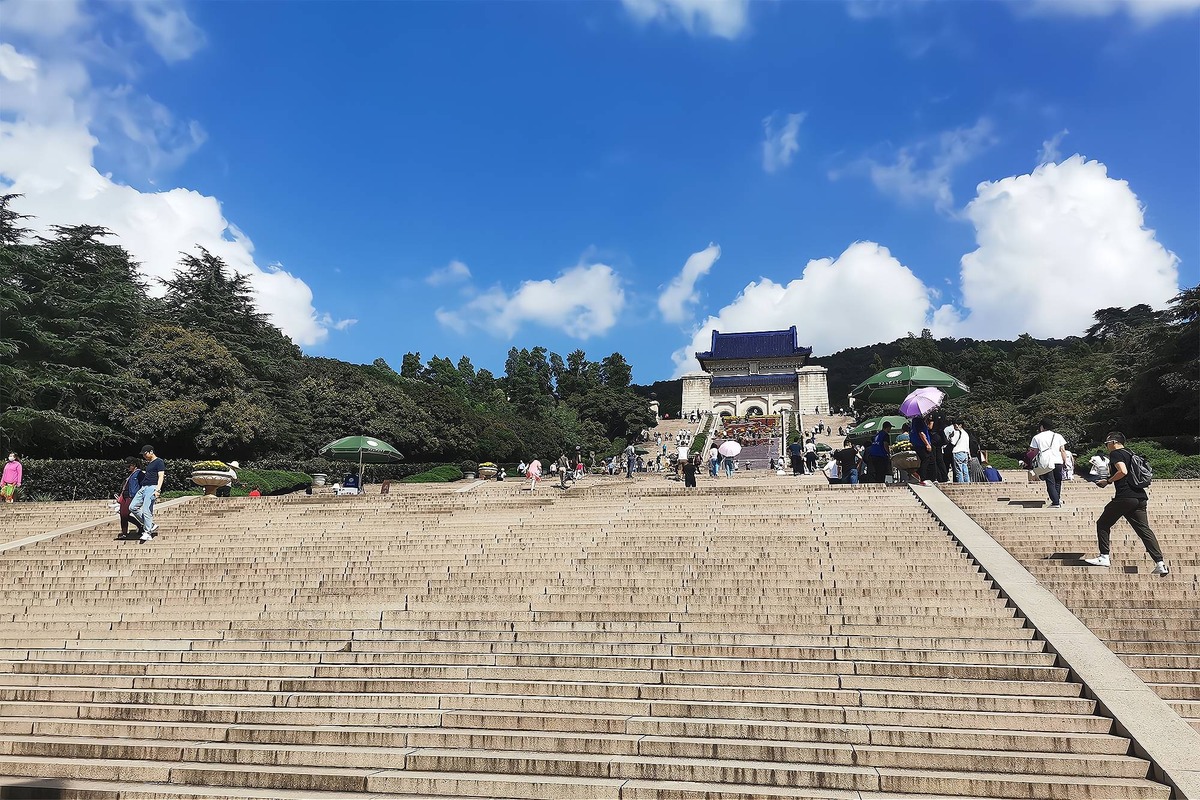
White granite walls, blue glazed roof, and a plaque over the door reading that the world belongs to everyone. Inside is a seated marble figure, and behind it the vault where the coffin lies, set below the floor of the hall.
- The Story: The architecture is modern and the grammar is imperial. A processional axis, a gate, an ascent, a hall of ceremony — the same sequence as the Ming tombs a kilometre away, built with concrete and granite instead of timber and tile.
- What to Look For: The absence of ornament. There are no dragons, no guardian animals, no painted beams. Everything decorative has been stripped out and replaced with inscriptions.
🕯️ The Vault
The chamber below the seated statue is open to visitors on weekdays only, not at weekends, and it is small — a few people at a time, a slow shuffle around a sunken crypt. It is not the reason to come; the hall and the climb are.
🌲 The Descent
The view is behind you on the way up. Turn around at the top and the whole stair falls away to the arch, with the wooded slope of Purple Mountain on both sides and the city beyond it. This is the photograph everyone takes, and it is better in the morning when the light comes from the east.
3. Cultural Contrast: A Republic Buried in Imperial Grammar
Nanjing is a city of tombs, and this one is younger than everything around it by five centuries. The Ming Xiaoling a kilometre away has an avenue of stone animals, a stele pavilion and a sealed mound; Sun’s tomb has a stair, a hall and a plaque. Same sequence, opposite politics: one monument asserts a dynasty, the other asserts a citizenry.
- It is a pilgrimage site, not a ruin. Chinese visitors arrive in groups, bow at the statue, and photograph the plaque.
- The politics are on the walls. The inscriptions are the decoration, and they are all quotations from a political programme.
- The mountain is part of the monument. Purple Mountain is the reason the site works, and the walk between the tombs is the best thing on it.
4. Practical Essentials: Tickets, Transit & Scam Alerts
Tickets & Passport Booking
- Entry is free, but the reservation is compulsory. Book on the scenic area’s WeChat account, up to seven days ahead; the booking window runs through the day. Without the code you do not get into the mausoleum precinct.
- The passport you book with must be the one you carry. The number is checked against the document at the gate.
- Open 08:30 to 17:00, closed Mondays for maintenance — except on public holidays and on the anniversaries of Sun Yat-sen’s birth and death.
- The inner vault opens Tuesday to Friday only. Plan the day around that if the crypt matters to you.
- Children under a certain height and age enter free, on production of documents; the exact thresholds are set on site.
How to Get There
- Location: 7 Shixiang Road (石象路), Xuanwu District, inside the Zhongshan scenic area.
- Traffic control is in force on the mountain (currently scheduled to run for several years): taxis and ride-hailing cars cannot enter the controlled roads, so being dropped at the junction is normal, not a scam.
- The reliable route is Metro Line 2 to Xiamafang, then walk or take the scenic-area shuttle.
- Taxi instruction: “师傅,去【地铁 2 号线下马坊站】,谢谢!” — ask for the metro station, not the tomb.
- Luggage: the visitor centre at the commercial street entrance takes bags; confirm the desk on arrival.
Inside Tips & Scam Alerts
- Nobody sells a ticket. Anyone offering one outside the metro is selling nothing at all.
- “Skip the queue, I’ll take you in” is a lie. Entry is by reservation code and passport, and no guide can bypass it.
- Electric carts charge per seat and per trip. Agree before boarding and keep small notes ready.
- The 392 steps have no lift. Wheelchairs reach the lower platforms only; the cart gets you closer but not to the hall.
- Take the opening slot. By mid-morning the stair is single file in full sun and the vault queue doubles.
- Combine it on foot: the wooded path to Ming Xiaoling is about a kilometre and a good part of the day in itself.
- Complaints or overcharging: call 12345. It is free from any local phone and has English-speaking operators.
Quick Answers
The 6 things visitors ask before setting out, answered from the same verified record used across this page.
- How much does it cost to visit Dr. Sun Yat-sen's Mausoleum (Zhongshan Ling)?
- Free (real-name reservation).
- What are the opening hours at Dr. Sun Yat-sen's Mausoleum (Zhongshan Ling)?
- 08:30-17:00. Closed Mondays except public holidays and Sun Yat-sen's birth/death anniversaries. The inner vault is open Tuesday-Friday only.
- Is Dr. Sun Yat-sen's Mausoleum (Zhongshan Ling) wheelchair accessible?
- Not fully. 392 granite steps in a single flight from the gate to the hall, with no lift and no ramp. Benches sit every 40 steps. The Blue Pavilion forecourt is flat and reachable by the park road.
- How do I tell a taxi driver to take me to Dr. Sun Yat-sen's Mausoleum (Zhongshan Ling)?
- Copy this line into DiDi or show it to the driver: 师傅,请带我到中山陵景区,谢谢!
- Can I leave my luggage at Dr. Sun Yat-sen's Mausoleum (Zhongshan Ling)?
- No lockers at the gate. Left-luggage counters exist at the metro station and at the visitor centre 600 m downhill.
- Is there anything to watch out for at Dr. Sun Yat-sen's Mausoleum (Zhongshan Ling)?
- Entry is free - anyone selling a 'Zhongshan Ling ticket' outside the metro is selling nothing. Electric carts quote per-seat and per-trip; agree the price before boarding and keep small notes ready.
Where to go next
Three short lists, recomputed at build time from the same coordinates and categories as the pages themselves — no paid placement, no hand-picked names. Every card is a published guide.
Next stop in Nanjing
Straight-line distance from this spot, so you can judge what is walkable and what needs a taxi.


More like this, elsewhere in China
If landmark is what you came for, these are the closest equivalents you can reach in another city — ordered by distance, one city per card.


Change the subject
Deliberately a different category, for when one more temple or garden would blur into the last one.


Lists are derived from coordinates and category alone. Fix a wrong pin or re-tag a place and every list that mentions it moves with it.
Before you go · arrival essentials
Practical guides that pair with this kind of place — picked by category, not sponsored placement.