
Mount Huangshan

Two things to hold firm on. Booking: tickets are sold real-name through the 'Huangshan Tourism Official Platform' WeChat/Alipay mini-program; the desktop site only points you to a QR code and does not complete a sale, and whether a passport can be used to buy online is genuinely unresolved — the platform lists passport as a document type but the ticket flow isn't rendered for it, so don't trust either 'buy online with passport' or 'must buy on-site'; confirm in the mini-program or at the ticket window. Access: the gate is at the south (Tangkou) transfer centre, from which official shuttles run to the lower ropeway stations at Yungu Temple or Ciguang Pavilion — you cannot drive your own car up, so beware any private offer to 'take you to the mountain'; you transfer to park buses at Tangkou.
Taxi & Street Navigation Help
师傅,请带我去黄山风景区·汤口换乘中心(南大门),谢谢!
Opening Hours & Best Time
The scenic area runs a roughly 07:00–17:30 operating day and does not publish a distinct last-entry cut-off separate from that window, so start early to leave enough time on the summit. Because it is a high mountain, the practical timetable is set by weather and by the cable cars: individual footpaths, the canyon tram or a ropeway can close temporarily in winter, wind or poor visibility. Check the official notice on the day, and remember the 'three-day' ticket only activates once you actually scan in, not when you merely book.
💡 Pro Tip: The old verdict says it: 'Once you return from the Five Great Mountains you no longer care for mountains; once you return from Huangshan you no longer care for the Five' — the famous line that crowns Huangshan above all. It is a UNESCO mixed Cultural AND Natural World Heritage site and a Global Geopark, celebrated for its 'five wonders': grotesque pines (the Welcoming Guest Pine is the emblem), bizarre rocks, a sea of clouds, hot springs and winter snow. The light is best at sunrise and after rain when cloud floods the valleys between granite spires. The classic circuit links Yuping (Welcoming Pine / Lotus Peak), Brightness Summit (Guangmingding) and the West Sea Grand Canyon; most foreign visitors use cable cars up and down and reserve real energy for the ridge walks. Staying one night on the summit to photograph dawn is the single biggest quality-of-visit upgrade.
Accessibility & Luggage Lockers
Accessibility: ⚠️ Step thresholds, limited access
A mountain of long stone staircases, narrow cliff paths and steep ridge walks; cable cars cut the vertical climb but the summit experience is fundamentally stair-and-foot based and not wheelchair- or stroller-practicable.
🧳 Luggage Storage: Storage is available at the Tangkou transfer/ticket centre — the working pattern is to leave big bags at the base and carry only an overnight kit up for a summit stay.
Nearby Landmarks
The 2 places within reach of this spot — each one opens straight into Apple Maps or Amap, with the Chinese name you can show a driver.
- Tangkou transfer centre, the south-gate service hub below the mountainTowerNearby
Also worth pairing: Huangshan North high-speed rail station & Tunxi, the transport gateways — real picks, just left off the grid so the cards stay in pairs.
Chinese names and pins are matched against each city's own map data at build time; a place only gets Directions once its pin has been verified, otherwise the button searches by name.
About Mount Huangshan
1. Historical Origins: The Mountain Above Mountains
Huangshan, in southern Anhui, was long known as Yishan and was renamed for the Yellow Emperor (Huang Di) — legend says he refined his elixir of immortality on its peaks — but its real fame is aesthetic rather than dynastic. For a thousand years it has been the summit of the Chinese painter’s imagination: a landscape of upright granite towers, wind-sculpted pines clinging to bare rock, and cloud seas that make the peaks seem to float. It became the archetype of shanshui — mountain-and-water — vision, and the proverb above enshrines it as the mountain that ends all mountain-making.
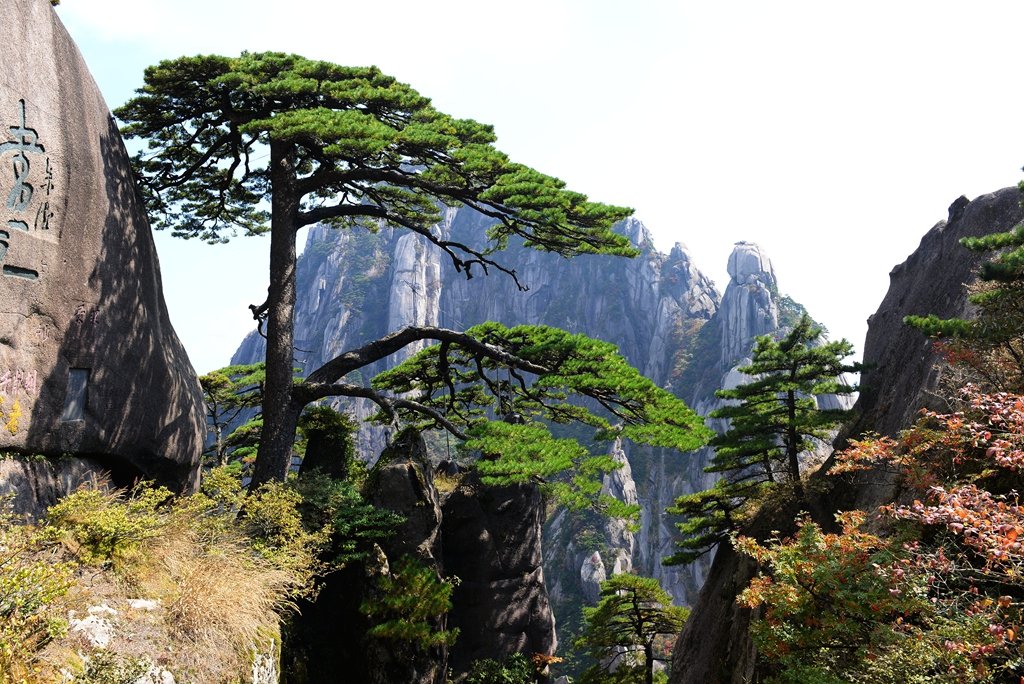
That cultural weight is matched by hard geology: a batholith of granite jointed and frost-shattered into hundreds of jagged spires, threaded with hanging valleys. Modern recognition stacked on top of the poets’ verdict — a UNESCO World Heritage site for both culture and nature, and a Global Geopark — because Huangshan is the rare place where a landscape actually looks like the paintings it inspired. Its three great wonders to a first-time walker are the pines, the rocks, and the sea of clouds that arrives on the heel of rain.
2. What to Spot: The Pines, the Peaks, the Sea of Clouds and the Canyon
🌲 The Grotesque Pines & Rocks
- The Story: Pines rooted in granite cracks, shaped by wind — the Welcoming Guest Pine, ‘Monkey Watching the Sea’, the ‘Bee-Coming-Through-Flower’ rock.
- What to Look For: Forms that read as deliberate sculpture; hunt the named pines and rocks along the Yuping and West Sea routes.
⛰️ The Great Peaks & Brightness Summit
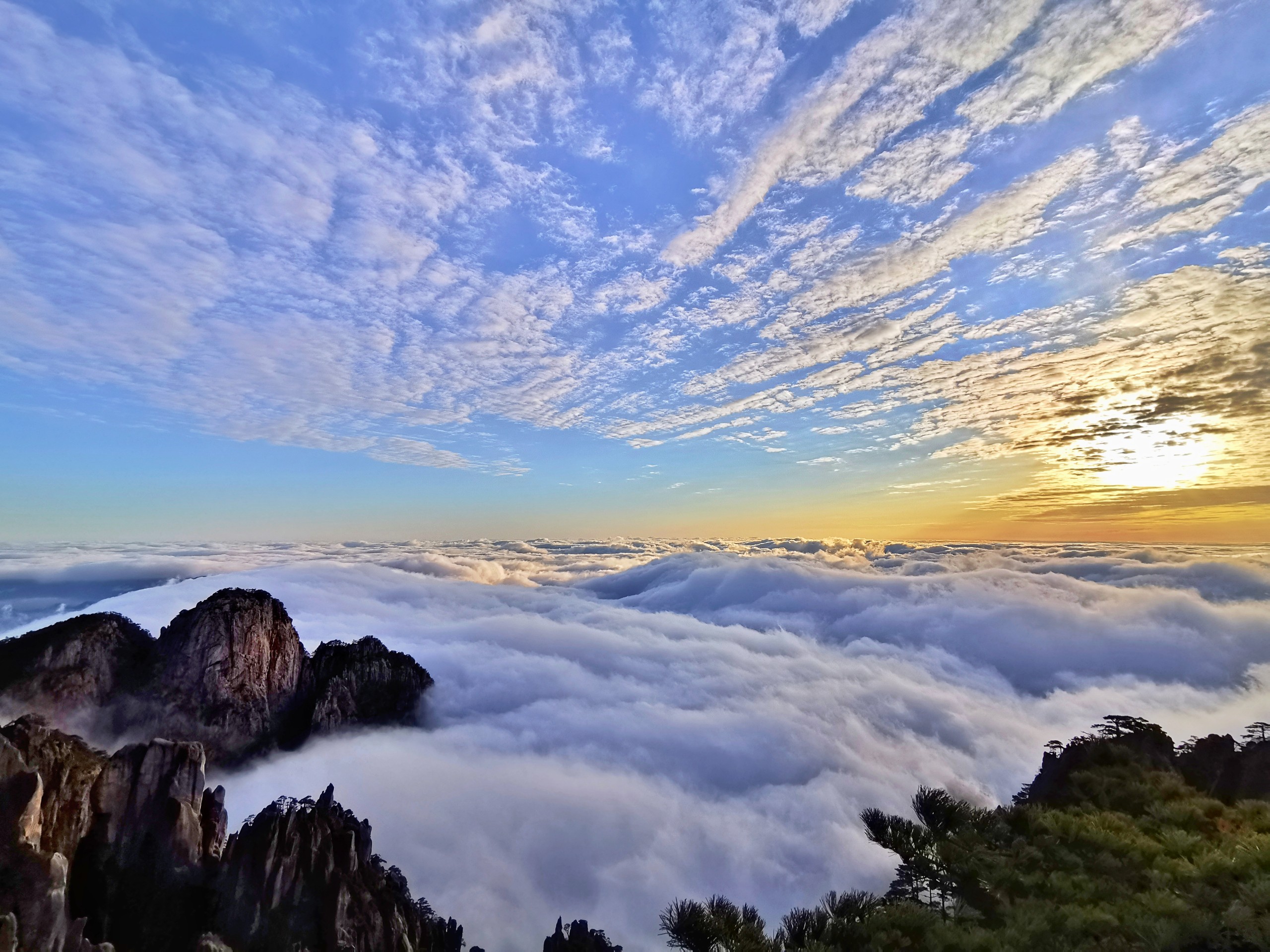
- The Story: Lotus Peak, Brightness Summit (Guangmingding) and Celestial City (Tiandu) are the high viewpoints of the ridge circuit.
- What to Look For: Panoramas over the whole spire-field — sunrise from Guangmingding is a defining Huangshan moment.
🏞️ The West Sea Grand Canyon
- The Story: The dramatic hanging valley, walked and railed by a ground-cable tram, the finest and most strenuous part.
- What to Look For: The vertiginous cliff-path descent and the tram ride back up — allow real time and check the tram is running.
🚡 The Ropeway Decision: Yungu, Yuping or Taiping
Huangshan has three main ropeways, and choosing wrong costs a morning. Yungu (Cloud Valley) on the east side is the busiest and connects best to the classic circuit via White Goose Ridge; Yuping on the west is the shortest route to the Welcoming Guest Pine and Lotus Peak; Taiping is the northern approach, useful if you are coming from the north or staying on that side.
For a first visit with one night on the summit, Yungu up and Yuping down is the standard loop: it covers the east-side viewpoints, Brightness Summit and the West Sea, and avoids retracing the same cable. For a day trip, take Yungu both ways and accept that the west side gets cut.
All three close in high wind, lightning or ice, and the park announces late. Check the official mini-program on the morning of travel rather than the night before. The West Sea tram is separate again — if it is closed, the canyon becomes a long out-and-back walk, not a loop. Coming from Huangshan, the south gate at Tangkou is the usual entry; the north side only makes sense if you are already staying there.
3. Cultural Contrast: Reading a Landscape Through Its Paintings
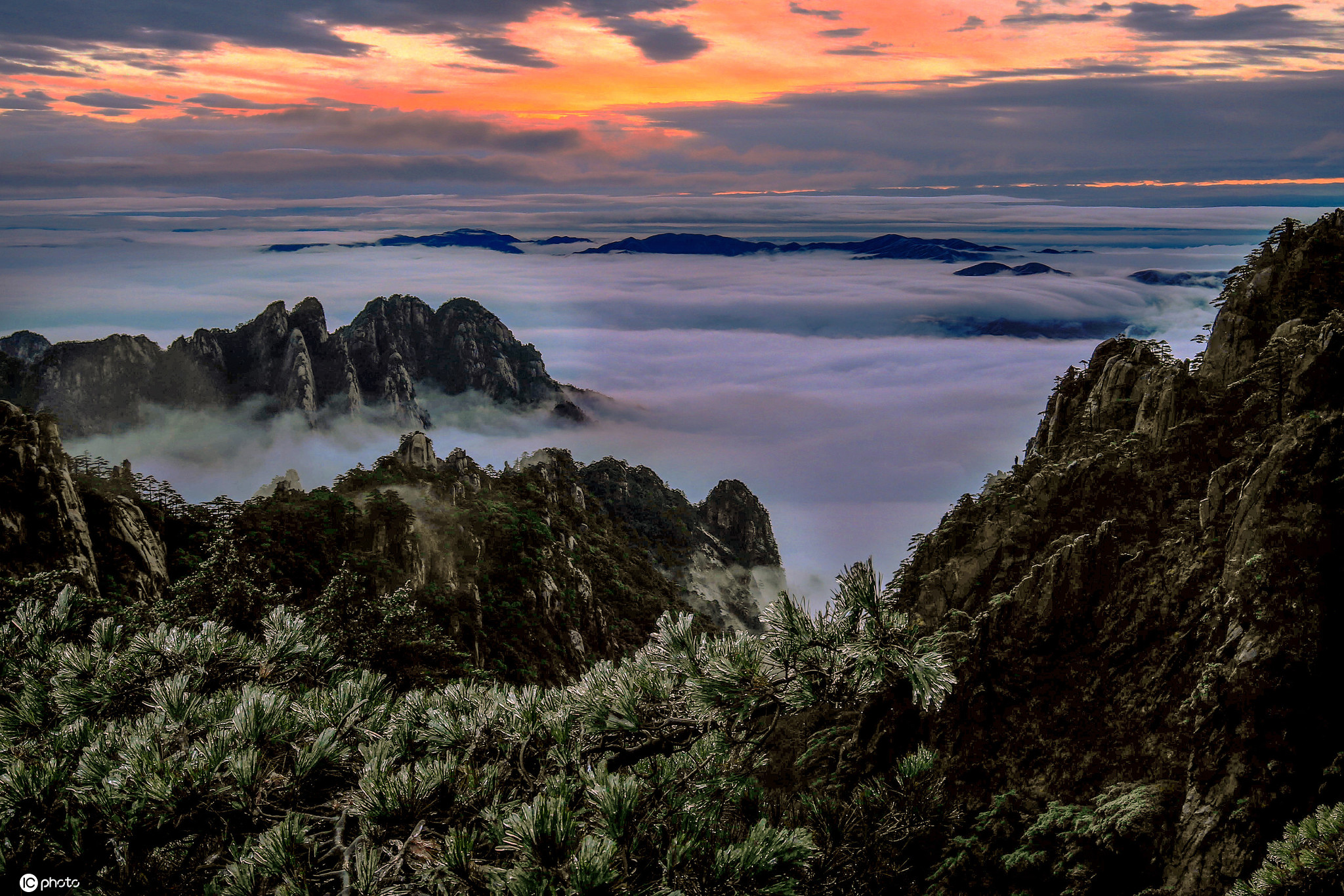
To walk Huangshan as a foreign visitor without context is to see a superb mountain; to see it through the Chinese eye is to recognise the original of a thousand scrolls. It is the landscape the Song and later painter-monks worshipped, and its value in Chinese culture is partly that every visitor is walking inside a national image. The pines are famous not only for their shape but for the names and poems layered onto them; a rock is a ‘guardian’ or a ‘monkey’ because painters fixed that reading centuries ago.
That cultural lens explains the practical art of a Huangshan trip: it is as much about timing weather and light as about distance. The mountain is notorious for shifting between blinding clarity and whiteout cloud, and the ‘sea of clouds’ that everyone wants can appear and vanish within an hour — hence the summit-overnight strategy to catch dawn, and the honest need to accept what the weather gives. Treated as a living painting you simply happen to be inside, rather than a checklist of viewpoints, Huangshan repays patience with one or two transcendent minutes that justify the whole climb.
4. Practical Essentials: Tickets, Transit & Scam Alerts
Tickets & Passport Booking
- Price: One gate ticket, valid for unlimited entry over three consecutive days from first scan; the higher rate is the long ‘regular season’ and the lower is a short ‘winter-tour’ window (counter-intuitive, so don’t assume). Cable cars and the canyon tram are separate. No figure is fixed here — confirm live prices on the official mini-program.
- Passport & booking: Real-name via the ‘Huangshan Tourism Official Platform’ mini-program; the PC site only redirects to a QR code. Whether a passport buys online is unresolved — confirm in the app or at the window; do not trust blanket ‘online passport’ or ‘on-site only’ claims.
How to Get There
- Where it is: Enter at the south gate via the Tangkou transfer centre; there is no official quoted drive time from Huangshan North station, Tunxi or the airport, so treat any mapping figure as an estimate, not a promise. Private cars stop at Tangkou — you transfer to park buses to the Yungu or Ciguang ropeway base.
- Show Your Driver: 师傅,请带我去黄山风景区·汤口换乘中心(南大门),谢谢!
Inside Tips & Scam Alerts
- Book a summit night to photograph dawn and split the circuit; the 3-day ticket exists precisely for this (first use must be at the window that day). Carry cash for ropeways and summit supplies. Check weather and tram/ropeway openings before relying on the West Sea Canyon. Layer up; the summit is cool and windy. Complaints / lost property: 12345, free from a local number.
Quick Answers
The 6 things visitors ask before setting out, answered from the same verified record used across this page.
- How much does it cost to visit Mount Huangshan?
- 3-day pass; ropeways extra.
- What are the opening hours at Mount Huangshan?
- The scenic area runs a roughly 07:00–17:30 operating day and does not publish a distinct last-entry cut-off separate from that window, so start early to leave enough time on the summit. Because it is a high mountain, the practical timetable is set by weather and by the cable cars: individual footpaths, the canyon tram or a ropeway can close temporarily in winter, wind or poor visibility. Check the official notice on the day, and remember the 'three-day' ticket only activates once you actually scan in, not when you merely book.
- Is Mount Huangshan wheelchair accessible?
- Not fully. A mountain of long stone staircases, narrow cliff paths and steep ridge walks; cable cars cut the vertical climb but the summit experience is fundamentally stair-and-foot based and not wheelchair- or stroller-practicable.
- How do I tell a taxi driver to take me to Mount Huangshan?
- Copy this line into DiDi or show it to the driver: 师傅,请带我去黄山风景区·汤口换乘中心(南大门),谢谢!
- Can I leave my luggage at Mount Huangshan?
- Storage is available at the Tangkou transfer/ticket centre — the working pattern is to leave big bags at the base and carry only an overnight kit up for a summit stay.
- Is there anything to watch out for at Mount Huangshan?
- Two things to hold firm on. Booking: tickets are sold real-name through the 'Huangshan Tourism Official Platform' WeChat/Alipay mini-program; the desktop site only points you to a QR code and does not complete a sale, and whether a passport can be used to buy online is genuinely unresolved — the platform lists passport as a document type but the ticket flow isn't rendered for it, so don't trust either 'buy online with passport' or 'must buy on-site'; confirm in the mini-program or at the ticket window. Access: the gate is at the south (Tangkou) transfer centre, from which official shuttles run to the lower ropeway stations at Yungu Temple or Ciguang Pavilion — you cannot drive your own car up, so beware any private offer to 'take you to the mountain'; you transfer to park buses at Tangkou.
Huangshan Photo Wall
1 / 1313 views of Huangshan (Yellow Mountain) from the visitor photo set: the sea of clouds, Bright Summit (Guangming Ding), the sunrise, the sunset, the granite peaks, the Greeting Pine.
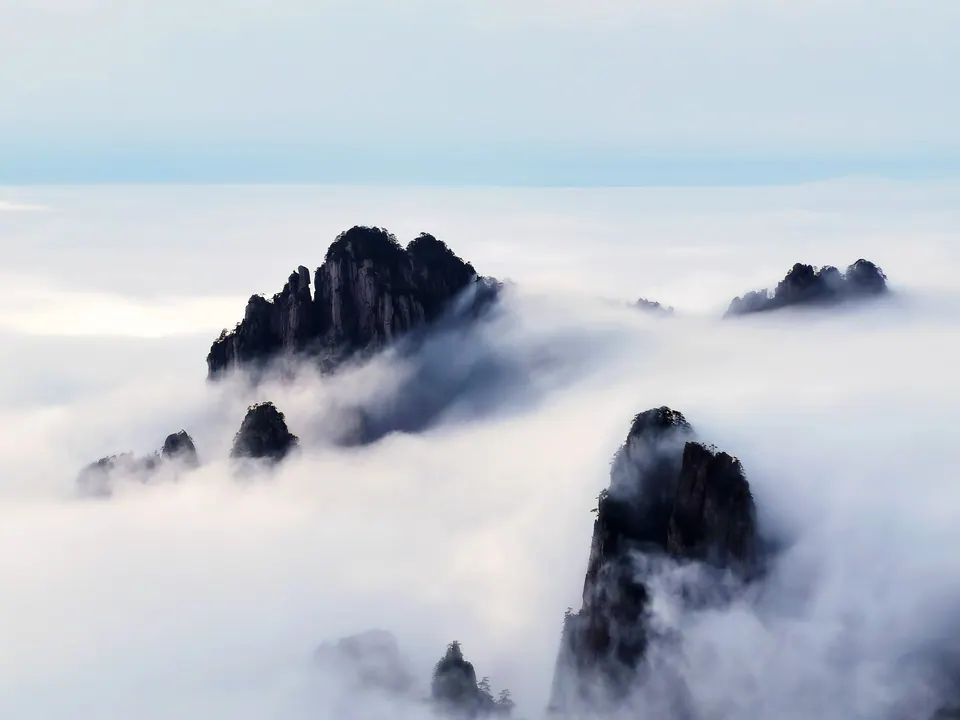
The sea of clouds.
Where to go next
Three short lists, recomputed at build time from the same coordinates and categories as the pages themselves — no paid placement, no hand-picked names. Every card is a published guide.
Next stop in Huangshan
Straight-line distance from this spot, so you can judge what is walkable and what needs a taxi.


More like this, elsewhere in China
If park or garden is what you came for, these are the closest equivalents you can reach in another city — ordered by distance, one city per card.


Change the subject
Deliberately a different category, for when one more temple or garden would blur into the last one.


Lists are derived from coordinates and category alone. Fix a wrong pin or re-tag a place and every list that mentions it moves with it.
Before you go · arrival essentials
Practical guides that pair with this kind of place — picked by category, not sponsored placement.