
Shanghai Botanical Garden (Bonsai & Orchid Hub)
ℹ️ ¥15 entry (glasshouses and seasonal displays may charge separately)

Taxi & Street Navigation Help
师傅,请带我去徐汇区龙吴路【上海植物园】2号门(龙吴路997号),谢谢!
Opening Hours & Best Time
07:00 - 17:00
💡 Pro Tip: Visit the Bonsai Garden (Penjing)—widely regarded as one of the finest and most comprehensive collections of miniature landscape trees in Asia.
Accessibility & Luggage Lockers
Accessibility: ♿ Wheelchair & Stroller Friendly
Broad garden walking trails with designated wheelchair ramps into main conservatories.
🧳 Luggage Storage: Deposit office at main ticket gate.
Nearby Landmarks & A Short Train Ride
The 4 places worth pairing with this spot — each one opens straight into Apple Maps or Amap, with the Chinese name you can show a driver. One pick sits in Hangzhou (HSR ~48 min) — a short high-speed ride, not a walk. Shanghai's own list came out one short of a pair, and this is the nearest pick that fills it.
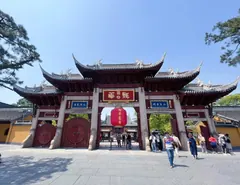 龙华寺与龙华塔Longhua Temple & Longhua PagodaTempleShort ride away3 km3 km


Chinese names and pins are matched against each city's own map data at build time; a place only gets Directions once its pin has been verified, otherwise the button searches by name. Cards with an amber city tag are in another city — the ride time shown is the fastest train of the day.
About Shanghai Botanical Garden (Bonsai & Orchid Hub)
1. Historical Origins: A Working Collection, Not a Flower Bed
Shanghai Botanical Garden occupies more than eighty hectares in Xuhui District and holds a collection of over three thousand plant species. That number matters: this is a scientific collection with a public park built around it, not a municipal flower garden, and the difference shows in how the beds are organised — by genus, by climate zone and by use, rather than purely for effect.

The garden is laid out as a set of specialist areas — penjing, peonies, roses, bamboo, orchids, conifers — connected by long tree-lined walks. Two events dominate the calendar: the international flower show in spring and the chrysanthemum display in autumn, both of which pull the whole city out here. The rest of the year it is quiet, which is when it is actually best.
2. What to Spot: Penjing, Orchids, and Spring
🌳 The Penjing Garden
- The Story: This is the garden’s international reputation — one of the finest collections of miniature landscape trees in Asia.
- What to Look For: The age of the trunks. Read the labels: several specimens are centuries old, and the pots are part of the composition, not just containers.
🌸 Peony, Rose and Bamboo Areas
- The Story: Each specialist garden peaks at a different week, so what is worth seeing depends entirely on when you come.
- What to Look For: Peonies in April, roses from late April into May, bamboo at any time — the bamboo grove is the most atmospheric walk in the park.


🌺 The Orchid House
- The Story: The greenhouses hold the tropical and subtropical collections that cannot survive a Shanghai winter outdoors.
- What to Look For: The orchid and fern houses, which are the most rewarding rooms on a cold or rainy day.
🍁 The Autumn Display
- The Story: The chrysanthemum show is the autumn counterpart to the spring flower show.
- What to Look For: The trained chrysanthemum forms — the cascades and spheres that take a year of work to produce.
3. Cultural Contrast: A Garden the City Actually Uses
On a weekday morning this is a park before it is a botanical collection. Retirees walk laps, photographers wait for a specific bloom, and school groups move through the glasshouses in tight formation. Weekend flower-show weeks are a different animal entirely — the paths run one way under crowd control and the penjing garden becomes a slow shuffle. Locals who know it come early on weekdays, and they treat the seasonal calendar as a schedule rather than a suggestion: this garden rewards knowing what week it is.

4. Practical Essentials: Tickets, Transit & Scam Alerts
Tickets & Passport Booking
- Price: ¥15 per person at the gate. Glasshouses and seasonal displays can carry their own charge when they run, so keep a little extra on the card and read the board before you commit.
- How to Book: No advance reservation — buy the entry ticket on site. Bring your passport in case the desk asks for ID; entry rules and pricing have changed several times, so confirm the current arrangement when you arrive.
How to Get There
- By Metro: Line 3 to Shilong Road Station, then about ten minutes on foot to 1111 Longwu Road, Xuhui District.
- Show Your Driver: 师傅,请带我去上海植物园,徐汇区龙吴路 1111 号,谢谢!
Inside Tips & Scam Alerts
- Hours: 07:00 to 17:00, with the closing time pulled back to about 16:30 in winter.
- Check the Calendar: The spring flower show and the autumn chrysanthemum show are the two peaks. Outside them the garden is calm; during them, come on a weekday at opening.
- Plan Your Route: Eighty hectares is more than a casual stroll. Pick two or three specialist gardens — penjing, bamboo, glasshouses — and walk them properly.
- Check what the ¥15 covers: that is the grounds. A special glasshouse or seasonal display may be ticketed separately, so ask at the window rather than assuming.
- Bring Water: Food and drink inside is limited and overpriced; the garden is a long way from the nearest convenience store once you are at the far end.
- Complaints: the national 12345 hotline is free to call from any local phone.
Quick Answers
The 6 things visitors ask before setting out, answered from the same verified record used across this page.
- How much does it cost to visit Shanghai Botanical Garden?
- ¥15 entry (glasshouses extra). ¥15 entry (glasshouses and seasonal displays may charge separately).
- What are the opening hours at Shanghai Botanical Garden?
- 07:00 - 17:00.
- Is Shanghai Botanical Garden wheelchair accessible?
- Yes. Broad garden walking trails with designated wheelchair ramps into main conservatories.
- How do I tell a taxi driver to take me to Shanghai Botanical Garden?
- Copy this line into DiDi or show it to the driver: 师傅,请带我去徐汇区龙吴路【上海植物园】2号门(龙吴路997号),谢谢!
- Can I leave my luggage at Shanghai Botanical Garden?
- Deposit office at main ticket gate.
- Will English work at Shanghai Botanical Garden?
- Limited — ticketing and signage are mostly Chinese. Have a translation app with the offline Chinese pack ready, and keep the Chinese name (上海植物园) on screen for staff.
Where to go next
Three short lists, recomputed at build time from the same coordinates and categories as the pages themselves — no paid placement, no hand-picked names. Every card is a published guide.
Next stop in Shanghai
Straight-line distance from this spot, so you can judge what is walkable and what needs a taxi.


More like this, elsewhere in China
If park or garden is what you came for, these are the closest equivalents you can reach in another city — ordered by distance, one city per card.


Change the subject
Deliberately a different category, for when one more temple or garden would blur into the last one.


Lists are derived from coordinates and category alone. Fix a wrong pin or re-tag a place and every list that mentions it moves with it.
Before you go · arrival essentials
Practical guides that pair with this kind of place — picked by category, not sponsored placement.