
Ming Xiaoling Mausoleum

Buy at the official window or the WeChat account. Vendors near the car park sell 'fast-entry' passes that are just ordinary tickets with a mark-up. Horse-carriage rides along the approach are priced per person, not per carriage - ask before sitting down.
Taxi & Street Navigation Help
师傅,请带我到明孝陵景区(梅花山方向入口),谢谢!
Opening Hours & Best Time
About 06:30-18:00. Ticket sales stop earlier than the gate closes; the Sacred Way is open-air and stays accessible around the clock.
💡 Pro Tip: Start at the Sacred Way's elephant avenue before 09:00. It is a public path outside the ticket gate, so you can walk the animals for free and then enter at the main gate when it opens.
Accessibility & Luggage Lockers
Accessibility: ♿ Wheelchair & Stroller Friendly
The Sacred Way and the first two courtyards are level stone and paved, fine for a stroller or a self-propelled wheelchair. The final tower sits at the top of a stepped mound with no alternative route.
🧳 Luggage Storage: No lockers on site. The visitor centre by the main gate and the metro station both hold bags.
Nearby Landmarks
The 2 places within reach of this spot — each one opens straight into Apple Maps or Amap, with the Chinese name you can show a driver.
 中山陵Dr. Sun Yat-sen's MausoleumLandmarkShort ride away1.32 km1.2 km east
Chinese names and pins are matched against each city's own map data at build time; a place only gets Directions once its pin has been verified, otherwise the button searches by name.
About Ming Xiaoling Mausoleum
1. Historical Origins: The Tomb That Set the Pattern
Zhu Yuanzhang, the founding emperor of the Ming, began building his tomb in 1381 on the south slope of Purple Mountain, and was buried here with the empress whose title gives the place its name. Almost nothing of what was built above ground survives in its original form; what survives is the plan.
That plan is why the site matters. Before this tomb, imperial burials were arranged one way; after it, they were arranged this way, and the Ming and Qing tombs that followed are variants of it. A processional avenue, a gate, a courtyard, a hall of sacrifices, and the burial mound sealed behind at the rear. Front court, rear chamber, in the Chinese phrase.
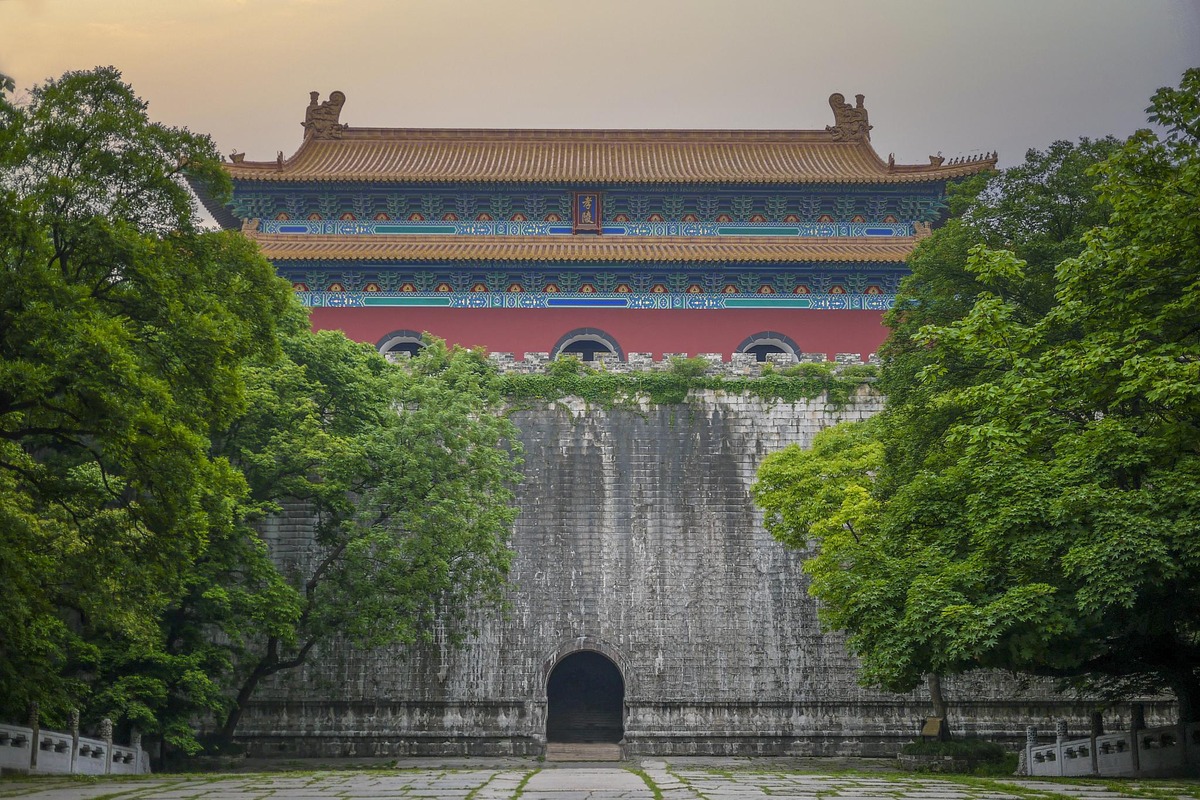
2. What to Spot: Animals, Axis and Autumn
🐘 The Sacred Way
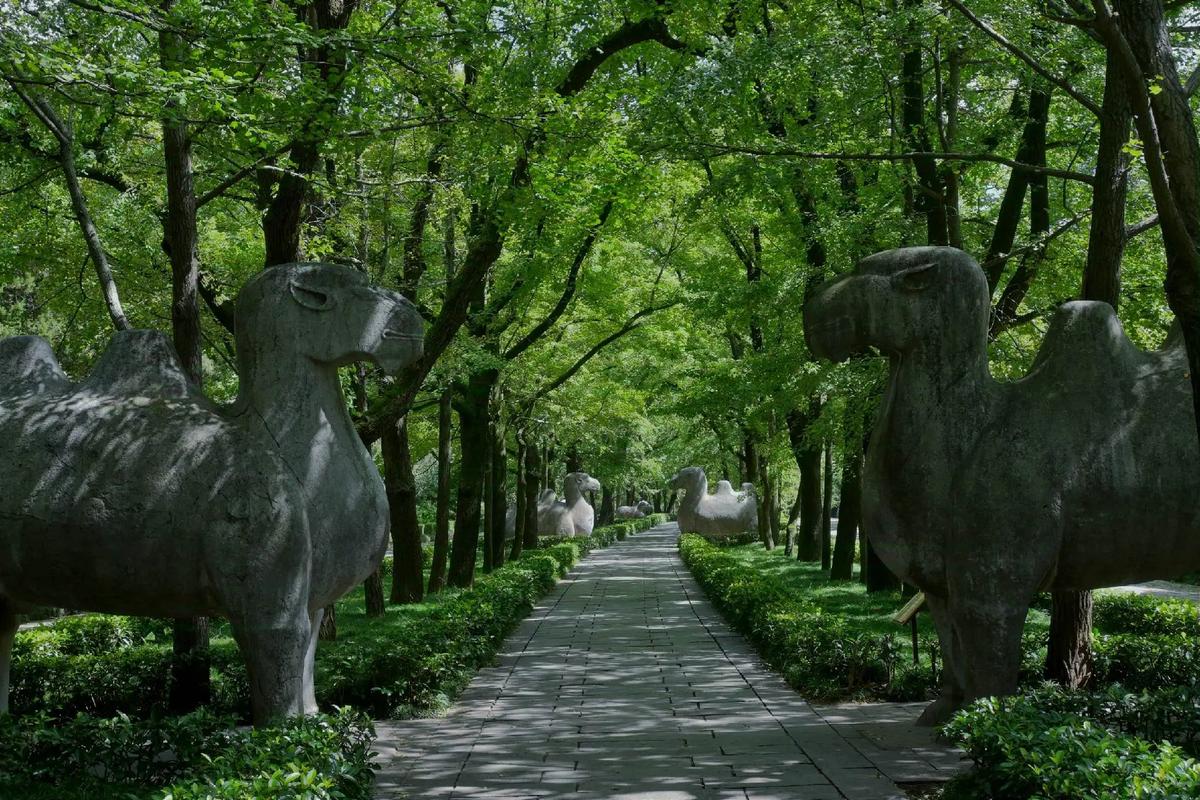
Six kinds of stone animal, twenty-four figures in all, stand along the approach — lions, camels, elephants, horses, qilin and the xiezhi, a single-horned beast — each pair alternating standing and crouching. They are outside the ticket gate and open to anyone at any hour, which makes this the one part of the site that belongs to the city.
- The Story: The avenue was a filter, not decoration. Walking it took time, and time was the point: you arrived at the tomb already slowed down.
- What to Look For: The scale of the elephants. They are carved from single blocks, and the proportions are slightly off, which is how you know they were cut by eye rather than measured.
🏯 The Axis
Inside the gate the route is one straight line: gate, courtyard, hall, and behind it the mound. The hall of sacrifices is a reconstruction; the stone plinth and the surviving carvings are not. Walk the axis slowly and the design explains itself — every gate frames the next thing.
🍂 Autumn on the Approach
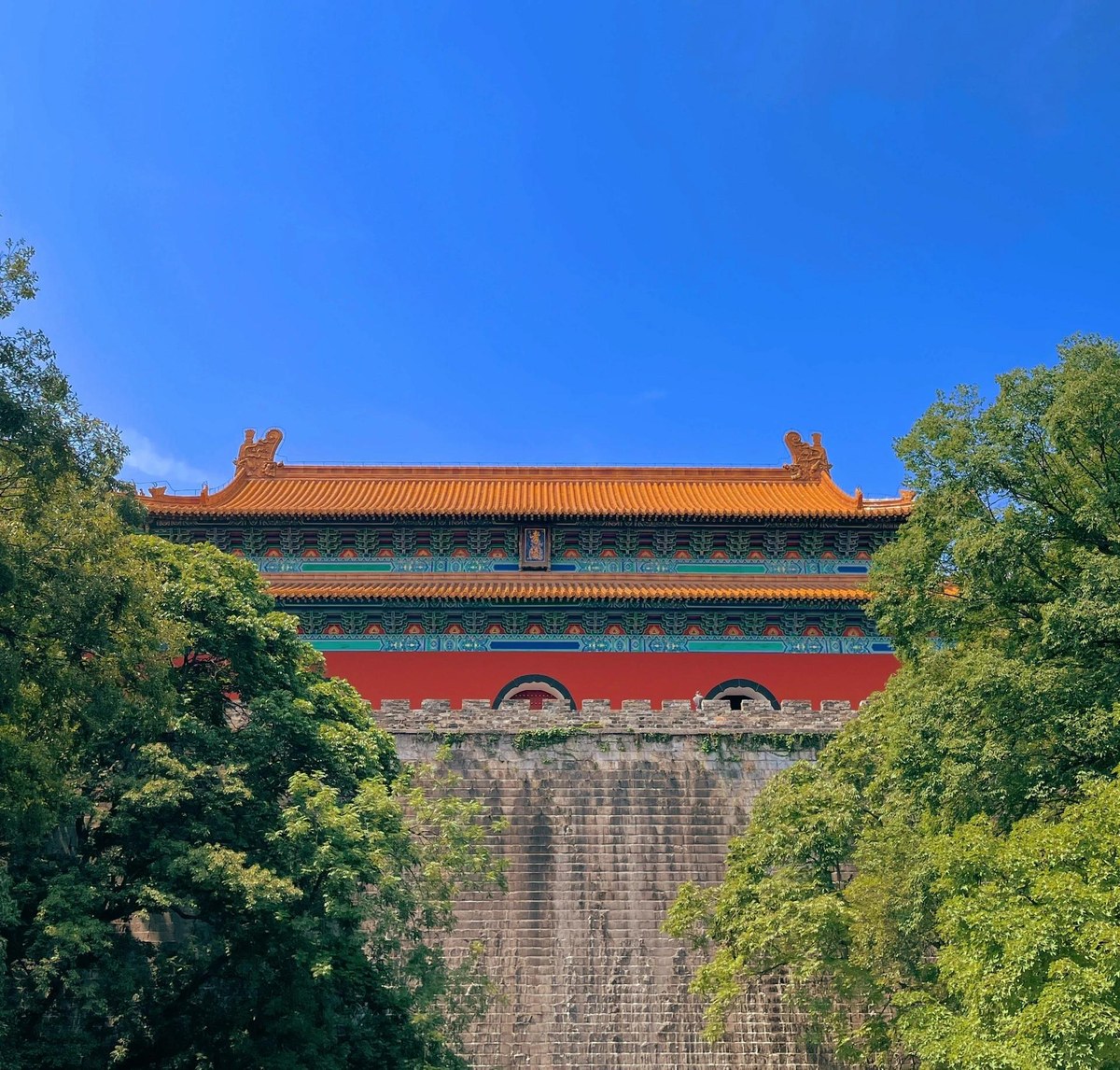
The avenue is at its best in late autumn, when the ginkgos go yellow and the maples red at the same time and the whole six hundred metres becomes a single corridor of colour. It is also when everybody in Nanjing arrives, so come at opening.
3. Cultural Contrast: A Mountain of Dynasties
Purple Mountain holds the tomb of the man who founded the Ming, and a kilometre up the same slope the tomb of the republican who ended the system the Ming belonged to. Between them they bracket six hundred years, and both use the same architectural grammar — which is the clearest illustration of how deeply this tomb shaped the way China buries its leaders.
- The Sacred Way is free. It is a public path, outside the ticket gate, open around the clock.
- The hill is a managed landscape. Planting, paths and signage are all designed; this is not a wild mountain with tombs in it.
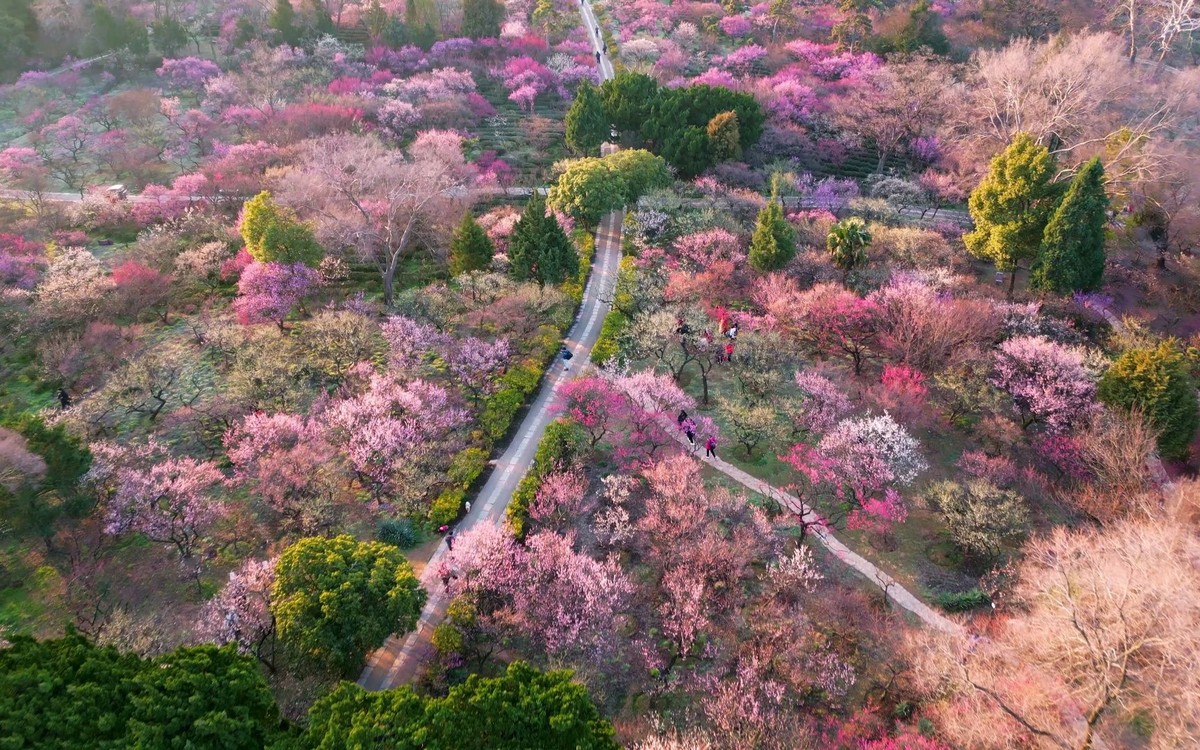
- Plum blossom season is a separate event. The slope next to the tomb fills in late winter, and the crowds come for the flowers rather than the emperor.
4. Practical Essentials: Tickets, Transit & Scam Alerts
Tickets & Passport Booking
- The tomb is ticketed; the Sacred Way is not. The stone animals are on a public path before the gate, which is how you can walk them for nothing.
- No prices are quoted here. The gate price varies by season, and a combined ticket covers several sites on the mountain; the official ticketing page carries the figure for the day.
- Opening hours are not quoted either — the official sources give different versions, and ticket sales stop before the gate closes.
- Concessions exist for children, students and older visitors, on production of documents. Foreign visitors should ask at the window which concession their passport supports.
How to Get There
- Location: south slope of Purple Mountain, Xuanwu District, inside the Zhongshan scenic area.
- Traffic control is in force on the mountain: taxis and ride-hailing cars cannot enter the controlled roads, so the drop-off at the junction is normal.
- The reliable route is Metro Line 2 to Muxuyuan, then the scenic-area shuttle.
- Taxi instruction: “师傅,去【地铁 2 号线苜蓿园站】,我去明孝陵,谢谢!”
Inside Tips & Scam Alerts
- Street vendors near the car park sell “fast-entry” passes that are ordinary tickets with a mark-up. Buy at the window or on the official account.
- Horse-carriage rides along the approach are priced per person, not per carriage. Agree the total before anyone sits down.
- Electric-cart “tours of the whole mountain” are sold by touts at the gate; fix the price and the route first, or use the official shuttle.
- The Sacred Way is level and step-free; the steps up to the burial mound are steep.
- Come at opening in autumn. By mid-morning the avenue is a queue of tripods.
- Complaints or overcharging: call 12345. It is free from any local phone and has English-speaking operators.
Quick Answers
The 6 things visitors ask before setting out, answered from the same verified record used across this page.
- How much does it cost to visit Ming Xiaoling Mausoleum?
- ¥70; combo ¥100.
- What are the opening hours at Ming Xiaoling Mausoleum?
- About 06:30-18:00. Ticket sales stop earlier than the gate closes; the Sacred Way is open-air and stays accessible around the clock.
- Is Ming Xiaoling Mausoleum wheelchair accessible?
- Yes. The Sacred Way and the first two courtyards are level stone and paved, fine for a stroller or a self-propelled wheelchair. The final tower sits at the top of a stepped mound with no alternative route.
- How do I tell a taxi driver to take me to Ming Xiaoling Mausoleum?
- Copy this line into DiDi or show it to the driver: 师傅,请带我到明孝陵景区(梅花山方向入口),谢谢!
- Can I leave my luggage at Ming Xiaoling Mausoleum?
- No lockers on site. The visitor centre by the main gate and the metro station both hold bags.
- Is there anything to watch out for at Ming Xiaoling Mausoleum?
- Buy at the official window or the WeChat account. Vendors near the car park sell 'fast-entry' passes that are just ordinary tickets with a mark-up. Horse-carriage rides along the approach are priced per person, not per carriage - ask before sitting down.
Where to go next
Three short lists, recomputed at build time from the same coordinates and categories as the pages themselves — no paid placement, no hand-picked names. Every card is a published guide.
Next stop in Nanjing
Straight-line distance from this spot, so you can judge what is walkable and what needs a taxi.


More like this, elsewhere in China
If historic district is what you came for, these are the closest equivalents you can reach in another city — ordered by distance, one city per card.


Change the subject
Deliberately a different category, for when one more temple or garden would blur into the last one.


Lists are derived from coordinates and category alone. Fix a wrong pin or re-tag a place and every list that mentions it moves with it.
Before you go · arrival essentials
Practical guides that pair with this kind of place — picked by category, not sponsored placement.
- Pay with Alipay & WeChat PayPayment · Set up Alipay or WeChat Pay on a foreign card — needed at almost every counter.
- Claim your tourist tax refundTax refund · Get 11% VAT back on what you buy here, at the airport on departure.
- Book China train tickets (12306)Trains · Buy high-speed rail tickets with a foreign passport, for getting here and back.