
Guiyuan Temple
ℹ️ ¥10 (¥20 over Spring Festival, Labour Day and National Day). Cash or mobile payment at the gate; no advance booking needed.

Fortune-tellers and 'monk' blessing touts operate on the approach street and inside the outer courtyard. They are not temple staff. Incense is included with the ticket; you never need to buy a ¥200 'high incense' bundle.
Taxi & Street Navigation Help
师傅,请带我到归元禅寺(翠微路20号),谢谢!
Opening Hours & Best Time
08:30-17:00. Extended hours around Lunar New Year.
💡 Pro Tip: Go for the arhat hall, not the main halls. The 500 lacquered figures are arranged in a zig-zag corridor with mirrored walls, and in the late afternoon light with few visitors it is the best interior in Wuhan.
Accessibility & Luggage Lockers
Accessibility: ♿ Wheelchair & Stroller Friendly
Flat courtyards and ramped thresholds between halls. The 500 arhat hall is a narrow looping corridor - a wheelchair can pass but it is tight on busy days.
🧳 Luggage Storage: No storage; the temple gate has no bag facilities.
Nearby Landmarks
The 2 places within reach of this spot — each one opens straight into Apple Maps or Amap, with the Chinese name you can show a driver.
Chinese names and pins are matched against each city's own map data at build time; a place only gets Directions once its pin has been verified, otherwise the button searches by name.
About Guiyuan Temple
1. Historical Origins: A Working Monastery, Not a Museum
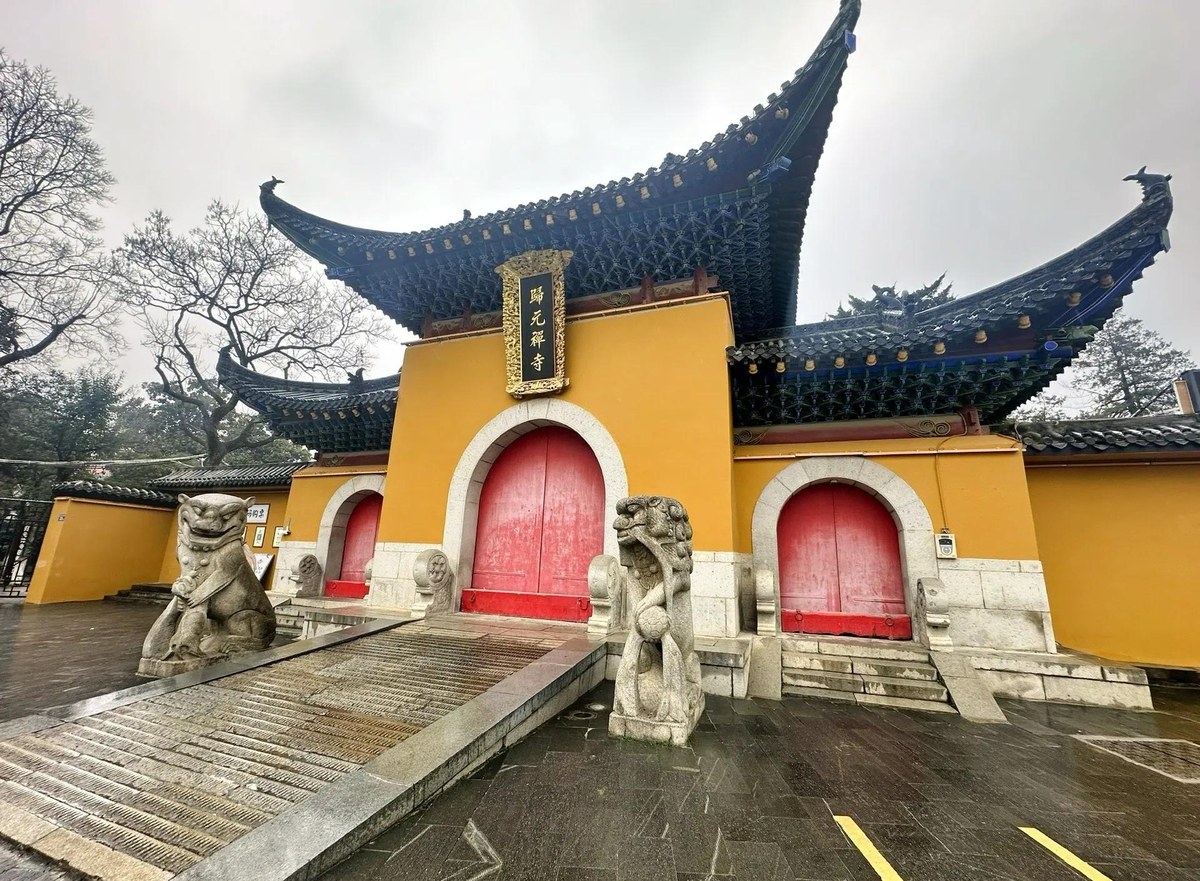
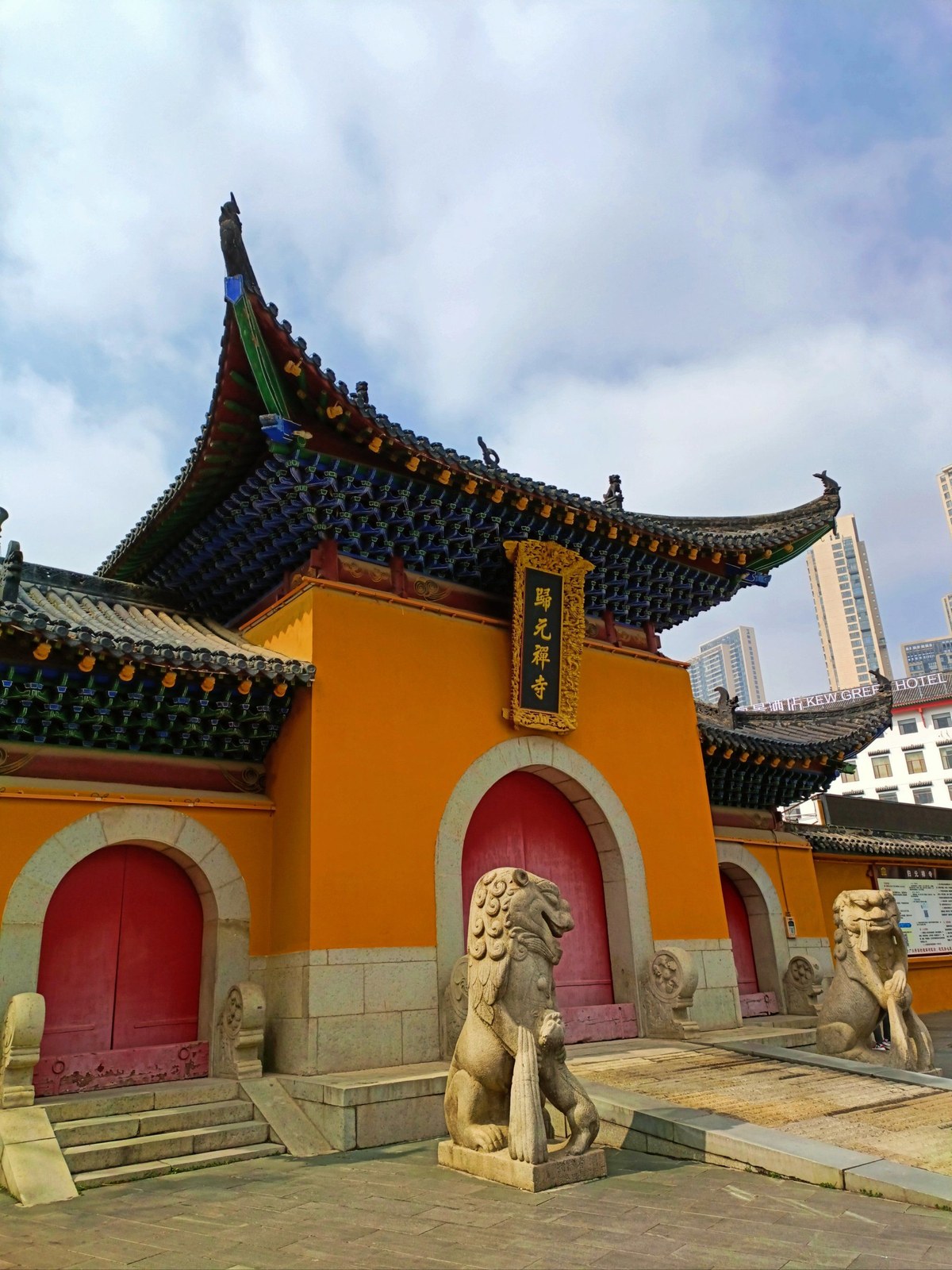
Guiyuan Temple was founded in 1658, in the early years of the Qing dynasty, and it has been one of the four great Buddhist monasteries of Wuhan ever since — the other three being Baotong, Lianxi and Zhengjue. That sentence is the most useful thing to know before you arrive, because it tells you what kind of place this is: not a heritage site with a ticket desk bolted on, but a monastery that happens to sell tickets.
Which means the courtyards are full of people praying rather than people photographing, the incense smoke is already thick when the gates open, and monks and volunteers move between buildings on their own business rather than yours. It also means the architecture is Qing in origin and modest: grey brick, tiled roofs, a series of courtyards leading back from the street, no imperial yellow anywhere.
And then, at the back, there is a room that makes the whole visit worth it. The Arhat Hall holds five hundred figures, and it is one of the five great arhat halls in China. Most visitors come for that and nothing else, which is the correct instinct.
2. What to Spot: Five Hundred Arhats and a Counting Game
🕉️ The Arhat Hall
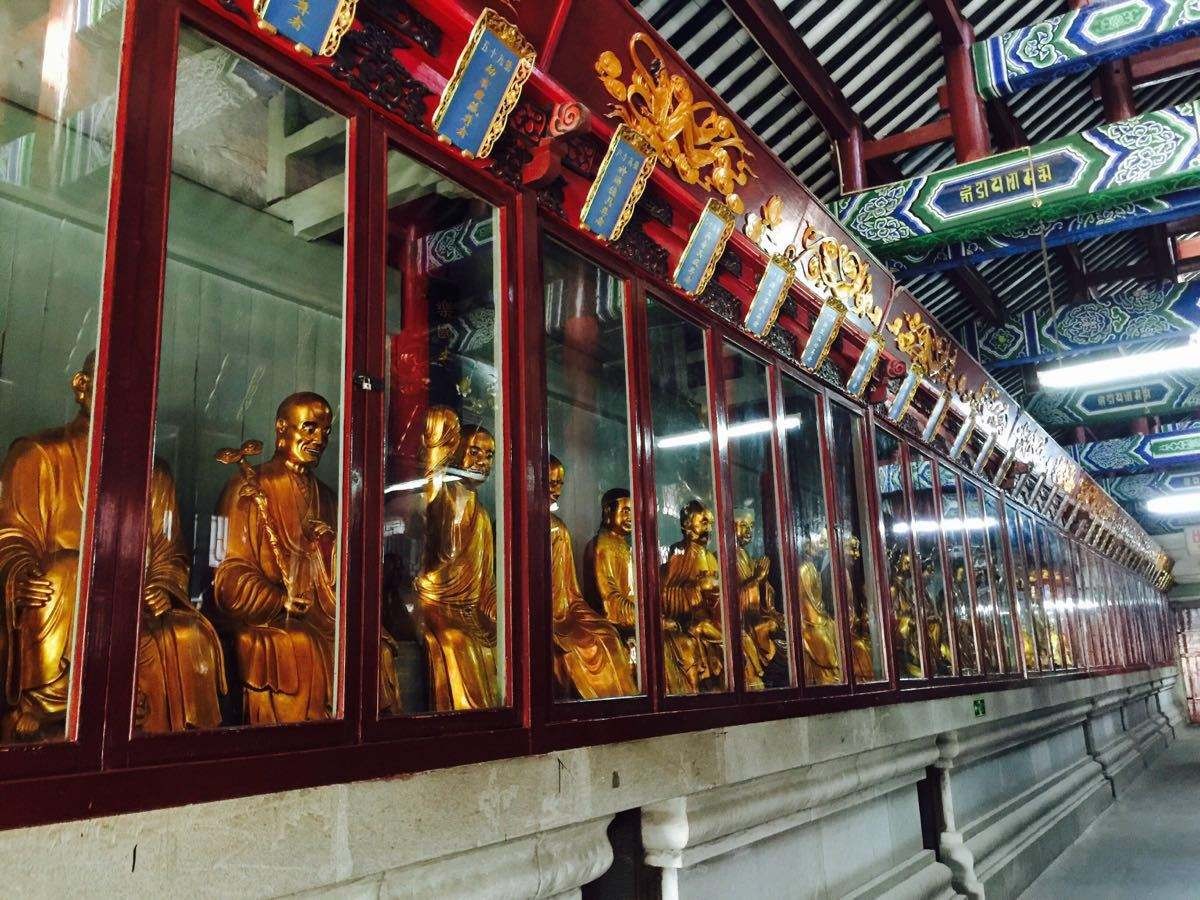
- The Story: Five hundred clay figures finished in gilt lacquer, arranged along a zig-zag corridor with mirrored walls at the corners so that the rows appear to continue past the point where the room ends. No two of the five hundred share an expression; that was the brief, and the sculptors met it.
- What to Look For: The faces at eye level in the middle of the corridor, where the light falls best. The figures nearer the door are the ones everyone photographs; the far end is where the good ones are, and where you can stand still.
🔢 Counting the Arhats
- The Story: A local custom rather than a temple ritual: pick any figure to start from, count along the rows until you reach the number of your own age, and the figure you land on tells you something about the year ahead. Families do it together, arguing over which direction to count.
- What to Look For: Watch how the counting is done before you join in — people start from whichever figure takes their eye, then move in one direction through the hall. Nobody minds a foreigner trying it; do not pay anyone to interpret the result.
🗿 The Two-Faced Guanyin
- The Story: A Guanyin with a face on each side, displayed in its own hall among the main courtyards — one of the pieces the monastery is known for locally, and one that most day-trippers walk straight past.
- What to Look For: Walk a full circle around it. The two faces are carved to be seen from opposite approaches, so the figure only makes sense in the round.
📚 The Sutra Library
- The Story: The scripture hall at the rear of the complex, which holds the monastery’s sutra collection and is the quietest part of the site.
- What to Look For: The courtyard outside it, which is the one place in the compound where you will likely be alone.
3. Cultural Contrast: Why the Arhat Hall Beats the Main Halls
Chinese temples are usually visited in a rush: burn incense at the front, photograph the big Buddha, leave. Guiyuan rewards the opposite approach. The main halls are handsome but standard; the Arhat Hall is the reason the ¥10 is good value, and it is the best interior space in Wuhan.
The pleasure is spatial rather than devotional. You enter a narrow corridor, the rows of figures press in on both sides, the mirrored corners throw the lines back at you, and the whole thing becomes a maze that you walk rather than a room that you look at. Late afternoon is the time to do it: the light comes in low, the crowds thin out after 15:30, and the gilt on five hundred faces starts catching it.
One practical note that most guides miss: this is an active monastery, not a diorama. Photography rules vary from hall to hall — if people are kneeling, put the phone down.
4. Practical Essentials: Tickets, Transit & Scam Alerts
Tickets & Passport Booking
- Price: ¥10 on ordinary days. It rises to ¥20 over Spring Festival, Labour Day and National Day, when the temple is at its busiest. There is no discount tier and nothing to add on.
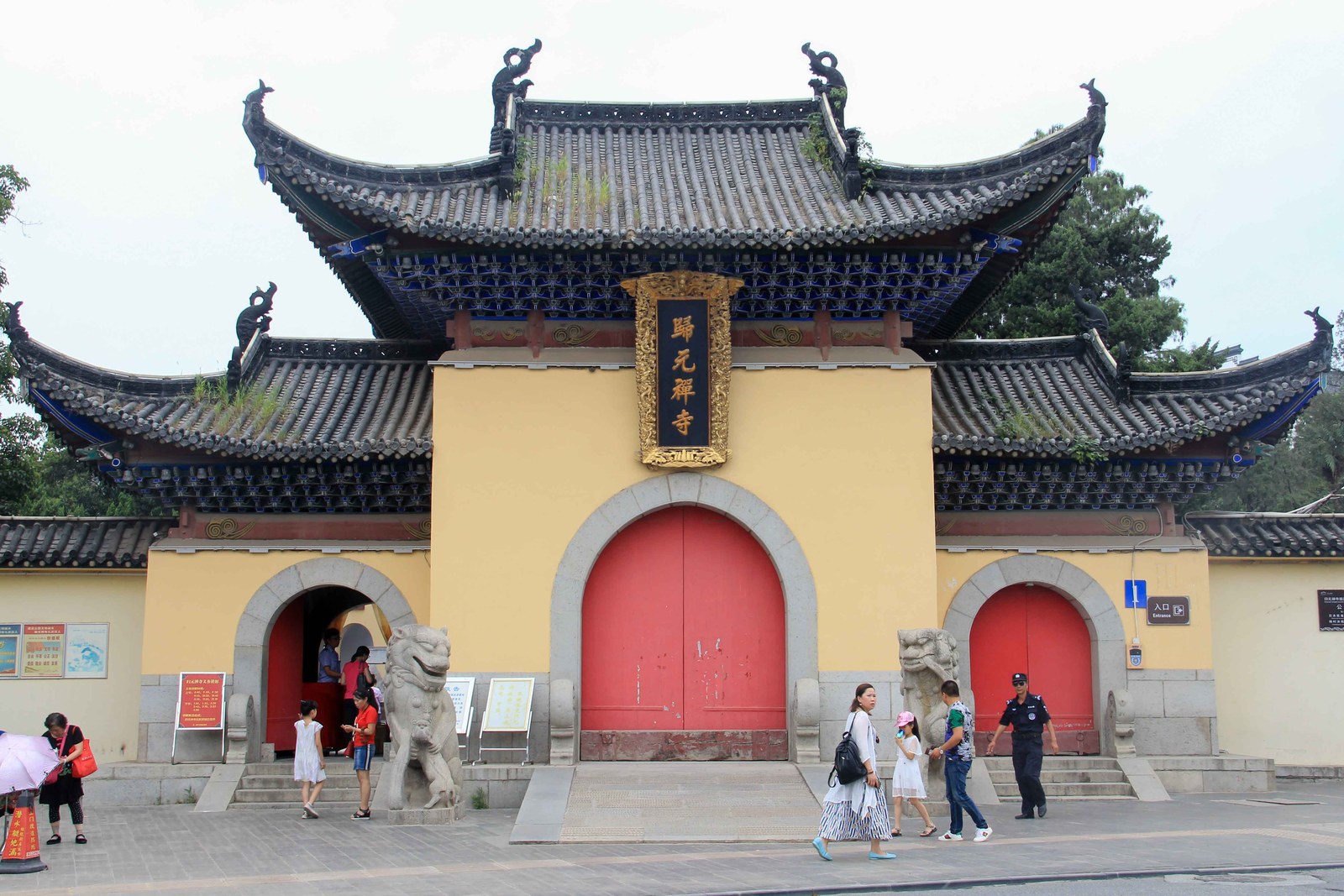
- How to Book: Buy at the gate. No reservation, no mini-program, no advance booking — the ticket window sells all day and only sells out in the sense that the queue is long. Your passport is the ID you will be asked for. The window takes cash and mobile payment; foreign cards are not accepted, so have ¥10–20 in notes or set up Alipay beforehand.
- Opening Hours: 08:30–17:00. Hours extend around Lunar New Year, when the temple stays open into the evening; check locally if you are travelling in that window.
How to Get There
- By Metro: Line 4 or Line 6 to Zhongjiacun Station (钟家村), then about 10 minutes on foot to the south-west, through the streets of the surrounding commercial district. The walk is part of the visit.
- By Bus: Buses 26, 42, 79, 413, 531, 535, 541, 553, 585, 607, 705, 708, 710, 711, 740 and 803 all serve the Cuiwei Road area.
- Show Your Driver: 师傅,去归元禅寺(汉阳翠微路),谢谢!
Inside Tips & Scam Alerts
- Incense is included with your ticket. You never need to buy a ¥200 “high incense” bundle, and the men selling them at the gate are not temple staff.
- The fortune-tellers on the approach street and the “monks” offering blessings in the outer courtyard are not part of the monastery. Some wear robes. None of them work here. A polite no is enough.
- The interpretation service after you count your arhat is a sales pitch, not a reading. The counting itself is free and is the fun part; the paid blessing that follows is not required by anyone.
- Buy nothing described as a “consecrated bracelet” on the way out. They are sold at tourist prices on goods that are new.
- The 1st and 15th of the lunar month, and the whole of Spring Festival, are standing-room only. If you want the Arhat Hall to yourself, come on a weekday afternoon instead.
- Over the three big holidays the ticket is ¥20, and touts will offer to “get you in for ¥10”. They cannot; the window price is the price, and buying at the gate takes two minutes.
- The main axis and courtyards are step-free and usable with a wheelchair; the halls themselves have raised thresholds.
- Complaints or overcharging: the 12345 hotline is free to call from any local phone and has English operators.
Quick Answers
The 6 things visitors ask before setting out, answered from the same verified record used across this page.
- How much does it cost to visit Guiyuan Temple?
- ¥10 (¥20 during festivals). ¥10 (¥20 over Spring Festival, Labour Day and National Day). Cash or mobile payment at the gate; no advance booking needed.
- What are the opening hours at Guiyuan Temple?
- 08:30-17:00. Extended hours around Lunar New Year.
- Is Guiyuan Temple wheelchair accessible?
- Yes. Flat courtyards and ramped thresholds between halls. The 500 arhat hall is a narrow looping corridor - a wheelchair can pass but it is tight on busy days.
- How do I tell a taxi driver to take me to Guiyuan Temple?
- Copy this line into DiDi or show it to the driver: 师傅,请带我到归元禅寺(翠微路20号),谢谢!
- Can I leave my luggage at Guiyuan Temple?
- No storage; the temple gate has no bag facilities.
- Is there anything to watch out for at Guiyuan Temple?
- Fortune-tellers and 'monk' blessing touts operate on the approach street and inside the outer courtyard. They are not temple staff. Incense is included with the ticket; you never need to buy a ¥200 'high incense' bundle.
Where to go next
Three short lists, recomputed at build time from the same coordinates and categories as the pages themselves — no paid placement, no hand-picked names. Every card is a published guide.
Next stop in Wuhan
Straight-line distance from this spot, so you can judge what is walkable and what needs a taxi.


More like this, elsewhere in China
If temple is what you came for, these are the closest equivalents you can reach in another city — ordered by distance, one city per card.


Change the subject
Deliberately a different category, for when one more temple or garden would blur into the last one.


Lists are derived from coordinates and category alone. Fix a wrong pin or re-tag a place and every list that mentions it moves with it.
Before you go · arrival essentials
Practical guides that pair with this kind of place — picked by category, not sponsored placement.