
Hunan Provincial Museum (Mawangdui)
ℹ️ Free. Bring your passport - entry is by timed reservation, released on the museum's WeChat account; 15,000 slots a day.

Entry is free and only bookable through the official WeChat account or the gate kiosks. Scalpers outside sell QR codes for ¥50-100 - they are reselling free slots and the gate scans passports, so they often fail.
Taxi & Street Navigation Help
师傅,请带我到湖南省博物馆(东风路50号),谢谢!
Opening Hours & Best Time
09:00-17:00, closed Mondays. Last entry 16:00.
💡 Pro Tip: The reservation opens 7 days ahead at 20:00 and weekend slots go in minutes. Book the first slot (09:00) and go straight to the third floor for Lady Dai before the tour groups arrive, then work downwards.
Accessibility & Luggage Lockers
Accessibility: ♿ Wheelchair & Stroller Friendly
Purpose-built 2017 building with lifts, ramps and accessible toilets throughout. Wheelchairs available on loan at the service desk.
🧳 Luggage Storage: Free lockers at the entrance - large bags must be checked.
Nearby Landmarks
The 2 places within reach of this spot — each one opens straight into Apple Maps or Amap, with the Chinese name you can show a driver.
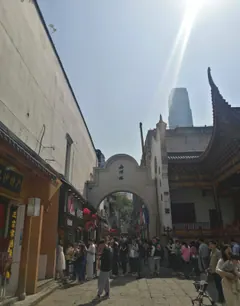 太平街Taiping StreetHistoric districtShort ride away3.08 km2.5 km south-west
Chinese names and pins are matched against each city's own map data at build time; a place only gets Directions once its pin has been verified, otherwise the button searches by name.
About Hunan Provincial Museum (Mawangdui)
1. Historical Origins: A Provincial Museum Holding a National Treasure
On paper, Hunan Provincial Museum should not be a destination. It is a provincial institution in a second-tier city, and its 180,000 objects — 763 of them graded first-class — would struggle to compete with the national collections in Beijing or Taipei. Then in 1972 a hospital on the eastern edge of Changsha tried to cut an air-raid shelter into a small hill and hit a seam of white clay. Underneath were three sealed Han dynasty tombs. In the largest lay the wife of the Marquis of Dai, buried around 168 BC and very nearly intact.
The excavation changed what archaeologists believed was possible. Lady Dai — Xin Zhui in Chinese — was found with her skin still soft, her joints still flexible, her hair, eyelashes and the contents of her stomach all preserved. She had not been wrapped, dried or mummified. She had simply been sealed inside four nested lacquered coffins, packed in a metre of charcoal and a metre of white clay, in a chamber that stayed cold, dark and airtight for 2,100 years.
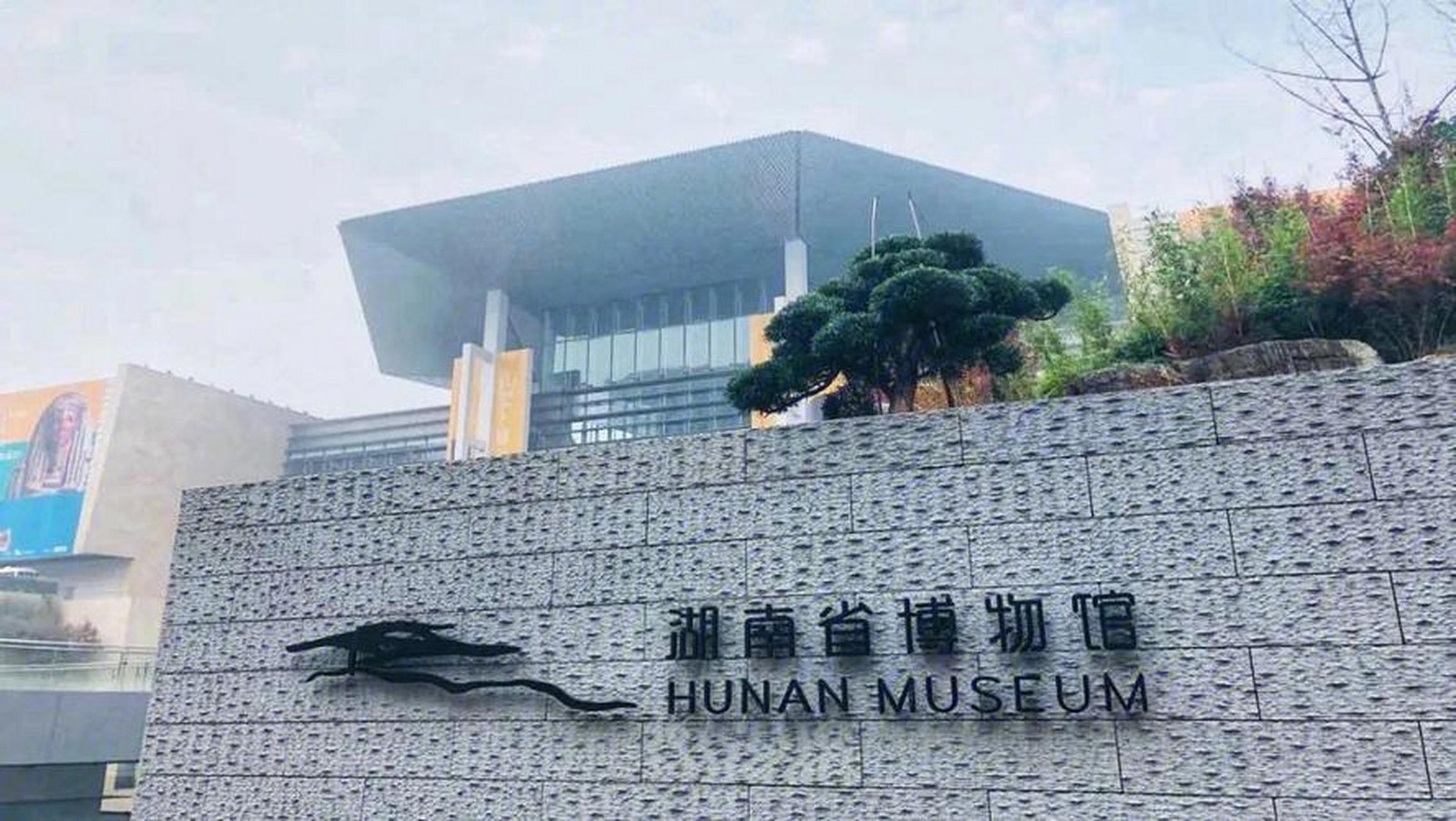
The building you walk into was rebuilt in 2017; the building is not the reason to come. Because every Mawangdui object came from one site, one family and one century, this museum can do something the big national collections cannot: tell a single continuous story — tomb, coffin, corpse, object — inside a floor plan you can cover in three hours.
2. What to Spot: Lady Dai, 49 Grams of Silk, and a Banner to the Afterlife
🕯️ Lady Dai Herself
- The Story: The body of Xin Zhui is the centrepiece of the Mawangdui galleries, displayed in a dim, cooled room on the third floor. She died in her early fifties, most likely of a heart attack after a rich meal, and her preservation is not the result of embalming but of an environment so hostile to bacteria that soft tissue survived two millennia.
- What to Look For: The skin tone and the articulation of the limbs, which is what visitors find hardest to accept. Photography is restricted here and the gallery is deliberately quiet — this is a burial, not a spectacle.
🧵 The Plain Gauze Garment
- The Story: A single unlined robe, 128 cm long and weighing 48–49 grams, folded down to the size of a matchbox. Two thousand years later, no workshop has reproduced the weave at that weight.
- What to Look For: It sits in a low-lit case. Look at the seams rather than the fabric — the garment was cut and sewn so fine that the joins disappear at arm’s length.
🎨 The T-Shaped Banner
- The Story: The painted silk banner carried at Lady Dai’s funeral, showing the cosmos in three registers: heaven above, the living world in the middle, the underworld below. It is the earliest known Chinese painting on silk with a named subject.
- What to Look For: The sun and crow at top right, the crescent moon and toad at top left, and the figure of Lady Dai herself, third from the top in the middle register, leaning on a staff.
🥢 Everything Else
- The Story: Two further floors cover Hunan’s bronze age and the Changsha kilns, whose export ceramics went to Persia and East Africa in the Tang dynasty.
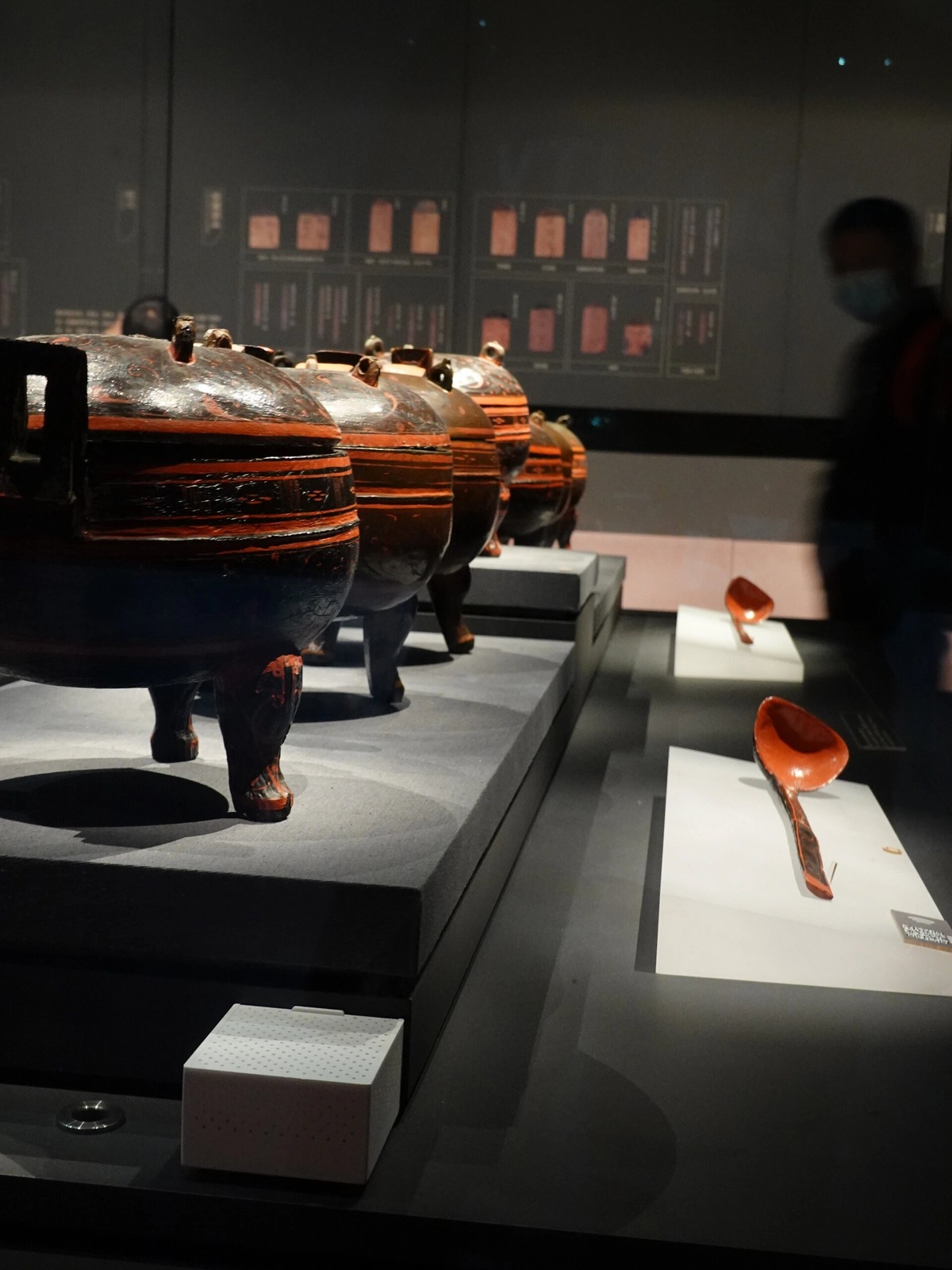
- What to Look For: The lacquerware and the sealed jars of food from the same tomb — pickled plums, grain, meat — which is where the exhibition stops being about treasure and starts being about a household.
3. Cultural Contrast: Why a Provincial Museum Beats a National One
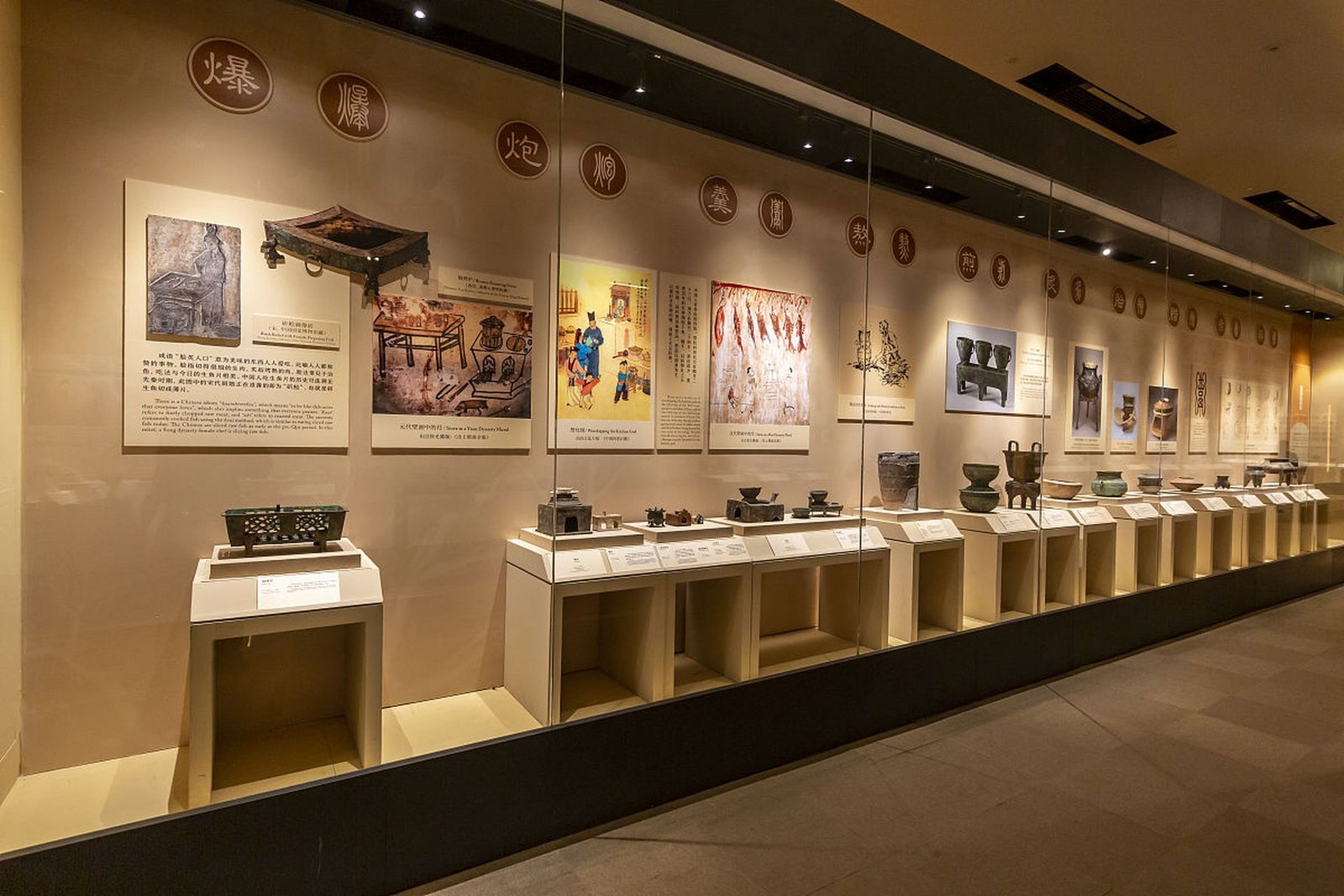
Chinese museums are usually organised by dynasty, which means a foreign visitor spends two hours looking at unlabelled bronzes and learns nothing about how anyone lived. Mawangdui is the opposite: one family, one date, one set of rooms. You see the food they pickled, the clothes they wore, the text they read and the map they drew of their own cosmos, all from a single excavation.
The comparison worth making is with the National Museum in Beijing, which is larger, freer of queues and far less personal. Hunan’s advantage is that nothing here was collected. It was all buried together in 168 BC and dug up in 1972, and the museum has resisted the urge to pad it out.
4. Practical Essentials: Tickets, Transit & Scam Alerts
Tickets & Passport Booking
- Price: Free. There is no paid ticket and no optional add-on.
- How to Book: Entry is by timed reservation, released on the museum’s official WeChat account seven days ahead at 20:00, with about 15,000 free slots per open day. The booking interface is Chinese-only; a passport number is accepted as the ID, and the gate scans passports rather than QR codes. If the online slots are gone, the gate kiosks release a limited number on the day — arrive before opening and queue with your passport. Foreign cards are not needed anywhere in the building, since nothing is sold at the entrance.
- Opening Hours: 09:00–17:00, last entry 16:00. Closed Mondays (except public holidays) and closed on New Year’s Eve.
How to Get There
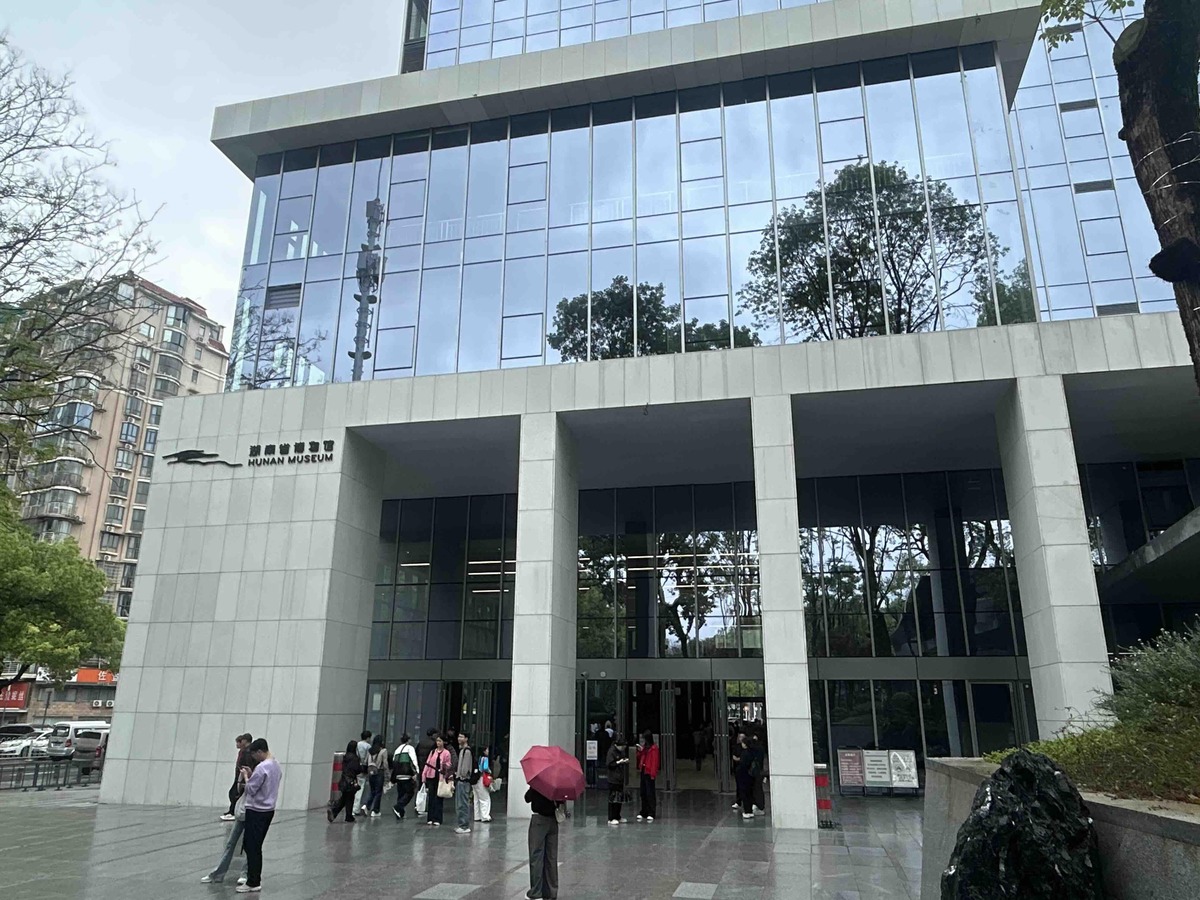
- By Metro: Line 6 to Martyr’s Park South Station (烈士公园南), Exit 2, then 400 m north — the museum is the large grey building on the left. Line 1 to Xiangya Hospital Station also works, about 12 minutes on foot. Buses 3, 112, 113, 131, 136, 146, 150, 203, 358 and 901 stop at the museum gate.
- Show Your Driver: 师傅,请带我到湖南省博物馆,东风路50号,谢谢!
Inside Tips & Scam Alerts
- Monday is closed, and it catches out more visitors than anything else in Changsha. If your trip includes a Monday, put the museum on your first non-Monday and build the rest of the city around it.
- The men selling QR codes outside are reselling free slots. They ask ¥50–100 for entry that costs nothing, and because the gate reads passports rather than phone screens, the codes frequently fail. Walk past them.
- Paid queue-jumping and “guided entry” offers are not official. The museum’s own guides and audio guides are arranged at the service desk inside the hall, after security.
- Go up first, then work down. Take the lift to the Mawangdui floor the moment you clear security; the tour groups arrive around 10:00 and move as a block.
- Free lockers at the entrance, and large bags must be checked. There is a café but no proper restaurant — this pairs well with a walk in Martyr’s Park next door, which is free and directly across the road.
- Accessibility is good throughout: lifts, ramps and accessible toilets on every floor, and wheelchairs on loan at the desk.
- Complaints or lost property: the 12345 hotline is free to call from any local phone and has English operators.
Quick Answers
The 6 things visitors ask before setting out, answered from the same verified record used across this page.
- How much does it cost to visit Hunan Provincial Museum (Mawangdui)?
- Free (passport, timed booking). Free. Bring your passport - entry is by timed reservation, released on the museum's WeChat account; 15,000 slots a day.
- What are the opening hours at Hunan Provincial Museum (Mawangdui)?
- 09:00-17:00, closed Mondays. Last entry 16:00.
- Is Hunan Provincial Museum (Mawangdui) wheelchair accessible?
- Yes. Purpose-built 2017 building with lifts, ramps and accessible toilets throughout. Wheelchairs available on loan at the service desk.
- How do I tell a taxi driver to take me to Hunan Provincial Museum (Mawangdui)?
- Copy this line into DiDi or show it to the driver: 师傅,请带我到湖南省博物馆(东风路50号),谢谢!
- Can I leave my luggage at Hunan Provincial Museum (Mawangdui)?
- Free lockers at the entrance - large bags must be checked.
- Is there anything to watch out for at Hunan Provincial Museum (Mawangdui)?
- Entry is free and only bookable through the official WeChat account or the gate kiosks. Scalpers outside sell QR codes for ¥50-100 - they are reselling free slots and the gate scans passports, so they often fail.
Where to go next
Three short lists, recomputed at build time from the same coordinates and categories as the pages themselves — no paid placement, no hand-picked names. Every card is a published guide.
Next stop in Changsha
Straight-line distance from this spot, so you can judge what is walkable and what needs a taxi.


More like this, elsewhere in China
If museum is what you came for, these are the closest equivalents you can reach in another city — ordered by distance, one city per card.


Change the subject
Deliberately a different category, for when one more temple or garden would blur into the last one.


Lists are derived from coordinates and category alone. Fix a wrong pin or re-tag a place and every list that mentions it moves with it.
Before you go · arrival essentials
Practical guides that pair with this kind of place — picked by category, not sponsored placement.
- Pay with Alipay & WeChat PayPayment · Set up Alipay or WeChat Pay on a foreign card — needed at almost every counter.
- Get online with a China eSIMConnectivity · Maps and messaging that work without a VPN, the moment you land.
- Book China train tickets (12306)Trains · Buy high-speed rail tickets with a foreign passport, for getting here and back.