
First Yangtze River Bridge
ℹ️ Free to walk. The two lifts at either end charge ¥2 per person; the lifts run limited hours.

The bridge is free; nobody sells tickets. Photographers at the bridgehead offer instant prints at ¥20-40 - a fair price if you want one, but confirm before they shoot.
Taxi & Street Navigation Help
师傅,请带我到武汉长江大桥(武昌桥头堡),谢谢!
Opening Hours & Best Time
The pedestrian walkway is open 24h; the lifts operate roughly 08:00-20:00 and close in high wind.
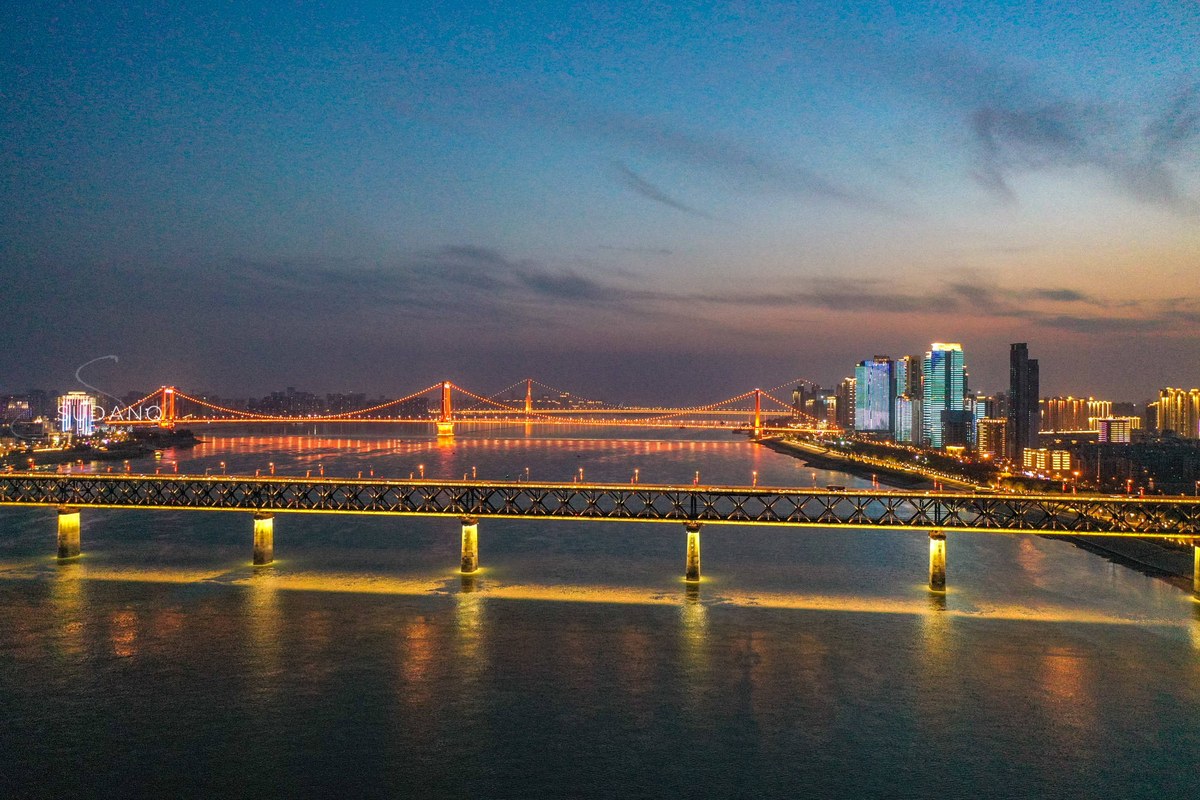
💡 Pro Tip: Walk it at 06:30 when the river is still hazy and commuter traffic is thin, or after 20:00 for the lit-up version. Fifteen minutes each way at a normal pace.
Accessibility & Luggage Lockers
Accessibility: ⚠️ Step thresholds, limited access
A 1.7 km walkway with a raised kerb, no barrier on the road side and no refuge bays. Not suitable for wheelchairs or strollers; the lift cabins are small and often out of service.
🧳 Luggage Storage: Nothing on the bridge. Leave bags behind - the walkway is narrow.
Nearby Landmarks
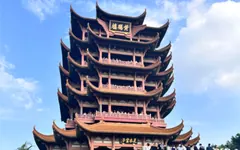
The 2 places within reach of this spot — each one opens straight into Apple Maps or Amap, with the Chinese name you can show a driver.
Chinese names and pins are matched against each city's own map data at build time; a place only gets Directions once its pin has been verified, otherwise the button searches by name.
About First Yangtze River Bridge
1. Historical Origins: The Bridge That Joined the Railway
Until 1957 there was no bridge across the Yangtze at Wuhan. Every train, every lorry and every passenger crossing the river did it by ferry, and the Beijing–Guangzhou line was cut in two by water for the width of the city. The bridge that opened in that year — the First Yangtze River Bridge — ended that, and it is still the reason the line works.
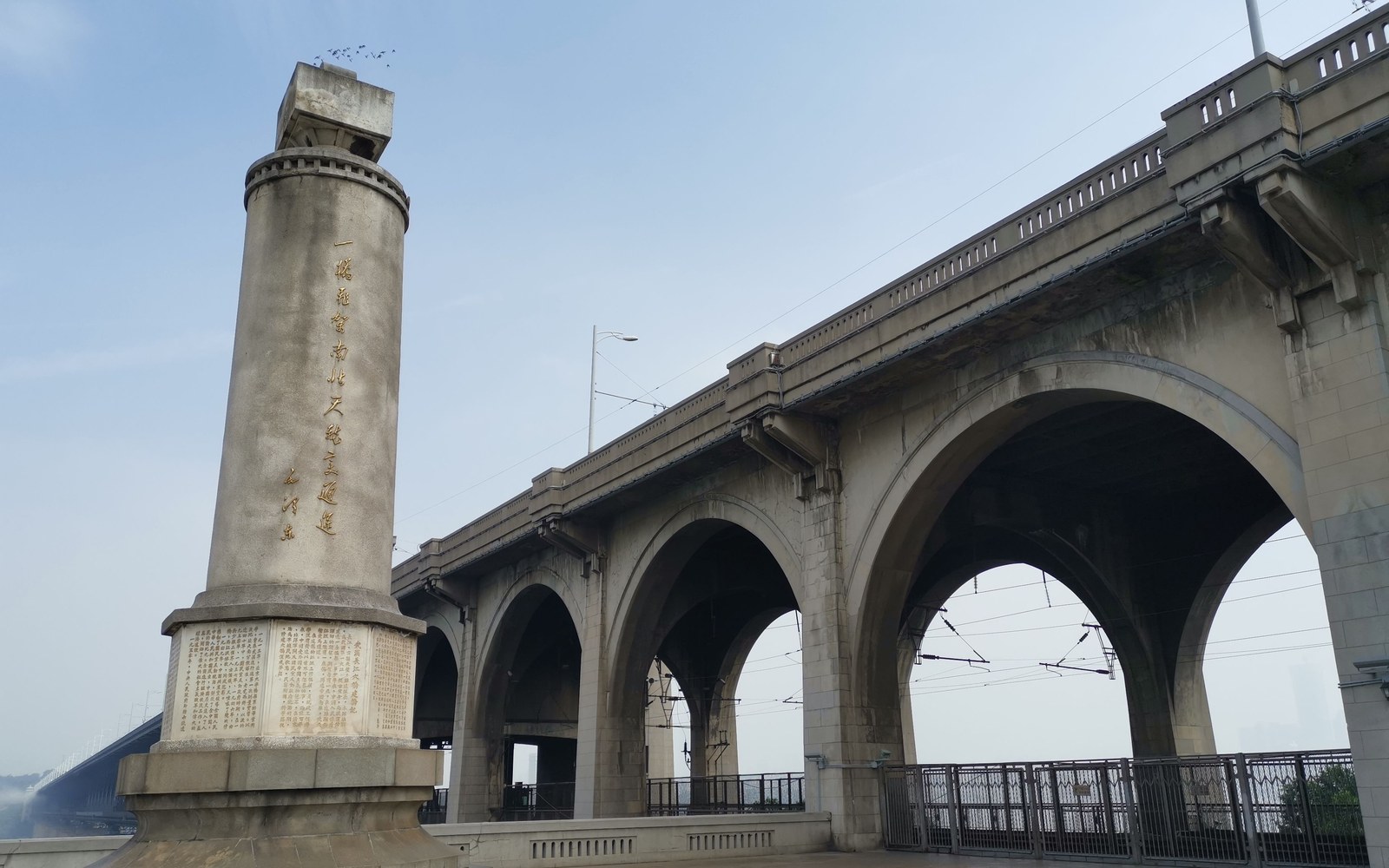
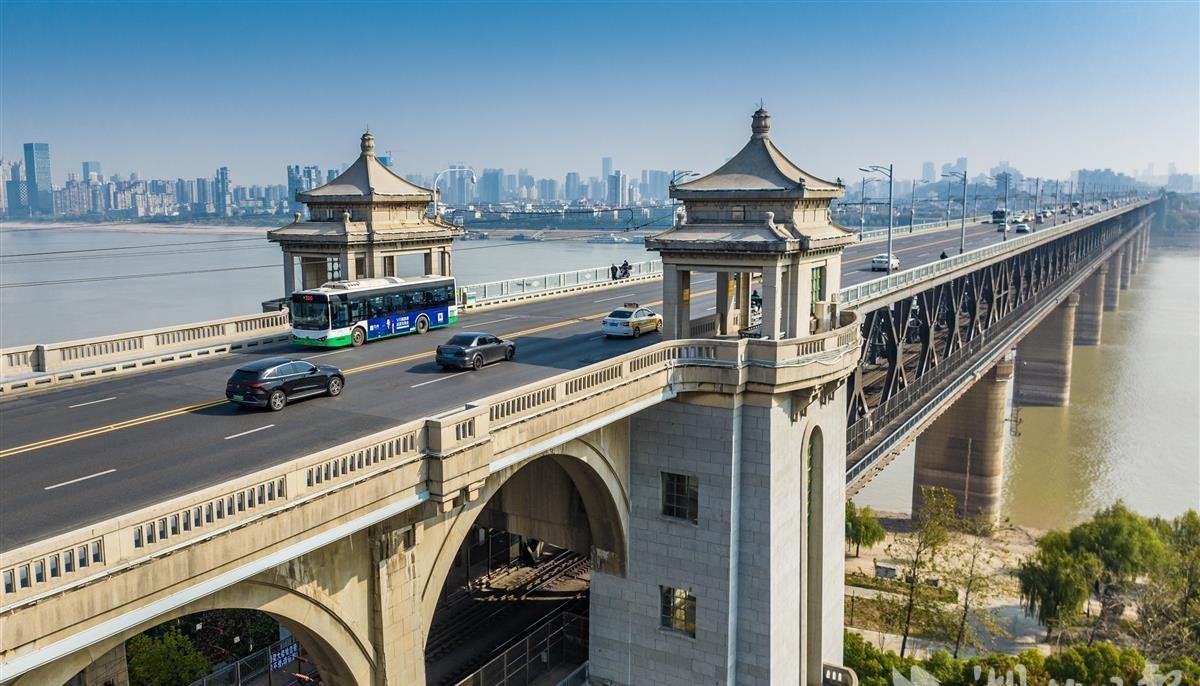
It is a double-deck truss: road traffic on top, the Beijing–Guangzhou railway underneath, 1,670.4 metres of it carried on eight piers and nine spans. The numbers matter less than the arrangement. Stand on the pedestrian deck and a train will pass beneath your feet with a noise you feel in the handrail — that is the whole point of the structure, and it is why this bridge is still the reference point for every crossing built upstream since.
Mao Zedong wrote that a single bridge had flown north and south and turned a natural moat into a road. It is the kind of line that gets carved into stone at a bridgehead, and it has the advantage of being literally true: the crossing at Wuhan was the choke point of the whole north–south network, and after 1957 it was not.
2. What to Spot: Two Decks, Eight Piers, One River
🌉 The Two Decks
- The Story: A road deck on top and a railway deck below, built as a single steel truss and held up by eight piers standing in the river. Both decks were part of the design from the start, and the bridge has carried both ever since.
- What to Look For: The moment a train crosses. Go to the rail on the downstream side and wait — the whole deck hums before you see anything.
🏛️ The Bridgeheads
- The Story: Both ends are anchored by heavy bridgehead towers, with lifts inside them that carry pedestrians from the bank up to the deck. The Wuchang tower sits at the foot of Snake Hill, directly below Yellow Crane Tower.
- What to Look For: The towers from the riverbank, where their scale makes sense. From the deck they are just the place the walk starts.
🌅 The Walk Across
- The Story: The pedestrian deck runs the full length of the bridge, about 1.7 kilometres, and it is free and open at all hours. Fifteen minutes each way at a normal pace; forty if you stop, which you will.
- What to Look For: The sunset shot taken from the Wuchang end walking west: sun on the water, cargo ships below, and the tower behind you. This is the one photograph everybody comes for.
🐢 Turtle and Snake
- The Story: The bridge connects Turtle Hill in Hanyang to Snake Hill in Wuchang — the two hills that give the city its oldest landscape metaphor. On the Hanyang side, the Qingchuan Pavilion stands at the water’s edge below the bridgehead.
- What to Look For: The continuation. Walk across from Wuchang, come down at Hanyang, and Qingchuan Pavilion is a few minutes away — the natural end of the crossing.
3. Cultural Contrast: Why a Bridge Became a Monument
Foreign visitors tend to be puzzled that a 1957 road bridge is on every Wuhan postcard. Bridges are infrastructure at home; this one is a national event. The reason is the river: the Yangtze is wide, fast, and until 1957 nothing crossed it at Wuhan, so every train on the north–south line was lifted onto a ferry and lifted off again on the far bank.
So the bridge did two things at once. It closed a gap in the map, and it proved something — that a river this size could be spanned with Chinese steel and Chinese labour at a moment when the country had very little of either. The decorative details at the bridgeheads, the slogans, the viewing lifts: all of it exists because this was never just a bridge.
Which is also why it is worth walking rather than photographing from the bank. The experience is not visual. It is the noise of the train deck under your feet, the wind funnelling along the truss, and the sudden realisation, halfway across, that the river below you is the one all the poems were about.
4. Practical Essentials: Tickets, Transit & Scam Alerts
Tickets & Passport Booking
- Price: Free to walk. The two viewing lifts at either end charge ¥2 per person, which is the only money involved.
- How to Book: Nothing to book, no ticket, no reservation. Pay the lift operator in cash or by phone scan at the tower. Foreign cards are not accepted at a two-yuan lift; carry coins or notes.
- Opening Hours: The pedestrian deck is open 24 hours. The lifts run roughly 08:00–20:00 and shut in high wind, which is exactly when you would want them. Check before walking up.
How to Get There
- By Bus to the Wuchang End: Buses 514, 539, 542, 566, 572, 573, 578, 607, 717, 804 and 916 stop near the bridgehead, which is a few minutes’ walk from Yellow Crane Tower.
- By Foot: The walk starts at Snake Hill on the Wuchang side and ends at the foot of Turtle Hill in Hanyang, where Qingchuan Pavilion is a short walk on.
- Show Your Driver: 师傅,去武汉长江大桥武昌桥头(黄鹤楼旁边),谢谢!
Inside Tips & Scam Alerts
- Walk it at 06:30 or after 20:00. At dawn the river is still hazy and the commuter traffic is thin; after eight the truss is lit and the wind has dropped. Midday in July is genuinely punishing.
- 1.7 kilometres with no shade in either direction. Take water and a hat in summer; take a windproof layer in winter, when the deck is colder than the bank.
- The barrier between the walkway and the traffic is low, and electric scooters use the bridge. Keep to the inside, hold your phone with two hands, and do not lean over the rail for the photograph.
- Hats and scarves go into the river on windy evenings. This is not a metaphor; it happens constantly.
- The bridge is free and nobody sells tickets for it. Photographers at the bridgehead offer instant prints at ¥20–40, which is a fair price if you want one — but agree before they shoot.
- If 1.7 kilometres sounds like too much, take the Zhonghua Road to Wuhan Pass ferry instead. Five minutes on the water, a view of the bridge from below, and no walking.
- Accessibility is limited: the deck is reached by stairs or by the lift, and neither is generous. Wheelchair users should check at the tower before committing to the crossing.
- Complaints or overcharging: the 12345 hotline is free to call from any local phone and has English operators.
Quick Answers
The 6 things visitors ask before setting out, answered from the same verified record used across this page.
- How much does it cost to visit First Yangtze River Bridge?
- Free to walk; lifts ¥2. Free to walk. The two lifts at either end charge ¥2 per person; the lifts run limited hours.
- What are the opening hours at First Yangtze River Bridge?
- The pedestrian walkway is open 24h; the lifts operate roughly 08:00-20:00 and close in high wind.
- Is First Yangtze River Bridge wheelchair accessible?
- Not fully. A 1.7 km walkway with a raised kerb, no barrier on the road side and no refuge bays. Not suitable for wheelchairs or strollers; the lift cabins are small and often out of service.
- How do I tell a taxi driver to take me to First Yangtze River Bridge?
- Copy this line into DiDi or show it to the driver: 师傅,请带我到武汉长江大桥(武昌桥头堡),谢谢!
- Can I leave my luggage at First Yangtze River Bridge?
- Nothing on the bridge. Leave bags behind - the walkway is narrow.
- Is there anything to watch out for at First Yangtze River Bridge?
- The bridge is free; nobody sells tickets. Photographers at the bridgehead offer instant prints at ¥20-40 - a fair price if you want one, but confirm before they shoot.
Where to go next
Three short lists, recomputed at build time from the same coordinates and categories as the pages themselves — no paid placement, no hand-picked names. Every card is a published guide.
Next stop in Wuhan
Straight-line distance from this spot, so you can judge what is walkable and what needs a taxi.


More like this, elsewhere in China
If landmark is what you came for, these are the closest equivalents you can reach in another city — ordered by distance, one city per card.


Change the subject
Deliberately a different category, for when one more temple or garden would blur into the last one.


Lists are derived from coordinates and category alone. Fix a wrong pin or re-tag a place and every list that mentions it moves with it.
Before you go · arrival essentials
Practical guides that pair with this kind of place — picked by category, not sponsored placement.