
Mogao Caves

This is the single most-reserved ticket in western Gansu and the official warnings are unusually blunt. One: the Dunhuang Academy has authorised NO third-party ticket resale — any OTA listing, 'ticket + private car' package, informal ride-share or scalper offer claiming to guarantee entry is, in the Academy's own words, false advertising; buy only through the official platform. Two: access is real-name, timed and capped to a low daily number that sells out days-to-weeks ahead in peak season, so book early and for a specific slot. Three: there is no ticket office and no car park at the caves themselves — never drive straight to the grottoes; your destination is always the Digital Display Centre, where you watch the films and board the official shuttle. A staff inquiry hotline exists but takes no bookings, and it does not sell by phone — if you cannot use the official WeChat channel you have effectively no alternative reservation route, so plan for that before a peak-season trip.
Taxi & Street Navigation Help
师傅,去【莫高窟数字展示中心】(敦煌市阳关东路8899号),谢谢!
Opening Hours & Best Time
The year splits into two posted seasons. In peak season (roughly 1 April to 30 November) the site runs about 08:00 to 18:00 with a last ticket check in the mid-afternoon; in the off-season (roughly 1 December to 31 March) it opens later and closes earlier, around 09:00 to 17:00 with an earlier final check. The exact cut-offs move with the season and with the Academy's notices, so treat the posted 'last check' — not the closing time — as the real deadline, and remember the whole visit starts at the Digital Display Centre, not at the caves.
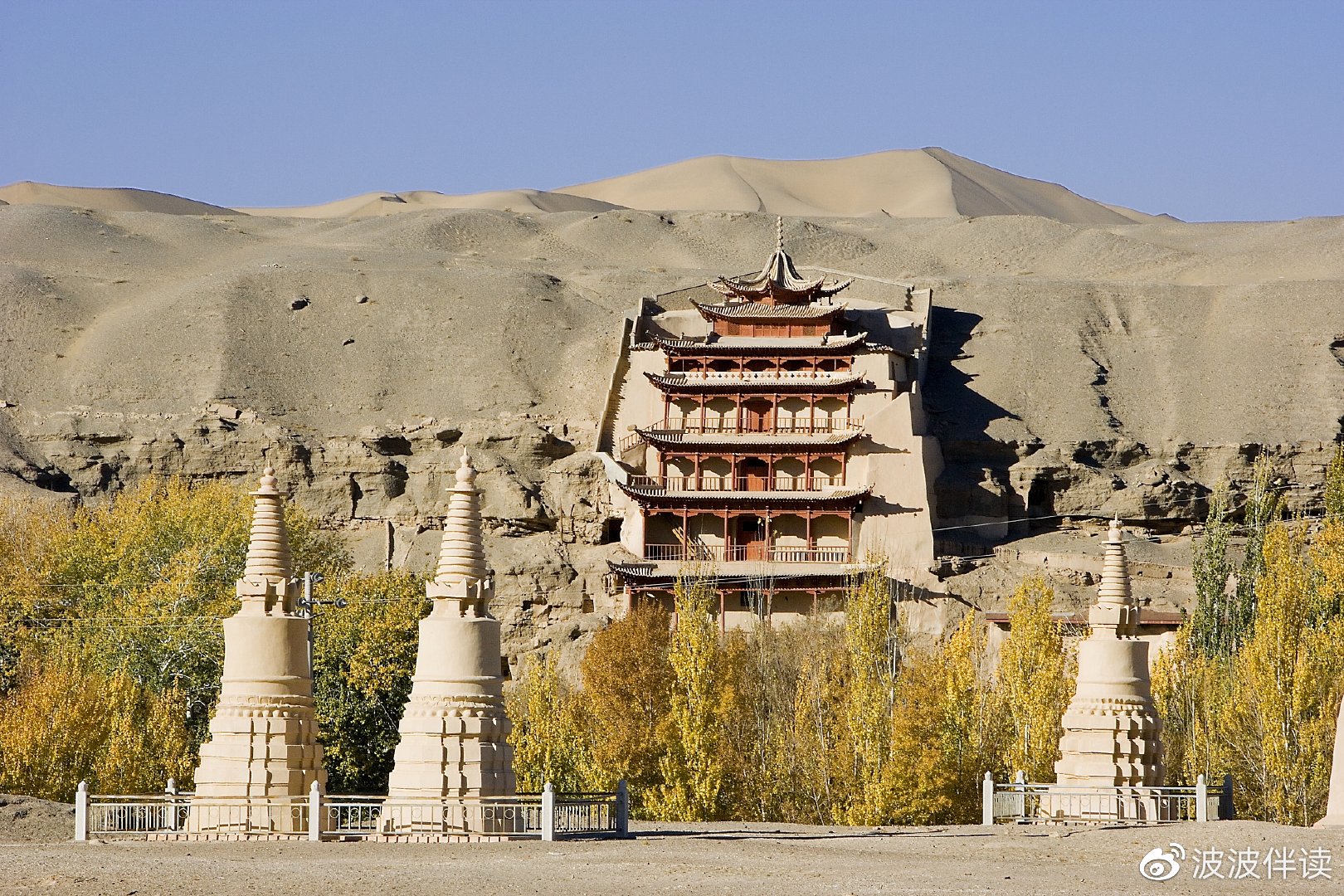
💡 Pro Tip: A UNESCO World Heritage site and one of China's Four Great Grottoes, the Mogao Caves are the longest continuously developed Buddhist art complex on earth: legend dates the first hermit's cell to 366 AD, and over the next thousand years — through the Sixteen Kingdoms, Sui, Tang and on to the Yuan — the sandstone cliff of Mingsha's eastern face was hollowed into 735 numbered caves holding some 45,000 square metres of mural and more than 2,000 painted sculptures. It is, in short, a thousand-year painting-and-sculpture gallery of a civilisation, and its greatest icon is the nine-storey pagoda (jiu ceng lou) fronting the giant Maitreya Buddha of Cave 96. In 1900 the 'Library Cave' (Cave 17) was found sealed with tens of thousands of manuscripts and paintings, a discovery so vast it created an entire international discipline — Dunhuangology. The visit is deliberately staged: two films at the Digital Display Centre first give you the history and a high-definition look inside chambers too fragile for daily opening, and only then does your guide lead you into the real caves — where, to protect the pigments, absolutely no photography is allowed.
Accessibility & Luggage Lockers
Accessibility: ⚠️ Step thresholds, limited access
Grotto access is up external stairways and walkways into cliff-face caves with steps and low thresholds; many chambers are reached by stairs and are not wheelchair- or stroller-practicable. The Digital Display Centre is modern and level, but the cave tour itself assumes confident footing on steps.
🧳 Luggage Storage: Storage is at the Digital Display Centre, which is your real entry point — leave big bags there before the films and shuttle; the cave zone has no such facilities.
Nearby Landmarks
The 2 places within reach of this spot — each one opens straight into Apple Maps or Amap, with the Chinese name you can show a driver.
- Mingsha Mountain & Crescent Spring, on the city's south-west edgeNatureNearbyseparate operator, separate ticket
- The Digital Display Centre on Yangguan East Road, the mandatory visit gatewayHistoric districtNearby
Also worth pairing: Dunhuang Museum in the city, for the Silk Road background before you see the caves — real picks, just left off the grid so the cards stay in pairs.
Chinese names and pins are matched against each city's own map data at build time; a place only gets Directions once its pin has been verified, otherwise the button searches by name.
About Mogao Caves
1. Historical Origins: A Thousand Years Painted into a Cliff
The Mogao Caves begin, by tradition, in 366 AD, when a travelling monk saw a vision of a thousand Buddhas glowing on the cliff of Mingsha Mountain and cut the first meditation cell into the soft sandstone. That pious sighting began an extraordinary run of patronage: over roughly a thousand years — across the fractious Sixteen Kingdoms, the cosmopolitan Tang, and the periods that followed to the Yuan — monks, merchants, officials and whole families funded chambers here, each painted and sculpted to the styles of its age, so the cliff became a dated, in-place record of a millennium of Chinese and Silk Road art.
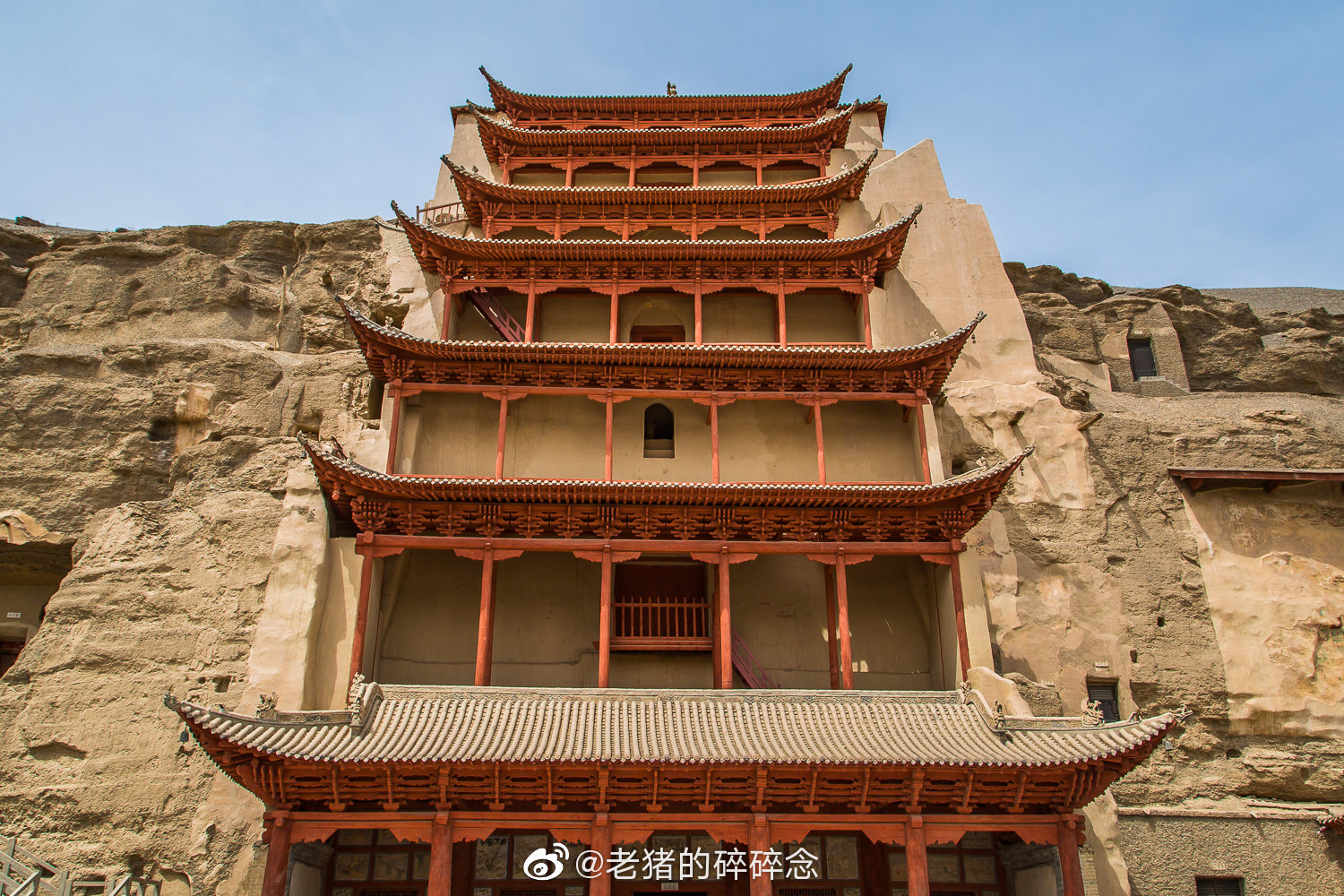
Its modern fame arrived by accident. Around 1900, Cave 17 — the ‘Library Cave’ — was found sealed for centuries with a staggering hoard of manuscripts, prints and paintings in many languages, documenting the multilingual Silk Road trade that made Dunhuang the choke-point where routes around the Taklamakan converged. The find was so significant it founded an international field, ‘Dunhuangology’. Today the site is a UNESCO World Heritage listing and one of China’s Four Great Grottoes: 735 caves, tens of thousands of square metres of mural, two thousand sculptures — the richest surviving treasury of Buddhist art anywhere.
2. What to Spot: The Great Buddhas, the Murals, the Library Cave
🗿 The Giant Buddhas & Cave 96
- The Story: Cliff-face chambers of monumental scale, crowned by the Maitreya behind the nine-storey pagoda.
- What to Look For: The sheer size of the sculpted Buddhas against the painted smaller caves — scale as an act of devotion.
🎨 The Murals — a Dated Gallery of a Millennium
- The Story: 45,000 square metres of painting: flying apsaras, jataka tales, Pure Land scenes, donor portraits in period dress.
- What to Look For: Style shifting cave to cave across dynasties; the guide’s torch on a Tang paradise scene is the defining image (no photos inside).
📜 The Library Cave & the Films
- The Story: Cave 17, source of the sealed manuscript hoard that birthed Dunhuangology.
- What to Look For: The story is best absorbed in the Digital Display Centre films, which also open fragile caves too sensitive for the daily walking route.
3. Cultural Contrast: Where Civilisations Met in Pigment
To a first-time visitor the Mogao murals read as ‘Buddhist art’; to a historian they are a census of the Silk Road. Dunhuang sat at the choke-point where the northern and southern routes around the Taklamakan Desert rejoined, so every caravan, faith and craft passing between China and Central Asia left its trace here — Indian and Gandharan iconography gradually sinicised, foreign faces appear in donor processions, and the hoard in the Library Cave spanned Chinese, Tibetan, Sanskrit, Sogdian and more. The caves are where you can watch a civilisation absorbing the world, in colour, over centuries.
The other contrast is between image and access. For conservation reasons the Academy runs the Mogao as a tightly metered experience — capped numbers, mandatory films, guided batches, no cameras in the caves — precisely because the pigments cannot survive the breath, light and humidity of mass tourism. It can feel restrictive next to an open heritage site, but the discipline is the reason a thousand-year-old painting still shows you its original brushwork rather than a blank wall. Accept the choreography, and you are seeing what most of the ancient world lost.
4. Practical Essentials: Tickets, Booking & Scam Alerts
Tickets & the Foreign-Passport Route
- Tiers: peak-season standard and lower off-season standard (both include the two films plus a guided cave run), and a films-excluded, fewer-cave emergency ticket for extreme days. Concession prices apply only to mainland ID holders; a foreign passport buys full-price. No amount is fixed here — confirm the live tier for your dates officially.
- Passport booking: as a foreign-passport or HK/Macao/Taiwan-permit holder, follow the official ‘Mogao Caves Reservation’ WeChat service account and choose the ‘Ticket Booking’ path; even after buying online you must still collect a paper ticket-information slip at a staffed window on-site, so build the required early arrival around that exchange.
- The hard rule: arrive at the Digital Display Centre at least 30 minutes before your reserved slot; bring the same passport used to book (ticket, ID and face must match); and buy only through the official channel — the Academy authorises no third-party resale.
How to Get There
- Where it is: your destination is always the Digital Display Centre (No. 8899 Yangguan East Road), where films and shuttles start; the caves lie a short official-shuttle ride beyond and have no ticket office or parking, so do not drive to the grottoes. Dunhuang publishes no official drive time from the airport or rail station — treat mapping figures as estimates.
- Show Your Driver: 师傅,去【莫高窟数字展示中心】(敦煌市阳关东路8899号),谢谢!
Inside Tips & Scam Alerts
- Book the earliest slot you can in peak season — it sells out and mornings are cooler and calmer. Watch both films first; they make the caves legible and show chambers you won’t enter. No photography inside the caves (outside and in the park, yes). Refuse every ‘guaranteed-ticket + car’ offer — all are, officially, false. Complaints / lost property: 12345, free from a local number.
Quick Answers
The 6 things visitors ask before setting out, answered from the same verified record used across this page.
- How much does it cost to visit Mogao Caves?
- Dunhuang Academy tiers — book official.
- What are the opening hours at Mogao Caves?
- The year splits into two posted seasons. In peak season (roughly 1 April to 30 November) the site runs about 08:00 to 18:00 with a last ticket check in the mid-afternoon; in the off-season (roughly 1 December to 31 March) it opens later and closes earlier, around 09:00 to 17:00 with an earlier final check. The exact cut-offs move with the season and with the Academy's notices, so treat the posted 'last check' — not the closing time — as the real deadline, and remember the whole visit starts at the Digital Display Centre, not at the caves.
- Is Mogao Caves wheelchair accessible?
- Not fully. Grotto access is up external stairways and walkways into cliff-face caves with steps and low thresholds; many chambers are reached by stairs and are not wheelchair- or stroller-practicable. The Digital Display Centre is modern and level, but the cave tour itself assumes confident footing on steps.
- How do I tell a taxi driver to take me to Mogao Caves?
- Copy this line into DiDi or show it to the driver: 师傅,去【莫高窟数字展示中心】(敦煌市阳关东路8899号),谢谢!
- Can I leave my luggage at Mogao Caves?
- Storage is at the Digital Display Centre, which is your real entry point — leave big bags there before the films and shuttle; the cave zone has no such facilities.
- Is there anything to watch out for at Mogao Caves?
- This is the single most-reserved ticket in western Gansu and the official warnings are unusually blunt. One: the Dunhuang Academy has authorised NO third-party ticket resale — any OTA listing, 'ticket + private car' package, informal ride-share or scalper offer claiming to guarantee entry is, in the Academy's own words, false advertising; buy only through the official platform. Two: access is real-name, timed and capped to a low daily number that sells out days-to-weeks ahead in peak season, so book early and for a specific slot. Three: there is no ticket office and no car park at the caves themselves — never drive straight to the grottoes; your destination is always the Digital Display Centre, where you watch the films and board the official shuttle. A staff inquiry hotline exists but takes no bookings, and it does not sell by phone — if you cannot use the official WeChat channel you have effectively no alternative reservation route, so plan for that before a peak-season trip.
Where to go next
Three short lists, recomputed at build time from the same coordinates and categories as the pages themselves — no paid placement, no hand-picked names. Every card is a published guide.
Next stop in Dunhuang
Straight-line distance from this spot, so you can judge what is walkable and what needs a taxi.


More like this, elsewhere in China
If landmark is what you came for, these are the closest equivalents you can reach in another city — ordered by distance, one city per card.


Change the subject
Deliberately a different category, for when one more temple or garden would blur into the last one.


Lists are derived from coordinates and category alone. Fix a wrong pin or re-tag a place and every list that mentions it moves with it.
Before you go · arrival essentials
Practical guides that pair with this kind of place — picked by category, not sponsored placement.