
Gushan (Drum Mountain)
ℹ️ Free to climb. 涌泉寺 temple ¥40. Cable car about ¥50 one way / ¥75 return. ⚠️ Confirm at the gate.

The mountain is free - there is no entrance ticket, whatever anyone at the car park says. Temple ticket is a fixed ¥40 at the temple gate. 'Monks' offering blessings and a donation book on the steps are not monks; decline politely and keep walking.
Taxi & Street Navigation Help
师傅,请带我到鼓山(涌泉寺登山口),谢谢!
Opening Hours & Best Time
Mountain paths 24h; 涌泉寺 about 06:00-17:30; cable car about 08:00-17:00.
💡 Pro Tip: Climb the 1,800 steps at 07:00 while it is still cool - most of the route is in shade under old banyans and there are tea stalls and pavilions with calligraphy carved into the cliff the whole way. At the top 涌泉寺 has a vegetarian canteen; eat there. Come down by cable car if your knees are unhappy.
Accessibility & Luggage Lockers
Accessibility: ⚠️ Step thresholds, limited access
1,800 stone steps to the temple - steep, uneven and continuous. Not accessible. The cable car reaches the temple level but is not wheelchair-adapted. A paved road serves the temple for vehicles.
🧳 Luggage Storage: No storage; leave bags at the hotel.
Nearby Landmarks & A Short Train Ride
The 4 places worth pairing with this spot — each one opens straight into Apple Maps or Amap, with the Chinese name you can show a driver. One pick sits in Xiamen (HSR ~58 min) — a short high-speed ride, not a walk. Fuzhou's own list came out one short of a pair, and this is the nearest pick that fills it.
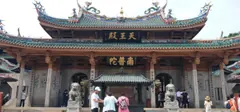
Chinese names and pins are matched against each city's own map data at build time; a place only gets Directions once its pin has been verified, otherwise the button searches by name. Cards with an amber city tag are in another city — the ride time shown is the fastest train of the day.
About Gushan (Drum Mountain)
1. Historical Origins: A Drum-Shaped Rock and a Temple Behind the Ridge
Gushan takes its name from a boulder near the summit that is said to sound like a drum when wind and rain hit it. The mountain has been a religious site for well over a thousand years: the temple half way up, Yongquan, was founded in the Tang and grew into one of the most important monasteries in the region.
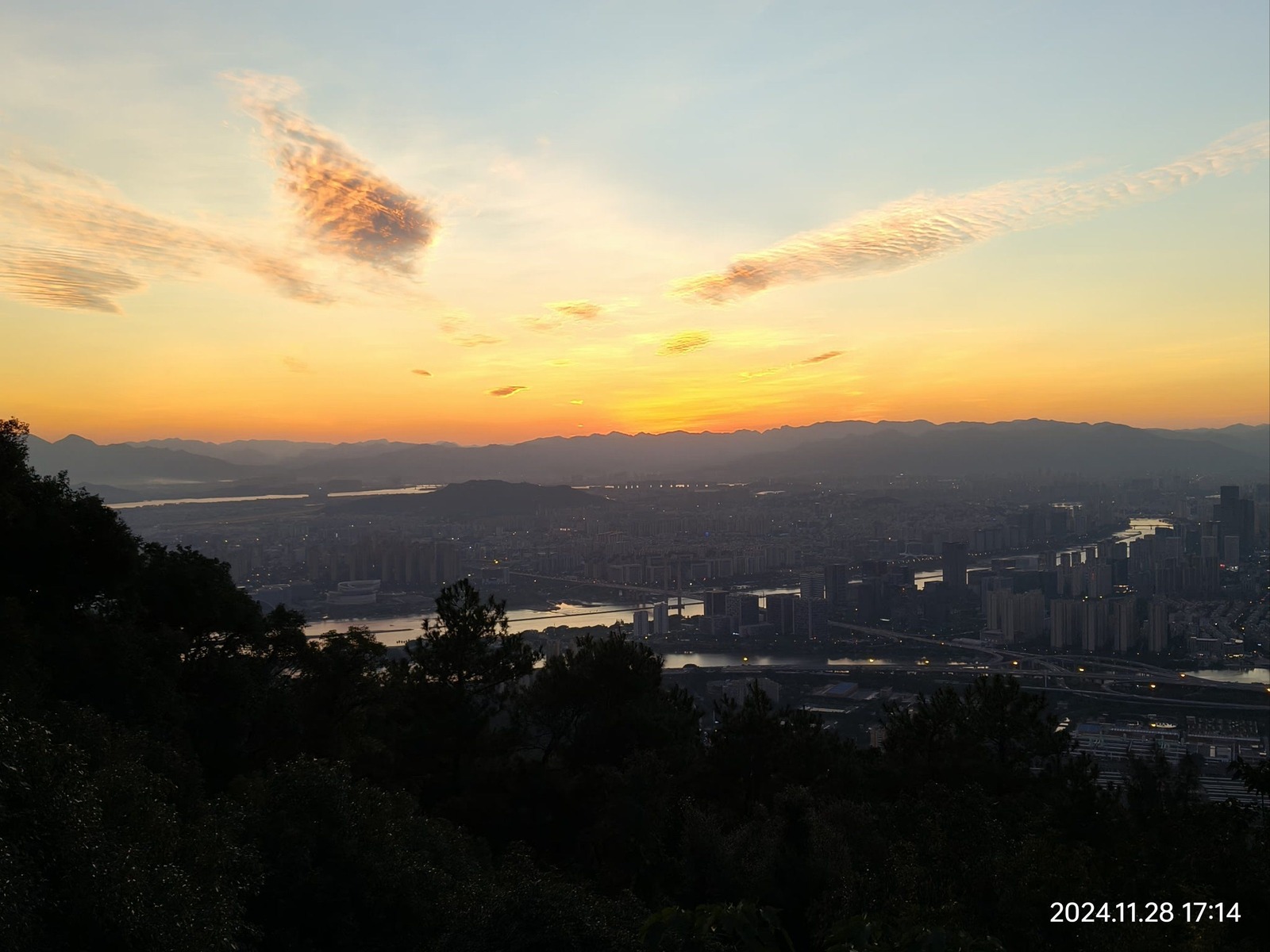
The layout is the thing people remember. From below you cannot see the temple for the trees, and once you are inside its courtyards the mountain disappears — a deliberate arrangement rather than an accident of terrain. The stone path up has been walked for centuries, and the cliff faces beside it carry inscriptions cut by people who made the climb before you, including scholars whose names you may know.
2. What to Spot: Steps, Carvings, the Temple
🪜 The Stone Path
The old route to the temple is a long flight of cut stone steps — around eighteen hundred of them, most of it in the shade of old banyans. It is not technical walking; it is sustained walking, and the tea stalls and pavilions along the way are part of the experience rather than a concession to it.
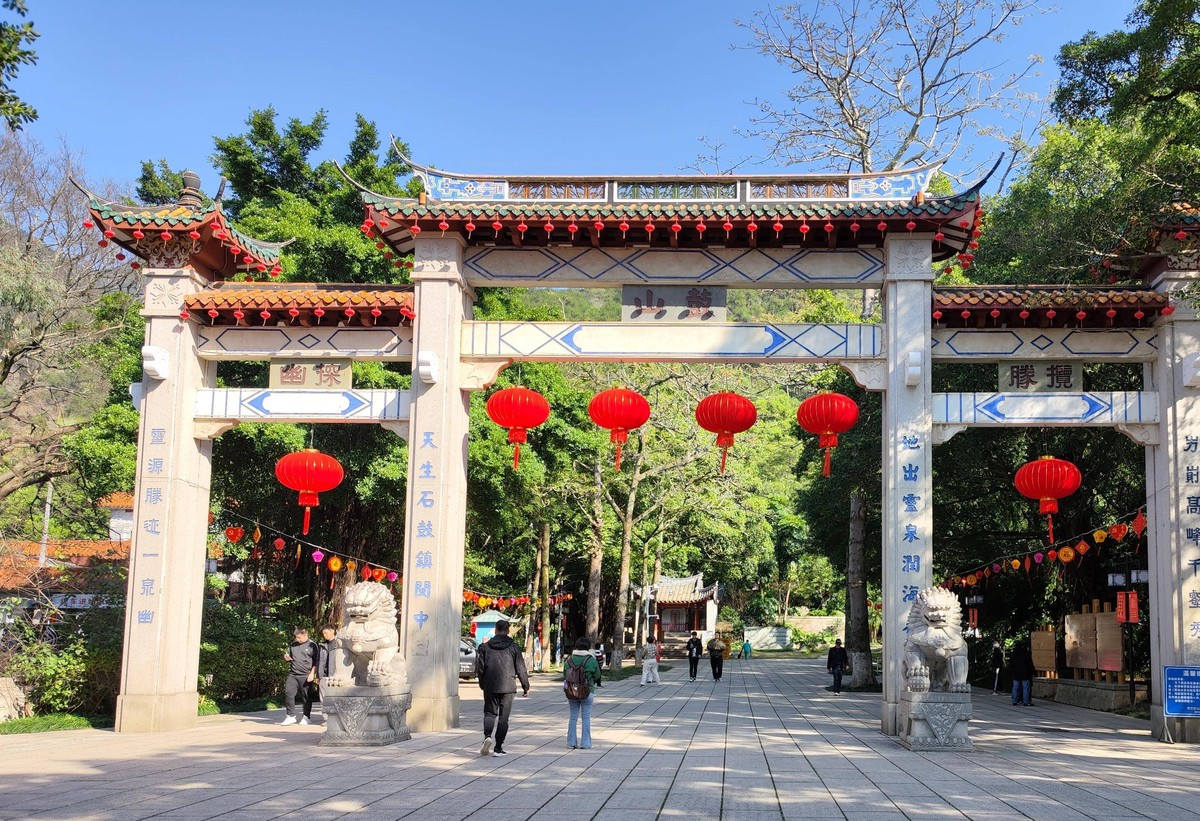
- The Story: The inscriptions cut into the rock are the mountain’s archive — centuries of visitors recording that they came, and what they thought of the view.
- What to Look For: Carvings at eye level rather than at the top of the cliff; most people climb past them looking at their feet.
🛕 Yongquan Temple
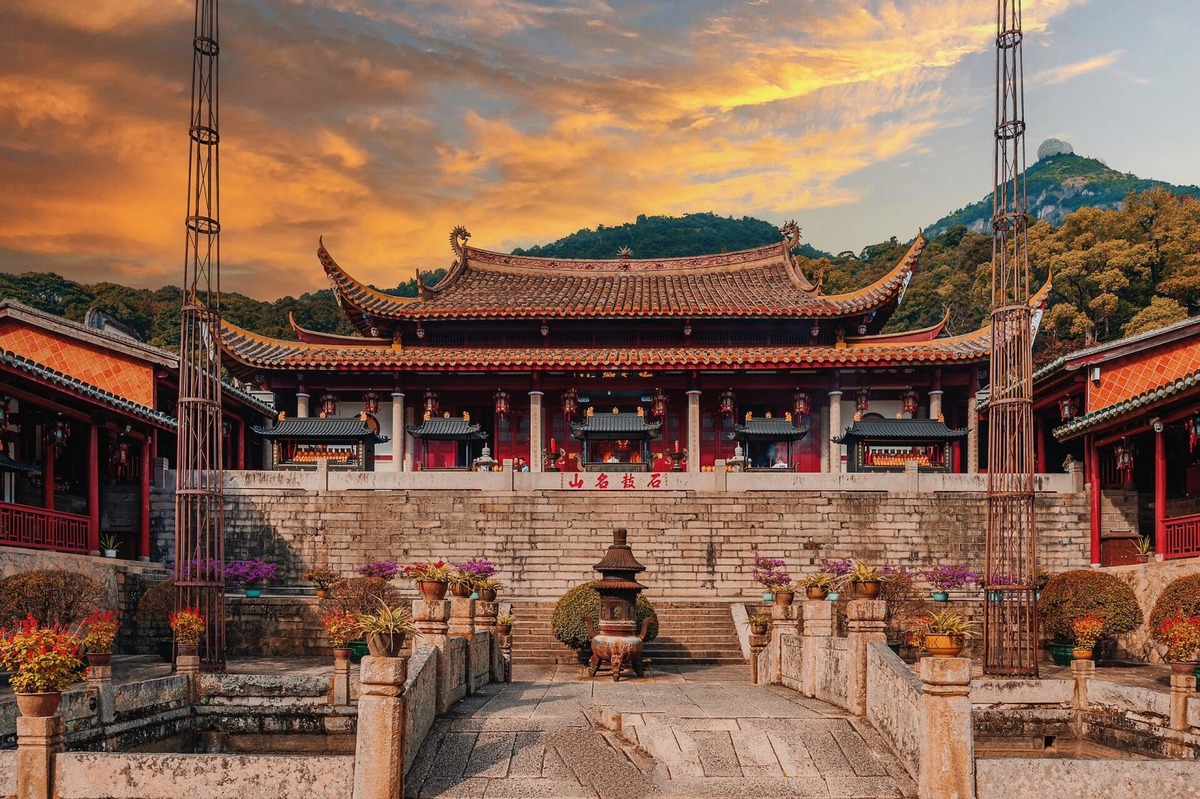
A working monastery, not a museum piece — halls in use, incense burning, and a vegetarian canteen that is the best reason to time your arrival before lunch. The temple charges its own admission, and the rules inside are the rules of a religious site: dress with a bit of care and keep your voice down.
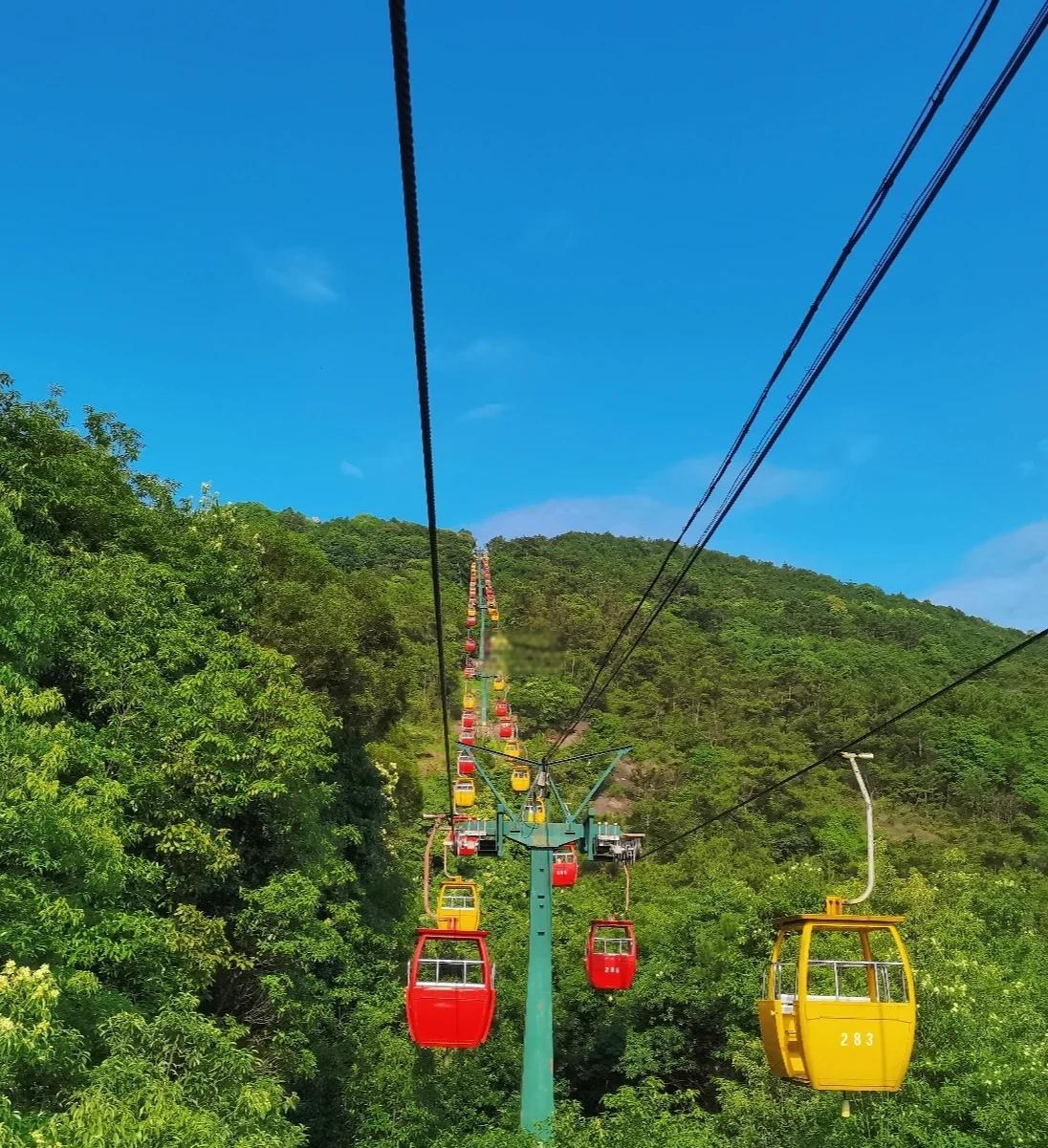
🚡 The Cable Car
It runs to a point below the temple and exists mostly so that people can get down without wrecking their knees. Buy a one-way ticket up front if you plan to walk up and ride down — it is the sensible order.
3. Cultural Contrast: A Mountain the City Actually Uses
In Europe a mountain this close to a city is likely to be a nature reserve with a car park and a marked trail. Here it is closer to a public living room: people climb before work, pensioners sing in the pavilions, and on summer evenings there are torches on the path after dark.
- The mountain is free to climb. There is no entrance ticket, whatever anyone near the car park tells you.
- The temple is a separate paid site and the cable car is a separate paid ride; both are priced at their own ticket windows and the figures differ between sources, so check the board on the day.
- Early morning is a local ritual. Start at seven and you will be walking up with people who do this weekly.
4. Practical Essentials: Tickets, Transit & Scam Alerts
Tickets & Passport Booking
- Climbing is free and the paths are open around the clock. No booking, no gate.
- Temple admission, the secondary scenic spots and the cable car are each charged separately. Prices differ depending on where you read them — buy at the window on the day and ignore online figures.
- Temple hours and last entry also vary between sources; arrive with daylight to spare rather than cutting it fine.
- Bring your passport even though nothing here requires an ID — you will need it for hotels and for any card transaction that gets queried.
How to Get There
- Location: Gushan, Jin’an District (晋安区), on the north bank of the Min River.
- Taxi: “师傅,去鼓山,涌泉寺” or “师傅,去鼓山缆车站” — say which one, because the temple gate and the cable car station are different drop-offs.
- Metro reaches the foot of the mountain, and the walk from the station to the old stone path is short.
- On foot up, cable car down takes about ninety minutes up at a steady pace, less if you skip the pavilions.
Inside Tips & Scam Alerts
- “Monks” on the steps with a donation book are not monks. A blessing followed by a suggested donation is a hustle; decline politely and keep walking.
- Ignore the “cheap day tour” touts at the car park. The mountain needs no tour.
- The steps are slippery after rain. Trainers with grip, and do not attempt the descent in sandals.
- Take water up with you. Stalls exist but are spaced out, and prices climb with the altitude.
- Afternoon thunderstorms are common in summer. If the sky turns, head down; the city’s museums and Sanfang Qixiang are the wet-day substitute.
- Complaints or overcharging: the 12345 hotline is free from any local phone and has English-speaking operators.
Quick Answers
The 6 things visitors ask before setting out, answered from the same verified record used across this page.
- How much does it cost to visit Gushan (Drum Mountain)?
- Free to climb; temple ¥40. Free to climb. 涌泉寺 temple ¥40. Cable car about ¥50 one way / ¥75 return. ⚠️ Confirm at the gate.
- What are the opening hours at Gushan (Drum Mountain)?
- Mountain paths 24h; 涌泉寺 about 06:00-17:30; cable car about 08:00-17:00.
- Is Gushan (Drum Mountain) wheelchair accessible?
- Not fully. 1,800 stone steps to the temple - steep, uneven and continuous. Not accessible. The cable car reaches the temple level but is not wheelchair-adapted. A paved road serves the temple for vehicles.
- How do I tell a taxi driver to take me to Gushan (Drum Mountain)?
- Copy this line into DiDi or show it to the driver: 师傅,请带我到鼓山(涌泉寺登山口),谢谢!
- Can I leave my luggage at Gushan (Drum Mountain)?
- No storage; leave bags at the hotel.
- Is there anything to watch out for at Gushan (Drum Mountain)?
- The mountain is free - there is no entrance ticket, whatever anyone at the car park says. Temple ticket is a fixed ¥40 at the temple gate. 'Monks' offering blessings and a donation book on the steps are not monks; decline politely and keep walking.
Where to go next
Three short lists, recomputed at build time from the same coordinates and categories as the pages themselves — no paid placement, no hand-picked names. Every card is a published guide.
Next stop in Fuzhou
Straight-line distance from this spot, so you can judge what is walkable and what needs a taxi.


More like this, elsewhere in China
If park or garden is what you came for, these are the closest equivalents you can reach in another city — ordered by distance, one city per card.


Change the subject
Deliberately a different category, for when one more temple or garden would blur into the last one.


Lists are derived from coordinates and category alone. Fix a wrong pin or re-tag a place and every list that mentions it moves with it.
Before you go · arrival essentials
Practical guides that pair with this kind of place — picked by category, not sponsored placement.