
Xiamen Botanical Garden (Wanshi)
ℹ️ ¥30 (¥15 concession). Separate ticket for the Zhonggu cableway.

Taxi & Street Navigation Help
师傅,请带我到厦门园林植物园西门(虎园路25号),谢谢!
Opening Hours & Best Time
06:30-18:00 (summer, May 1-Oct 7) / 06:30-17:30 (winter).
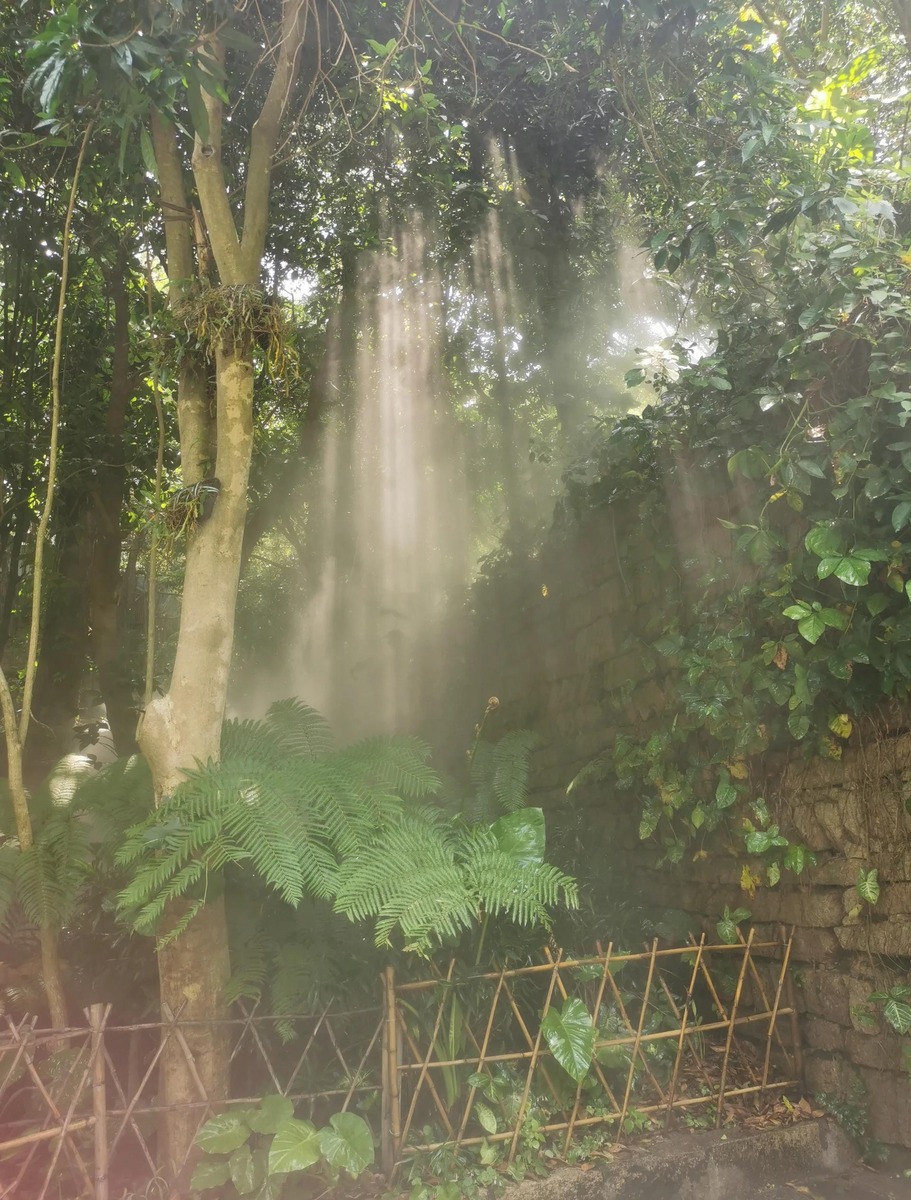
💡 Pro Tip: Go straight to the rain-forest valley first thing in the morning while the misting system runs and the light comes through the canopy - by 11:00 it is a humid queue of selfie sticks.
Accessibility & Luggage Lockers
Accessibility: ⚠️ Step thresholds, limited access
The garden is built on a mountain: internal roads climb continuously and the rain-forest valley is reached by stairs. A shuttle bus runs between the main zones for those who cannot walk the gradients.
🧳 Luggage Storage: Lockers at the west gate; the site is a 5-minute taxi from Zhongshan Road.
Nearby Landmarks
The 2 places within reach of this spot — each one opens straight into Apple Maps or Amap, with the Chinese name you can show a driver.
Chinese names and pins are matched against each city's own map data at build time; a place only gets Directions once its pin has been verified, otherwise the button searches by name.
About Xiamen Botanical Garden (Wanshi)
1. What It Is: A Mountain Garden on the Slope of Wulao Peak
This is not a walled garden with beds and labels. It is a mountain on the edge of the city — the southern slope of Wulao Peak, pressed up against Xiamen University on one side and the Zhongshan Road district on the other — planted with more than eight thousand species and crossed by roads steep enough to make you stop.
The older name, Wanshi, means ten thousand stones, and the granite boulders breaking out of the slopes everywhere explain it: the garden was built around the rock, not over it. Paths thread between the boulders and around small lakes, and small Buddhist halls sit in the clefts where the rock was left alone.
Because it is a mountain, the collection is arranged by height and drainage rather than by taxonomy. You walk from humid valley to dry, exposed rockface within twenty minutes, and the planting changes with the ground under your feet.
2. What to Spot: The Rain Forest, the Cacti and the Stone
🌫️ The Rain-Forest Valley
The garden runs a misting system through a shaded valley, and for part of the morning the air under the canopy is genuinely wet — water hanging in the light, trunks dark, the whole thing reading as forest rather than as planting. It is the single most photographed corner of the site, and the timing is everything.
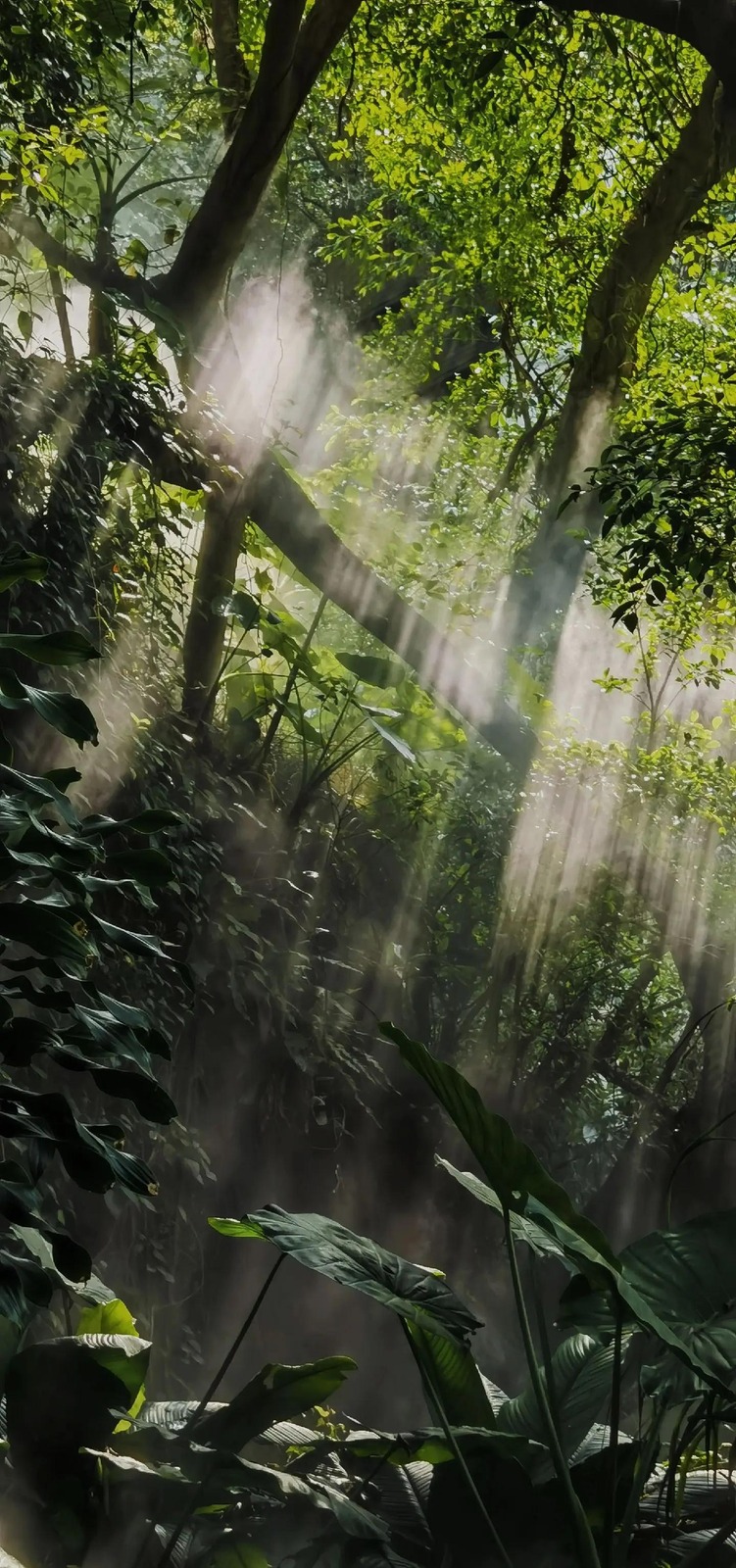
- The Story: The misting is a piece of stagecraft — a subtropical valley dressed to look like the cloud forest it is not quite.
- What to Look For: Epiphytes and ferns growing on the trunks and rock walls, not just in beds. That is what the humidity is for.
🌵 The Succulent and Desert Beds
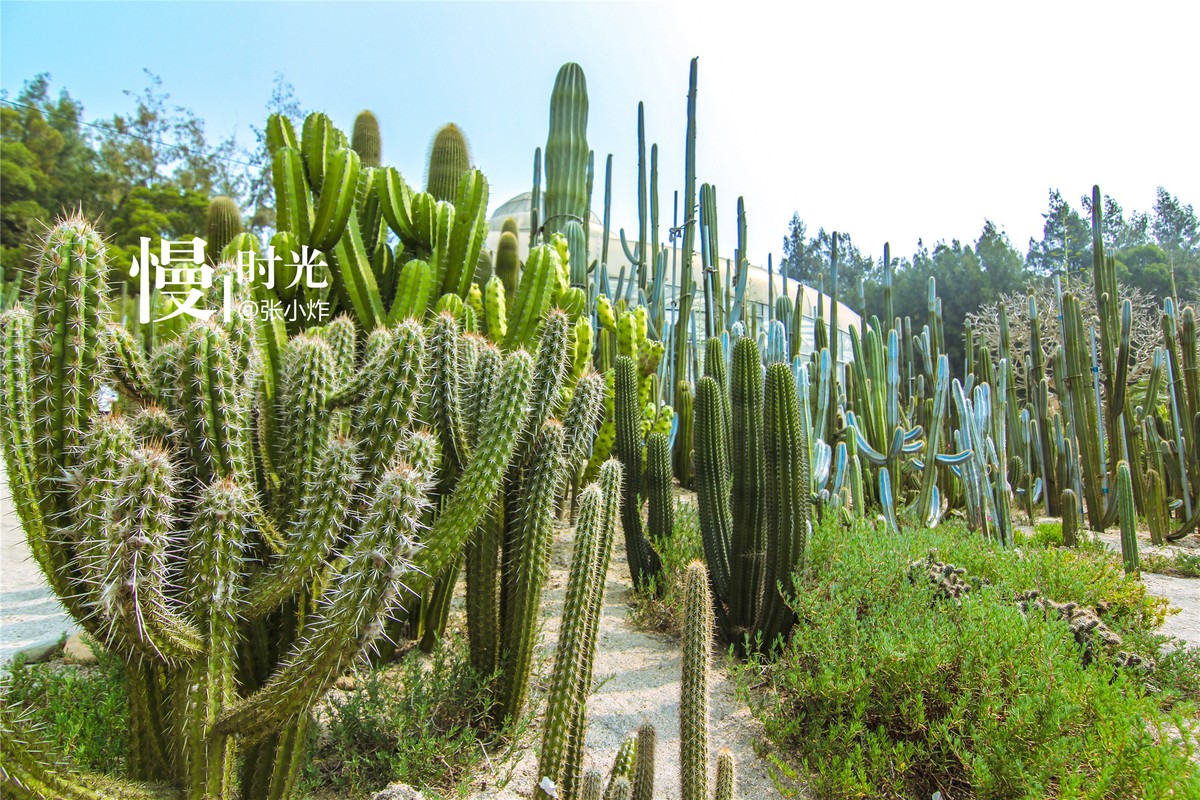
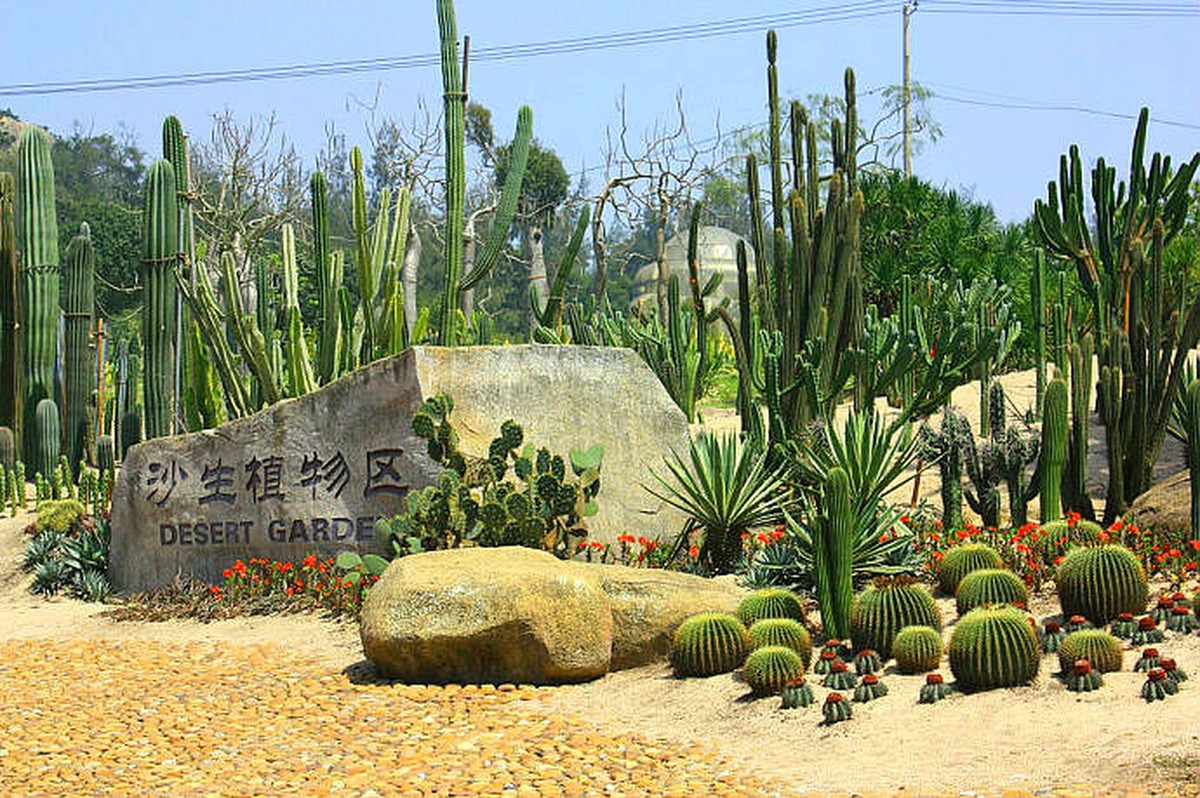
A short climb away, the planting flips completely: column cacti, agaves and barrel forms set among rock, with almost no shade and a very different colour palette. This is the other half of the garden’s reputation, and the contrast with the wet valley is the reason to see both.
🪨 The Rock, the Lawn and the Halls
Between the themed sections the garden is simply a mountain park — granite outcrops, a broad lawn under araucaria trees where local families sit, and the stone steps that connect everything. The small temples in the rocks are working places of worship, not exhibits, and are treated as such by the people who come to them.
3. Cultural Contrast: A Garden You Climb
A European botanic garden is usually flat, walled, laid out on a plan and labelled in Latin. This one is a mountain with a plant collection on it: you climb to see it, the paths wander, and the labels matter less than the shade. Local visitors treat it as a hiking and picnic destination first and a botanical one second — thermoses, strollers, tripods, grandparents taking the shuttle bus to the top and walking down.
That changes how you should plan. Think of it as a half-day walk with two extraordinary set pieces rather than as a museum of plants to be seen in sequence.
- Two hours minimum, three if you want the far valleys.
- Go early for the mist, and accept that the valley will be a queue by late morning.
- The shuttle bus is worth it if you are short of time or travelling with anyone who cannot do stairs.
4. Practical Essentials: Tickets, Transit & Scam Alerts
Tickets & Passport Booking
- The garden is a paid site with a concession rate, and no price is quoted here. The figure circulates across booking platforms and local information sites; the official ticket page is the only one that applies.
- Two things cost extra on top of entry: the internal shuttle bus, and the Zhonggu cableway next door, which is a separate operator and a separate ticket. Buy them only if you plan to use them.
- Seasonal hours, confirmed by two sources: 06:30 to 18:00 from 1 May to 7 October, and 06:30 to 17:30 from 8 October to 30 April.
- The misting and the individual garden sections keep their own hours inside the park. Ask at the gate which ones are running that day; arriving late means missing them.
- Foreign visitors buy with a passport at the gate. No advance reservation is normally required for individuals.
How to Get There
- Address: 25 Huyuan Road, Siming District.
- Use the west gate on Huyuan Road. It puts you closest to the main valleys; the other gates add a long climb before you have seen anything.
- By taxi: say 师傅,去万石植物园西门 — the west gate, not the park in general, or you will be dropped at the wrong side of the mountain.
- On foot from the city: it is a short walk from the Nanputuo and Xiamen University area, which makes the garden an easy half-day combined with either.
Inside Tips & Scam Alerts
- Do not let a driver take you to a peripheral gate. The east side is a long way from the collections, and the walk back is uphill.
- The site is large and stepped. Wheelchairs and prams manage the main lake area and some of the flat roads; the valleys and the succulent terraces are stairs. Take the shuttle if that is the limit.
- No large left luggage. Travel light — there is nowhere to leave a suitcase at the gate.
- Bring water and mosquito repellent. The wet valley is humid and shaded, which is exactly what the insects like.
- Complaints, overcharging or a taxi that will not use the meter: call 12345, free from a local phone, with English-speaking operators.
Quick Answers
The 7 things visitors ask before setting out, answered from the same verified record used across this page.
- How much does it cost to visit Xiamen Botanical Garden (Wanshi)?
- ¥30 (¥15 concession). ¥30 (¥15 concession). Separate ticket for the Zhonggu cableway.
- What are the opening hours at Xiamen Botanical Garden (Wanshi)?
- 06:30-18:00 (summer, May 1-Oct 7) / 06:30-17:30 (winter).
- How long should I spend at Xiamen Botanical Garden (Wanshi)?
- Two hours minimum; three to reach the far valleys.
- Is Xiamen Botanical Garden (Wanshi) wheelchair accessible?
- Not fully. The garden is built on a mountain: internal roads climb continuously and the rain-forest valley is reached by stairs. A shuttle bus runs between the main zones for those who cannot walk the gradients.
- How do I tell a taxi driver to take me to Xiamen Botanical Garden (Wanshi)?
- Copy this line into DiDi or show it to the driver: 师傅,请带我到厦门园林植物园西门(虎园路25号),谢谢!
- Can I leave my luggage at Xiamen Botanical Garden (Wanshi)?
- Lockers at the west gate; the site is a 5-minute taxi from Zhongshan Road.
- Will English work at Xiamen Botanical Garden (Wanshi)?
- Yes — staff used to foreign visitors handle English, and the site scores 4/5 on our foreign-friendliness scale.
Where to go next
Three short lists, recomputed at build time from the same coordinates and categories as the pages themselves — no paid placement, no hand-picked names. Every card is a published guide.
Next stop in Xiamen
Straight-line distance from this spot, so you can judge what is walkable and what needs a taxi.


More like this, elsewhere in China
If park or garden is what you came for, these are the closest equivalents you can reach in another city — ordered by distance, one city per card.


Change the subject
Deliberately a different category, for when one more temple or garden would blur into the last one.


Lists are derived from coordinates and category alone. Fix a wrong pin or re-tag a place and every list that mentions it moves with it.
Before you go · arrival essentials
Practical guides that pair with this kind of place — picked by category, not sponsored placement.