
Nanputuo Temple
ℹ️ ¥3 incense ticket at the gate (free entry periods are common - check the day board).

Incense sellers outside the gate push ¥99-¥299 'blessing packages' the temple does not require - free incense is handed out inside. Anyone offering to read your fortune or 'release a turtle for you' is running a private racket, not a temple service.
Taxi & Street Navigation Help
师傅,请带我到南普陀寺(思明南路515号),谢谢!
Opening Hours & Best Time
About 08:00-19:00; outer mountain gate opens earlier.
💡 Pro Tip: Skip the front courtyard crowds by walking through to the rear halls, then climb 五老峰 for 30-40 minutes: from the ridge you look down on the temple roofs and out over the university and the sea.
Accessibility & Luggage Lockers
Accessibility: ♿ Wheelchair & Stroller Friendly
The main halls sit on a level terrace reached by a ramp to the side of the entrance, and the courtyards are paved. The 五老峰 climb behind the temple is stairs only.
🧳 Luggage Storage: Free luggage lockers beside the ticket office; the temple is a 10-minute walk from Xiamen University's main gate.
Nearby Landmarks
The 2 places within reach of this spot — each one opens straight into Apple Maps or Amap, with the Chinese name you can show a driver.
Chinese names and pins are matched against each city's own map data at build time; a place only gets Directions once its pin has been verified, otherwise the button searches by name.
About Nanputuo Temple
1. Historical Origins: A Tang Foundation Facing the Sea
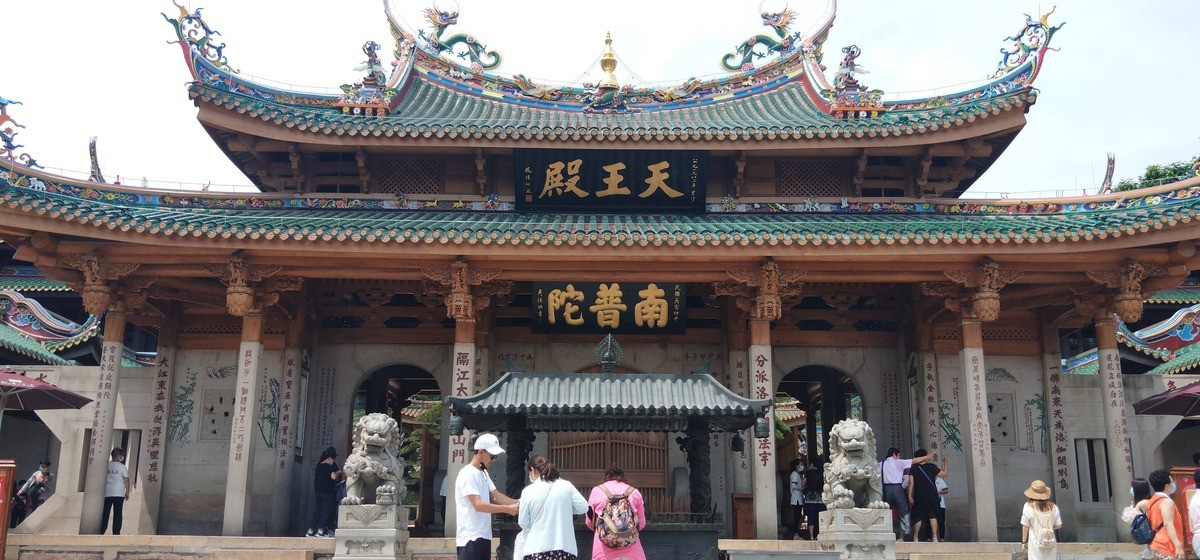
Nanputuo is one of the great temples of Minnan Buddhism, and its name is a direction rather than a dedication: it stands south of the hill and mirrors the great Guanyin site at Putuo in Zhejiang, hence “southern Putuo”. The foundation is usually dated to the Tang dynasty, and the temple has been rebuilt and expanded many times since — the present halls belong to the Qing and to twentieth-century restorations.
Its position is what most people remember. The temple is built into the foot of Wulao Peak, halls stepping up the slope one behind another, and the whole complex faces the sea across the road. Xiamen University’s gates are next door, which is why the two are always visited together.
2. What to Spot: Halls, Incense, the Ridge
🏯 The Halls
The sequence is the standard one — a bell and drum pavilion at the gate, the Heavenly Kings Hall, the Great Hall, the Hall of Great Compassion and the sutra library at the top — but the site is steep, so the climb gives the visit its shape. The Hall of Great Compassion has the octagonal plan and the gilded Guanyin that figure in every photograph of the place.
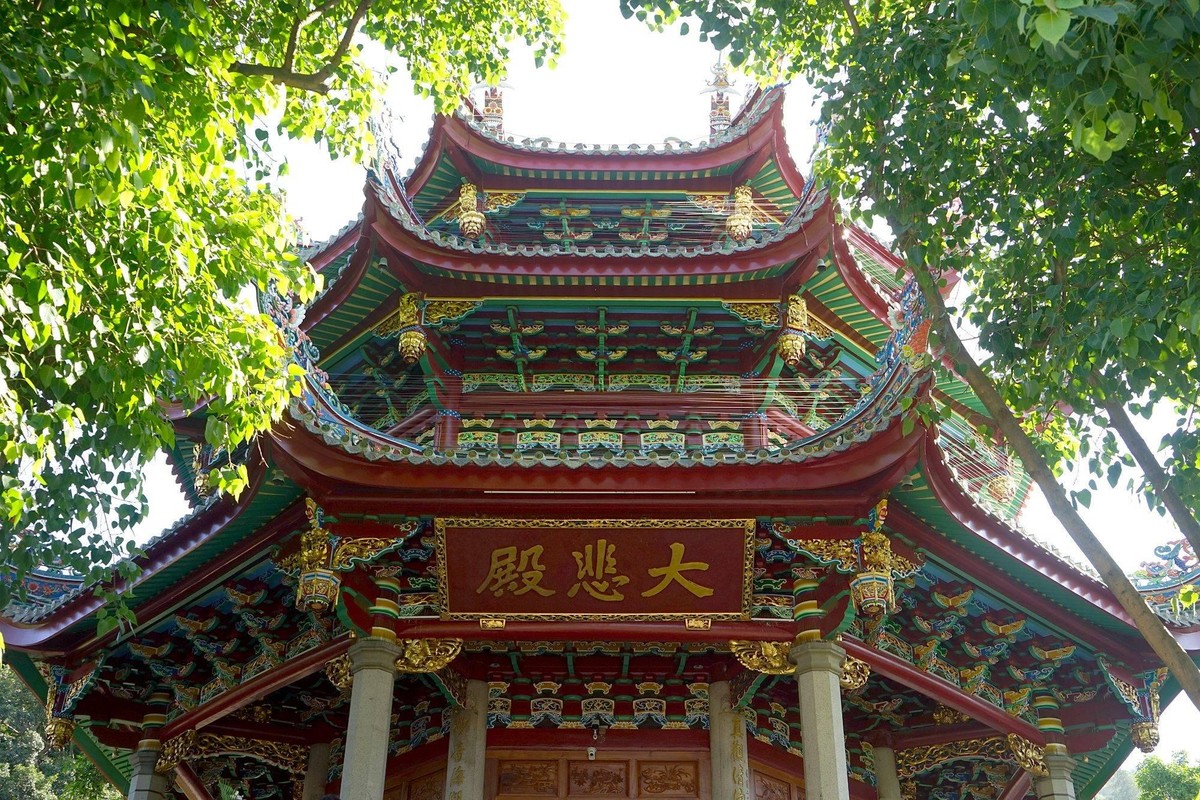
- The Story: The temple has been a working monastery for centuries and still is; the visitors walk through a functioning institution rather than a monument.
- What to Look For: The courtyards between the halls, where the light comes down between the stone and the trees — the visual signature of a southern Chinese temple.
🕯️ The Incense Court
This is an active pilgrimage site, and the courtyard in front of the halls is usually full of people holding incense. The temple gives it away rather than selling it, and the etiquette is simple: take one stick, offer it at the censer, and keep the rest of the visit quiet.
🥾 The Climb to Wulao Peak
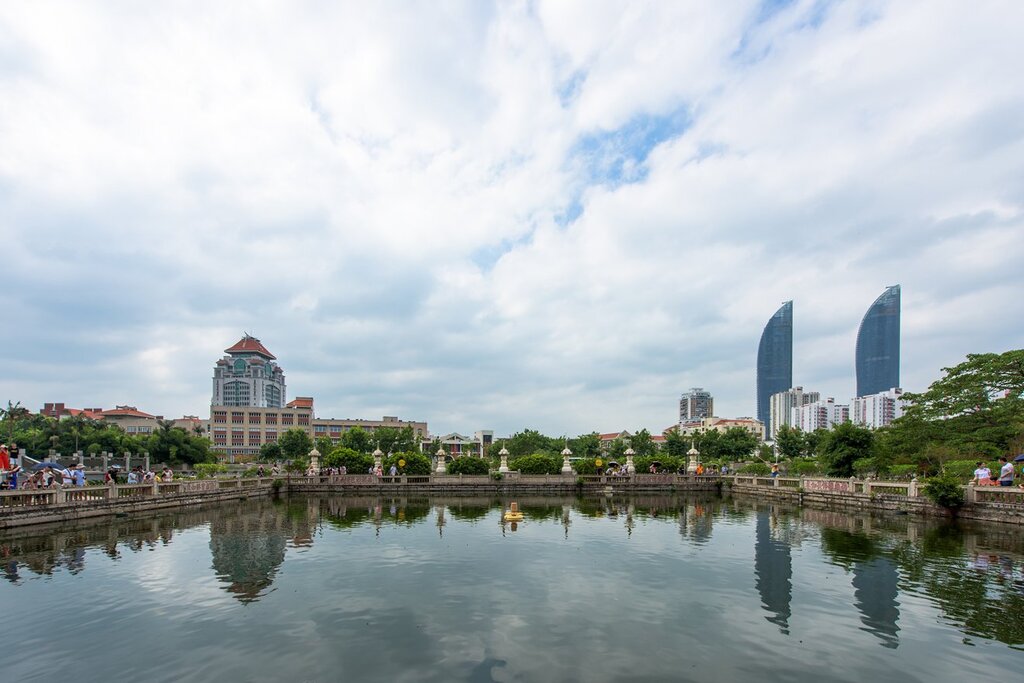
Behind the temple a stone path climbs the ridge above the halls, and forty minutes of steps brings you out above the roofs with the university, the harbour and the sea in one sweep. It is a real climb, not a stroll, and it is the best view in the city.
3. Cultural Contrast: A Temple With a Time Budget
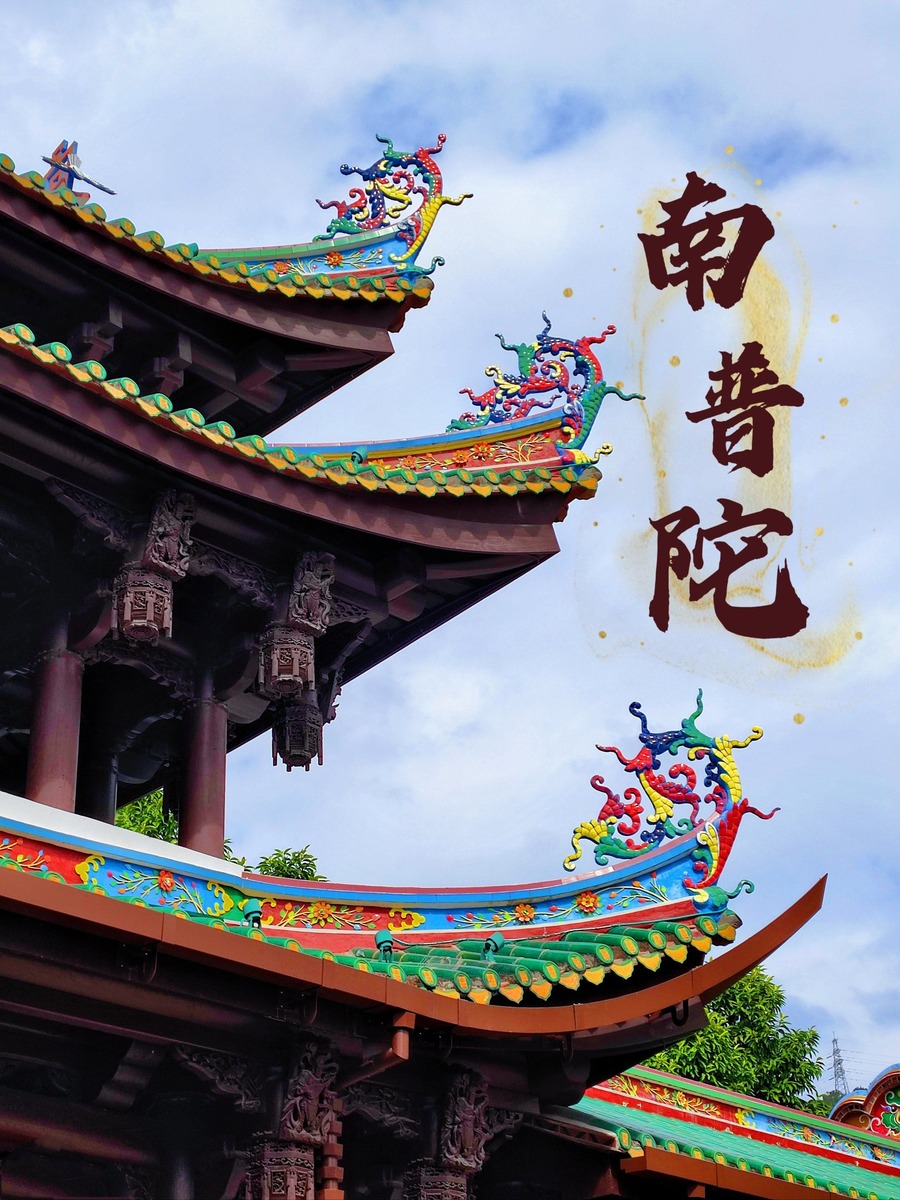
Foreign visitors tend to treat Nanputuo as a sight, and it works better as a place with two speeds: the courtyards are a ten-minute walk-through at one end, and the ridge is an hour’s climb at the other. Most of the crowd never leaves the front courtyard, which is why the rear halls and the path above them are the parts worth planning for.
- Come before nine. The front court is manageable early and unmanageable at mid-morning on a holiday.
- Walk to the back first, then climb. Doing the halls on the way down saves the crowds.
- The vegetarian cakes are the local souvenir. They are sold at the temple shop and eaten everywhere in Xiamen.
4. Practical Essentials: Tickets, Transit & Scam Alerts
Tickets & Passport Booking
- Entry is either free or a nominal incense charge, and the sources disagree on which. No amount is quoted here: the temple’s own notice board at the gate is the answer, and it changes.
- On ordinary days you walk in. On public holidays the temple may cap numbers and require advance booking through its own reservation mini-programme, so check before a holiday visit.
- Carry a passport. Foreign visitors are registered as a matter of course at major religious sites.
- Hours are roughly eight in the morning to seven in the evening, with the outer gate opening earlier; entrance timings differ slightly between gates, so follow the board.
How to Get There
- Location: 515 Siming South Road, Siming District (思明区思明南路), immediately north of Xiamen University.
- Taxi: “师傅,去南普陀寺,厦门大学对面” — the temple and the university share a road.
- By bus: this stretch of Siming South Road is served by many routes; check the Chinese stop name against a map.
- On foot: the campus gate is about three minutes away, and Baicheng beach and the Hulishan fortress are a short ride south.
Inside Tips & Scam Alerts
- The temple gives incense away free. Ignore the sellers outside offering “blessing packages” at three-figure prices; nothing they sell is required.
- Fortune telling and “release a turtle for you” are private rackets, not temple services. Decline and keep walking.
- Dress for a religious site. No shorts, short skirts or slippers; keep your voice down and do not photograph people at prayer.
- The main halls are relatively level, but the ridge path is all steps. Wheelchairs and prams can do the courtyards and nothing above them.
- Complaints or overcharging: the 12345 hotline is free from a local phone and has English-speaking operators.
Quick Answers
The 6 things visitors ask before setting out, answered from the same verified record used across this page.
- How much does it cost to visit Nanputuo Temple?
- ¥3 incense ticket (often free). ¥3 incense ticket at the gate (free entry periods are common - check the day board).
- What are the opening hours at Nanputuo Temple?
- About 08:00-19:00; outer mountain gate opens earlier.
- Is Nanputuo Temple wheelchair accessible?
- Yes. The main halls sit on a level terrace reached by a ramp to the side of the entrance, and the courtyards are paved. The 五老峰 climb behind the temple is stairs only.
- How do I tell a taxi driver to take me to Nanputuo Temple?
- Copy this line into DiDi or show it to the driver: 师傅,请带我到南普陀寺(思明南路515号),谢谢!
- Can I leave my luggage at Nanputuo Temple?
- Free luggage lockers beside the ticket office; the temple is a 10-minute walk from Xiamen University's main gate.
- Is there anything to watch out for at Nanputuo Temple?
- Incense sellers outside the gate push ¥99-¥299 'blessing packages' the temple does not require - free incense is handed out inside. Anyone offering to read your fortune or 'release a turtle for you' is running a private racket, not a temple service.
Where to go next
Three short lists, recomputed at build time from the same coordinates and categories as the pages themselves — no paid placement, no hand-picked names. Every card is a published guide.
Next stop in Xiamen
Straight-line distance from this spot, so you can judge what is walkable and what needs a taxi.


More like this, elsewhere in China
If temple is what you came for, these are the closest equivalents you can reach in another city — ordered by distance, one city per card.


Change the subject
Deliberately a different category, for when one more temple or garden would blur into the last one.


Lists are derived from coordinates and category alone. Fix a wrong pin or re-tag a place and every list that mentions it moves with it.
Before you go · arrival essentials
Practical guides that pair with this kind of place — picked by category, not sponsored placement.