
Liurong (Six Banyans) Temple

Taxi & Street Navigation Help
师傅,请带我到六榕寺(六榕路87号,花塔)。谢谢!
Opening Hours & Best Time
08:00 - 17:00
💡 Pro Tip: The Flower Pagoda is the shot — 57 meters of octagonal brick-and-wood, nine visible stories (17 internal), crowned with the bronze stupa finial that catches the light. Su Dongpo named the temple: shown the six banyans in 1100, he wrote '六榕' (Six Banyans) for the wall, and the name replaced the original. The pagoda's ground floor holds the thousand-Buddha relief — walk it full circle.
Accessibility & Luggage Lockers
Accessibility: ♿ Wheelchair & Stroller Friendly
The courtyard and the pagoda's exterior circuit are flat; the pagoda's internal stair is narrow and stepped (view from the ground floor). The temple is compact — 30 accessible minutes.
🧳 Luggage Storage: Ticket-gate bag-hold.
Nearby Landmarks & A Short Train Ride
The 4 places worth pairing with this spot — each one opens straight into Apple Maps or Amap, with the Chinese name you can show a driver. One pick sits in Shenzhen (HSR ~36 min) — a short high-speed ride, not a walk. Guangzhou's own list came out one short of a pair, and this is the nearest pick that fills it.
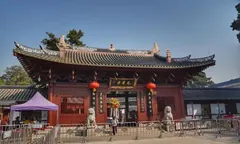
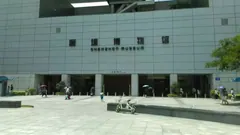
Chinese names and pins are matched against each city's own map data at build time; a place only gets Directions once its pin has been verified, otherwise the button searches by name. Cards with an amber city tag are in another city — the ride time shown is the fastest train of the day.
About Liurong (Six Banyans) Temple
1. Historical Origins: Named by a Poet in Exile
The temple was founded in 537, in the Liang dynasty, and has been rebuilt so many times that almost nothing visible is that old — the pagoda you photograph today is Song in form and later in fabric. What has not changed is the site’s reputation: this has been one of Guangzhou’s principal temples for close to fifteen hundred years.
The name is a later accident. In 1100 the poet Su Dongpo, exiled to the south and passing through, was shown six banyan trees in the courtyard and wrote the two characters ‘six banyans’ for the wall. The nickname outlasted the official name, which is why every map now calls it Liurong. The Flower Pagoda beside the halls is the tallest ancient structure in the city centre: 57 metres, octagonal, nine storeys outside and seventeen inside.

2. What to Spot: The Pagoda, the Thousand Buddhas, the Name Board
🗼 The Flower Pagoda
- The Story: Rebuilt in the Song, with a bronze stupa finial on top that catches the light — the reason locals call it the flower pagoda.
- What to Look For: The south-east corner of the courtyard, framed through banyan branches. That is the shot; from the middle of the yard it is just a tall building.
🕉️ The thousand-Buddha relief
- The Story: The pagoda’s ground floor is lined with small niches of Buddhas, spiralling up with the internal stair.
- What to Look For: Walk the full circle at the base before deciding whether to climb; the relief is the better half.
📜 The ‘Six Banyans’ board
- The Story: Su Dongpo’s two characters, copied onto the gate board, with the stone lions outside.
- What to Look For: The calligraphy itself — this is the temple’s actual relic, and it is a piece of handwriting rather than an object.
🏛️ The halls
- The Story: Tang and Song bronze Buddhas are kept in the side halls, along with later images.
- What to Look For: The bronze work rather than the gilding; the labels are minimal, so look at the metal.


3. Cultural Contrast: The Second Half of a Temple Morning
For Chinese visitors Liurong is the quieter, more literary half of the pair with Guangxiao: fewer tour groups, more people praying, and a pagoda that everyone knows from photographs. The temple is small — forty minutes covers it — and it is a working religious site rather than a monument, so the atmosphere shifts with the lunar calendar and the time of day.
The practical reason to come is the pairing: Guangxiao for the Zen history, twelve minutes’ walk to Liurong for the pagoda. Do them in that order in the morning, and you have seen the two buildings that explain how Buddhism arrived in China and how it became Chinese. One caveat: the pagoda is periodically covered in restoration scaffolding, so check recent photographs before making it the centrepiece of a day.

4. Practical Essentials: Tickets, Transit & Scam Alerts
Tickets & Passport Booking
- Price: ¥5, a nominal charge that has varied between free, donation and small fee in recent years. Climbing the pagoda costs a small extra.
- How to Book: Buy at the gate; no reservation. Open 08:00–17:00. Carry a little cash or use a payment app, since the policy changes.
How to Get There
- By Metro: Line 2 to Sun Yat-sen Memorial Hall, Exit D, then about eight minutes north on foot; or Line 1 to Ximenkou and ten minutes. Guangxiao is twelve minutes away.
- Show Your Driver: 师傅,请带我去六榕寺,六榕路87号,花塔这边,谢谢!
Inside Tips & Scam Alerts
- Ignore ‘fortune-tellers and lot readers’ outside the gate. They are not monks of this temple and their fees are arbitrary; donations belong in the boxes inside the halls.
- Climbing the pagoda is narrow, one-way and sometimes closed for restoration. Check before you plan around it — the courtyards, bronzes and banyans stay open either way.
- The light is best late afternoon on the pagoda’s east face, when the bronze finial catches the sun.
- Accessibility: the courtyards are level; the pagoda stair is steep, dark and unsuitable for wheelchairs, and the halls have raised thresholds.
- Complaints: the national 12345 hotline is free to call from any local phone.
Quick Answers
The 6 things visitors ask before setting out, answered from the same verified record used across this page.
- How much does it cost to visit Liurong (Six Banyans) Temple?
- ¥5.
- What are the opening hours at Liurong (Six Banyans) Temple?
- 08:00 - 17:00.
- Is Liurong (Six Banyans) Temple wheelchair accessible?
- Yes. The courtyard and the pagoda's exterior circuit are flat; the pagoda's internal stair is narrow and stepped (view from the ground floor). The temple is compact — 30 accessible minutes.
- How do I tell a taxi driver to take me to Liurong (Six Banyans) Temple?
- Copy this line into DiDi or show it to the driver: 师傅,请带我到六榕寺(六榕路87号,花塔)。谢谢!
- Can I leave my luggage at Liurong (Six Banyans) Temple?
- Ticket-gate bag-hold.
- Will English work at Liurong (Six Banyans) Temple?
- Limited — ticketing and signage are mostly Chinese. Have a translation app with the offline Chinese pack ready, and keep the Chinese name (六榕寺) on screen for staff.
Where to go next
Three short lists, recomputed at build time from the same coordinates and categories as the pages themselves — no paid placement, no hand-picked names. Every card is a published guide.
Next stop in Guangzhou
Straight-line distance from this spot, so you can judge what is walkable and what needs a taxi.


More like this, elsewhere in China
If temple is what you came for, these are the closest equivalents you can reach in another city — ordered by distance, one city per card.


Change the subject
Deliberately a different category, for when one more temple or garden would blur into the last one.


Lists are derived from coordinates and category alone. Fix a wrong pin or re-tag a place and every list that mentions it moves with it.
Before you go · arrival essentials
Practical guides that pair with this kind of place — picked by category, not sponsored placement.