
Temple of the Five Officials
ℹ️ About ¥17 full price (¥12 concession) - ⚠️ some resellers quote ¥27-48, buy at the gate. Parts may be closed during restoration.

Fortune-tellers and 'blessing' sellers work outside the gate at festival times. The temple has no fixed-price ritual - decline anything quoted at ¥100 or more.
Taxi & Street Navigation Help
师傅,请带我到五公祠(海府路),谢谢!
Opening Hours & Best Time
About 08:00-17:30; ⚠️ one official listing says 08:00-23:00 - go with the earlier time.
💡 Pro Tip: Read the steles before you walk in: this is a shrine to five officials exiled to Hainan for criticising the emperor, and the exile was real - Hainan was the empire's furthest penal posting. Come early morning for the birdsong and no crowds.
Accessibility & Luggage Lockers
Accessibility: ♿ Wheelchair & Stroller Friendly
Flat walled compound with paved paths, low thresholds and a ramp into the main hall. Benches in the shade throughout.
🧳 Luggage Storage: No storage.
Nearby Landmarks
The 2 places within reach of this spot — each one opens straight into Apple Maps or Amap, with the Chinese name you can show a driver.
Chinese names and pins are matched against each city's own map data at build time; a place only gets Directions once its pin has been verified, otherwise the button searches by name.
About Temple of the Five Officials
1. Historical Origins: Exile as the Empire’s Sharpest Punishment
Five officials are honoured here, from the Tang and Song dynasties: Li Deyu, Li Gang, Zhao Ding, Hu Quan and Li Guang. All five were sent to Hainan for criticising the emperor or losing a political fight, and the posting was not a rest cure — in the Tang and Song, this island was the furthest penal destination the state had.
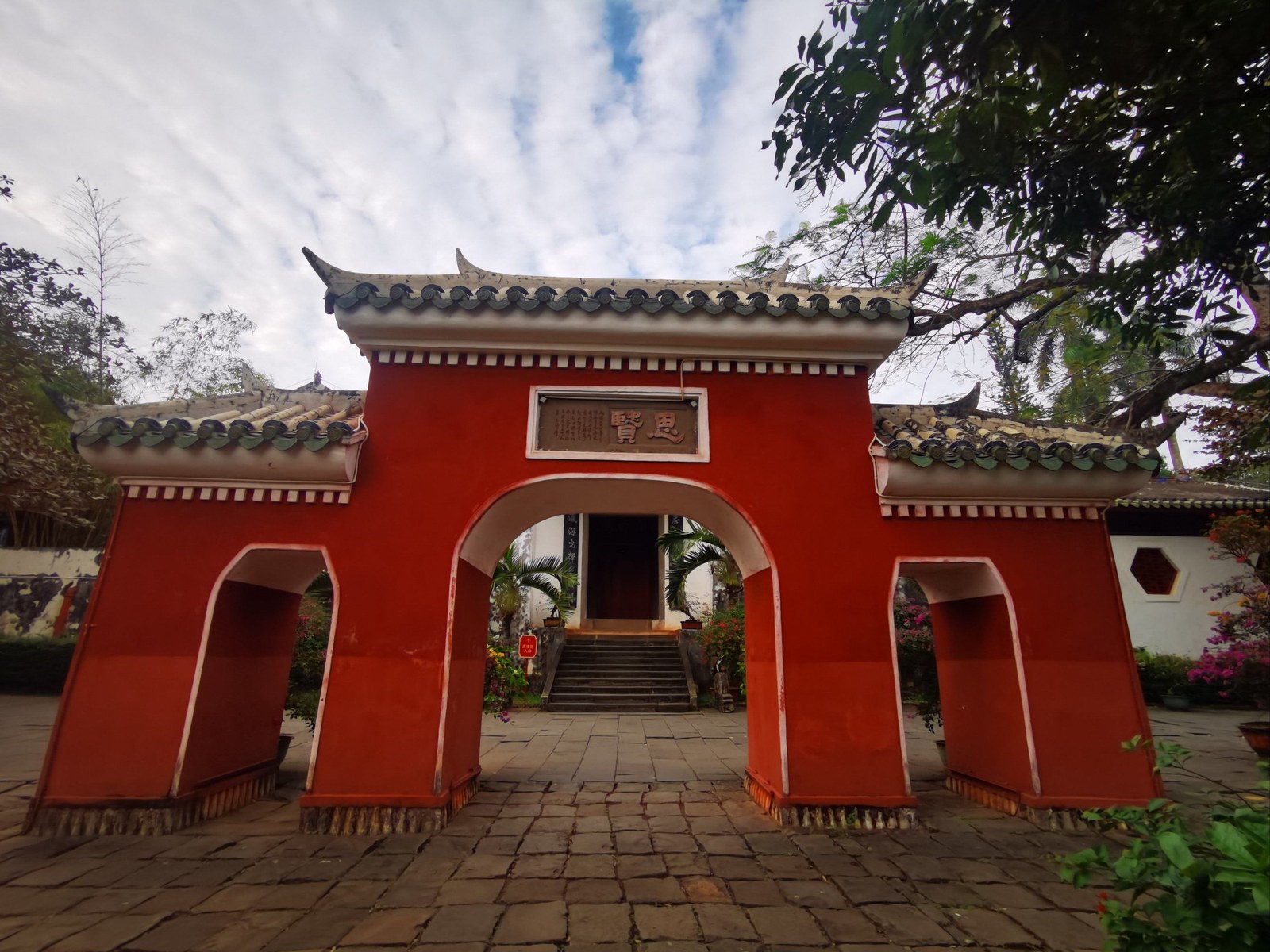
The buildings grew into a complex — this shrine, the Su Gong shrine for Su Dongpo, who was exiled here too, and the shrines to the two Han-era generals Ma Yuan and Lu Bode — which is why the site reads as a small walled garden city rather than a single hall. The steles set into the walls are the part that matters: they are the record the exiles and their admirers left.
2. What to Spot: Steles, Halls, Old Trees
🪧 The Steles
Read the stones before you go into the halls. They carry poems, memorials and calligraphy by people who were here, and they are the only part of the site that is unambiguously original.
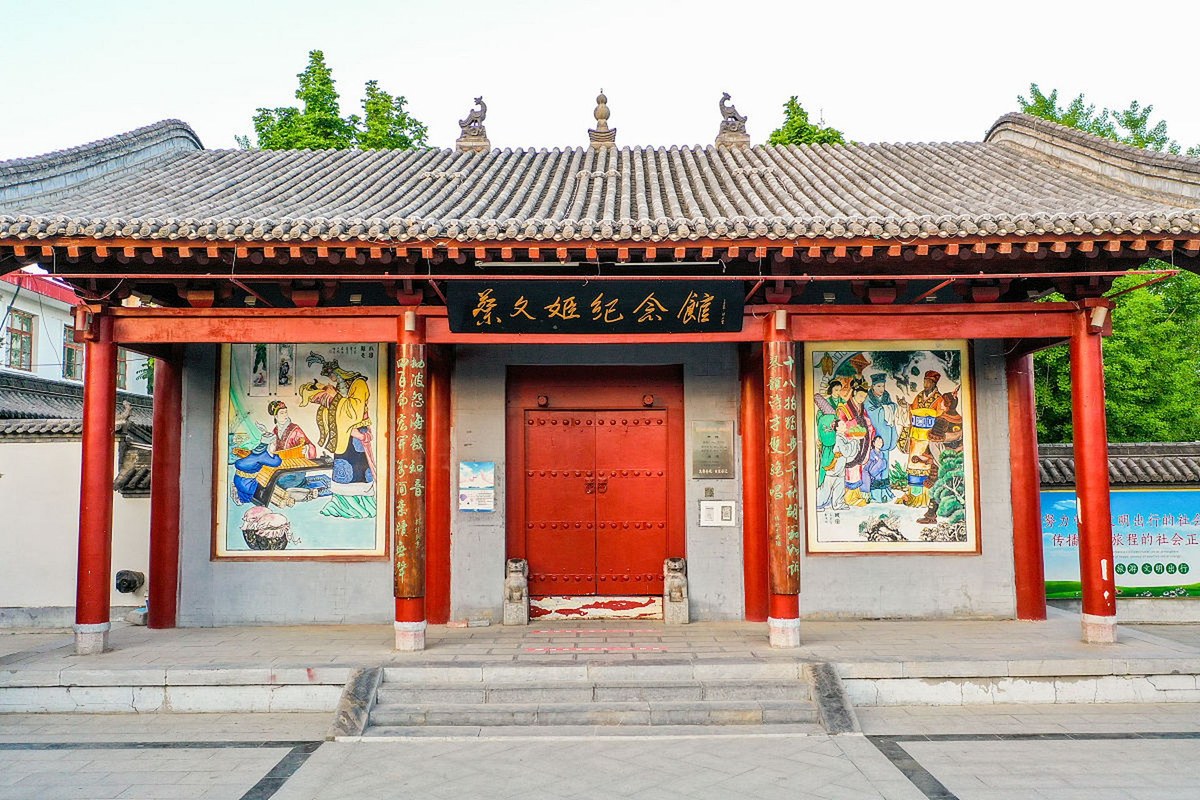
- The Story: Exile to Hainan was intended to be survivable but irreversible — a way of removing a minister from court without executing him. Most of these men never went home.
- What to Look For: The carved surnames and dates. A stele is a person’s only remaining claim to the place they were sent to.
🏯 Su Dongpo’s Corner
Su Shi, the Song poet, was banished to Hainan in 1097 and spent three years here. His shrine sits inside this complex, and it is the reason Chinese visitors come: the poems he wrote on the island are standard school material, and several are carved on the walls.
🌳 The Garden
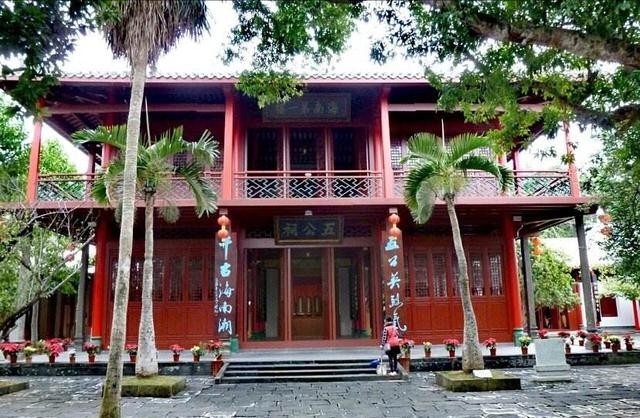
Old banyans, a spring, shaded walkways and a couple of small pavilions. It is quiet in a way that central Haikou is not, and early morning brings birdsong instead of tour groups.
3. Cultural Contrast: A Garden About Losing
Western memorials to political figures usually celebrate victory. This one commemorates men who were defeated, sent away and, in most cases, forgotten by the court that banished them — and it does so with gardens, poems and carved stone rather than with statues and rhetoric.
- Expect almost no English. The site’s interpretation is Chinese-only, and the story does not survive without it; use a translation app on the stele captions.
- The exile history is the whole point. Without it the compound is pretty old buildings; with it, it is a document about how power punished dissent.
- Come in the morning. The garden is at its best before the heat and before the groups.
4. Practical Essentials: Tickets & Scam Alerts
Tickets & Passport Booking
- Entry is paid, at the gate. Prices differ between the official listing and resellers, and part of the complex may be closed for restoration, so nothing is quoted here — buy at the window and ask what is currently open.
- Concession tickets depend on age and ID, verified on the spot. Foreign visitors should expect a staffed window rather than a machine, and bring the passport.
- No advance booking is documented. Walk-up purchase is the norm.
- Opening hours have at least two versions in circulation. Assume daytime and go early rather than late.
How to Get There
- Address: No. 169 Haifu Road, Qiongshan District (琼山区海府路 169 号).
- Taxi: “师傅,去五公祠,海府路” — short and unambiguous.
- By bus: Haifu Road is a main artery with frequent service; the stop is signed in Chinese.
- With the museum: the Hainan Provincial Museum and the Hairui cultural park are both in this southern quarter, so the three make a half-day without crossing the city.
Inside Tips & Scam Alerts
- Fortune-tellers and “blessing” sellers work outside the gate at festival times. The temple has no fixed-price ritual; decline anything quoted at a hundred yuan or more.
- Restoration hoarding is normal here. Sections of the complex open and close; the garden stays walkable.
- Steps and thresholds are everywhere. The main path works with a stroller, individual halls do not work with a wheelchair.
- Complaints or overcharging: the 12345 hotline is free from any local phone and has English-speaking operators.
Quick Answers
The 6 things visitors ask before setting out, answered from the same verified record used across this page.
- How much does it cost to visit Temple of the Five Officials?
- About ¥17 — buy at the gate. About ¥17 full price (¥12 concession) - ⚠️ some resellers quote ¥27-48, buy at the gate. Parts may be closed during restoration.
- What are the opening hours at Temple of the Five Officials?
- About 08:00-17:30; ⚠️ one official listing says 08:00-23:00 - go with the earlier time.
- Is Temple of the Five Officials wheelchair accessible?
- Yes. Flat walled compound with paved paths, low thresholds and a ramp into the main hall. Benches in the shade throughout.
- How do I tell a taxi driver to take me to Temple of the Five Officials?
- Copy this line into DiDi or show it to the driver: 师傅,请带我到五公祠(海府路),谢谢!
- Can I leave my luggage at Temple of the Five Officials?
- No storage.
- Is there anything to watch out for at Temple of the Five Officials?
- Fortune-tellers and 'blessing' sellers work outside the gate at festival times. The temple has no fixed-price ritual - decline anything quoted at ¥100 or more.
Where to go next
Three short lists, recomputed at build time from the same coordinates and categories as the pages themselves — no paid placement, no hand-picked names. Every card is a published guide.
Next stop in Haikou
Straight-line distance from this spot, so you can judge what is walkable and what needs a taxi.


More like this, elsewhere in China
If temple is what you came for, these are the closest equivalents you can reach in another city — ordered by distance, one city per card.


Change the subject
Deliberately a different category, for when one more temple or garden would blur into the last one.


Lists are derived from coordinates and category alone. Fix a wrong pin or re-tag a place and every list that mentions it moves with it.
Before you go · arrival essentials
Practical guides that pair with this kind of place — picked by category, not sponsored placement.