
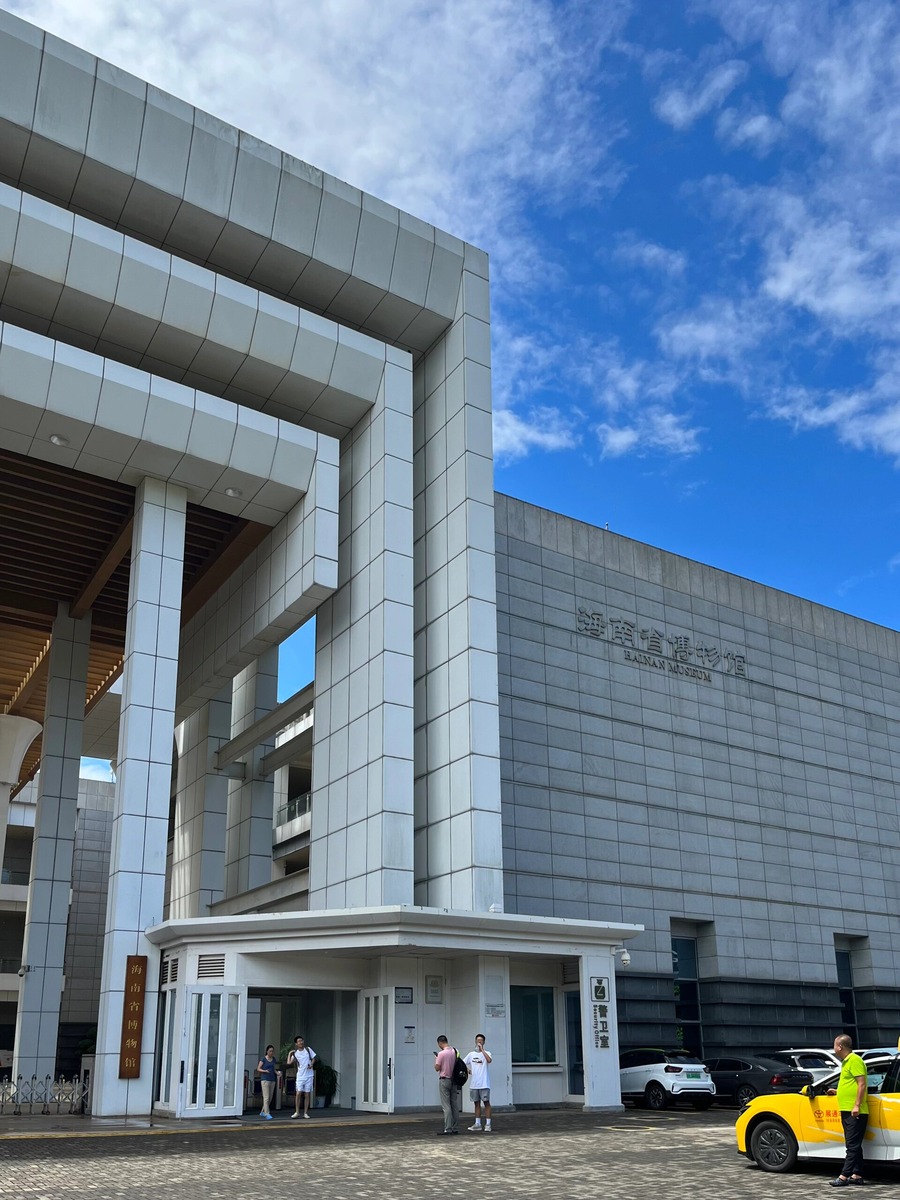
Hainan Provincial Museum

Entry is free with passport; no reservation fee is legitimate. If someone outside offers to 'get you in' for money, they are selling nothing.
Taxi & Street Navigation Help
师傅,请带我到海南省博物馆(国兴大道),谢谢!
Opening Hours & Best Time
Tuesday-Sunday about 09:00-17:00 (last entry 17:30 per one listing); closed Mondays except public holidays.
💡 Pro Tip: The **南海人文** and **南溟奇甸** galleries are the ones to see - shipwreck ceramics from the maritime Silk Road and the Li and Miao textile collections. Two hours. The Li brocade gallery alone justifies the trip on a rainy afternoon.
Accessibility & Luggage Lockers
Accessibility: ♿ Wheelchair & Stroller Friendly
Modern building with lifts, ramps and accessible toilets on every floor. Wheelchairs available at the desk.
🧳 Luggage Storage: Free lockers at the entrance; large bags must be checked.
Nearby Landmarks
The 2 places within reach of this spot — each one opens straight into Apple Maps or Amap, with the Chinese name you can show a driver.
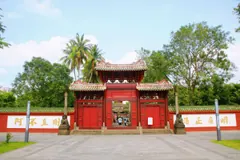 海瑞文化公园Hai Rui Cultural ParkParkShort ride away8.77 km6 km south-west
Chinese names and pins are matched against each city's own map data at build time; a place only gets Directions once its pin has been verified, otherwise the button searches by name.
About Hainan Provincial Museum
1. Historical Origins: An Island Explained as a Sea Road
The provincial museum’s permanent exhibition is built around one idea — that Hainan is not a remote island but a station on a sea route. The name of the main gallery, “Nanming Qidian”, frames the island as a staging point on the maritime network rather than as the end of the line it looked like from the mainland.
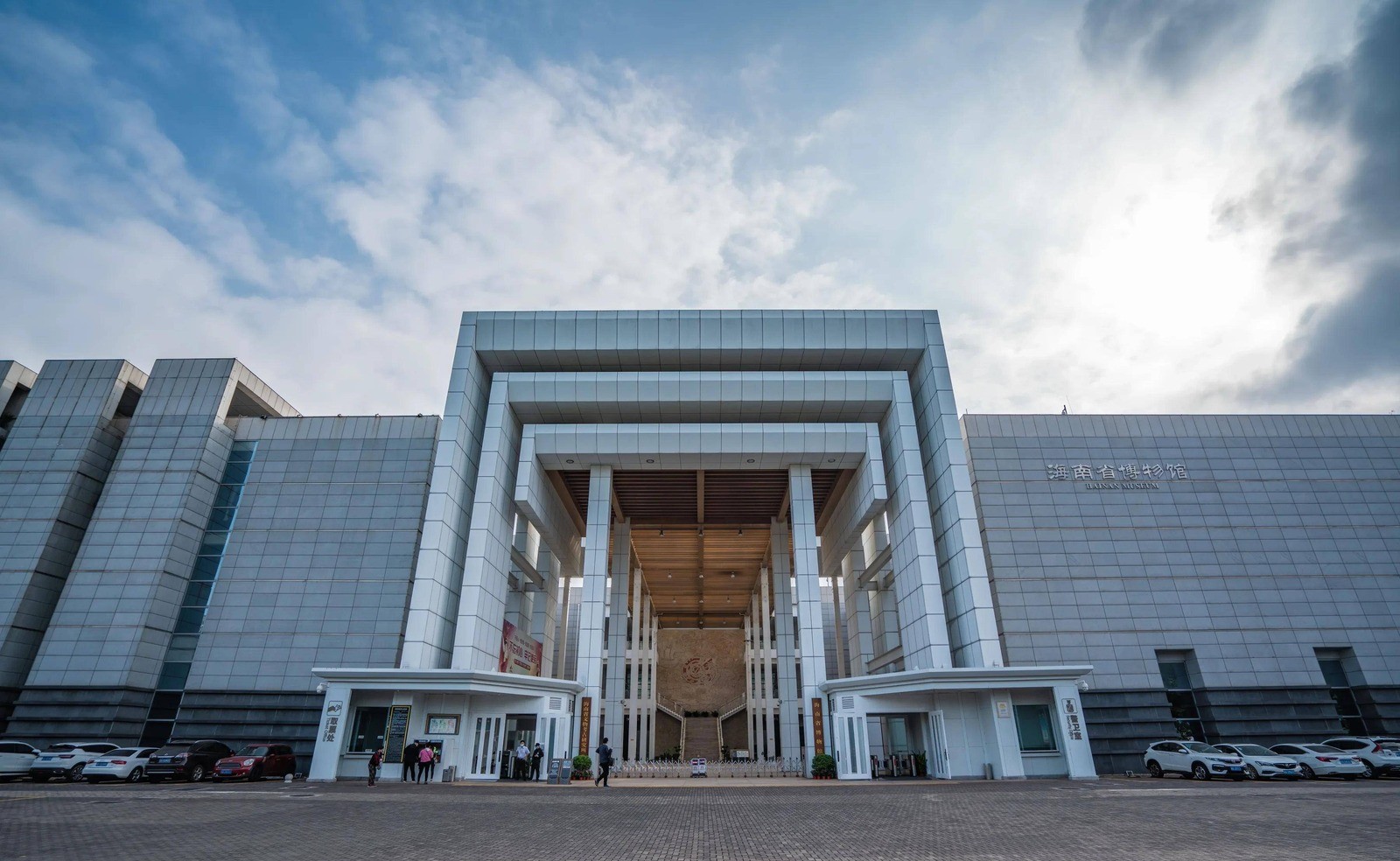
With more than twenty-six thousand objects and specimens, it is the only place in the province where the Li and Miao minorities, the sea trade, the overseas-Chinese story and the island’s ecology are laid out together.
2. What to Spot: Shipwreck Ceramics and Li Brocade
🏺 The Shipwreck Cargo
The ceramics recovered from wrecked trading ships in the South China Sea are the collection’s spine. They are not pretty objects in a case; they are a cargo manifest, and the museum treats them accordingly — what was being carried, for whom, and how it ended up on the seabed.
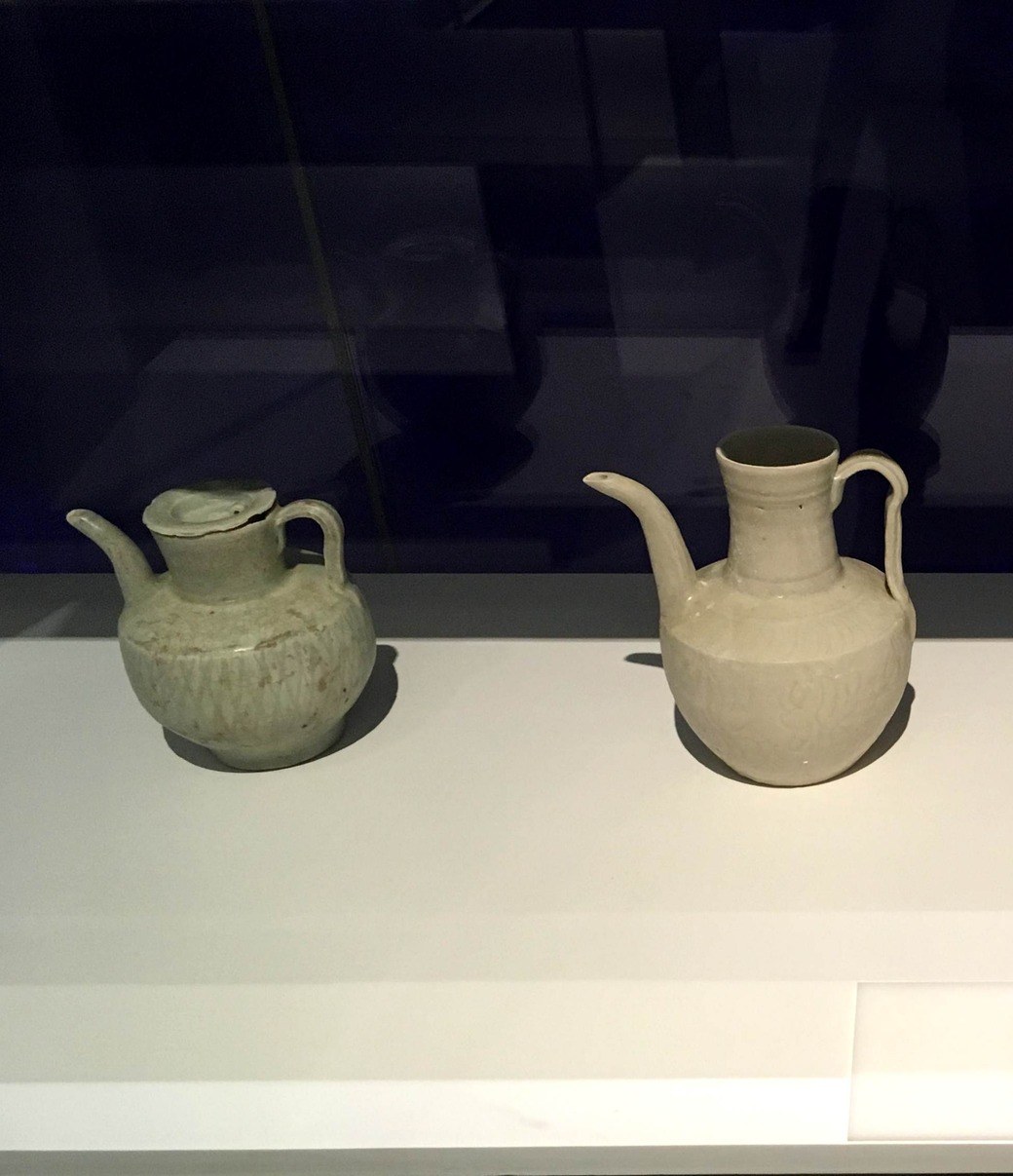
- The Story: The maritime Silk Road ran past Hainan, and the wrecks in these waters are the reason the island’s history is a shipping history. The cargo is the evidence.
- What to Look For: Identical bowls stacked in their packing straw — the point is quantity, not craftsmanship.
🧵 Li Brocade
The Li textile galleries are the other reason to come. Brocade woven without a drawn pattern, using a technique held by individual weavers, is knowledge rather than a product, and the museum displays it as a craft with a system behind it.
🌏 The Overseas-Chinese Gallery
Hainan sent large numbers of people abroad, particularly to Southeast Asia, and the gallery follows them out and back. It is the section that explains the island’s food and architecture better than any other.
3. Cultural Contrast: A Provincial Museum That Does the Sea Well
Most Chinese provincial museums organise themselves around excavated bronzes and imperial administration. This one is organised around water — trade, fishing, migration — because that is what the province actually is. For a foreign visitor it is the fastest route to understanding why Hainan feels more like Southeast Asia than like the mainland.
- English exists but thins out. Headline objects are labelled bilingually; the narrative panels are Chinese. A camera translator gets you most of the way.
- Two hours covers the two main galleries; three if you add the minorities and the overseas-Chinese section.
- Rainy afternoons are what this museum is for. Haikou’s weather makes an indoor plan worth keeping in reserve.
4. Practical Essentials: Tickets, Transit & Scam Alerts
Tickets & Passport Booking
- Entry is free. Individuals register with a passport or ID at the gate; groups must book in advance.
- Closed Mondays except public holidays. Opening and last-entry times differ between listings, so check the official notice on the day rather than trusting a remembered time.
- Bring the physical passport. The gate process is built around Chinese ID cards, and staff will need to enter your document by hand.
- No reservation fee is legitimate. If anyone outside offers to “get you in” for money, they are selling nothing.
How to Get There
- Location: Guoxing Avenue, Qiongshan District (琼山区国兴大道). Sources give different street numbers, so navigate by the museum name, not by the address.
- Taxi: “师傅,去海南省博物馆,国兴大道” — the road is well known.
- By bus: the avenue is a major corridor with frequent service.
- With the rest of the south: the duty-free mall, the Temple of the Five Officials and the east railway station are all in this quarter, so plan them together.
Inside Tips & Scam Alerts
- Security screening at the entrance, and large bags must be checked — leave luggage at the hotel.
- Some galleries ban photography. Check the sign at the door rather than copying the crowd.
- No food inside, and the cafe is small; eat before you arrive.
- Complaints or overcharging: the 12345 hotline is free from any local phone and has English-speaking operators.
Quick Answers
The 6 things visitors ask before setting out, answered from the same verified record used across this page.
- How much does it cost to visit Hainan Provincial Museum?
- Free. Passport or ID required at the gate; groups must book.
- What are the opening hours at Hainan Provincial Museum?
- Tuesday-Sunday about 09:00-17:00 (last entry 17:30 per one listing); closed Mondays except public holidays.
- Is Hainan Provincial Museum wheelchair accessible?
- Yes. Modern building with lifts, ramps and accessible toilets on every floor. Wheelchairs available at the desk.
- How do I tell a taxi driver to take me to Hainan Provincial Museum?
- Copy this line into DiDi or show it to the driver: 师傅,请带我到海南省博物馆(国兴大道),谢谢!
- Can I leave my luggage at Hainan Provincial Museum?
- Free lockers at the entrance; large bags must be checked.
- Is there anything to watch out for at Hainan Provincial Museum?
- Entry is free with passport; no reservation fee is legitimate. If someone outside offers to 'get you in' for money, they are selling nothing.
Where to go next
Three short lists, recomputed at build time from the same coordinates and categories as the pages themselves — no paid placement, no hand-picked names. Every card is a published guide.
Next stop in Haikou
Straight-line distance from this spot, so you can judge what is walkable and what needs a taxi.


More like this, elsewhere in China
If museum is what you came for, these are the closest equivalents you can reach in another city — ordered by distance, one city per card.


Change the subject
Deliberately a different category, for when one more temple or garden would blur into the last one.


Lists are derived from coordinates and category alone. Fix a wrong pin or re-tag a place and every list that mentions it moves with it.
Before you go · arrival essentials
Practical guides that pair with this kind of place — picked by category, not sponsored placement.
- Pay with Alipay & WeChat PayPayment · Set up Alipay or WeChat Pay on a foreign card — needed at almost every counter.
- Get online with a China eSIMConnectivity · Maps and messaging that work without a VPN, the moment you land.
- Book China train tickets (12306)Trains · Buy high-speed rail tickets with a foreign passport, for getting here and back.