
Tunxi Old Street

The watch-outs are those of any famous tourist street dressed in honest merchant stock. Tea and curio pricing: the street's specialities — Huizhou ink sticks, She inkstones, yellow-peak and keemun teas — vary wildly in genuine quality, so buy from established old firms, ask to see and examine before paying, and be sceptical of 'collector-grade' stories told only in English. Guide offers at lane entrances and 'tea tasting' invitations that quietly become sales sessions should be declined politely. The street itself is safe, free and walked by locals running errands; the main trap is simply paying street-headline prices for what a county-market shop sells far cheaper.
Taxi & Street Navigation Help
师傅,去【屯溪老街】(黄山市屯溪),谢谢!
Opening Hours & Best Time
An all-day pedestrian commercial street; the lanes themselves are open around the clock, while the classic shopfront trade runs roughly daytime into early evening, with individual restaurants and some night economy running later. No single confirmed timetable governs the whole street — each house keeps its own hours — so treat early evening as the sweet spot: shops still open, lanterns lit, and the riverfront active. Weekends are busier with local shoppers as well as visitors.
💡 Pro Tip: Called 'the living Along-the-River-During-the-Qingming-Festival scroll' — after the famous Song dynasty painting of urban bustle — Tunxi Old Street is one of the best-preserved stretches of Song-style Hui commercial architecture anywhere: a cobblestoned lane beside the Xin'an River lined with black-tiled, horse-head-gabled timber shopfronts in the classic 'front shop, rear workshop' plan, where goods were made and sold under one roof. It has for centuries been the market outlet for everything Huizhou does best: Hui ink sticks and She inkstones (two of China's Four Treasures of the Study), teas — Huangshan Maofeng and Keemun black tea both ship from here — and Hui trade goods generally. Come hungry: this is the street for hairy tofu and stinky mandarin fish; come at dusk for lanterns and the riverside promenade.
Accessibility & Luggage Lockers
Accessibility: ⚠️ Step thresholds, limited access
An old commercial street of irregular cobblestones, shop thresholds and occasional steps, level overall along the main axis but genuinely rough underfoot; side lanes are narrower. Pushable with effort for wheelchairs and strollers, not comfortable — the surface, not the route, is the barrier.
🧳 Luggage Storage: As a city-centre street it sits among hotels and shops that'll hold a bag for a tip; there is no official street luggage service — the airport and rail station are your formal options.
Nearby Landmarks
The 2 places within reach of this spot — each one opens straight into Apple Maps or Amap, with the Chinese name you can show a driver.
- Xin'an River Provenance Garden (Liuyang) waterfront, at the street's edgeParkNearby
- Huizhou Ancient City (Shexian), up-riverNatureNearbyseparate, ticketed interior sites
Also worth pairing: Huangshan Tunxi International Airport & Huangshan North rail station, the transport gateways — real picks, just left off the grid so the cards stay in pairs.
Chinese names and pins are matched against each city's own map data at build time; a place only gets Directions once its pin has been verified, otherwise the button searches by name.
About Tunxi Old Street
1. Historical Origins: The Market Street That Never Moved
Tunxi Old Street grew where the old roads to Hangzhou crossed the Xin’an River: a Ming-Qing market town in the shadow of the greater prefecture at Shexian, whose merchants exported Hui ink, Hui paper, Hui teas and Hui tradesmen to every canal city in China. The street you walk is that port-of-trade’s surviving spine — Song-grid lanes, timber shopfronts under black tiles and stepped horse-head gables, in the ‘front shop, rear workshop’ plan that made it a working street rather than a show one.
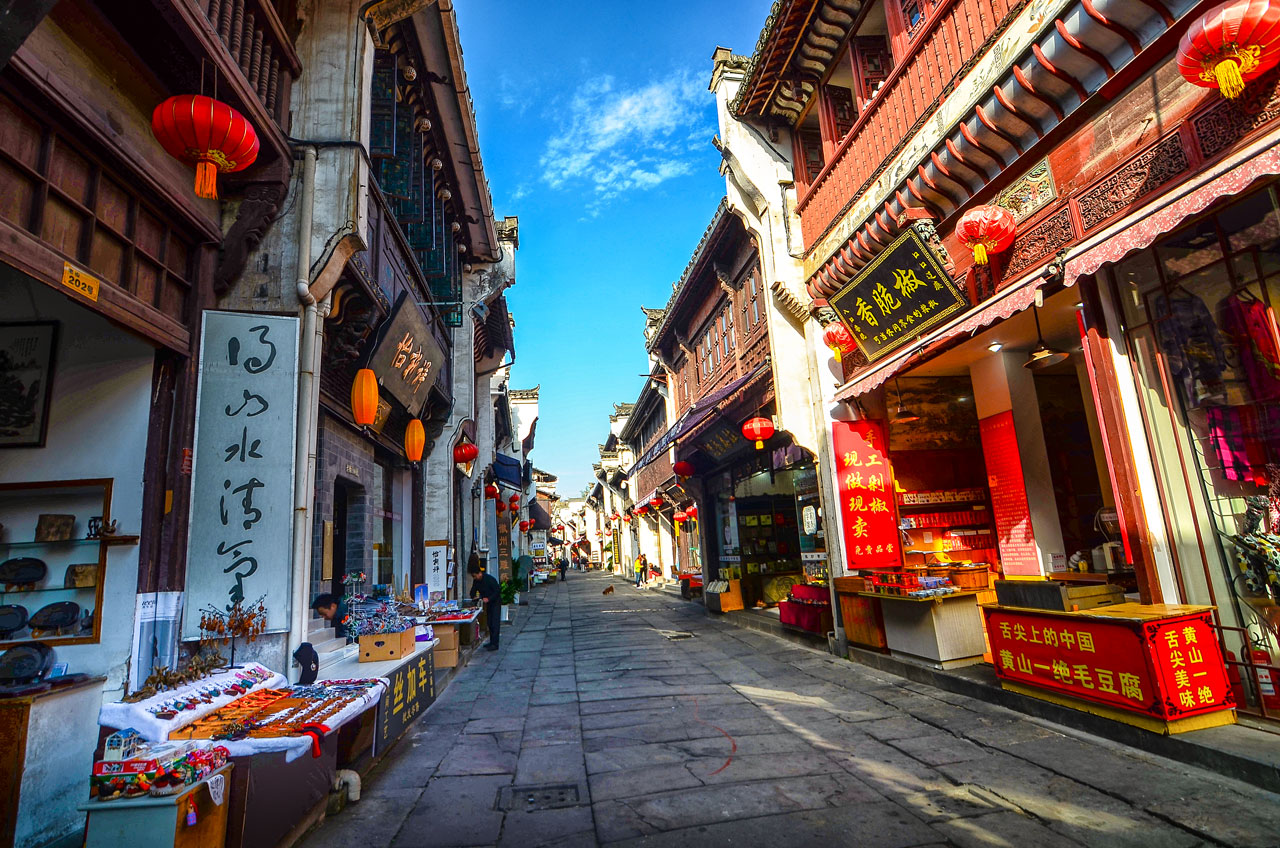
Its nickname is the boldest claim a Chinese street can make: ‘the living Along-the-River-During-the-Qingming-Festival scroll’, after the Song masterpiece depicting Kaifeng’s riverside commerce — because here, as in the painting, the shops, porters, food stalls and river trade form an unbroken portrait of everyday Chinese mercantile life. Unlike most heritage streets rebuilt as sets, Tunxi’s core kept its fabric and, more importantly, its function: the ink-stick houses and tea firms on the lane are the same trades the street was famous for centuries ago.
2. What to Spot: Shopfronts, the Four Treasures, Hui Food
🏮 The Song-Style Street Fabric
- The Story: One of the best-preserved Hui commercial streets — cobblestones, timber fronts, horse-head gables end to end.
- What to Look For: The ‘front shop, rear workshop’ plan; old firm signboards and plate-glass counters that haven’t changed in decades.
🖌️ Hui Ink Sticks & She Inkstones
- The Story: Two of the Four Treasures of the Study are local products, and this street is their market.
- What to Look For: Lampblack-and-glue ink sticks with gilded relief, and slate inkstones with natural grain — examine before believing any rarity story.
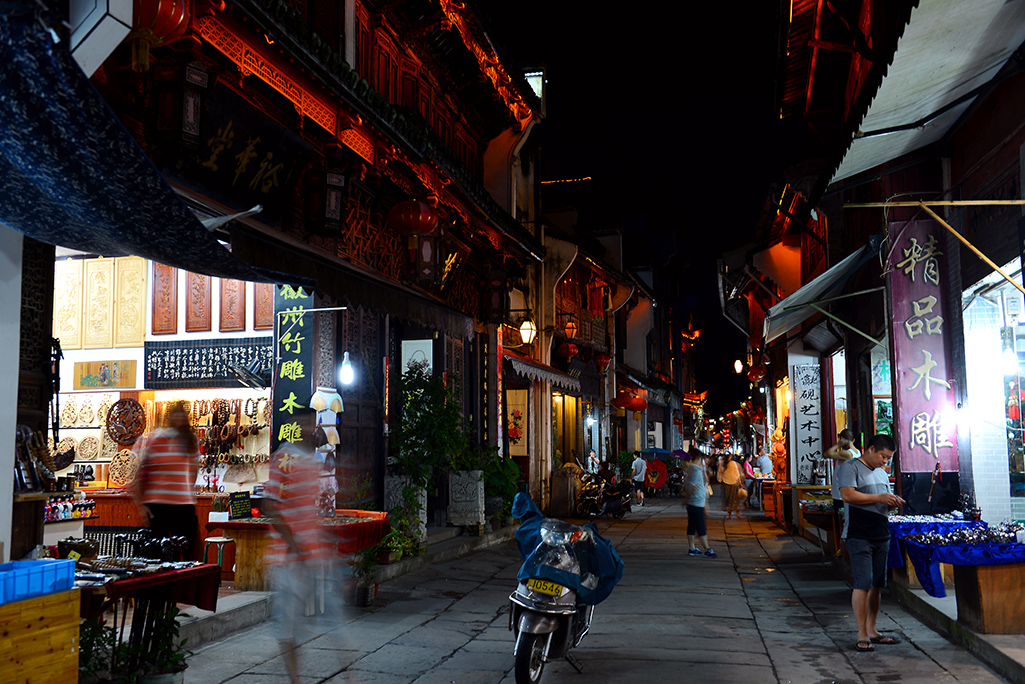
🍢 Hui Kitchens & Snacks
- The Story: Huizhou cuisine — braised, fermented, unapologetic — is sold here in its street form.
- What to Look For: Hairy tofu (fermented, grilled at the stall) and stinky mandarin fish; tea houses for Huangshan Maofeng and Keemun.
3. Cultural Contrast: The Heritage Street That Never Became a Museum
The global norm for old commercial streets is preservation-by-freeze: fabric kept, trade evicted, gift shops installed. Tunxi inverts the model — it stayed a working street, so its ‘authenticity’ isn’t staged but residual: real ink workshops, real tea firms, real locals buying soy sauce where tourists photograph it. For a foreign visitor that makes the street legible in a way few heritage sites are — commerce as living history, not heritage business.
The flip side is honest: a street that serves everyone serves the tour group too, and the same lane holds century-old firms alongside tourist-priced lookalikes. The cultural skill being tested here is discernment — knowing what Huizhou ink and She stone actually look like before paying for them, and preferring the stall with a queue in Chinese. Eaten, shopped and walked with a little learning, the street rewards you with the rarest souvenir of modern China: an old town still doing what it was built to do.
4. Practical Essentials: Tickets, Transit & Scam Alerts
Tickets & Passport Booking
- Price: Nothing to enter — an open, free historic street; interior venues (e.g. the Wancui Building museum) and all consumption carry their own posted fees. No ticket exists for the street itself, so beware anyone selling one.
- Documents & booking: None required for the street; museum entry at its own counter follows posted rules.
How to Get There
- Where it is: In Tunxi, Huangshan’s city centre, beside the Xin’an River — the natural arrival/departure stop for the city; this city publishes no official drive times from the airport or Huangshan North station, so treat mapping estimates as indicative. Taxis and city buses reach the street edge directly.
- Show Your Driver: 师傅,去【屯溪老街】(黄山市屯溪),谢谢!
Inside Tips & Scam Alerts
- Go at dusk for lanterns plus open shops, and walk down to the riverside promenade after. Eat the street — hairy tofu at the stalls, Hui dishes at the old restaurants. Buy ink, stone and tea with eyes open: established firms, examine first, no story-only purchases; decline ‘tasting tour’ invitations. Complaints / lost property: 12345, free from a local number.
Quick Answers
The 6 things visitors ask before setting out, answered from the same verified record used across this page.
- How much does it cost to visit Tunxi Old Street?
- Free — open historic street.
- What are the opening hours at Tunxi Old Street?
- An all-day pedestrian commercial street; the lanes themselves are open around the clock, while the classic shopfront trade runs roughly daytime into early evening, with individual restaurants and some night economy running later. No single confirmed timetable governs the whole street — each house keeps its own hours — so treat early evening as the sweet spot: shops still open, lanterns lit, and the riverfront active. Weekends are busier with local shoppers as well as visitors.
- Is Tunxi Old Street wheelchair accessible?
- Not fully. An old commercial street of irregular cobblestones, shop thresholds and occasional steps, level overall along the main axis but genuinely rough underfoot; side lanes are narrower. Pushable with effort for wheelchairs and strollers, not comfortable — the surface, not the route, is the barrier.
- How do I tell a taxi driver to take me to Tunxi Old Street?
- Copy this line into DiDi or show it to the driver: 师傅,去【屯溪老街】(黄山市屯溪),谢谢!
- Can I leave my luggage at Tunxi Old Street?
- As a city-centre street it sits among hotels and shops that'll hold a bag for a tip; there is no official street luggage service — the airport and rail station are your formal options.
- Is there anything to watch out for at Tunxi Old Street?
- The watch-outs are those of any famous tourist street dressed in honest merchant stock. Tea and curio pricing: the street's specialities — Huizhou ink sticks, She inkstones, yellow-peak and keemun teas — vary wildly in genuine quality, so buy from established old firms, ask to see and examine before paying, and be sceptical of 'collector-grade' stories told only in English. Guide offers at lane entrances and 'tea tasting' invitations that quietly become sales sessions should be declined politely. The street itself is safe, free and walked by locals running errands; the main trap is simply paying street-headline prices for what a county-market shop sells far cheaper.
Where to go next
Three short lists, recomputed at build time from the same coordinates and categories as the pages themselves — no paid placement, no hand-picked names. Every card is a published guide.
Next stop in Huangshan
Straight-line distance from this spot, so you can judge what is walkable and what needs a taxi.


More like this, elsewhere in China
If historic district is what you came for, these are the closest equivalents you can reach in another city — ordered by distance, one city per card.


Change the subject
Deliberately a different category, for when one more temple or garden would blur into the last one.


Lists are derived from coordinates and category alone. Fix a wrong pin or re-tag a place and every list that mentions it moves with it.
Before you go · arrival essentials
Practical guides that pair with this kind of place — picked by category, not sponsored placement.
- Pay with Alipay & WeChat PayPayment · Set up Alipay or WeChat Pay on a foreign card — needed at almost every counter.
- Claim your tourist tax refundTax refund · Get 11% VAT back on what you buy here, at the airport on departure.
- Book China train tickets (12306)Trains · Buy high-speed rail tickets with a foreign passport, for getting here and back.