
Huizhou Ancient City

The main trap is structural, not criminal: visitors assume 'ancient city' means one ticketed enclosure like Pingyao, then discover the streets are open and the sites inside are separately checked — so decide what you actually want before buying any combo, at the official gate or channel rather than from touts or third-party headlines. Second, this is Shexian's living county town, not a stage set: shops selling Hui ink sticks, She inkstones and 'antiques' range from honest old firms to tourist pricing — buy from established names, expect to examine, and don't trust provenance you can't verify. Ordinary watch-outs apply to tea-house and curio stops that quietly turn into sales pitches.
Taxi & Street Navigation Help
师傅,去【徽州古城】(黄山歙县),谢谢!
Opening Hours & Best Time
The street fabric is an open historic quarter — living, working town of Shexian county seat — so walking its lanes is not gated by a scenic timetable; the interior ticketed sites and the restored prefecture government follow their own posted hours, for which no single confirmed schedule is relied on here. Check the day's hours before targeting specific halls, and remember the town's atmosphere — teahouses, street food, errand-running locals — is best in early morning and evening when it is simply itself.
💡 Pro Tip: For centuries this was the prefectural seat of Huizhou — the administrative, commercial and cultural capital of Hui culture, which is why it is the single best place to understand everything else on this list: the merchants, the academies, the architecture, the cuisine (stinky mandarin fish and hairy tofu were Huizhou dishes before they were Huangshan ones). Its wonder is the Xu Guo Stone Archway in the old street: built 1581 for Grand Secretary Xu Guo, it has eight pillars forming an unusual octagonal 'cross archway' — and because imperial protocol granted normally a single street arch, this one was famously dubbed the 'second capital's archway'. Do not miss the restored Huizhou Prefecture government offices, and downstream the Yuliang Dam — an ancient waterworks regulating the Xin'an River traffic that carried Hui merchants down to Hangzhou and the world. Tao Xingzhi, China's great modern educator, was a local son and has a memorial here.
Accessibility & Luggage Lockers
Accessibility: ⚠️ Step thresholds, limited access
A historic town core of cobblestoned streets, raised thresholds, stone archway bases and stepped gate complexes built for foot and cart traffic centuries ago; level walking exists along the main street but the old city overall is not wheelchair- or stroller-practicable.
🧳 Luggage Storage: As a living county town it has ordinary station-style storage near transport points and hotels; the historic lanes themselves have none — carry light and use your accommodation.
Nearby Landmarks
The 2 places within reach of this spot — each one opens straight into Apple Maps or Amap, with the Chinese name you can show a driver.
- Mount Huangshan scenic area, to the south-westLandmarkNearbyseparate ticket
Chinese names and pins are matched against each city's own map data at build time; a place only gets Directions once its pin has been verified, otherwise the button searches by name.
About Huizhou Ancient City
1. Historical Origins: The Capital That Made Hui Culture a Name
Huizhou Ancient City is today’s Shexian county seat — and for nearly a thousand years the seat of Huizhou Prefecture, the metropolis of a region so distinctive that ‘Hui’ became the name of a whole culture: Hui merchants, Hui architecture, Hui ink, Hui cooking. When the prefecture was abolished in the early Republic, the title of ‘the ancient capital of Huizhou’ effectively devolved to this town, and it guards that inheritance more completely than anywhere else.
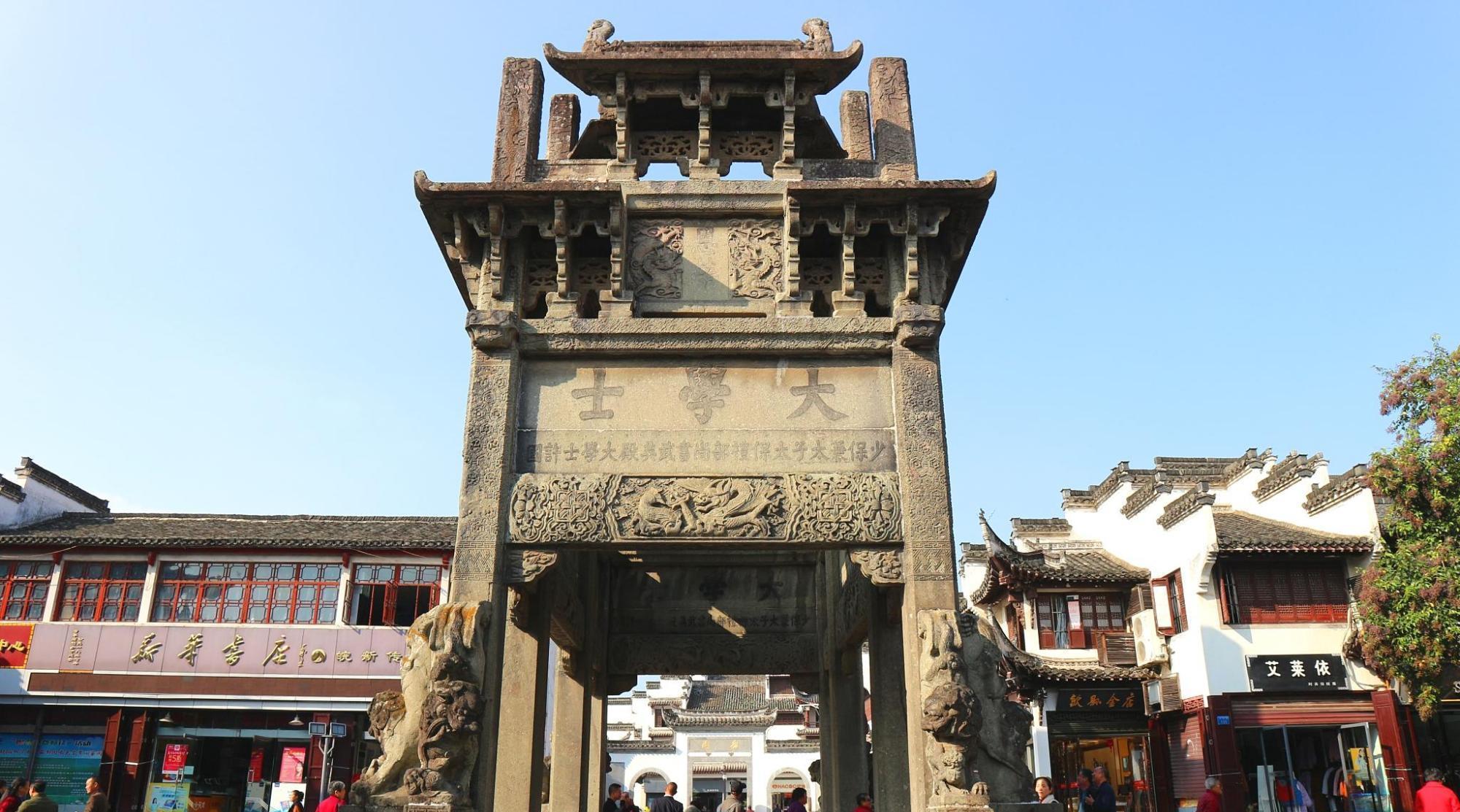
Its monuments tell the story of that official-and-merchant world. The Xu Guo Stone Archway was raised in 1581 for Xu Guo, a native son who rose to Grand Secretary: by imperial custom a street archway was limited, yet his was built as a rare octagonal complex of eight pillars — a promotion in stone. The restored Huizhou Prefecture government offices recreate the yamen compound where prefectural administration ran for centuries, and just outside, the Yuliang Dam harnessed the Xin’an River so that the boat traffic of Hui commerce could reach Hangzhou. Listed among China’s best-preserved historic county towns alongside Pingyao and Lijiang, Shexian is where Huizhou as a system — not just a style — was governed and financed.
2. What to Spot: The Archway, the Yamen, the River Dam
🏛️ The Xu Guo Stone Archway
- The Story: 1581, eight pillars, an octagonal street arch for a Grand Secretary — a flagrant, celebrated exception to imperial rules.
- What to Look For: The lions, relief inscriptions and ‘raised in thanks for favour’ panels; it stands mid-street and is impossible to miss.
🏯 The Huizhou Prefecture Government Offices
- The Story: The restored seat of the prefecture — a full yamen compound of gates, halls and inner courtyards.
- What to Look For: Court layout, plaques and the drum-and-clock towers; the best single lesson in how Huizhou was actually ruled.
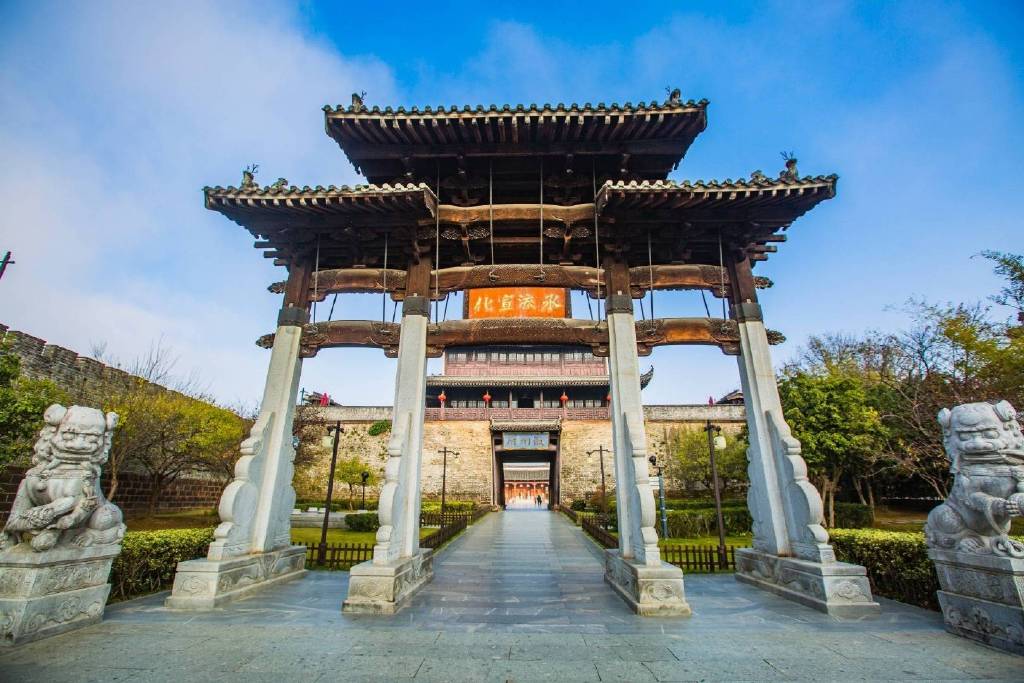
🌊 Yuliang Dam — the Water Gate of Hui Trade
- The Story: An ancient stone dam and sluice regulating the Xin’an River, the outlet that carried Hui merchants to Hangzhou.
- What to Look For: The stepped spillway and the boat-dock lanes above it — the commercial reason the prefecture prospered.
3. Cultural Contrast: An Old City That Never Closed Shop
Pingyao and Lijiang present their past as a bounded, ticketed ensemble; Huizhou Ancient City does something older and rarer — it simply kept being a town. The lanes around the archway are still Shexian’s high street: groceries beside ink-stick shops, grandparents on stools where Ming officials walked. For a foreign visitor this living continuity is the real artefact; the buildings are the by-products of a community that never stopped using its own history.
That double nature explains the ticket structure — open streets, checked sites — and the honest rule for visiting: buy a ticket only for what genuinely interests you, and let the free walking carry the atmosphere. The prefecture’s genius was turning administrative position plus river access into a merchant diaspora; everything ‘Hui’ — the villages of Yixian, the carvings, the cuisine, the ink — radiated from this seat. Walk the archway street at breakfast hour and you are standing at the centre of that system, still running.
4. Practical Essentials: Tickets, Transit & Scam Alerts
Tickets & Passport Booking
- Price: Streets free to walk; interior sites separately checked, commonly as a multi-site combo. No official figure is fixed here — OTA combo references are non-official; confirm the structure and price at the official gate or channel for the day.
- Passport & booking: Buy interior-site tickets at the gate or official channel with your passport; reservation and document rules follow posted scenic-area policy.
How to Get There
- Where it is: Shexian county seat, down-river from Tunxi and well away from the mountain gate; this city publishes no official transfer times, so treat mapping estimates as indicative. Trains and buses connect Tunxi and Shexian frequently.
- Show Your Driver: 师傅,去【徽州古城】(黄山歙县),谢谢!
Inside Tips & Scam Alerts
- Decide first, buy second — walk the free core, and pay only for the yamen or sites you actually want. Eat Hui here: hairy tofu and stinky mandarin fish are regional dishes, and the street food is the cheapest authenticity test. Buy ink sticks and inkstones from established old firms, examine before paying. Pair with Yuliang Dam at sunset. Complaints / lost property: 12345, free from a local number.
Quick Answers
The 6 things visitors ask before setting out, answered from the same verified record used across this page.
- How much does it cost to visit Huizhou Ancient City?
- Streets free; sites combo (OTA).
- What are the opening hours at Huizhou Ancient City?
- The street fabric is an open historic quarter — living, working town of Shexian county seat — so walking its lanes is not gated by a scenic timetable; the interior ticketed sites and the restored prefecture government follow their own posted hours, for which no single confirmed schedule is relied on here. Check the day's hours before targeting specific halls, and remember the town's atmosphere — teahouses, street food, errand-running locals — is best in early morning and evening when it is simply itself.
- Is Huizhou Ancient City wheelchair accessible?
- Not fully. A historic town core of cobblestoned streets, raised thresholds, stone archway bases and stepped gate complexes built for foot and cart traffic centuries ago; level walking exists along the main street but the old city overall is not wheelchair- or stroller-practicable.
- How do I tell a taxi driver to take me to Huizhou Ancient City?
- Copy this line into DiDi or show it to the driver: 师傅,去【徽州古城】(黄山歙县),谢谢!
- Can I leave my luggage at Huizhou Ancient City?
- As a living county town it has ordinary station-style storage near transport points and hotels; the historic lanes themselves have none — carry light and use your accommodation.
- Is there anything to watch out for at Huizhou Ancient City?
- The main trap is structural, not criminal: visitors assume 'ancient city' means one ticketed enclosure like Pingyao, then discover the streets are open and the sites inside are separately checked — so decide what you actually want before buying any combo, at the official gate or channel rather than from touts or third-party headlines. Second, this is Shexian's living county town, not a stage set: shops selling Hui ink sticks, She inkstones and 'antiques' range from honest old firms to tourist pricing — buy from established names, expect to examine, and don't trust provenance you can't verify. Ordinary watch-outs apply to tea-house and curio stops that quietly turn into sales pitches.
Where to go next
Three short lists, recomputed at build time from the same coordinates and categories as the pages themselves — no paid placement, no hand-picked names. Every card is a published guide.
Next stop in Huangshan
Straight-line distance from this spot, so you can judge what is walkable and what needs a taxi.


More like this, elsewhere in China
If historic district is what you came for, these are the closest equivalents you can reach in another city — ordered by distance, one city per card.


Change the subject
Deliberately a different category, for when one more temple or garden would blur into the last one.


Lists are derived from coordinates and category alone. Fix a wrong pin or re-tag a place and every list that mentions it moves with it.
Before you go · arrival essentials
Practical guides that pair with this kind of place — picked by category, not sponsored placement.
- Pay with Alipay & WeChat PayPayment · Set up Alipay or WeChat Pay on a foreign card — needed at almost every counter.
- Claim your tourist tax refundTax refund · Get 11% VAT back on what you buy here, at the airport on departure.
- Book China train tickets (12306)Trains · Buy high-speed rail tickets with a foreign passport, for getting here and back.