
Daxingshan Temple

Taxi & Street Navigation Help
师傅,请带我到大兴善寺,小寨兴善寺西街。谢谢!
Opening Hours & Best Time
8:00 - 17:30
💡 Pro Tip: This is the 'incense and locals' temple — no ticket, no crowds, and the courtyard's old locust trees make it the calmest 30 minutes in central Xi'an. The temple shop sells the small 'peace bracelets' that locals actually buy, at local prices.
Accessibility & Luggage Lockers
Accessibility: ♿ Wheelchair & Stroller Friendly
Flat courtyards, step-free gates; one of the easiest temples in Xi'an for wheels.
🧳 Luggage Storage: No lockers; bags stay with you.
Nearby Landmarks
The 2 places within reach of this spot — each one opens straight into Apple Maps or Amap, with the Chinese name you can show a driver.
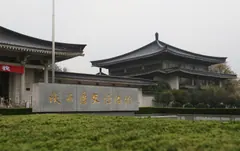
Also worth pairing: Small Wild Goose Pagoda (15 min walk north) — real picks, just left off the grid so the cards stay in pairs.
Chinese names and pins are matched against each city's own map data at build time; a place only gets Directions once its pin has been verified, otherwise the button searches by name.
About Daxingshan Temple
1. Historical Origins: Where Tantric Buddhism Learned Chinese
Daxingshan Temple was founded in the Western Jin dynasty, roughly 1,700 years ago, which makes it one of the oldest Buddhist sites inside the city walls. Its real importance, though, comes from about the 8th century. Three Indian masters — Subhakarasimha, Vajrabodhi and Amoghavajra — worked here under Tang patronage, translating Sanskrit tantric texts and teaching the ritual system that became Chinese Esoteric Buddhism, or Mizong. For a period, this courtyard was the transmission point between Indian tantra and East Asian practice.
That history is why Japanese and Korean pilgrims still turn up. The lineages that reached Japan as Shingon trace part of their ancestry back through this temple, and the modern reconstruction of the site leans on that international connection rather than on imperial splendour.
The physical temple is smaller than its history. A gate, two main halls, a pagoda footprint, and a courtyard of old locust trees that predate everything else around them. In a district now dominated by shopping malls and the Xiaozhai interchange, it functions as a 30-minute hole in the noise.

2. What to Spot: Halls, Locust Trees, Incense
🏯 The Main Hall
- The Story: The halls are modern restorations on Tang and Ming foundations; what survived the 20th century here was the ground plan and the function, not the timber.
- What to Look For: Look up at the plaque above the door before you go in — the calligraphy is the object most visitors photograph.
🌳 The Old Locust Trees
- The Story: The courtyard trees are older than the rebuilt halls, and in summer the canopy is what makes the place bearable in August heat.
- What to Look For: The benches underneath. This is where local retirees sit through the afternoon, and where you can too.
🪔 The Incense Courtyard
- The Story: Unlike the big tourist temples, this one still runs on lay worship rather than ticket revenue — the censers are in constant use.
- What to Look For: Go early on a weekday and you get the smoke and the chanting without a crowd. The large bronze censer in front of the main hall is the visual centre of the temple.


3. Cultural Contrast: A Working Temple, Not a Monument
Chinese visitors use Daxingshan the way Europeans use a neighbourhood church: they drop in, burn a few sticks of incense, sit for a while, and leave. There is no audio guide, no diorama, and no attempt to explain itself in English. That is either the point or a disappointment, depending on what you came for.
The pairing that makes it work for a foreign visitor is proximity. The Shaanxi History Museum is 600 metres west, and its timed-entry system means most people arrive at 10 a.m. and queue. Coming here at 9 a.m. first — half an hour of quiet courtyard — then walking to the museum is the best morning in Xi’an that nobody plans.
One note on the front gate: the fortune-tellers and “blessing” vendors outside are not affiliated with the temple. Inside is the real thing; outside is a business.

4. Practical Essentials: Tickets, Transit & Scam Alerts
Tickets & Passport Booking
- Price: Free. There is no ticket and no reservation system.
- How to Book: Nothing to book — walk in. Opening hours are roughly 8:00 to 17:30; check the official site before you go in case they change for festival days.
How to Get There
- By Metro: Line 2 or Line 3 to Xiaozhai Station, Exit A, then about three minutes on foot into the temple street. The Shaanxi History Museum is 600 metres west of the temple.
- Show Your Driver: 师傅,请带我到大兴善寺,小寨兴善寺西街。谢谢!
Inside Tips & Scam Alerts
- The fortune-tellers at the gate are not temple staff. Anyone outside offering to read your face or sell you a blessing is running a private business; the temple itself asks for nothing.
- Come on a weekday morning. That is when the incense is thickest and the courtyard quietest; weekend afternoons are busy with local families.
- Dress is relaxed but shoulders and knees covered is the polite default at an active worship site, as at any working temple in China.
- The small peace bracelets sold in the temple shop are the local purchase — cheap, unbranded, and actually bought by Xi’an residents rather than tourists.
- Complaints: the national 12345 hotline is free to call from any local phone.
Quick Answers
The 6 things visitors ask before setting out, answered from the same verified record used across this page.
- How much does it cost to visit Daxingshan Temple?
- FREE.
- What are the opening hours at Daxingshan Temple?
- 8:00 - 17:30.
- Is Daxingshan Temple wheelchair accessible?
- Yes. Flat courtyards, step-free gates; one of the easiest temples in Xi'an for wheels.
- How do I tell a taxi driver to take me to Daxingshan Temple?
- Copy this line into DiDi or show it to the driver: 师傅,请带我到大兴善寺,小寨兴善寺西街。谢谢!
- Can I leave my luggage at Daxingshan Temple?
- No lockers; bags stay with you.
- Will English work at Daxingshan Temple?
- Limited — ticketing and signage are mostly Chinese. Have a translation app with the offline Chinese pack ready, and keep the Chinese name (大兴善寺) on screen for staff.
Where to go next
Three short lists, recomputed at build time from the same coordinates and categories as the pages themselves — no paid placement, no hand-picked names. Every card is a published guide.
Next stop in Xi'an
Straight-line distance from this spot, so you can judge what is walkable and what needs a taxi.


More like this, elsewhere in China
If temple is what you came for, these are the closest equivalents you can reach in another city — ordered by distance, one city per card.


Change the subject
Deliberately a different category, for when one more temple or garden would blur into the last one.


Lists are derived from coordinates and category alone. Fix a wrong pin or re-tag a place and every list that mentions it moves with it.
Before you go · arrival essentials
Practical guides that pair with this kind of place — picked by category, not sponsored placement.