
Big Wild Goose Pagoda (Da Ci'en Temple)

Taxi & Street Navigation Help
师傅,请带我到大雁塔大慈恩寺正门。谢谢!
Opening Hours & Best Time
8:00 - 18:00
💡 Pro Tip: The North Square fountain show (free, nightly around 7/8/9 PM depending on season) is Asia's largest musical fountain — arrive 20 minutes early for a front-row spot facing the pagoda. The pagoda silhouette behind the water jets is the shot.
Accessibility & Luggage Lockers
Accessibility: ♿ Wheelchair & Stroller Friendly
Temple grounds are flat and paved; the pagoda climb itself is stairs only (narrow, one-way spiral). Wheelchair users can enjoy the full grounds and exterior.
🧳 Luggage Storage: No lockers; travel light. The South Square mall (nearby) has paid storage.
Nearby Landmarks
The 2 places within reach of this spot — each one opens straight into Apple Maps or Amap, with the Chinese name you can show a driver.
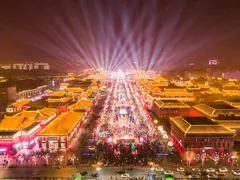 大唐不夜城Grand Tang Mall (Datang Everbright City) — 10 min walk southTheme parkAbout a 15-min walk0.49 km
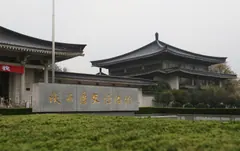
Also worth pairing: Datang Furong Garden (Metro Line 4, one stop) — real picks, just left off the grid so the cards stay in pairs.
Chinese names and pins are matched against each city's own map data at build time; a place only gets Directions once its pin has been verified, otherwise the button searches by name.
About Big Wild Goose Pagoda (Da Ci'en Temple)
1. Historical Origins: A Tower Built for Books
The pagoda was finished in 652, and it exists for one reason: Xuanzang needed somewhere dry to keep the sutras. The monk had spent seventeen years travelling to India and back, and returned with more than 600 Buddhist texts, which he then spent the rest of his life translating. The brick tower was built to store them — five storeys originally, ten today after successive rebuildings, 64 metres tall and entirely without iron or concrete.
Xuanzang is better known outside China as the model for the monk in Journey to the West, and the fiction has largely buried the history. The real journey was a solo overland trip through Central Asia and back, undertaken against the emperor’s initial refusal. The stone reliefs at the base of the pagoda illustrate that route; almost nobody reads them before climbing.

2. What to Spot: Pagoda, Reliefs, Fountain
🛕 The Pagoda
- The Story: Seven climbable storeys of grey brick, tapering slightly, with the weathered look of a building that has survived earthquakes and rebuildings.
- What to Look For: The silhouette from the temple courtyard rather than the summit. From the top you mostly see roofs and haze.
🪨 The Base Reliefs
- The Story: Carved panels at the foot of the tower depicting Xuanzang’s journey west, in place before you start climbing.
- What to Look For: Read them first. They turn the climb from a staircase into a story, and they are free with the temple ticket.
⛲ The North Square Fountain
- The Story: A very large synchronised musical fountain across the square, free to watch, running several times each evening.
- What to Look For: Stand at the northern end of the square and shoot back toward the pagoda so the jets frame the tower; arrive 20 minutes early for the front row.
🏮 The Square After Dark
- The Story: The pagoda is floodlit at night and the square fills with people in rented Tang costume having their photographs taken.
- What to Look For: About 20 minutes after sunset — colour still in the sky, lights already on. Walk south afterwards into the Grand Tang Mall.


3. Cultural Contrast: The Most Photographed Monk in China
Chinese visitors arrive with the novel, not the history: this is the temple of the monk from Journey to the West, and the costume-rental trade on the square is built entirely around that association. The atmosphere in the evening is closer to a festival than a religious site.
Foreign visitors usually know the history and not the fiction, which inverts the experience — you get a seventh-century translation project and a working temple, and the crowd gets a photo set. Both readings coexist without friction. The one decision worth making deliberately: the ¥25 climb is a narrow, steep, queuing staircase with a modest view, while the temple courtyard and the evening square are where the value is.

4. Practical Essentials: Tickets, Transit & Scam Alerts
Tickets & Passport Booking
- Price: ¥40 for Da Ci’en Temple, plus ¥25 to climb the pagoda, bought separately inside the temple grounds. The square and the fountain are free.
- How to Book: Buy at the gate or through the temple’s official account; a passport is fine and no real-name reservation is required.
How to Get There
- By Metro: Lines 3 and 4 to Dayanta Station, exit C, which surfaces facing the temple’s north square. The Shaanxi History Museum is about 1 km west and the Grand Tang Mall starts immediately to the south.
- Show Your Driver: 师傅,请带我到大雁塔大慈恩寺正门。谢谢!
Inside Tips & Scam Alerts
- Come in the late afternoon. The temple is quiet after 16:00 and the fountain runs after dark — one visit, two experiences.
- Skip the climb if you are short on time. Seven storeys of narrow stairs for a rooftop view; the courtyard and square photograph better.
- Incense packages sold outside the gate are vendors’ goods, not temple requirements. Nothing about them is compulsory.
- Fountain times shift with the season — roughly 19:00, 20:00 and 21:00. Confirm on the day.
- Complaints: the national 12345 hotline is free to call from any local phone.
Quick Answers
The 6 things visitors ask before setting out, answered from the same verified record used across this page.
- How much does it cost to visit Big Wild Goose Pagoda (Da Ci'en Temple)?
- Temple ¥40 + Pagoda climb ¥25 (separate).
- What are the opening hours at Big Wild Goose Pagoda (Da Ci'en Temple)?
- 8:00 - 18:00.
- Is Big Wild Goose Pagoda (Da Ci'en Temple) wheelchair accessible?
- Yes. Temple grounds are flat and paved; the pagoda climb itself is stairs only (narrow, one-way spiral). Wheelchair users can enjoy the full grounds and exterior.
- How do I tell a taxi driver to take me to Big Wild Goose Pagoda (Da Ci'en Temple)?
- Copy this line into DiDi or show it to the driver: 师傅,请带我到大雁塔大慈恩寺正门。谢谢!
- Can I leave my luggage at Big Wild Goose Pagoda (Da Ci'en Temple)?
- No lockers; travel light. The South Square mall (nearby) has paid storage.
- Will English work at Big Wild Goose Pagoda (Da Ci'en Temple)?
- Yes — staff used to foreign visitors handle English, and the site scores 4/5 on our foreign-friendliness scale.
Where to go next
Three short lists, recomputed at build time from the same coordinates and categories as the pages themselves — no paid placement, no hand-picked names. Every card is a published guide.
Next stop in Xi'an
Straight-line distance from this spot, so you can judge what is walkable and what needs a taxi.


More like this, elsewhere in China
If landmark is what you came for, these are the closest equivalents you can reach in another city — ordered by distance, one city per card.


Change the subject
Deliberately a different category, for when one more temple or garden would blur into the last one.


Lists are derived from coordinates and category alone. Fix a wrong pin or re-tag a place and every list that mentions it moves with it.
Before you go · arrival essentials
Practical guides that pair with this kind of place — picked by category, not sponsored placement.