
Guandu Ancient Town

Free. The snack stalls are the point - prices are per item and cheap. Silver and jade shops sell at tourist multiples; buy food, not jewellery. The 'old town' is partly rebuilt; the pagoda is not.
Taxi & Street Navigation Help
师傅,请带我到官渡古镇,谢谢!
Opening Hours & Best Time
Open all day; shops about 09:00-21:00.
💡 Pro Tip: The reason to come is the **金刚宝座塔** (Vajra Throne Pagoda) of 1457: a square stone base with five pagodas on top, a Ming-dynasty copy of the Mahabodhi temple at Bodh Gaya in India. There are only a handful in China. Then eat: 官渡粑粑 (griddle cake), 豌豆粉 (pea jelly) and 米线 from the stalls.
Accessibility & Luggage Lockers
Accessibility: ♿ Wheelchair & Stroller Friendly
Level stone-paved lanes with dropped kerbs. Some temple halls have steps of 15-20 cm. Very crowded on weekend evenings.
🧳 Luggage Storage: No storage.
Nearby Landmarks
The 2 places within reach of this spot — each one opens straight into Apple Maps or Amap, with the Chinese name you can show a driver.
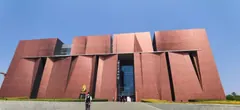 云南省博物馆Yunnan Provincial MuseumMuseumAbout a 15-min walk0.66 km3 km south
Also worth pairing: Kunming city centre (8 km north) — real picks, just left off the grid so the cards stay in pairs.
Chinese names and pins are matched against each city's own map data at build time; a place only gets Directions once its pin has been verified, otherwise the button searches by name.
About Guandu Ancient Town
1. Historical Origins: A Ferry Crossing That Became a Town
Guandu started as a river crossing. In the Tang and Song periods this was the ferry point on the northern shore of Dianchi, where the road south out of Kunming met the water, and a market town grew up around the landing. It has been a market ever since.
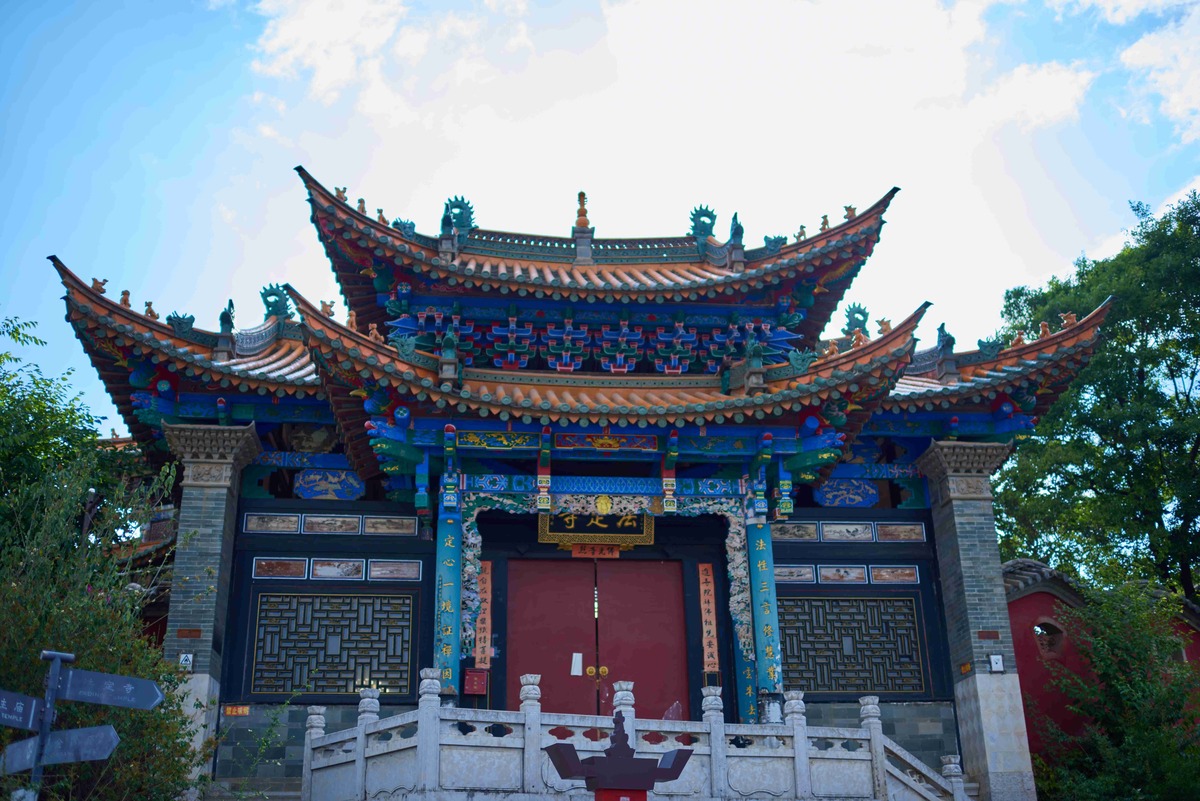
What is left is a street grid with a pagoda standing in the middle of it, surrounded by the remains of a dense religious quarter — six temples, seven pavilions, eight shrines by the old count, most of them gone and a few of them still there, in use, between houses.
2. What to Spot: One Ming Pagoda and a Street of Food
🛕 The Vajra Throne Pagoda
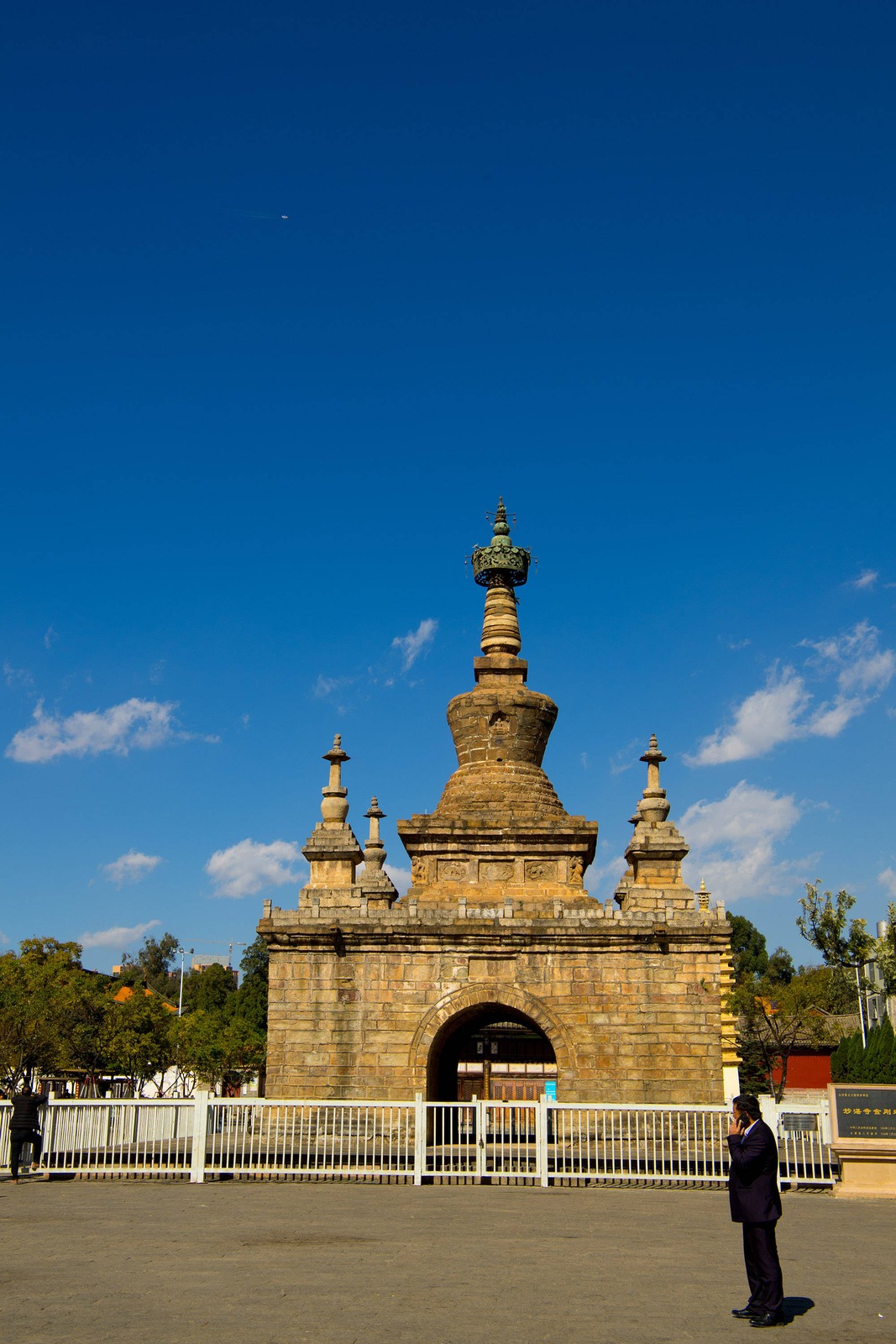
This is the reason to come. Built in 1457, it is a square stone base carrying five small pagodas — one at each corner and one in the centre — and the form is a Ming-dynasty reading of the Mahabodhi temple at Bodh Gaya in India. Only a handful of these survive in China, and this one stands in the open at a street junction rather than behind a fence.
- The Story: The type travelled from India through Tibet and Mongolia into Ming China, and the result is a building that belongs to three architectural traditions at once.
- What to Look For: The corner pagodas. Each is a miniature of the central one, and the proportions repeat exactly at every scale — which is how you can tell it is a copy of a shrine rather than a stupa built to its own logic.
🏮 The Street
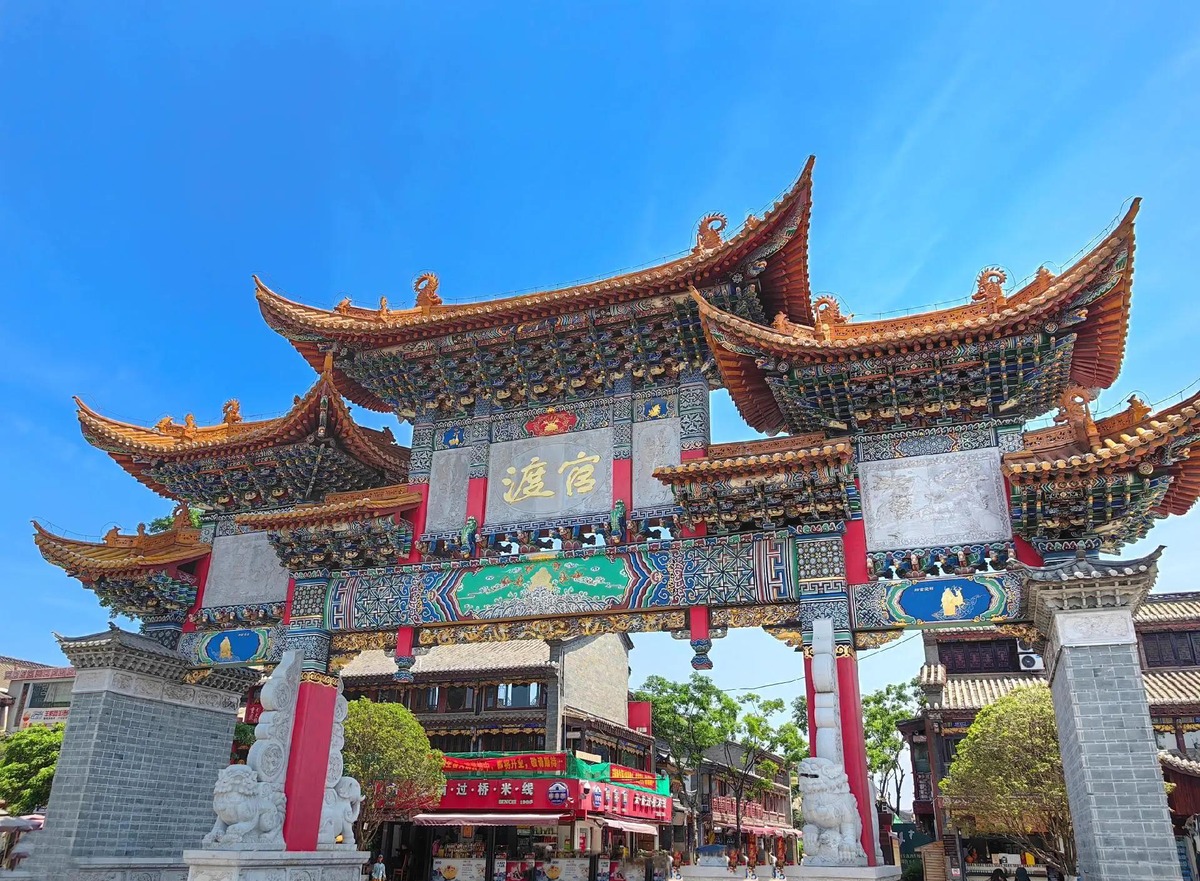
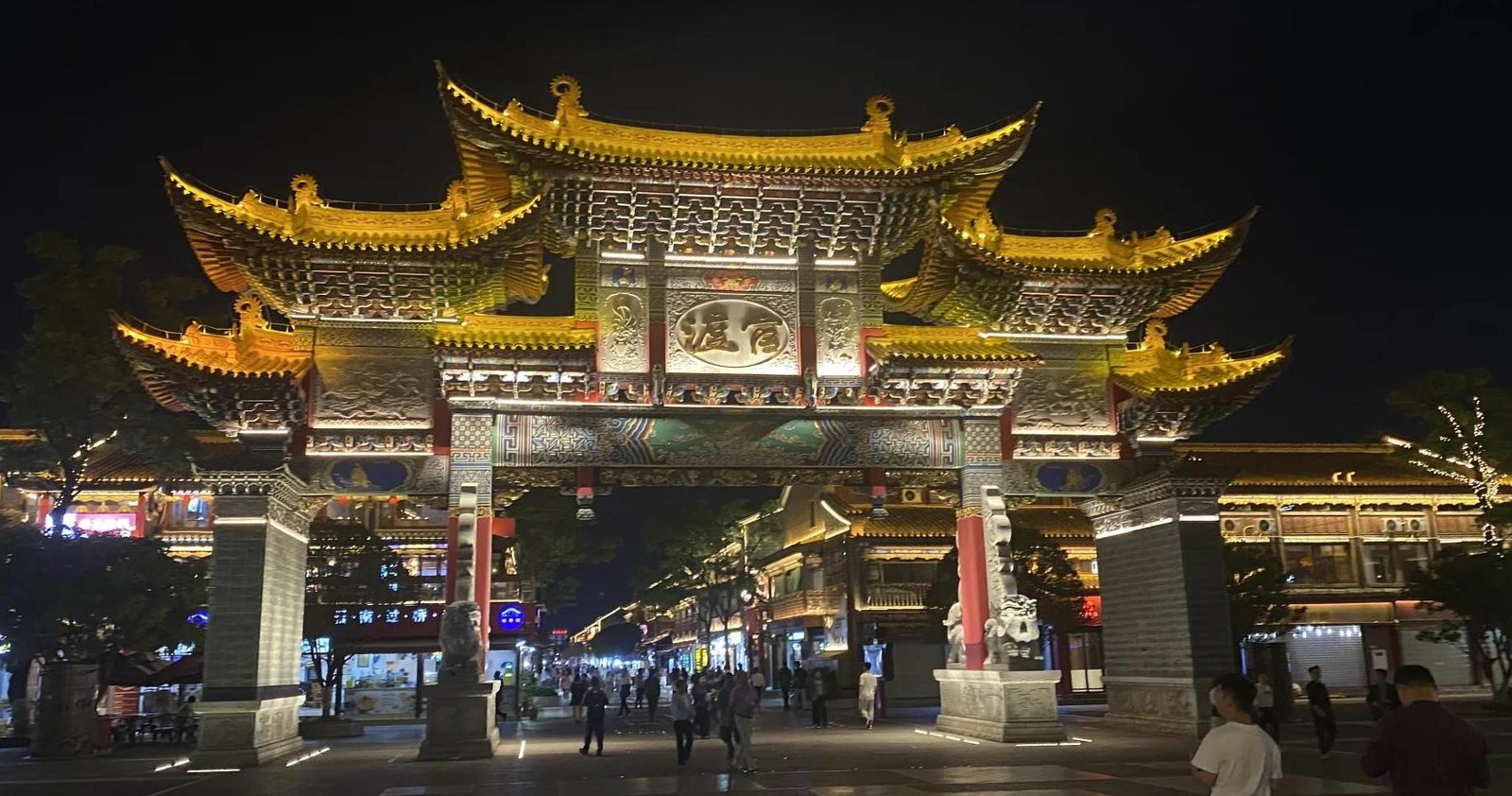
Be honest about what you are walking through. Part of the quarter has been rebuilt for visitors, with new timber facades on old alignments; the pagoda, a few temple halls and the street pattern are the original fabric. Walk the side lanes as well as the main street — the residents are still there, and the small temples are between the houses, not on a signposted circuit.
🥢 The Food
This is a working market town and the eating is the second reason to come. Guandu baba — a griddle cake, pressed flat and cooked on both sides — is the local signature; pea jelly and rice noodles are the everyday lunch. Prices are per item, they are local, and the stalls do most of their business in the morning.
3. Cultural Contrast: A Market With a Monument in It
A European old town would have the monument fenced, ticketed and interpreted. Here the pagoda is a piece of street furniture that people walk past on the way to lunch, and the shops around it sell to residents as much as to visitors. That is both the charm and the difficulty: there is no exhibition, no route and no explanation unless you bring one.
- The pagoda is free and unprotected by a barrier. Walk around it, not into it.
- Silver and jade shops ask tourist multiples. Buy food, not jewellery.
- The snack stalls are the point. They are cheap, they are local, and they are why Kunming people come out here at the weekend.
4. Practical Essentials: Tickets, Transit & Scam Alerts
Tickets & Passport Booking
- The quarter is free and open all day. No ticket, no booking; foreign visitors walk in like anyone else.
- The Vajra Throne Pagoda is free too — both sources agree on this, and there is no gate to pass.
- Shops and restaurants keep roughly nine in the morning to nine at night, and later during lantern festivals; that is the only schedule worth planning around.
- A few halls and experiences inside charge separately. Prices and whether they are open are decided on site; no figures are quoted here.
How to Get There
- Location: Guandu District, around Guangfu Road, in the south-east of the city.
- Taxi: “师傅,去【官渡古镇】(官渡区广福路),谢谢!”
- Combining it: the provincial museum is in the same district, so the two make a half day — museum first, food after.
- Luggage: there is no official left-luggage in the quarter; travel light or ask at the visitor centre.
Inside Tips & Scam Alerts
- Fortune-tellers and “blessing” services at the entrances are a pitch. Decline and keep walking.
- Ask the price before ordering cooked food. The stalls are cheap, but not all of them are priced for locals.
- Lantern festivals bring crowds after dark. Keep valuables in front of you and expect the side lanes to be shoulder to shoulder.
- The main street is smooth flagstone and step-free; the lanes have steps, so loop round rather than pushing through.
- If you are short of time, see the pagoda and the two or three old halls beside it and skip the rebuilt stretch.
- Complaints or overcharging: call 12345. It is free from any local phone and has English-speaking operators.
Quick Answers
The 6 things visitors ask before setting out, answered from the same verified record used across this page.
- How much does it cost to visit Guandu Ancient Town?
- Free to enter; 妙湛寺 金刚塔 free.
- What are the opening hours at Guandu Ancient Town?
- Open all day; shops about 09:00-21:00.
- Is Guandu Ancient Town wheelchair accessible?
- Yes. Level stone-paved lanes with dropped kerbs. Some temple halls have steps of 15-20 cm. Very crowded on weekend evenings.
- How do I tell a taxi driver to take me to Guandu Ancient Town?
- Copy this line into DiDi or show it to the driver: 师傅,请带我到官渡古镇,谢谢!
- Can I leave my luggage at Guandu Ancient Town?
- No storage.
- Is there anything to watch out for at Guandu Ancient Town?
- Free. The snack stalls are the point - prices are per item and cheap. Silver and jade shops sell at tourist multiples; buy food, not jewellery. The 'old town' is partly rebuilt; the pagoda is not.
Where to go next
Three short lists, recomputed at build time from the same coordinates and categories as the pages themselves — no paid placement, no hand-picked names. Every card is a published guide.
Next stop in Kunming
Straight-line distance from this spot, so you can judge what is walkable and what needs a taxi.


More like this, elsewhere in China
If historic district is what you came for, these are the closest equivalents you can reach in another city — ordered by distance, one city per card.


Change the subject
Deliberately a different category, for when one more temple or garden would blur into the last one.


Lists are derived from coordinates and category alone. Fix a wrong pin or re-tag a place and every list that mentions it moves with it.
Before you go · arrival essentials
Practical guides that pair with this kind of place — picked by category, not sponsored placement.
- Pay with Alipay & WeChat PayPayment · Set up Alipay or WeChat Pay on a foreign card — needed at almost every counter.
- Claim your tourist tax refundTax refund · Get 11% VAT back on what you buy here, at the airport on departure.
- Book China train tickets (12306)Trains · Buy high-speed rail tickets with a foreign passport, for getting here and back.