
Yunnan Provincial Museum

Free, no ticket sellers. Some special exhibitions have a paid queue - check whether it is worth it before paying.
Taxi & Street Navigation Help
师傅,请带我到云南省博物馆(广福路),谢谢!
Opening Hours & Best Time
Tuesday-Sunday 09:00-17:00 (last entry 16:00); closed Mondays.
💡 Pro Tip: Three collections are world class: the **牛虎铜案** and the Dian kingdom bronzes (2nd century BC - cowrie-shell containers, war scenes, a tiger attacking an ox), the **佛教造像** from Dali, and the **古生物** fossils, because Yunnan is where the Cambrian explosion was found. The Dian bronzes alone justify the trip. Two to three hours.
Accessibility & Luggage Lockers
Accessibility: ♿ Wheelchair & Stroller Friendly
Modern building, lifts to all floors, ramps at the entrance, accessible toilets, free wheelchairs at the desk.
🧳 Luggage Storage: Free lockers.
Nearby Landmarks
The 2 places within reach of this spot — each one opens straight into Apple Maps or Amap, with the Chinese name you can show a driver.
 官渡古镇Guandu Ancient TownHistoric districtAbout a 15-min walk0.66 km3 km north
Chinese names and pins are matched against each city's own map data at build time; a place only gets Directions once its pin has been verified, otherwise the button searches by name.
About Yunnan Provincial Museum
1. Historical Origins: A Province in One Building
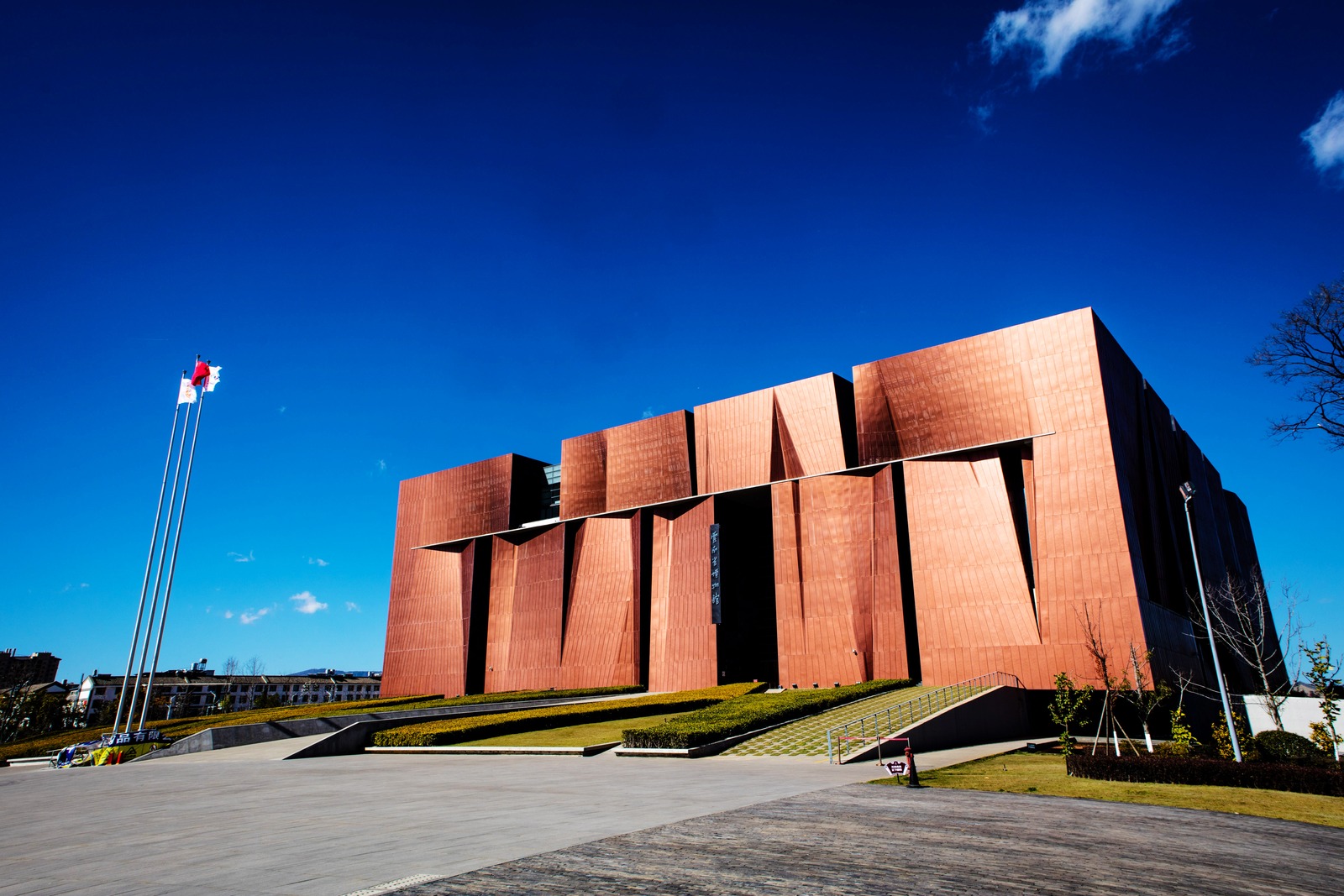
Yunnan is a corridor. It runs between the Tibetan plateau, the river valleys of Southeast Asia and the Chinese interior, and every one of those directions has left people and objects behind. The provincial museum on Guangfu Road is the place where that is laid out as a single sequence, in a modern building with a collection in the hundreds of thousands.
The spine of the permanent galleries is chronological: the Dian kingdom of the second century BC, then the Nanzhao and Dali kingdoms, then the Yuan, Ming and Qing. Walk it in order and the argument lands — this was never a remote appendage of the centre, it was a place with its own bronze-age state, its own Buddhist art and its own trade routes.
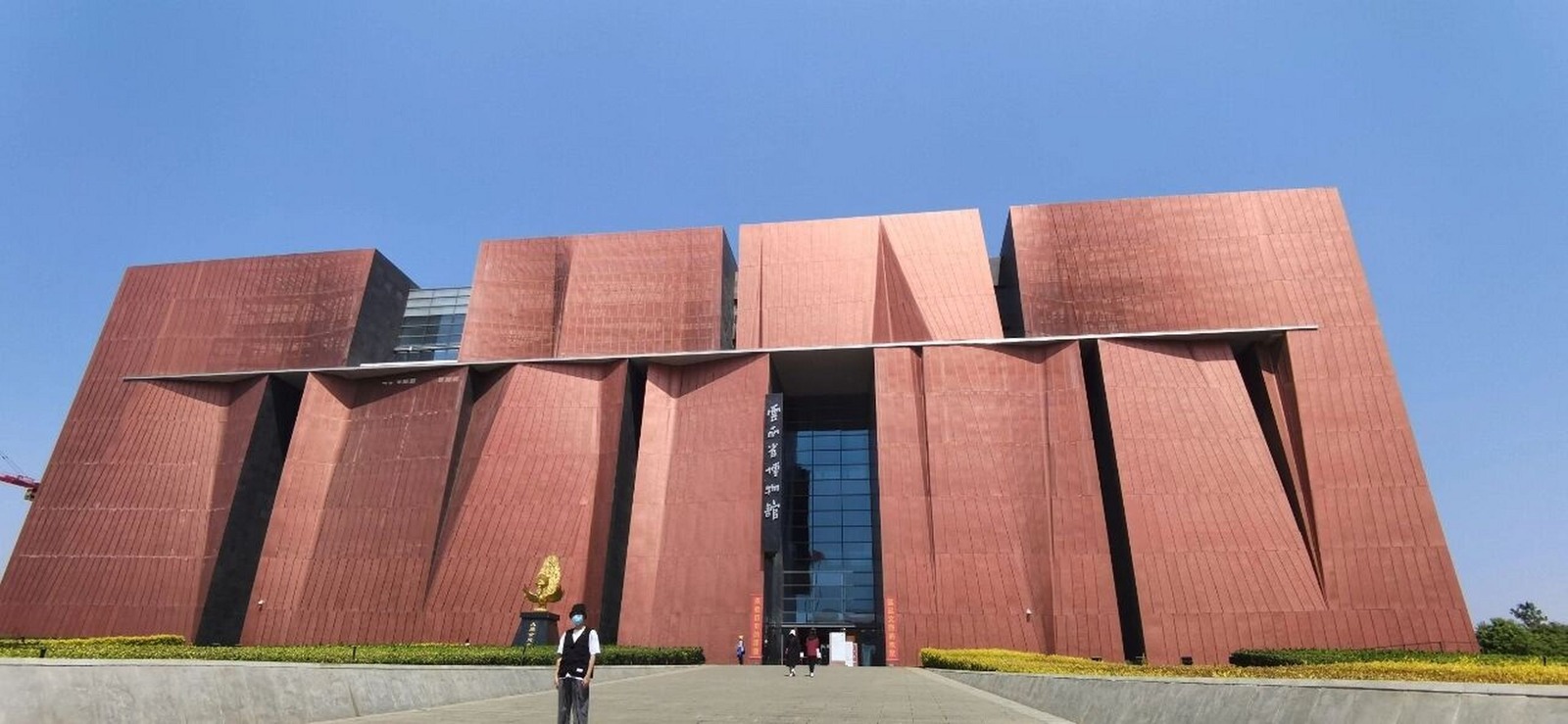
It is free, it is booked by name, and it is the single best two hours you can spend in Kunming on a wet afternoon.
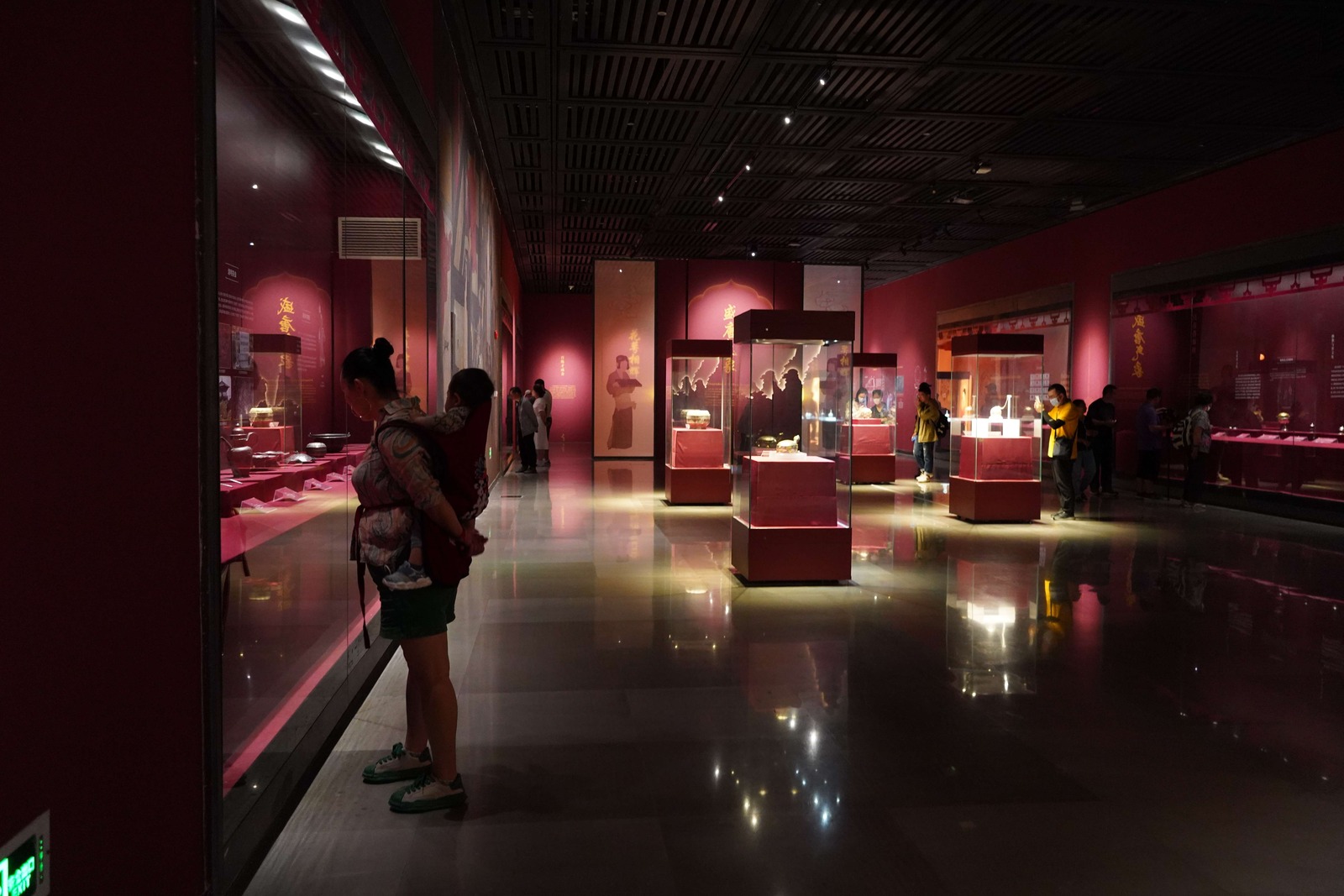
2. What to Spot: Three Collections Worth the Trip
🐂 The Dian Bronzes
The Dian kingdom buried its elite with bronze, and the pieces are unlike anything from the Central Plains. The signature object is the ox-and-tiger altar: a standing ox with a tiger climbing its hindquarters and a calf sheltering under its belly, cast as a single composition. Around it are the cowrie-shell containers — lidded bronze vessels whose surfaces carry whole scenes in relief: war, ritual, weaving, animals.
- The Story: Central Plains bronzes were made for ancestral ritual and are covered in abstract patterns. Dian bronzes are pictorial. They are the closest thing China has to a bronze-age picture book.
- What to Look For: The lids. The scenes sit on top of the vessels, so you have to look down into them to read the story.
🕊️ The Dali Buddhist Bronzes
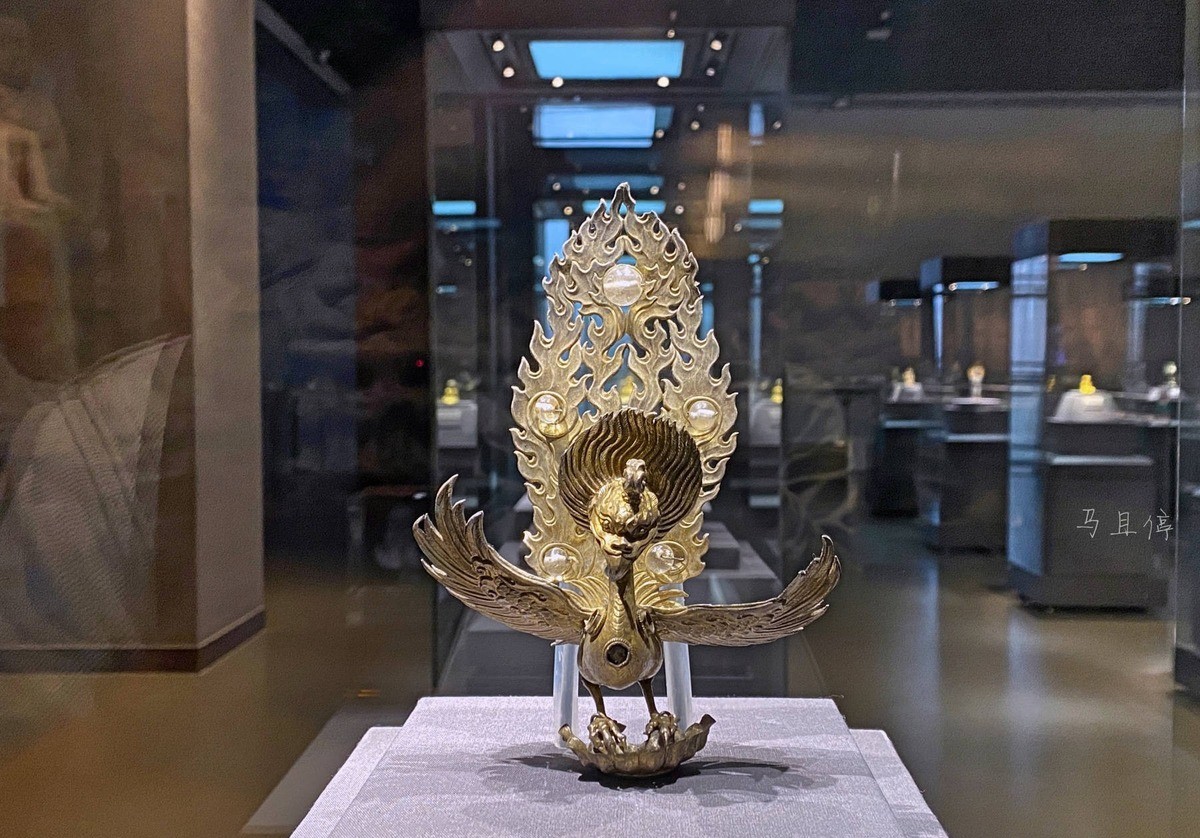
The gilded silver garuda — a bird deity with spread wings, inlaid with pearls — came out of the Three Pagodas at Dali, and it is one of the finest surviving pieces of Dali-period metalwork. The gallery around it shows how Buddhist art arriving from India and Tibet was reworked locally rather than copied.
🦕 The Fossils
Yunnan is where the Cambrian explosion was found in quantity, and the fossil gallery is not a sideline. If you have children with you, start here and work forwards; if you do not, the Lufeng dinosaur material is still worth twenty minutes on the way to the bronzes.
3. Cultural Contrast: A Kingdom the Histories Skipped
Chinese historiography treats Yunnan as a frontier to be brought in. The Dian bronzes say otherwise: a bronze-age society with its own ruler, its own iconography and its own economy, using cowrie shells as currency when the Central Plains was using cast bronze coins. Seeing it in a provincial museum rather than a national one is the point — this is local history that the centre did not write.
- The objects are local. Almost everything in the core galleries was excavated in the province, which is why the story holds together.
- The folk hall upstairs is a different register: reconstructed interiors from the province’s ethnic groups, useful as a preview if you are heading to the villages.
- Expect half-English signage. Object labels carry English; the long panel texts mostly do not.
4. Practical Essentials: Tickets, Transit & Scam Alerts
Tickets & Passport Booking
- Free, but booked by name. Reserve through the museum’s WeChat account; foreign visitors show a passport at the desk and collect the entry ticket.
- Open Tuesday to Sunday; closed Mondays, except on public holidays. This is the most common wasted trip in Kunming.
- Last entry is about half an hour before closing. Sources differ on the exact minute, so aim to be at the door well before the stated closing time.
- Special exhibitions can carry a separate charge or a separate queue. Check at the entrance whether the paid show is worth it before joining.
How to Get There
- Location: 6393 Guangfu Road (广福路), Guandu District, in the south-east of the city.
- Taxi: “师傅,去【云南省博物馆】(官渡区广福路),谢谢!”
- Public transport takes a change or two from the centre, which is why a taxi is the practical option.
- Combining it: Guandu Old Town is in the same district, and the pair makes an easy half day.
Inside Tips & Scam Alerts
- Nothing here is for sale at the door. No ticket touts; if someone offers entry, walk on.
- No flash. Standard, and enforced.
- Step-free throughout — lifts, ramps and wheelchairs, and free lockers in the hall.
- An audio guide is available; the English track is the efficient way to follow the Dian galleries.
- Monday alternative: the ethnic museum on the Dianchi shore, or the old street quarter.
- Complaints or overcharging: call 12345. It is free from any local phone and has English-speaking operators.
Quick Answers
The 7 things visitors ask before setting out, answered from the same verified record used across this page.
- How much does it cost to visit Yunnan Provincial Museum?
- Free with passport; reserve on WeChat.
- What are the opening hours at Yunnan Provincial Museum?
- Tuesday-Sunday 09:00-17:00 (last entry 16:00); closed Mondays.
- How long should I spend at Yunnan Provincial Museum?
- About two hours.
- Is Yunnan Provincial Museum wheelchair accessible?
- Yes. Modern building, lifts to all floors, ramps at the entrance, accessible toilets, free wheelchairs at the desk.
- How do I tell a taxi driver to take me to Yunnan Provincial Museum?
- Copy this line into DiDi or show it to the driver: 师傅,请带我到云南省博物馆(广福路),谢谢!
- Can I leave my luggage at Yunnan Provincial Museum?
- Free lockers.
- Is there anything to watch out for at Yunnan Provincial Museum?
- Free, no ticket sellers. Some special exhibitions have a paid queue - check whether it is worth it before paying.
Where to go next
Three short lists, recomputed at build time from the same coordinates and categories as the pages themselves — no paid placement, no hand-picked names. Every card is a published guide.
Next stop in Kunming
Straight-line distance from this spot, so you can judge what is walkable and what needs a taxi.


More like this, elsewhere in China
If museum is what you came for, these are the closest equivalents you can reach in another city — ordered by distance, one city per card.


Change the subject
Deliberately a different category, for when one more temple or garden would blur into the last one.


Lists are derived from coordinates and category alone. Fix a wrong pin or re-tag a place and every list that mentions it moves with it.
Before you go · arrival essentials
Practical guides that pair with this kind of place — picked by category, not sponsored placement.
- Pay with Alipay & WeChat PayPayment · Set up Alipay or WeChat Pay on a foreign card — needed at almost every counter.
- Get online with a China eSIMConnectivity · Maps and messaging that work without a VPN, the moment you land.
- Book China train tickets (12306)Trains · Buy high-speed rail tickets with a foreign passport, for getting here and back.