
Yunnan Nationalities Village

This is a purpose-built park, not a village. Inside, every 'ethnic household' has a photo studio or a shop. The Dai water-splashing and the elephant show cost extra. Skip unless you want a compressed overview in three hours.
Taxi & Street Navigation Help
师傅,请带我到云南民族村,谢谢!
Opening Hours & Best Time
About 08:30-18:00; evening performances until 21:30.
💡 Pro Tip: If you only have one day in Kunming and want to understand that Yunnan has 25 recognised ethnic minorities - more than any other province - this is the fastest way. Go for the evening show (¥180-260) or not at all; the daytime version is mostly shops. Otherwise spend the money on a real village: 官渡古镇 is free.
Accessibility & Luggage Lockers
Accessibility: ♿ Wheelchair & Stroller Friendly
Paved, level paths through the whole village with ramps and accessible toilets. Distances are long - about 3 km of walking.
🧳 Luggage Storage: Left-luggage at the gate.
Nearby Landmarks
The 2 places within reach of this spot — each one opens straight into Apple Maps or Amap, with the Chinese name you can show a driver.
Also worth pairing: Western Hills cable car station (at the north gate) — real picks, just left off the grid so the cards stay in pairs.
Chinese names and pins are matched against each city's own map data at build time; a place only gets Directions once its pin has been verified, otherwise the button searches by name.
About Yunnan Nationalities Village
1. Historical Origins: A Province Compressed Into a Park
Yunnan has more recognised ethnic minority groups than any other province — twenty-five of them, with their own languages, houses, dress and festivals. You cannot see that in a week of travelling; it would take months. So in the 1990s the province built the syllabus instead: a park on the shore of Dianchi where each group has a village, built in the regional style by builders from that region.
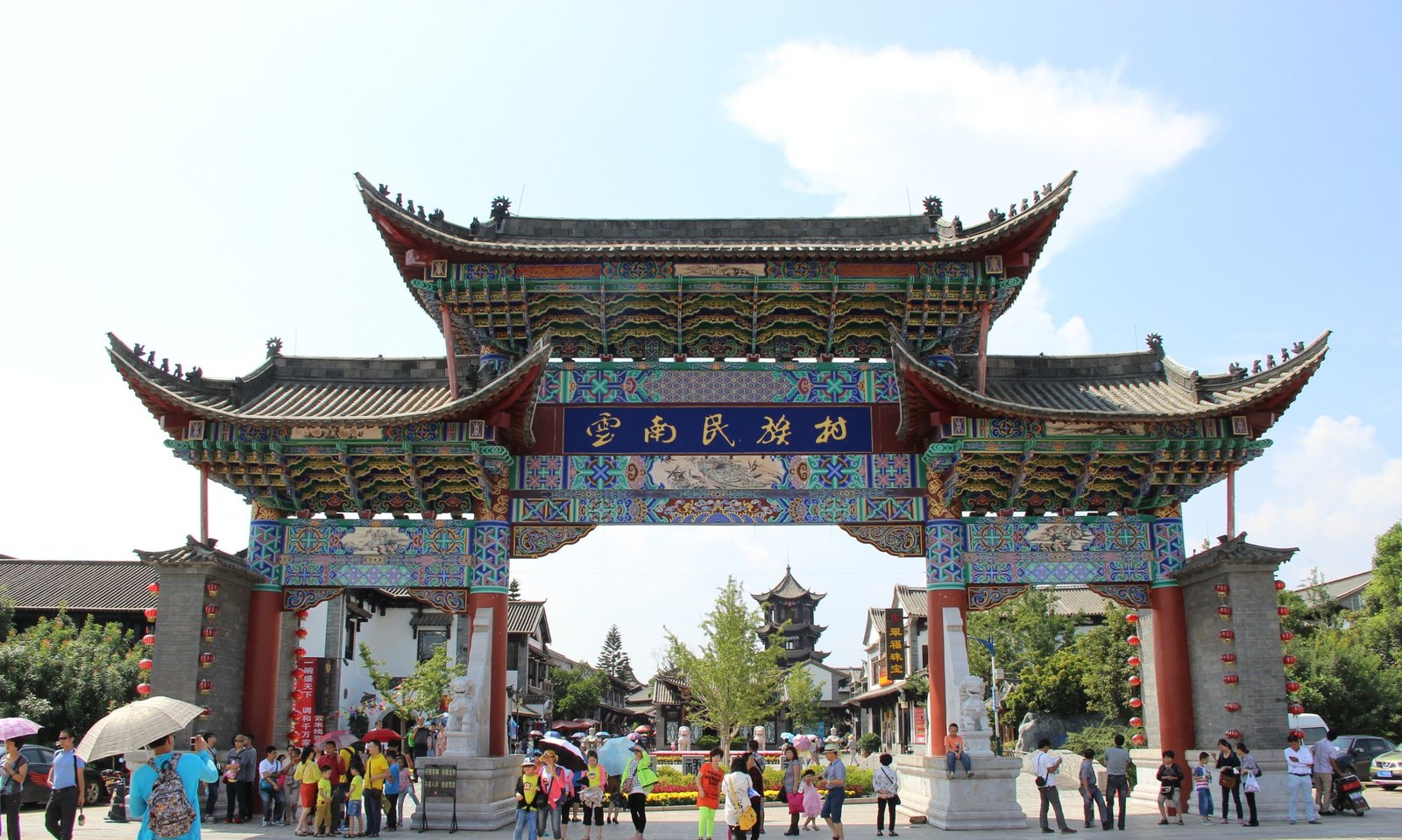
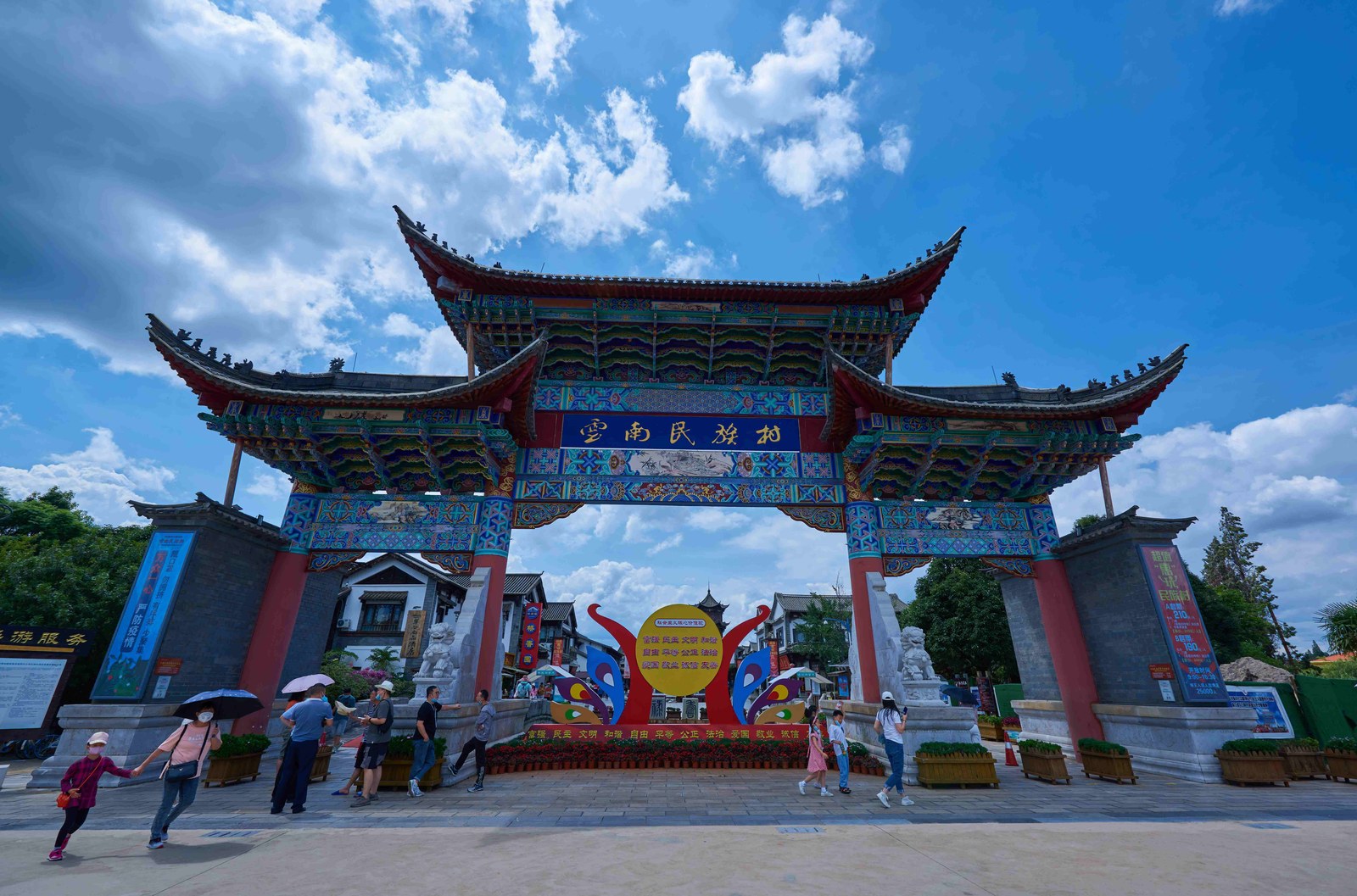
That is the honest description: the buildings are real buildings in the right style, the detailing was done by people from those regions, and the whole thing is a catalogue rather than a place. Knowing which one you are visiting is the difference between a good three hours and a bad one.
2. What to Spot: Four Kinds of House and a Schedule
🏠 The Architecture
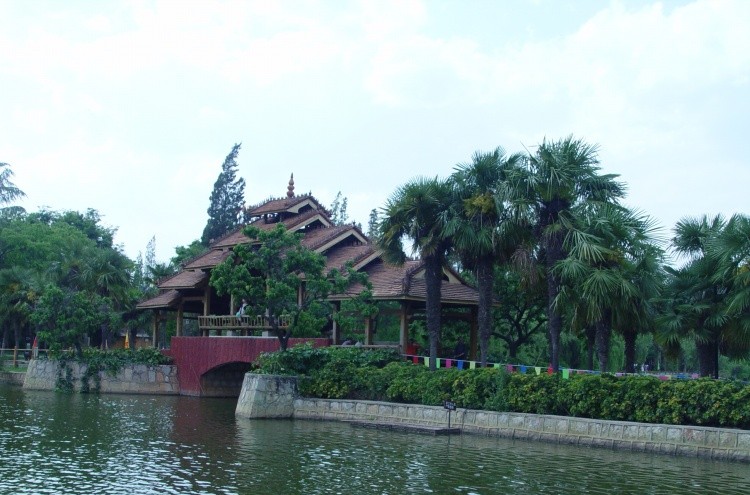
Read the houses as arguments about climate. The Dai build on stilts with steep roofs, because the south is wet and hot. The Bai build courtyards with a screen wall facing the gate, because the west is windy and dry. The Yi build flat roofs of rammed earth, because the plateau is cold and the roof is a threshing floor. The Wa build long houses around a drum, because the drum is the village’s instrument.
- The Story: Each form is a solution to a specific landscape, and seeing four of them within a kilometre makes the logic visible in a way that a single village never would.
- What to Look For: Roof pitch and wall thickness. Those two things tell you the rainfall and the winter of the place a house came from.
💃 The Performances
Song and dance shows run several times a day on the central stages and in the villages themselves, and they are the reason most visitors come. Photograph the day’s schedule board at the gate before you walk in — the loop is long and the shows are timed, so planning backwards from the times is the only way to see more than two.

🌊 The Festivals
The park stages the big ones — the Dai water-splashing festival in spring, the Yi torch festival in summer — and on those days it is packed, wet and loud. If you are in Kunming during a real festival, this is the closest thing to seeing it without travelling to a county town.
3. Cultural Contrast: A Catalogue, Not a Village
Every “household” here has a shop or a photo studio behind the door, the water-splashing session costs extra, and no one actually lives in the buildings. Say that plainly: it is a theme park about ethnicity, not an ethnic village. Foreign visitors who arrive expecting authenticity leave annoyed; visitors who arrive expecting a museum with dancers leave satisfied.
- The architecture is genuinely correct. Builders came from the regions, and the detailing holds up under close inspection.
- The commercial layer is the whole ground floor. Treat shopping as optional and walk past it.
- The alternative is a real village. Guandu Old Town is free and has actual residents. Do both if you have the time, and you will understand what the park is for.
4. Practical Essentials: Tickets, Transit & Scam Alerts
Tickets & Passport Booking
- Day and evening are separate sessions with separate tickets. The evening is a show; the day is the villages. Decide which you are buying before you reach the window.
- No prices are quoted here. Sources disagree and the rates change by season; check the park’s official account or ticketing mini-programme on the day.
- Opening and last-entry times are also not quoted — the two sources conflict, and the sessions are run separately.
- Passport: foreign visitors buy by real name at the window or in the mini-programme.
- Electric carts inside are hired by the hour. Agree the rate and the return time before you get on.
How to Get There
- Location: 1310 Dianchi Road (滇池路), Xishan District, on the lake shore.
- Metro: Line 5 runs direct to the park’s own station — the easiest arrival of any site on the lake.
- Taxi: “师傅,去【云南民族村】(滇池路),谢谢!”
- Combining it: Haigeng Dam and the lower station of the Western Hills cableway are on the same stretch, so this fits into a Dianchi day.
- Luggage: the visitor service area at the main gate handles storage; confirm the desk and the charge on arrival.
Inside Tips & Scam Alerts
- Photograph the performance board first. Everything else follows from the times on it.
- Festival days are crowded and wet. Keep valuables zipped, and do not handle the ritual objects in the village shrines.
- The main paths are flat and step-free — fine for wheelchairs and pushchairs; the interiors of individual villages revert to packed earth.
- The evening session is lights and stage, not the villages: you will see very little architecture after dark.
- Complaints or overcharging: call 12345. It is free from any local phone and has English-speaking operators.
Quick Answers
The 6 things visitors ask before setting out, answered from the same verified record used across this page.
- How much does it cost to visit Yunnan Nationalities Village?
- About ¥90.
- What are the opening hours at Yunnan Nationalities Village?
- About 08:30-18:00; evening performances until 21:30.
- Is Yunnan Nationalities Village wheelchair accessible?
- Yes. Paved, level paths through the whole village with ramps and accessible toilets. Distances are long - about 3 km of walking.
- How do I tell a taxi driver to take me to Yunnan Nationalities Village?
- Copy this line into DiDi or show it to the driver: 师傅,请带我到云南民族村,谢谢!
- Can I leave my luggage at Yunnan Nationalities Village?
- Left-luggage at the gate.
- Is there anything to watch out for at Yunnan Nationalities Village?
- This is a purpose-built park, not a village. Inside, every 'ethnic household' has a photo studio or a shop. The Dai water-splashing and the elephant show cost extra. Skip unless you want a compressed overview in three hours.
Where to go next
Three short lists, recomputed at build time from the same coordinates and categories as the pages themselves — no paid placement, no hand-picked names. Every card is a published guide.
Next stop in Kunming
Straight-line distance from this spot, so you can judge what is walkable and what needs a taxi.


More like this, elsewhere in China
If theme park is what you came for, these are the closest equivalents you can reach in another city — ordered by distance, one city per card.


Change the subject
Deliberately a different category, for when one more temple or garden would blur into the last one.


Lists are derived from coordinates and category alone. Fix a wrong pin or re-tag a place and every list that mentions it moves with it.
Before you go · arrival essentials
Practical guides that pair with this kind of place — picked by category, not sponsored placement.
- Pay with Alipay & WeChat PayPayment · Set up Alipay or WeChat Pay on a foreign card — needed at almost every counter.
- Book China train tickets (12306)Trains · Buy high-speed rail tickets with a foreign passport, for getting here and back.
- Find a doctor or pharmacyHealth · Where to go if you or your kids get hurt or ill.