
Western Hills and Dragon Gate
ℹ️ About ¥40 for the Dragon Gate plus ¥25-40 for the cable car; the hills themselves are free to walk. ⚠️ Confirm.

Two cable cars: one from the lake shore and one up the mountain. Buy the combination you actually need at the official window (¥70-100 total), not from the touts at the 海埂 gate. The Dragon Gate grotto charges its own ¥40 ticket at the top.
Taxi & Street Navigation Help
师傅,请带我到西山龙门,谢谢!
Opening Hours & Best Time
About 08:00-18:00 (cable car to 17:30).
💡 Pro Tip: The Dragon Gate is a set of grottoes, corridors and a pavilion carved by hand into a basalt cliff between 1781 and 1853 by a Taoist monk and his helpers, using hammers and no dynamite. The last stretch is a tunnel with a hole punched through to the sky. Come at 08:30 for the lake view before the haze builds, or at 17:00 for the light on Dianchi.
Accessibility & Luggage Lockers
Accessibility: ⚠️ Step thresholds, limited access
Dragon Gate is reached by a cable car and then 400 m of stairs cut into a cliff - narrow, steep, low ceilings, not accessible. The lakeside road below is level.
🧳 Luggage Storage: No storage; carry light.
Nearby Landmarks
The 2 places within reach of this spot — each one opens straight into Apple Maps or Amap, with the Chinese name you can show a driver.
Also worth pairing: Kunming city centre (15 km north-east) — real picks, just left off the grid so the cards stay in pairs.
Chinese names and pins are matched against each city's own map data at build time; a place only gets Directions once its pin has been verified, otherwise the button searches by name.
About Western Hills and Dragon Gate
1. Historical Origins: Forty Years of Hammering
The Western Hills are the ridge that closes the west shore of Dianchi, and from the city they read as a sleeping figure lying along the water. The ridge has been built on for centuries: Huating Temple, Taihua Temple, the tomb of the composer Nie Er, and then, at the top of the ridge, the Dragon Gate.
The Dragon Gate is not a gate. It is a set of grottoes, corridors and a pavilion cut by hand into a basalt cliff between 1781 and 1853 — a Taoist monk, his helpers, hammers and chisels, no explosives, forty-odd years of work. The chambers are scooped out of the rock face; the walkways are ledges with a wall on one side and the lake a long way below on the other.
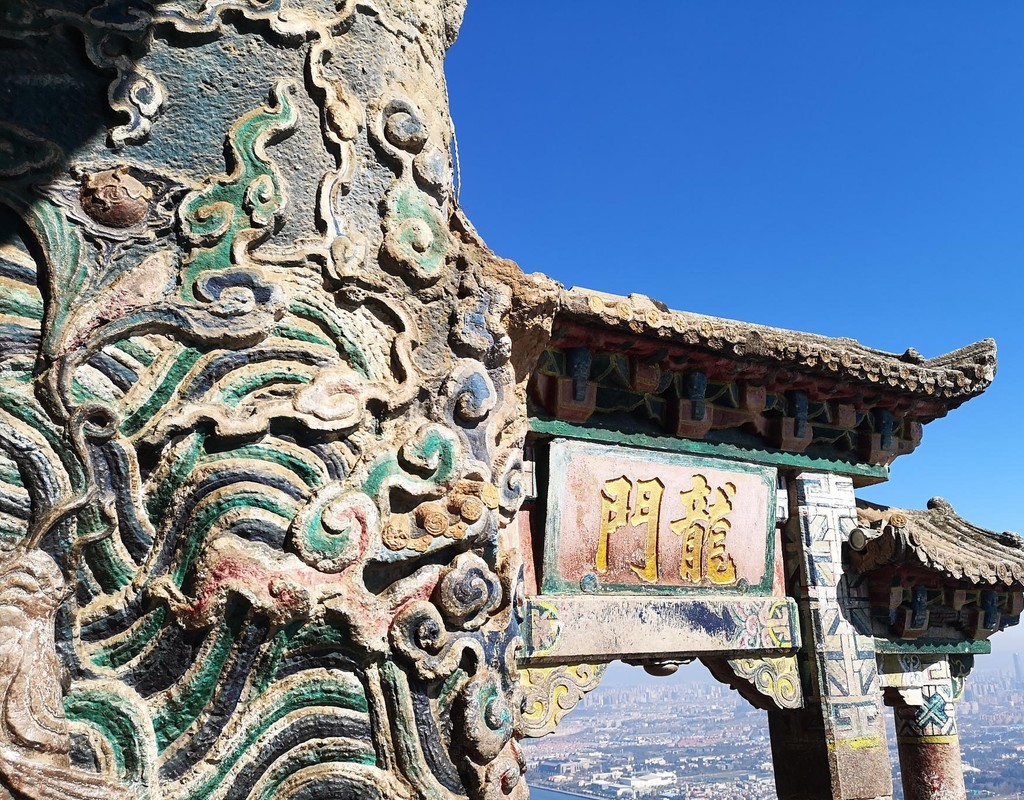
The whole ridge is free to walk. What you pay for is the carved section at the top, and the various ways of getting up there.

2. What to Spot: A Shrine Made by Removal
🗿 The Grottoes and the Corridors
The chambers are small and the ceilings are low, because every cubic metre had to be taken out by hand. Look at the walls of the corridor: the surface is polished where two centuries of shoulders and hands have passed, and rough where nobody reaches.
- The Story: A religious site built by subtraction. Where a European cathedral adds stone, this one takes it away, and the shape of a room is decided by what the rock will allow.
- What to Look For: The shrine figures, carved in place rather than installed. They are attached to the cliff at the back — you can see where the carving runs into the unconverted rock.
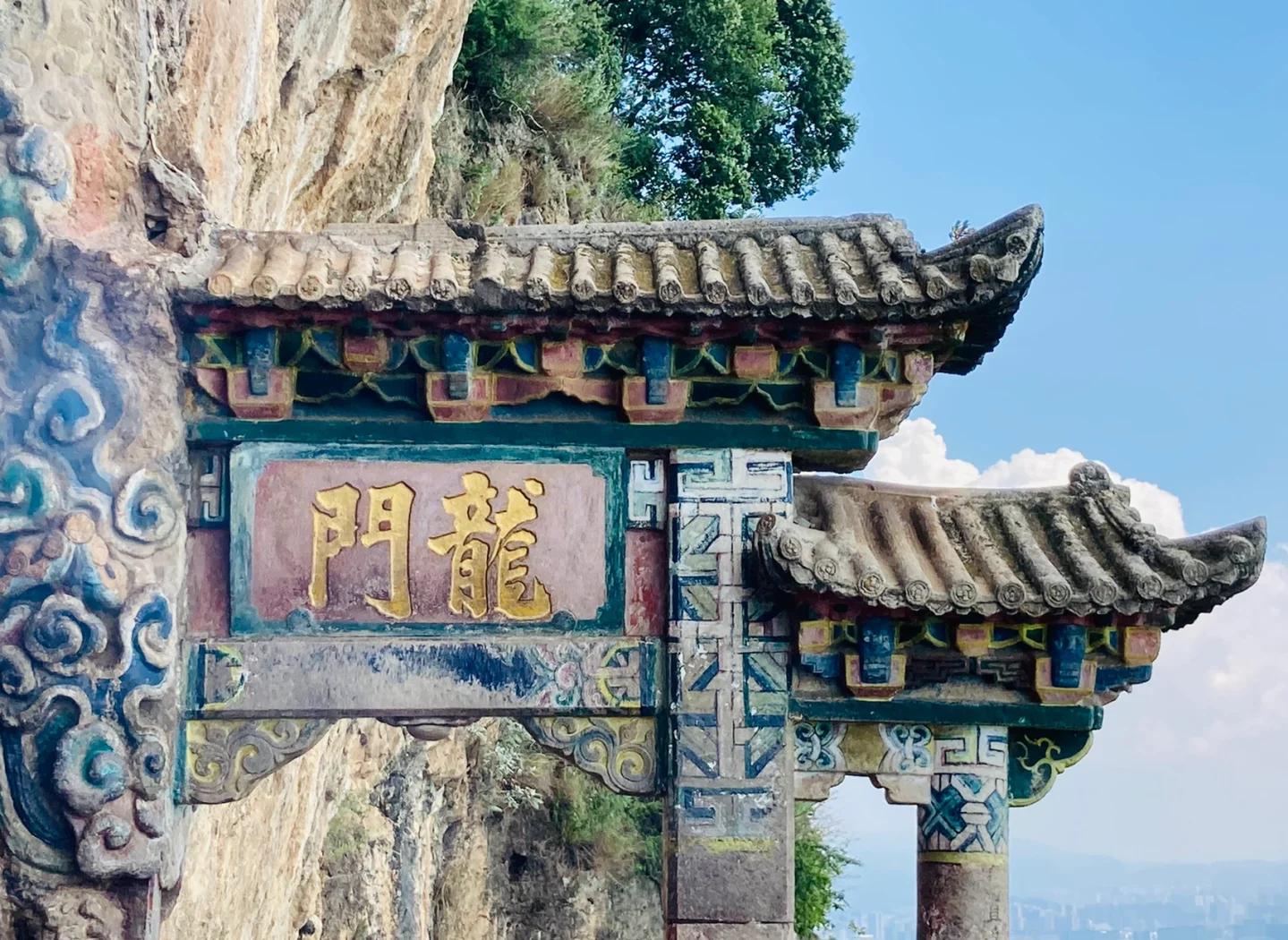
🕳️ The Hole to the Sky
The last stretch is a tunnel, and partway along it a shaft has been knocked through to the surface. Daylight comes down a tube of rock onto the passage floor, and everybody stops in it. It is the single most photographed square metre on the mountain.
🏞️ The Lake From Above
The terrace at the top looks straight down the cliff to Dianchi. This is the view the whole climb exists for: the lake flat to the far shore, the city on the northern end, and on a clear morning the far hills behind it.
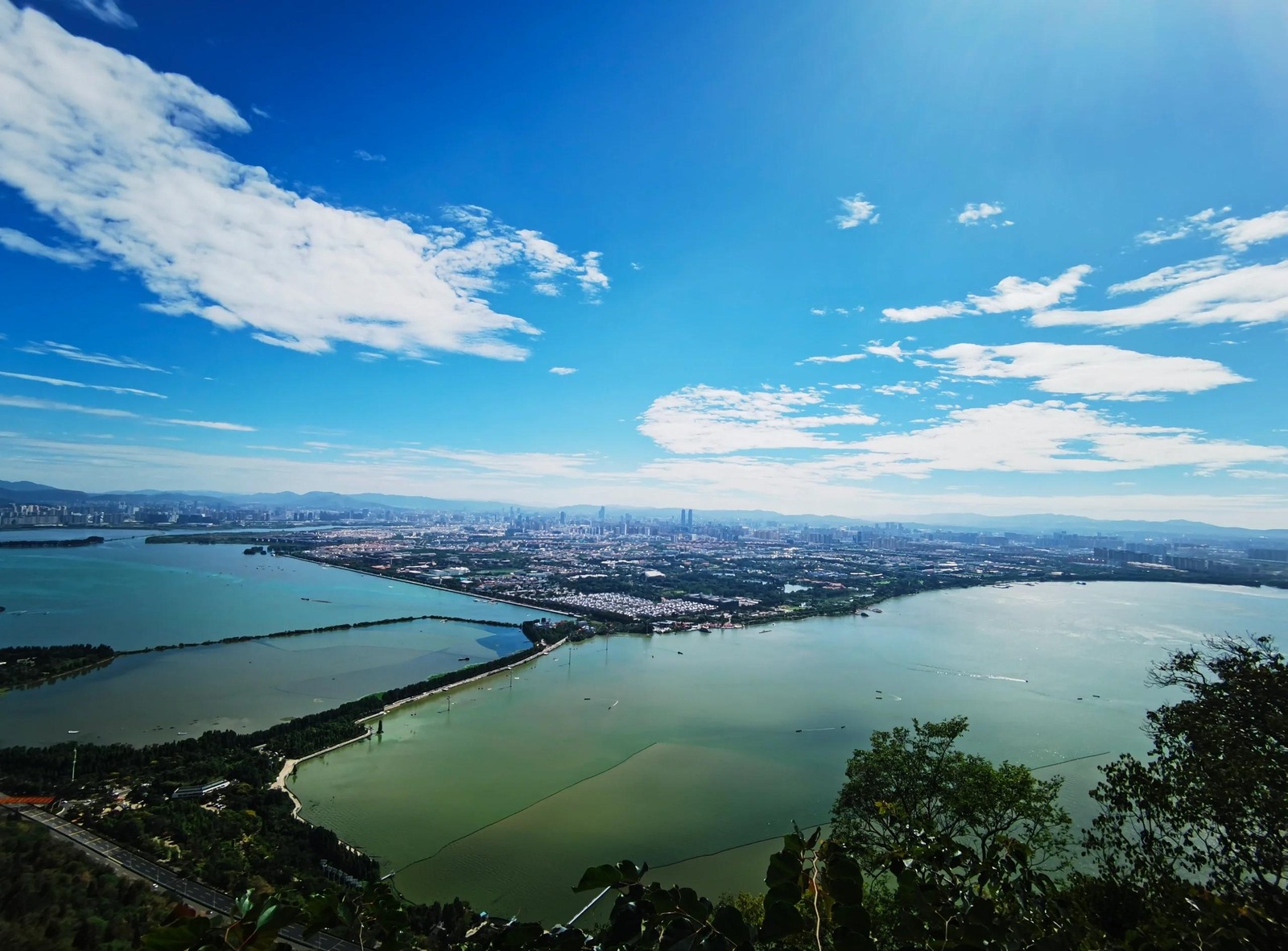
3. Cultural Contrast: The Climb Is the Point
A European mountain site puts a cable car at the summit and a café at the top. A Chinese mountain site is a sequence: gate, temple, inscription, viewpoint, and the walking is part of the religious exercise rather than a way of avoiding it. Visitors here climb because the climb is the visit — which is why the path is paved, signposted and lined with places to stop.
- It is a working religious site. People come to burn incense at the temples below the Dragon Gate, not only to look at the lake.
- The inscriptions are the record. The cliff carries carved calligraphy from the people who made the climb before you, and it is worth looking sideways as well as out.
- The engineering is the attraction. Forty years of hand tools on basalt is a more impressive fact than the view, and most visitors never hear it.
4. Practical Essentials: Tickets, Transit & Scam Alerts
Tickets & Passport Booking
- The hills are free; the carved section is ticketed. The Dragon Gate charges its own admission at the top, and it is not covered by the park entry.
- There are two cableways — one from the lake shore at Haigeng, one up the mountain — and they are separate products. Work out which combination you actually want and buy it at the official window.
- No prices are quoted on this page. Sources disagree, the cableway has been upgraded recently, and the combos change; check the scenic area’s official account or ticketing mini-programme for the day.
- Booking rule worth knowing: a combined ticket bought before half past nine in the morning can be used the same day; bought after that, it starts the following day. Plan the morning around it.
- Opening hours are not quoted — the two sources conflict, so read the notice on the day.
- Passport: foreign visitors buy by real name at the window or in the mini-programme.
How to Get There
- Location: Xishan Road, Xishan District, on the west shore of Dianchi.
- Metro: Line 3 to Gaoyao, then the park’s own transport up the hill.
- Classic route: up by shuttle, walk the ridge to the Dragon Gate, then take the cableway down across the lake to Haigeng Dam — it drops you straight onto the gull-watching embankment in season.
- Taxi: “师傅,去【西山风景区(龙门)】,谢谢!”
- When the cableway is stopped for wind or maintenance, the shuttle bus runs the same route; ask at the lower station before buying.
Inside Tips & Scam Alerts
- “Skip the queue, follow me” at the gate is a pitch, not a service. Buy at the window.
- Touts at the Haigeng gate sell cableway tickets at invented combinations. The official window is a few metres further on.
- The last section is steep stairs and low passages. Not workable with a wheelchair; the shuttle plus cableway cuts most of the climbing but not the stairs at the top.
- Sun and wind at the same time. Carry water and a light jacket; the stone steps are slippery in the rainy season.
- Timing: early for a clear lake, late afternoon for the light on the water. Midday gives you haze.
- Complaints or overcharging: call 12345. It is free from any local phone and has English-speaking operators.
Quick Answers
The 6 things visitors ask before setting out, answered from the same verified record used across this page.
- How much does it cost to visit Western Hills and Dragon Gate?
- Dragon Gate ~¥40; hills free. About ¥40 for the Dragon Gate plus ¥25-40 for the cable car; the hills themselves are free to walk. ⚠️ Confirm.
- What are the opening hours at Western Hills and Dragon Gate?
- About 08:00-18:00 (cable car to 17:30).
- Is Western Hills and Dragon Gate wheelchair accessible?
- Not fully. Dragon Gate is reached by a cable car and then 400 m of stairs cut into a cliff - narrow, steep, low ceilings, not accessible. The lakeside road below is level.
- How do I tell a taxi driver to take me to Western Hills and Dragon Gate?
- Copy this line into DiDi or show it to the driver: 师傅,请带我到西山龙门,谢谢!
- Can I leave my luggage at Western Hills and Dragon Gate?
- No storage; carry light.
- Is there anything to watch out for at Western Hills and Dragon Gate?
- Two cable cars: one from the lake shore and one up the mountain. Buy the combination you actually need at the official window (¥70-100 total), not from the touts at the 海埂 gate. The Dragon Gate grotto charges its own ¥40 ticket at the top.
Where to go next
Three short lists, recomputed at build time from the same coordinates and categories as the pages themselves — no paid placement, no hand-picked names. Every card is a published guide.
Next stop in Kunming
Straight-line distance from this spot, so you can judge what is walkable and what needs a taxi.


More like this, elsewhere in China
If park or garden is what you came for, these are the closest equivalents you can reach in another city — ordered by distance, one city per card.


Change the subject
Deliberately a different category, for when one more temple or garden would blur into the last one.


Lists are derived from coordinates and category alone. Fix a wrong pin or re-tag a place and every list that mentions it moves with it.
Before you go · arrival essentials
Practical guides that pair with this kind of place — picked by category, not sponsored placement.