
Sichuan Museum (Thangkas & Provincial Treasures)

Taxi & Street Navigation Help
师傅,请带我到四川博物院正门,浣花南路251号,谢谢!
Opening Hours & Best Time
9:00 - 17:00 (Mon closed)
💡 Pro Tip: The thangka (Tibetan scroll painting) hall is unique among Chinese provincial museums — Sichuan borders Tibet, and the collection shows the corridor's art. Pair with Qingyang Palace (Taoism) for a two-traditions afternoon.
Accessibility & Luggage Lockers
Accessibility: ♿ Wheelchair & Stroller Friendly
Full — modern building.
🧳 Luggage Storage: Free lockers.
Nearby Landmarks & A Short Train Ride
The 4 places worth pairing with this spot — each one opens straight into Apple Maps or Amap, with the Chinese name you can show a driver. One pick sits in Chongqing (HSR ~1 h 2 min) — a short high-speed ride, not a walk. Chengdu's own list came out one short of a pair, and this is the nearest pick that fills it.
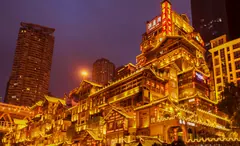
Chinese names and pins are matched against each city's own map data at build time; a place only gets Directions once its pin has been verified, otherwise the button searches by name. Cards with an amber city tag are in another city — the ride time shown is the fastest train of the day.
About Sichuan Museum (Thangkas & Provincial Treasures)
1. Historical Origins: A Province That Sits on a Border
Sichuan’s provincial museum was founded in 1941, during the war years when Chengdu had become a refuge for institutions and scholars pushed west by the Japanese advance. Its collection grew out of those wartime transfers plus decades of excavation in the Sichuan basin, and the present building on Huanhua South Road opened in 2009.
What distinguishes it from other provincial museums is geography. Sichuan borders Tibet, and the Tibetan plateau’s eastern edge runs through the province — which is why this museum holds one of the finest collections of thangkas outside Lhasa, together with the material culture of the Qiang, Yi and other highland peoples. That border position shaped the province’s art in every period: Shu bronzes with their own casting tradition, Han stone reliefs, Tang three-colour glaze, and a Buddhist sculptural line that is Indian in origin and Chinese in execution.
It is a quieter museum than the city museum, and for the specific thing it does well, better.

2. What to Spot: Thangkas, Bronzes, and a Laughing Drummer
🖼️ The Thangka Hall
- The Story: Thangkas are painted or appliquéd scrolls mounted on cloth, made for Tibetan monasteries as teaching devices and as objects of meditation.
- What to Look For: Get within half a metre. The mineral pigments and the line quality only read at close range, and the best pieces are crowded with detail no photograph captures.
🏺 The Shu Bronzes
- The Story: Sichuan cast bronze on its own trajectory, connected to but not identical with the central plains tradition.
- What to Look For: The vessel profiles and the surface patina; the labels point out the local variants.
😄 The Han Storyteller
- The Story: The Eastern Han drummer figurine is one of the most reproduced objects in Chinese museum merchandising — a comic performer caught mid-joke.
- What to Look For: The face, from the front and from the side. The expression changes.


3. Cultural Contrast: Two Traditions in One Afternoon
The useful thing about this museum’s location is what sits next door. Qingyang Palace, the oldest and largest Taoist temple in the city, is a twenty-minute walk away, and pairing the two gives you the religious geography of Sichuan in a single afternoon — the Tibetan Buddhist art in the cases, then the Taoist halls with incense still burning in them. Almost no foreign visitor does this, and it is the best value in the city’s museum circuit.
One practical difference from the city museum: this one is rarely crowded, which means the thangka hall is often empty. That matters. Thangkas were made to be looked at slowly and in sequence, and being alone in front of one is the difference between seeing them and walking past them. Go on a weekday afternoon, take your time on that floor, and skip whatever temporary exhibition is on if you are short of time.

4. Practical Essentials: Tickets, Transit & Scam Alerts
Tickets & Passport Booking
- Price: Free with a real-name reservation. Hours are 9:00 to 17:00 and the museum is closed on Mondays.
- How to Book: Reserve through the official WeChat account, or register with your passport at the door. Free lockers and full lift access are available.
How to Get There
- By Bus: Routes 19, 35 and 165 stop nearby. By metro, Line 5 to Qingyang Palace Station then twenty minutes on foot; a taxi from Du Fu’s cottage is about ¥10.
- Show Your Driver: 师傅,请带我到四川博物院正门,浣花南路251号。谢谢!
Inside Tips & Scam Alerts
- Monday is the trap. This museum and the city museum close on the same day. On a Monday, switch to the Jinsha Site Museum or the panda base, both open daily.
- Weekday afternoons are the quiet window. That is when the thangka hall is empty and the visit is worth the trip.
- Pair it with Qingyang Palace and Du Fu’s cottage, both within a kilometre, for a full west-side day.
- Complaints: the national 12345 hotline is free to call from any local phone.
Quick Answers
The 6 things visitors ask before setting out, answered from the same verified record used across this page.
- How much does it cost to visit Sichuan Museum?
- Free (reservation via WeChat or passport at door).
- What are the opening hours at Sichuan Museum?
- 9:00 - 17:00 (Mon closed).
- Is Sichuan Museum wheelchair accessible?
- Yes. Full — modern building.
- How do I tell a taxi driver to take me to Sichuan Museum?
- Copy this line into DiDi or show it to the driver: 师傅,请带我到四川博物院正门,浣花南路251号,谢谢!
- Can I leave my luggage at Sichuan Museum?
- Free lockers.
- Will English work at Sichuan Museum?
- Yes — staff used to foreign visitors handle English, and the site scores 4/5 on our foreign-friendliness scale.
Where to go next
Three short lists, recomputed at build time from the same coordinates and categories as the pages themselves — no paid placement, no hand-picked names. Every card is a published guide.
Next stop in Chengdu
Straight-line distance from this spot, so you can judge what is walkable and what needs a taxi.


More like this, elsewhere in China
If museum is what you came for, these are the closest equivalents you can reach in another city — ordered by distance, one city per card.


Change the subject
Deliberately a different category, for when one more temple or garden would blur into the last one.


Lists are derived from coordinates and category alone. Fix a wrong pin or re-tag a place and every list that mentions it moves with it.
Before you go · arrival essentials
Practical guides that pair with this kind of place — picked by category, not sponsored placement.
- Pay with Alipay & WeChat PayPayment · Set up Alipay or WeChat Pay on a foreign card — needed at almost every counter.
- Get online with a China eSIMConnectivity · Maps and messaging that work without a VPN, the moment you land.
- Book China train tickets (12306)Trains · Buy high-speed rail tickets with a foreign passport, for getting here and back.