
Heilongjiang Provincial Museum
ℹ️ Free with passport registration at the gate (booking rules change - check on arrival or ask your hotel to book).

Entry is free. Nobody outside sells tickets. The natural-history dioramas inside are dated but genuine - no upselling there.
Taxi & Street Navigation Help
师傅,请带我到黑龙江省博物馆(红军街50号),谢谢!
Opening Hours & Best Time
09:00-16:00, closed Mondays. Confirm before travelling as the museum has had long renovation closures.
💡 Pro Tip: Go for two things: the 1906 neo-Renaissance building itself, and the Tang-dynasty 渤海国 stone lions in the history gallery. English labelling is thin, so photograph the panels and translate.
Accessibility & Luggage Lockers
Accessibility: ♿ Wheelchair & Stroller Friendly
The 1906 building has a stepped main entrance with staff assistance available; internal galleries have a lift. Accessible toilet on the ground floor.
🧳 Luggage Storage: Bag check at the entrance; large bags are not allowed in the galleries.
Nearby Landmarks
The 2 places within reach of this spot — each one opens straight into Apple Maps or Amap, with the Chinese name you can show a driver.
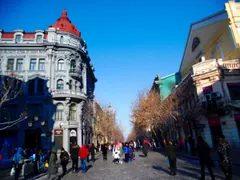 中央大街Central StreetHistoric districtShort ride away2.49 km1.5 km north
Chinese names and pins are matched against each city's own map data at build time; a place only gets Directions once its pin has been verified, otherwise the button searches by name.
About Heilongjiang Provincial Museum
1. Historical Origins: A Provincial Collection in an Old Russian Building
The Heilongjiang Provincial Museum is a general provincial collection — natural history and human history under one roof — housed in a Russian-era building on Hongjun Street in Nangang. The building is not a neutral container: it is one of the reasons people walk in, and it tells you which decade this part of Harbin was built up in.
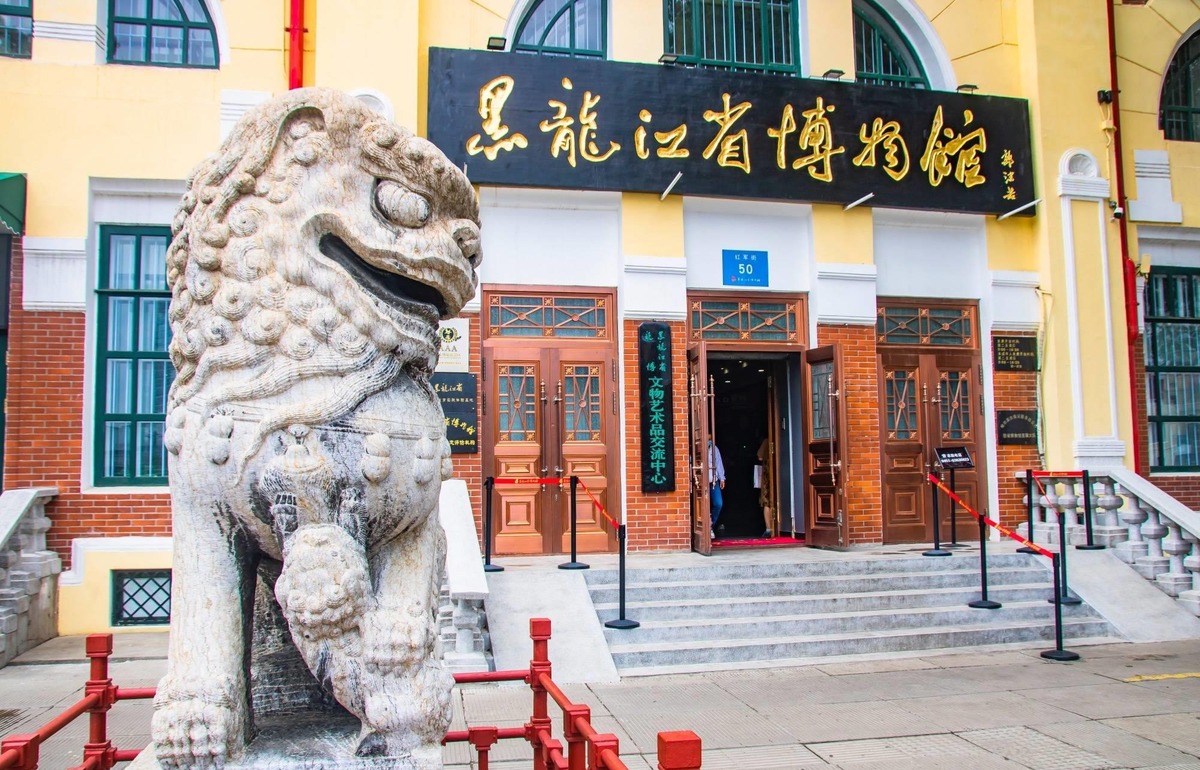
What it covers is the land rather than a dynasty: the wildlife of the northeast, and the archaeology and history of a frontier region that has been claimed, contested and crossed by several empires. That framing is the reason it is worth an hour and a half.
2. What to Spot: Dioramas and the History Gallery
🦌 The Natural History Halls
The dioramas are old-fashioned in the best sense: painted backdrops, mounted animals, glass cases. They explain the ecology of the northeast forests and wetlands — deer, tigers, bears, birds — in a way that a modern interactive display usually does not.
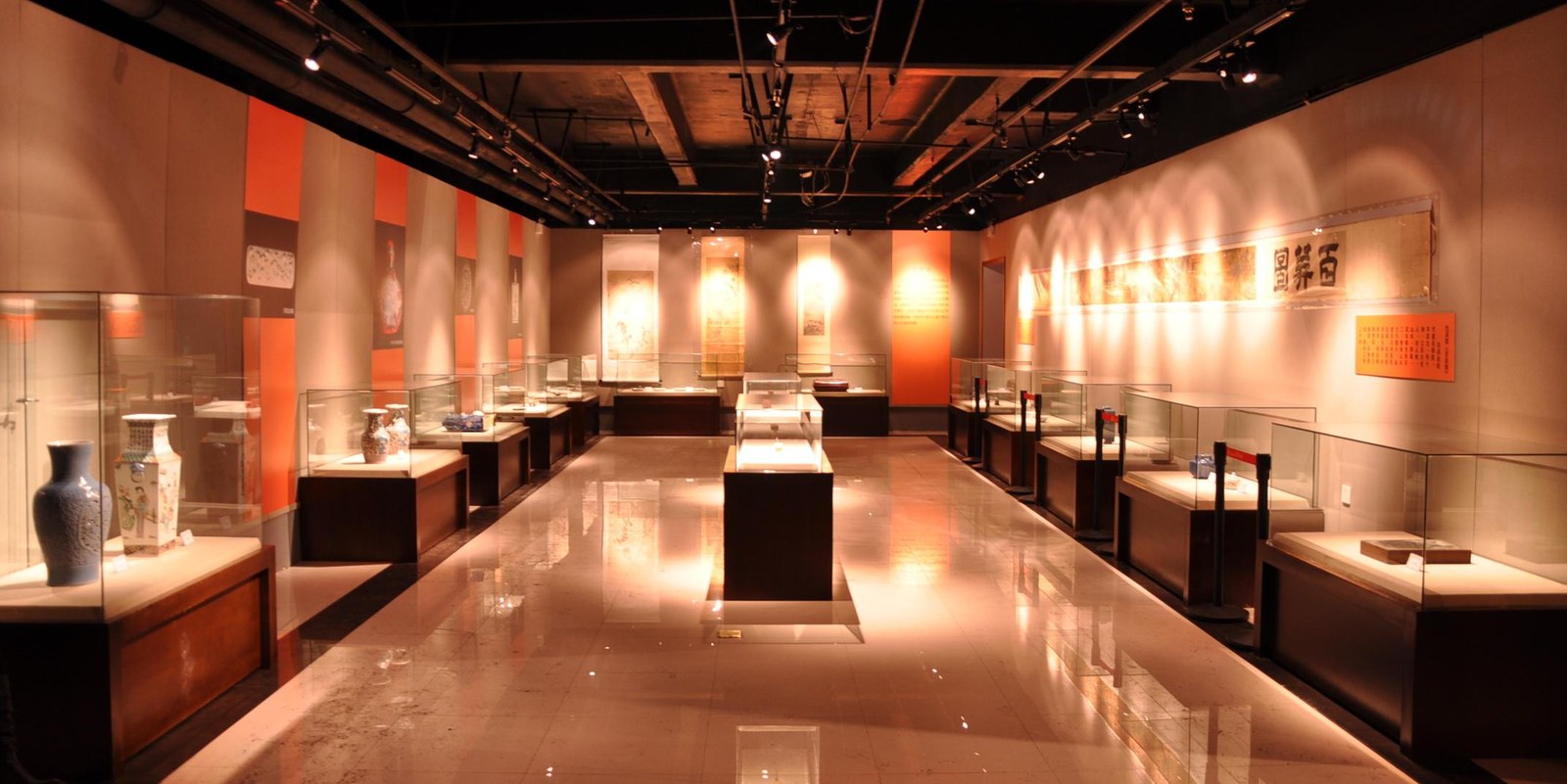
- The Story: A provincial museum in a frontier province collects differently from one in the Chinese heartland — the subject is forest, river and border rather than imperial administration.
- What to Look For: The scale of the mounted animals relative to the room. These were collected when the forests still held them in numbers.
🏺 The History Gallery
The archaeology and history galleries carry the region from its earliest cultures through the Qing and the railway era. Labels are Chinese-first, so this is a room for a camera translator rather than for reading.
🏛️ The Building
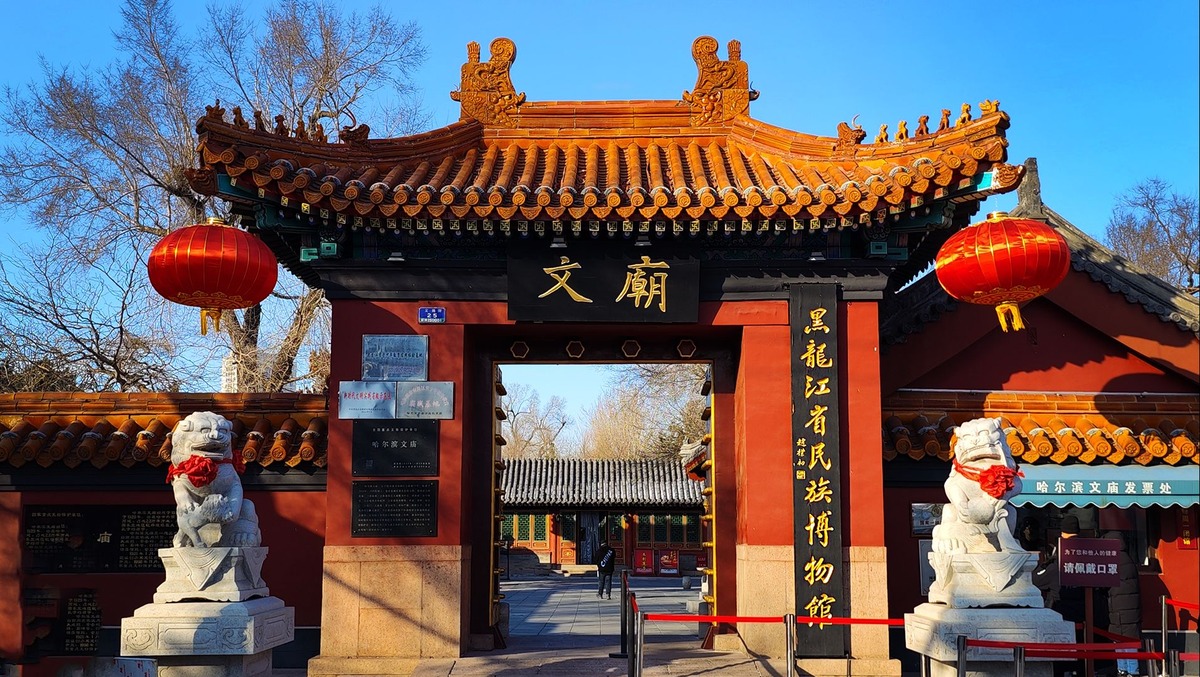
Walk the stairwell and the entrance hall before you start on the cases. The stone, the joinery and the proportions are of a piece with the streets around it.
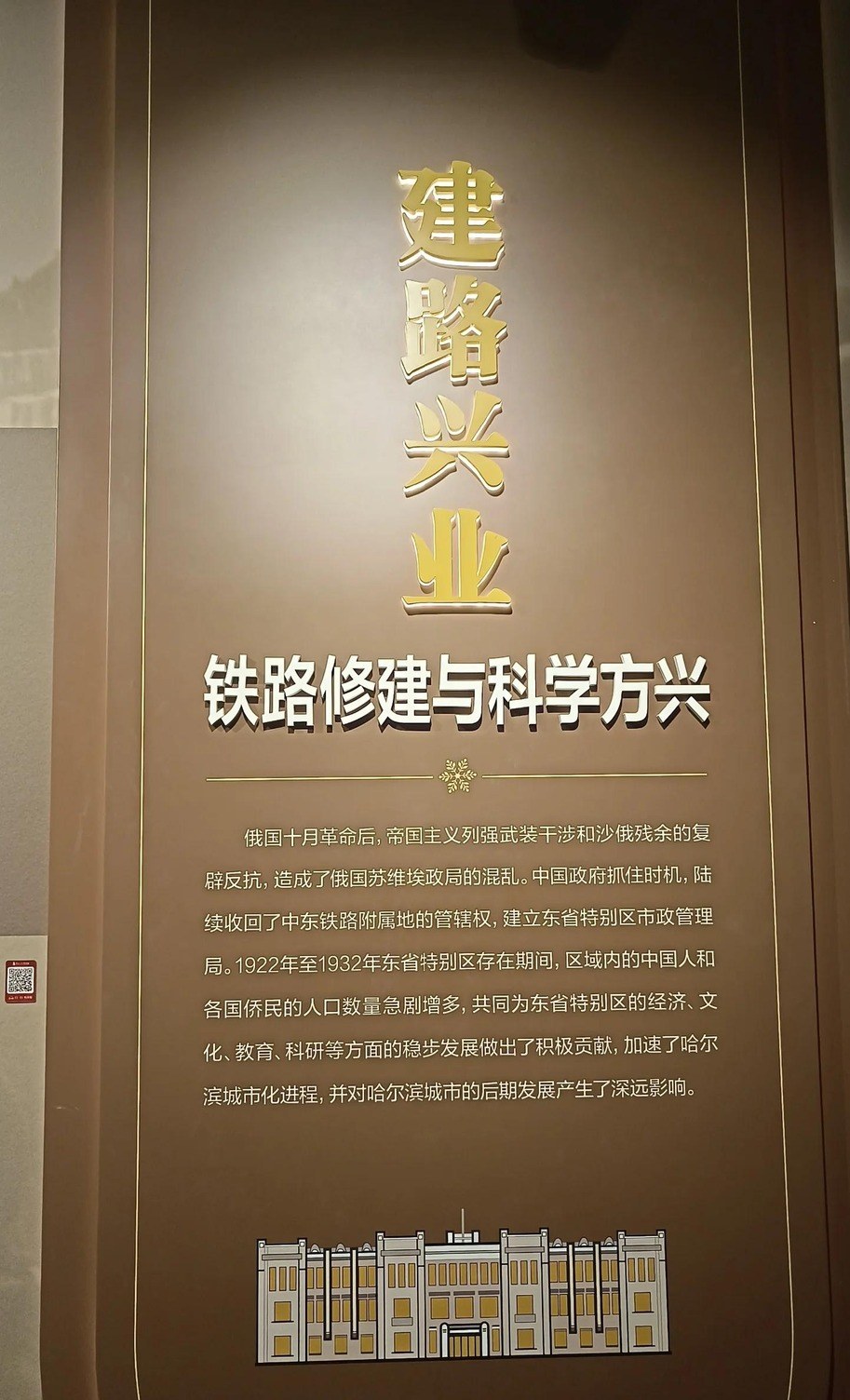
3. Cultural Contrast: Small, Old, and Unhurried
This is a provincial museum that has not been rebuilt as an experience: no immersive projections, no gift-shop funnel at the exit, thin English, and rooms you can be alone in on a weekday. For a visitor used to national museums with blockbuster ticketing, that quiet is either the charm or the disappointment — it depends what you came for.
- Come for the building and the history gallery, and treat the natural-history halls as a bonus.
- Expect almost no English. Camera translation works well on printed panels and badly on labels behind glass; photograph, then read over coffee.
- The neighbourhood is worth the rest of the morning. Nangang’s old streets, the temple on Dongdazhi Street and the Gogol Street area are all nearby — but they are a different district from Central Street, so do not plan this as a walk from the river.
4. Practical Essentials: Tickets, Transit & Scam Alerts
Tickets & Passport Booking
- Entry, booking and opening hours are the three things to confirm before you go. Nothing on this page quotes a price, an opening time or a closing day, because no official source states them consistently.
- The museum has had long renovation closures. This is the single most important line here: check the museum’s own official channel, or ask your hotel to check, before you cross the city for it.
- If it is open, carry your passport — registration at the gate is the usual procedure for foreign visitors, and the booking rules change.
- If it is closed, the provincial and city alternatives, or a morning in the Nangang streets, are the fallback.
How to Get There
- Address: No. 50 Hongjun Street, Nangang District (南岗区红军街 50 号).
- Taxi: “师傅,去黑龙江省博物馆,红军街” — the street name is what matters.
- On foot: Nangang’s old centre is compact; the temple on Dongdazhi Street and the Gogol Street shopping area are both in this district.
- Not next door to Central Street. St Sophia and the riverfront are in Daoli, across the railway; do not plan them as a walk.
Inside Tips & Scam Alerts
- If entry is free, there is no ticket to buy. Anyone outside selling one, or a “skip-the-line” pass, is selling nothing.
- The old building has steps, and lift coverage is limited; accessible routes should be confirmed at the door.
- Bag storage is limited. Leave large luggage at the hotel rather than at the entrance.
- Complaints or overcharging: the 12345 hotline is free from any local phone and has English-speaking operators.
Quick Answers
The 7 things visitors ask before setting out, answered from the same verified record used across this page.
- How much does it cost to visit Heilongjiang Provincial Museum?
- Free (passport at gate). Free with passport registration at the gate (booking rules change - check on arrival or ask your hotel to book).
- What are the opening hours at Heilongjiang Provincial Museum?
- 09:00-16:00, closed Mondays. Confirm before travelling as the museum has had long renovation closures.
- How long should I spend at Heilongjiang Provincial Museum?
- About an hour and a half.
- Is Heilongjiang Provincial Museum wheelchair accessible?
- Yes. The 1906 building has a stepped main entrance with staff assistance available; internal galleries have a lift. Accessible toilet on the ground floor.
- How do I tell a taxi driver to take me to Heilongjiang Provincial Museum?
- Copy this line into DiDi or show it to the driver: 师傅,请带我到黑龙江省博物馆(红军街50号),谢谢!
- Can I leave my luggage at Heilongjiang Provincial Museum?
- Bag check at the entrance; large bags are not allowed in the galleries.
- Is there anything to watch out for at Heilongjiang Provincial Museum?
- Entry is free. Nobody outside sells tickets. The natural-history dioramas inside are dated but genuine - no upselling there.
Where to go next
Three short lists, recomputed at build time from the same coordinates and categories as the pages themselves — no paid placement, no hand-picked names. Every card is a published guide.
Next stop in Harbin
Straight-line distance from this spot, so you can judge what is walkable and what needs a taxi.


More like this, elsewhere in China
If museum is what you came for, these are the closest equivalents you can reach in another city — ordered by distance, one city per card.


Change the subject
Deliberately a different category, for when one more temple or garden would blur into the last one.


Lists are derived from coordinates and category alone. Fix a wrong pin or re-tag a place and every list that mentions it moves with it.
Before you go · arrival essentials
Practical guides that pair with this kind of place — picked by category, not sponsored placement.
- Pay with Alipay & WeChat PayPayment · Set up Alipay or WeChat Pay on a foreign card — needed at almost every counter.
- Get online with a China eSIMConnectivity · Maps and messaging that work without a VPN, the moment you land.
- Book China train tickets (12306)Trains · Buy high-speed rail tickets with a foreign passport, for getting here and back.