
St Sophia Cathedral
ℹ️ ¥15 for the interior gallery (the square outside is free). The interior is now a photo exhibition, not a consecrated church.

Photographers in period costume cluster at the square gate and quote per shot then charge per print. Agree the total first, or shoot your own - the square is free and the light is better from the north-east corner.
Taxi & Street Navigation Help
师傅,请带我到圣索菲亚大教堂,谢谢!
Opening Hours & Best Time
08:30-17:00, ticket sales stop 30 minutes before closing.
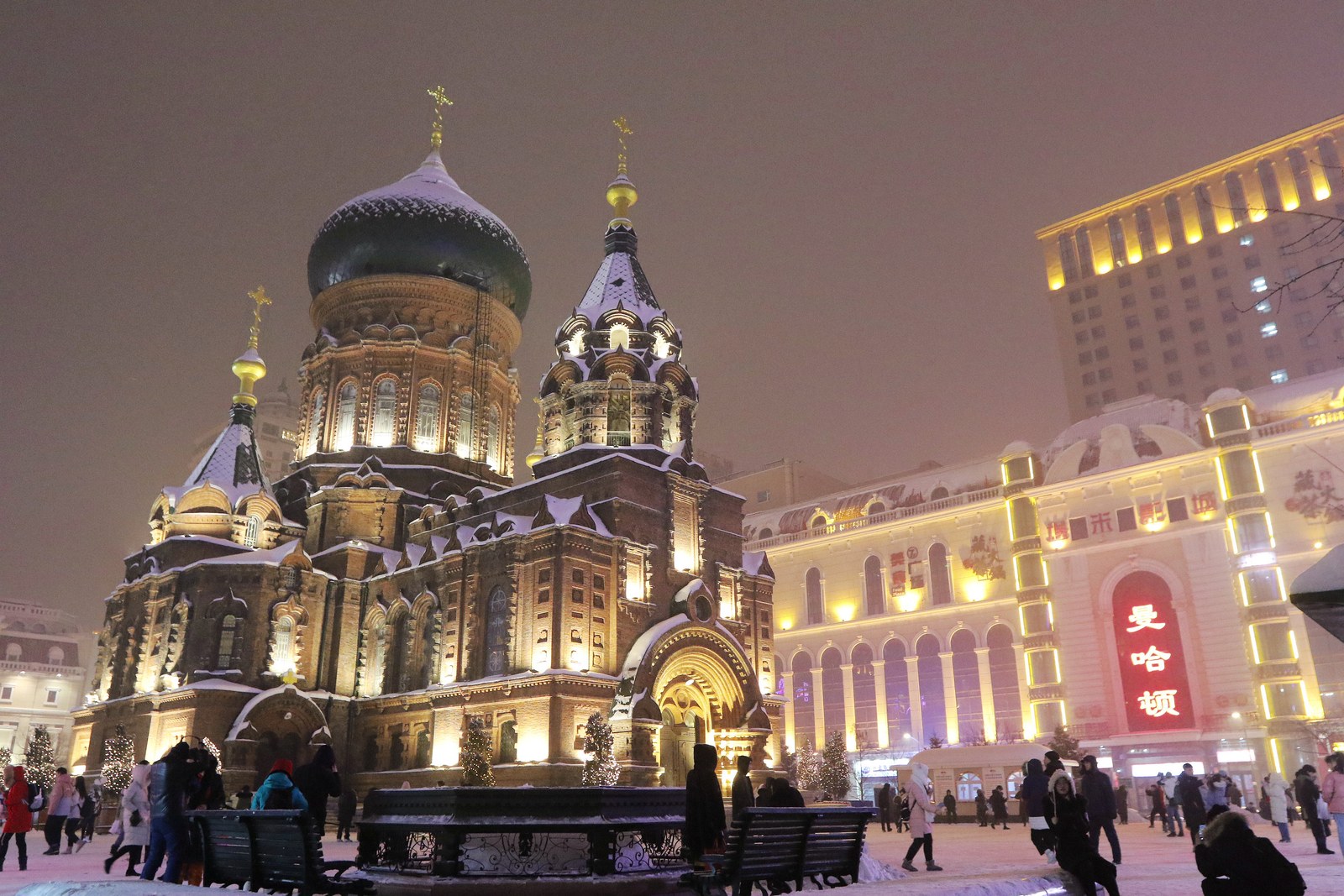
💡 Pro Tip: Come at blue hour in winter, around 16:00-16:30, when the brick goes deep red against a dark sky and the interior lights come on. The square is empty then; at 10:00 it is a photo queue.
Accessibility & Luggage Lockers
Accessibility: ♿ Wheelchair & Stroller Friendly
The square is flat and paved. The cathedral itself has a stepped entrance and no lift; the interior gallery is upstairs, reached by stairs only.
🧳 Luggage Storage: No storage.
Nearby Landmarks
The 2 places within reach of this spot — each one opens straight into Apple Maps or Amap, with the Chinese name you can show a driver.
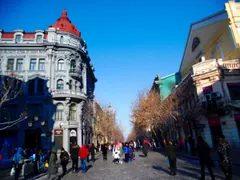 中央大街Central StreetHistoric districtAbout a 15-min walk0.77 km400 m south-west
Chinese names and pins are matched against each city's own map data at build time; a place only gets Directions once its pin has been verified, otherwise the button searches by name.
About St Sophia Cathedral
1. Historical Origins: A Church Built Twice
The cathedral on the square is the second building on the site. The first went up in 1907 in timber, for the Russian community that arrived with the railway. It was replaced between 1923 and 1932 in brick and stone: the building you see now, 53.3 metres to the top of the cross, 721 square metres of floor.
It was the largest Orthodox church in the Far East, and it served a city whose centre was, at the time, more Russian than Chinese. When that community left, the building was used for storage and workshops. In 1997 it was restored: the murals were reconstructed and the six crosses went back on the roof.
It is now a gallery of architecture — a museum inside a church, not a working parish.
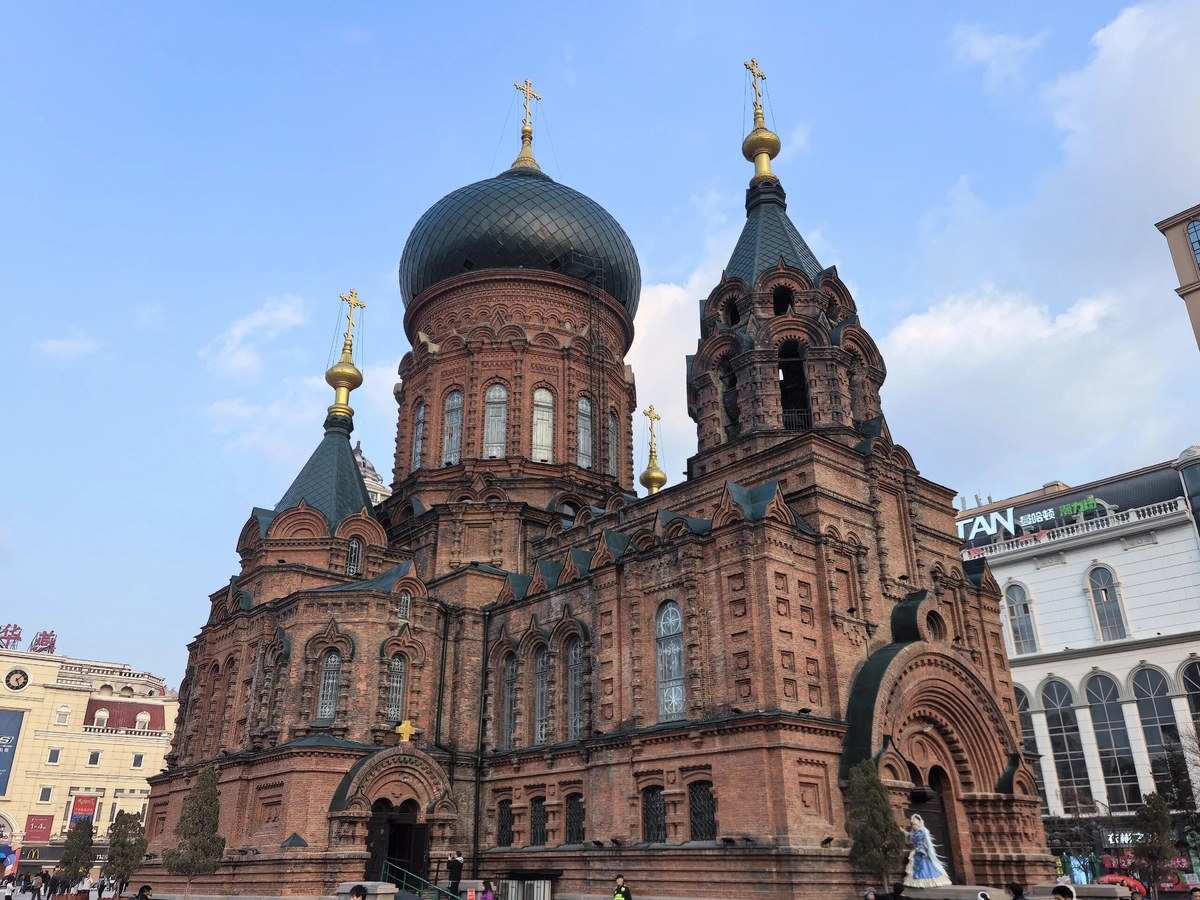
It is the one building every visitor photographs, and the reason Harbin can still sell itself as “the Moscow of the East”.
2. What to Spot: The Dome and What Is Under It
⛪ The Onion Dome
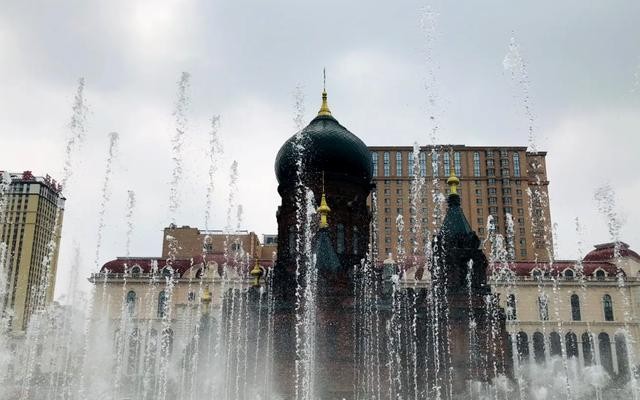
The green dome sits on a drum of arched windows, and the four smaller tent-roofed towers at the corners pull the silhouette up and inward. From the north-east corner of the square the dome clears the trees and the surrounding blocks.
- The Story: Byzantine brickwork, drawn by Russian engineers for a colonial railway city. It reads as a piece of St Petersburg dropped into Manchuria, and it was built to be seen from a distance.
- What to Look For: The banding. Every arch, every course and every window surround is picked out in a different brick, so the ornament is construction rather than applied decoration.
🖼️ The Interior
Inside, it is a gallery: photographs of old Harbin, architectural models, and the reconstructed painting on the drum. Expect exhibition lighting and captions, not candles and liturgy.
🕊️ The Square
Doves, benches, and costumed photographers working the gate. The square is public and free, and the light is best from the north-east in the afternoon.
3. Cultural Contrast: A Monument to People Who Left
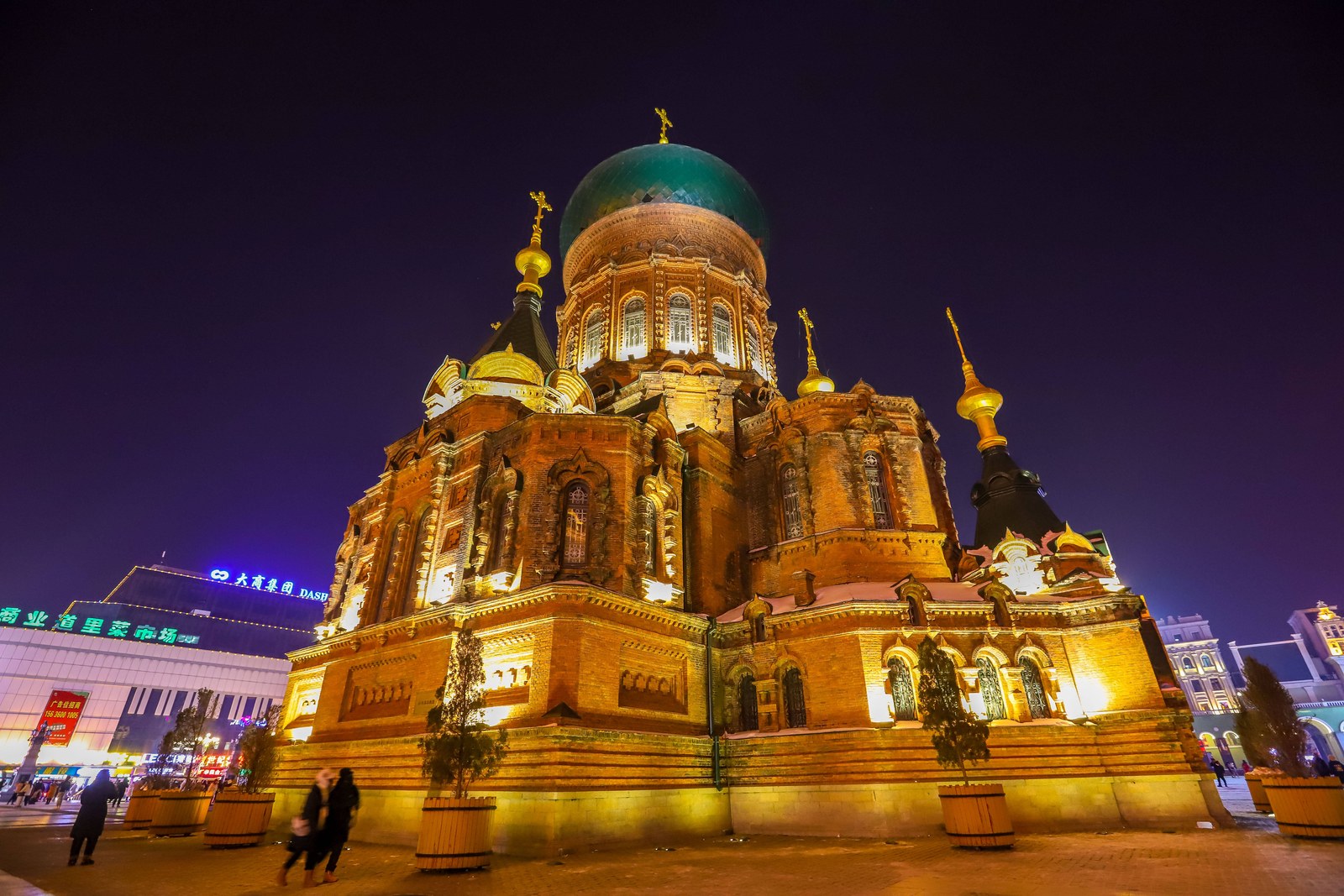
Harbin sells itself as “the Moscow of the East”, and this building is the image on the poster. But look at what surrounds it: a Chinese city square, Chinese street signs, apartment blocks behind. The church is a monument to a community that is no longer here, kept up by the city that replaced it — which is a more interesting thing than a photograph of a dome.
- It is not a working church. No services are held; the interior is an exhibition hall.
- The building is the sight, not the square. Most visitors shoot from the gate and leave; walk the full perimeter to see how the plan works.
- Foreign visitors are routine here. The ticket window handles passports without discussion.
4. Practical Essentials: Tickets, Transit & Scam Alerts
Tickets & Passport Booking
- The square is free and always open. The interior is a paid exhibition.
- No price and no hours are quoted on this page. No official source states them consistently, and special exhibitions change both; confirm at the window or on the museum’s own channel on the day.
- Passport: bring it. Foreign visitors buy at the window on a passport, and staff may take the number.
How to Get There
- Location: 88 Toulong Street (透笼街), Daoli District, on Sophia Square.
- Taxi: “师傅,去【圣索菲亚大教堂】(透笼街),谢谢!”
- By bus: several lines stop nearby on Zhaolin Street (兆麟街) — check the Chinese stop name against the map before boarding.
- On foot: ten to fifteen minutes from Central Street and ten from Zhaolin Park. All three fit into one loop.
Inside Tips & Scam Alerts
- Costumed photographers work the gate. They quote per shot and then charge per print; agree the total before anyone poses you, or take your own photographs.
- Feeding the doves is a paid activity. Ask the price before you accept the bag of grain.
- Winter dusk is the best light and the worst battery. The dome comes alight as the sky darkens, and phones die quickly in the cold — keep a power bank inside your coat, not in the bag.
- The entrance has steps. Ask at the window about step-free access before you commit to going in.
- Complaints or overcharging: call 12345. It is free from any local phone and has English-speaking operators.
Quick Answers
The 6 things visitors ask before setting out, answered from the same verified record used across this page.
- How much does it cost to visit St Sophia Cathedral?
- Interior gallery ¥15; square free. ¥15 for the interior gallery (the square outside is free). The interior is now a photo exhibition, not a consecrated church.
- What are the opening hours at St Sophia Cathedral?
- 08:30-17:00, ticket sales stop 30 minutes before closing.
- Is St Sophia Cathedral wheelchair accessible?
- Yes. The square is flat and paved. The cathedral itself has a stepped entrance and no lift; the interior gallery is upstairs, reached by stairs only.
- How do I tell a taxi driver to take me to St Sophia Cathedral?
- Copy this line into DiDi or show it to the driver: 师傅,请带我到圣索菲亚大教堂,谢谢!
- Can I leave my luggage at St Sophia Cathedral?
- No storage.
- Is there anything to watch out for at St Sophia Cathedral?
- Photographers in period costume cluster at the square gate and quote per shot then charge per print. Agree the total first, or shoot your own - the square is free and the light is better from the north-east corner.
Where to go next
Three short lists, recomputed at build time from the same coordinates and categories as the pages themselves — no paid placement, no hand-picked names. Every card is a published guide.
Next stop in Harbin
Straight-line distance from this spot, so you can judge what is walkable and what needs a taxi.


More like this, elsewhere in China
If temple is what you came for, these are the closest equivalents you can reach in another city — ordered by distance, one city per card.


Change the subject
Deliberately a different category, for when one more temple or garden would blur into the last one.


Lists are derived from coordinates and category alone. Fix a wrong pin or re-tag a place and every list that mentions it moves with it.
Before you go · arrival essentials
Practical guides that pair with this kind of place — picked by category, not sponsored placement.