
Mutianyu Great Wall (Foreigners' Favorite Wall Section)
ℹ️ ¥45 (Apr-Oct) / ¥40 (Nov-Mar); cable car or toboggan round trip ~¥120 extra

BLACK ONE-DAY TOUR HOTSPOT! Touts near hotels and roadside stops offering 'cheap Great Wall day trips' routinely force shopping stops, cut your wall time, and add surprise 'ticket/cable car fees'. Book only the official shuttle or reputable platforms (Trip.com/Klook).
Taxi & Street Navigation Help
师傅,请带我去怀柔慕田峪长城,谢谢!
Opening Hours & Best Time
07:00 - 18:00 (peak) / 07:30 - 17:30 (off-peak); confirm on official channels
💡 Pro Tip: Mutianyu over Badaling: 90% forest coverage, fewer crowds, and a toboggan descent. Take the cable car up, walk west to Tower 14 (the best panorama), then ride the toboggan down. Depart early to beat afternoon tour buses; bring water and sun protection.
Accessibility & Luggage Lockers
Accessibility: ⚠️ Step thresholds, limited access
Wall steps are steep and irregular; wheelchair travel is impossible on the wall itself. Baby strollers are impractical—use a baby carrier. The base area and cable car stations are accessible.
🧳 Luggage Storage: Luggage storage at the visitor center at the entrance; additional storage points near the cable car station.
Nearby Landmarks
The 2 places within reach of this spot — each one opens straight into Apple Maps or Amap, with the Chinese name you can show a driver.
Chinese names and pins are matched against each city's own map data at build time; a place only gets Directions once its pin has been verified, otherwise the button searches by name.
About Mutianyu Great Wall (Foreigners' Favorite Wall Section)
1. Historical Origins: A Wall Built by a Bureaucracy
The wall at Mutianyu was laid out in 1368, the first year of the Ming, on the site of an older Northern Qi rampart, and then rebuilt in stone and grey brick in the 1560s under the general Qi Jiguang. Qi’s problem was that the Mongols could ride around or through the earth walls of the early Ming, so he thickened the facing, added crenellations on both sides so defenders could shoot in either direction, and tightened the spacing of the towers to about a bowshot apart.
This was not a single act of construction so much as a 200-year maintenance programme run by a state that had garrisons here permanently. Mutianyu’s stretch of some 2.25 kilometres carries 22 towers, watch posts and powder stores packed into one ridge — which is why it reads as military architecture rather than as a symbol. UNESCO listed the Great Wall in 1987.

2. What to Spot: The Ridge, the Towers, the Descent
🏯 Tower 14 (the panorama)
- The Story: The high point of the restored section, with the wall coiling away in both directions and no modern building in sight.
- What to Look For: Walk west from the cable car to here and stop. Late afternoon gives the best side light; October adds the red-leaf slope.
🧱 The brick facing
- The Story: The Ming replaced packed earth with fired brick on a stone base, which is why the parapet still holds its edge after 450 years.
- What to Look For: The drainage slots at the base of the parapet, and the arrow slits — details most visitors walk straight past.
🛷 The toboggan descent
- The Story: A stainless-steel luge track that runs down the hillside from near Tower 6 — a genuinely fun way off a World Heritage site.
- What to Look For: Ride it in dry weather. It closes in rain or snow, and the queue after 14:00 is long.
🌲 90 percent forest
- The Story: Mutianyu’s slopes were replanted and protected; the coverage is what separates it from the bare ridgelines further west.
- What to Look For: The wall disappearing into chestnut and pine below Tower 20 — the shot that makes the scale clear.


3. Cultural Contrast: Why Foreigners Pick This Section
Chinese tour groups overwhelmingly go to Badaling, an hour closer to the city and much faster to reach; it is also the section on the currency and on every school trip itinerary. Mutianyu has become the default for foreign visitors instead, on the reasonable argument that the crowd density is a fraction of Badaling’s and the forest cover is around 90 percent rather than a bare ridge.
The two crowds behave differently. At Badaling people queue for the ceremonial photograph at the marker stone; at Mutianyu people walk. There is also a practical consequence: because Mutianyu is served by fewer buses, the scams aimed at foreigners cluster around transport rather than around the wall itself — the touts work the roadside, not the ticket gate.

4. Practical Essentials: Tickets, Transit & Scam Alerts
Tickets & Passport Booking
- Price: ¥45 from April to October, ¥40 from November to March. Cable car or toboggan round trip is around ¥120 extra, paid separately.
- How to Book: Reserve through the official ‘Mutianyu Great Wall’ WeChat account or buy at the gate with your passport; book ahead in high season. Opening 07:00–18:00 in peak season, 07:30–17:30 off-peak — check the official channel the day before.
How to Get There
- By Shuttle: The official tourist bus from Dongzhimen or Qianmen takes about 1.5 to 2 hours. A taxi or car is roughly 1.5 hours from the city centre.
- Show Your Driver: 师傅,请带我去怀柔慕田峪长城,谢谢!
Inside Tips & Scam Alerts
- The ‘cheap Great Wall day tour’ is the classic Beijing scam. Touts at hotels and roadside stops advertise a low fare, then add forced shopping stops, cut your wall time, and demand ‘ticket and cable car fees’ on the bus. Book only the official shuttle or a reputable platform such as Trip.com or Klook.
- Cable car up, toboggan down is the best use of a short visit; walk west to Tower 14 for the panorama.
- Go early. Afternoon brings the tour buses and the light goes flat; carry water and sun protection, there is very little shade on the wall itself.
- Accessibility: the steps are steep and uneven and there is no wheelchair route. Carry small children in a sling rather than a stroller.
- Complaints: the national 12345 hotline is free to call from any local phone.
Quick Answers
The 6 things visitors ask before setting out, answered from the same verified record used across this page.
- How much does it cost to visit Mutianyu Great Wall?
- ¥45 peak / ¥40 off-peak. ¥45 (Apr-Oct) / ¥40 (Nov-Mar); cable car or toboggan round trip ~¥120 extra.
- What are the opening hours at Mutianyu Great Wall?
- 07:00 - 18:00 (peak) / 07:30 - 17:30 (off-peak); confirm on official channels.
- Is Mutianyu Great Wall wheelchair accessible?
- Not fully. Wall steps are steep and irregular; wheelchair travel is impossible on the wall itself. Baby strollers are impractical—use a baby carrier. The base area and cable car stations are accessible.
- How do I tell a taxi driver to take me to Mutianyu Great Wall?
- Copy this line into DiDi or show it to the driver: 师傅,请带我去怀柔慕田峪长城,谢谢!
- Can I leave my luggage at Mutianyu Great Wall?
- Luggage storage at the visitor center at the entrance; additional storage points near the cable car station.
- Is there anything to watch out for at Mutianyu Great Wall?
- BLACK ONE-DAY TOUR HOTSPOT! Touts near hotels and roadside stops offering 'cheap Great Wall day trips' routinely force shopping stops, cut your wall time, and add surprise 'ticket/cable car fees'. Book only the official shuttle or reputable platforms (Trip.com/Klook).
Mutianyu Great Wall Photo Wall
1 / 12Twelve views of the Mutianyu Great Wall: watchtowers and winding wall over wooded ridges, mountain peach blossom in spring, a sunset panorama, and the wall snaking across the crest — photos shared by visitors on the official site.
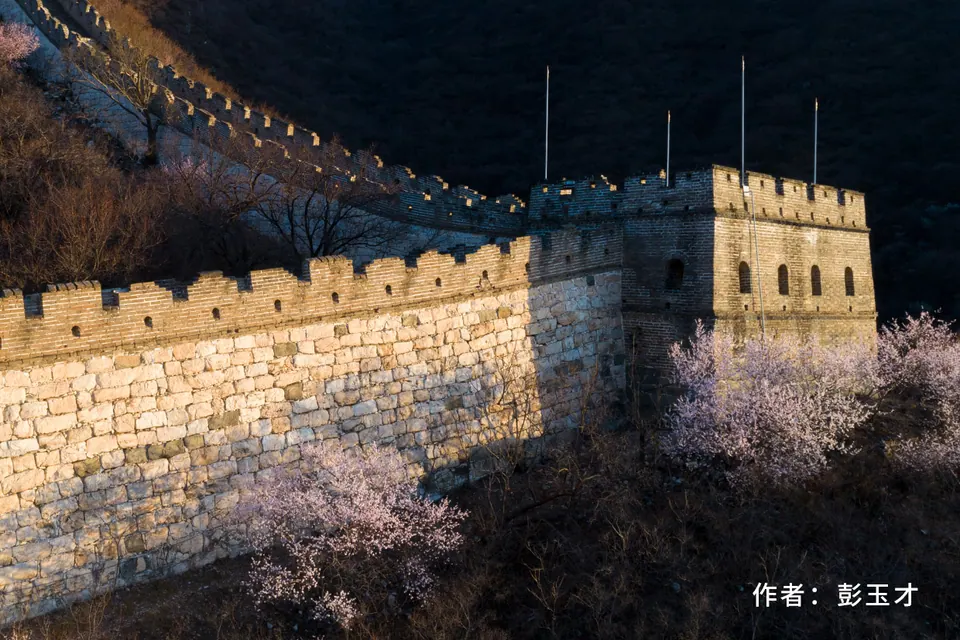
The wall and a watchtower beside spring blossoms.
Where to go next
Three short lists, recomputed at build time from the same coordinates and categories as the pages themselves — no paid placement, no hand-picked names. Every card is a published guide.
Next stop in Beijing
Straight-line distance from this spot, so you can judge what is walkable and what needs a taxi.


More like this, elsewhere in China
If landmark is what you came for, these are the closest equivalents you can reach in another city — ordered by distance, one city per card.


Change the subject
Deliberately a different category, for when one more temple or garden would blur into the last one.


Lists are derived from coordinates and category alone. Fix a wrong pin or re-tag a place and every list that mentions it moves with it.
Before you go · arrival essentials
Practical guides that pair with this kind of place — picked by category, not sponsored placement.