
Laodaowai Chinese Baroque Quarter
ℹ️ Free. Individual shops and the small museums charge their own prices.

The quarter is free; anyone selling an 'entry ticket' is selling a walking tour. Antique shops here ask tourist prices for obvious reproductions.
Taxi & Street Navigation Help
师傅,请带我到老道外中华巴洛克街区(靖宇街一带),谢谢!
Opening Hours & Best Time
Streets open 24h; shops roughly 09:00-19:00, many closed by 18:00 in winter.
💡 Pro Tip: Come for lunch, not for sightseeing. The old 老道外 restaurants serve Harbin's real local food - 张包铺 for steamed buns, 老厨家 for guoba rou - and the decayed baroque facades are the backdrop.
Accessibility & Luggage Lockers
Accessibility: ⚠️ Step thresholds, limited access
Old stone and concrete lanes with kerbs, steps into shopfronts and patches of ice in winter. Not accessible with wheels; watch your footing.
🧳 Luggage Storage: No storage - the lanes are narrow and uneven.
Nearby Landmarks
The 2 places within reach of this spot — each one opens straight into Apple Maps or Amap, with the Chinese name you can show a driver.
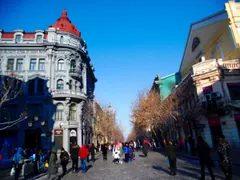 中央大街Central StreetHistoric districtShort ride away1.9 km2.5 km north-west
Chinese names and pins are matched against each city's own map data at build time; a place only gets Directions once its pin has been verified, otherwise the button searches by name.
About Laodaowai Chinese Baroque Quarter
1. Historical Origins: Two Harbins, Not One
Harbin is usually explained through its Russian quarter — the boulevards, the cathedral, the department stores of Daoli. Daowai, east of the old town, was the Chinese city, and it grew at the same time, for different people, on different money. Older sources call the neighbourhood Fujiadian.
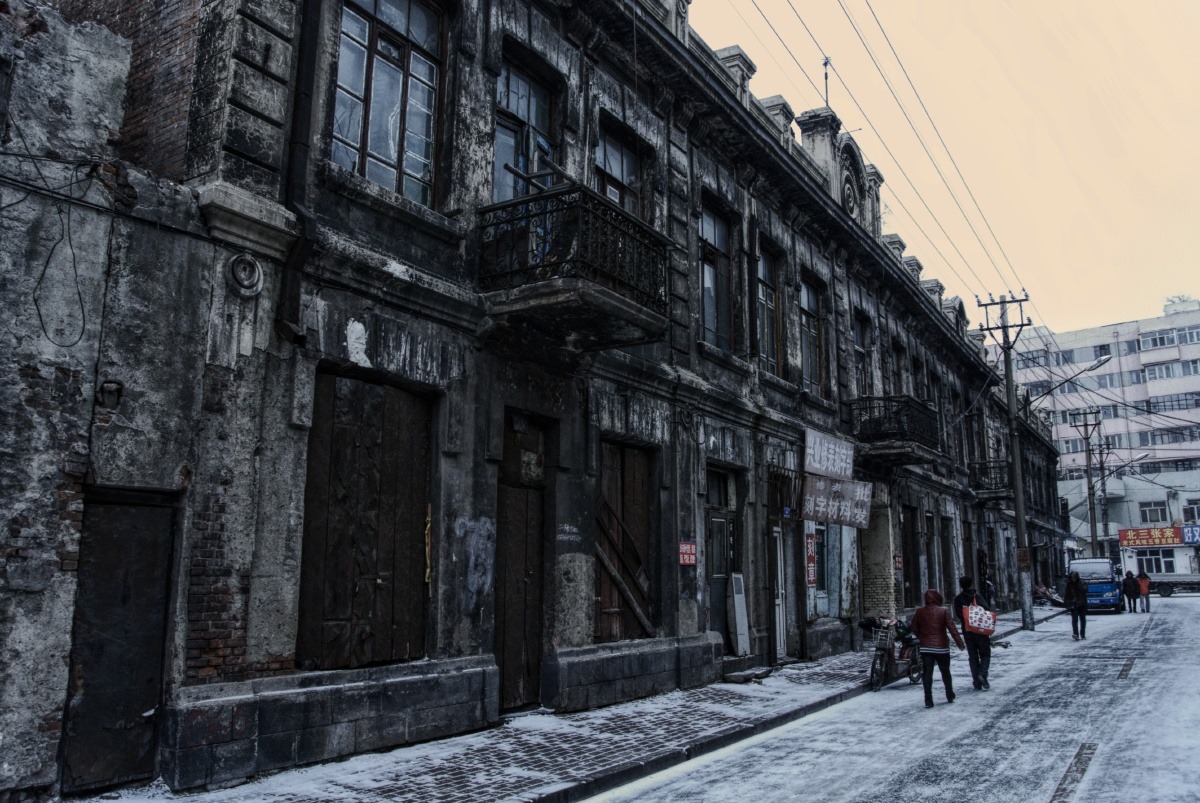
Around the turn of the twentieth century local merchants began rebuilding its main streets. What they put up is why the district now has a name abroad: European baroque fronts — columns, curved pediments, heavy cornices — on buildings that were, behind the plaster, Chinese courtyard houses. Shop on the street, family around a courtyard, storeroom at the back.
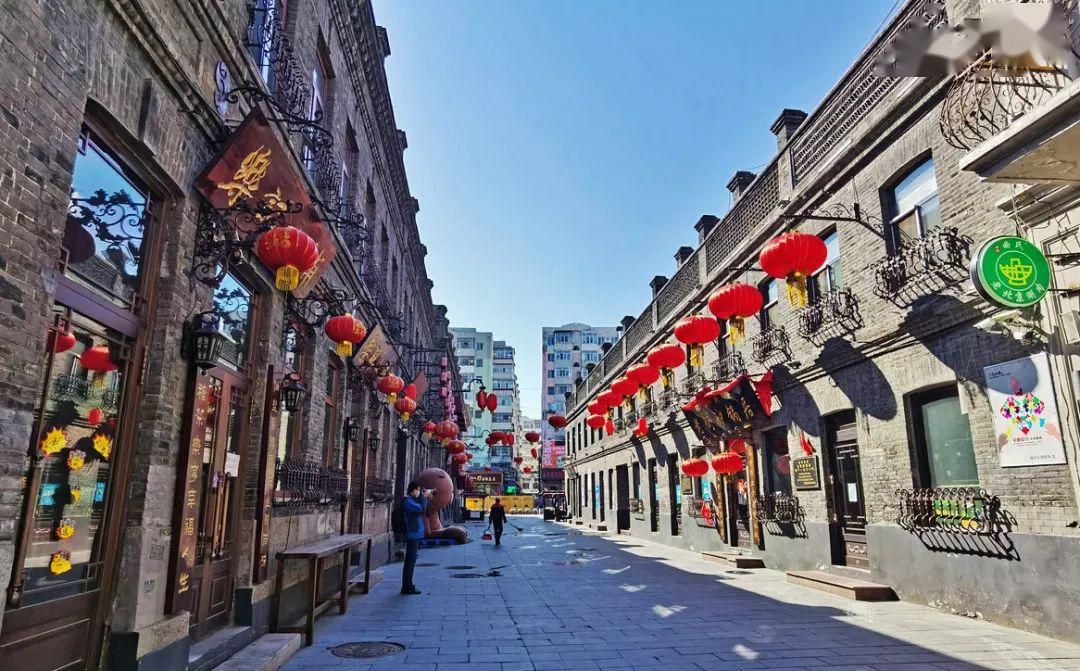
The district has since been restored and rebranded as a historic quarter. It is still a public street: free, open around the clock, no gate.
2. What to Spot: Facades Outside, Courtyards Inside
🏛️ The Street Wall
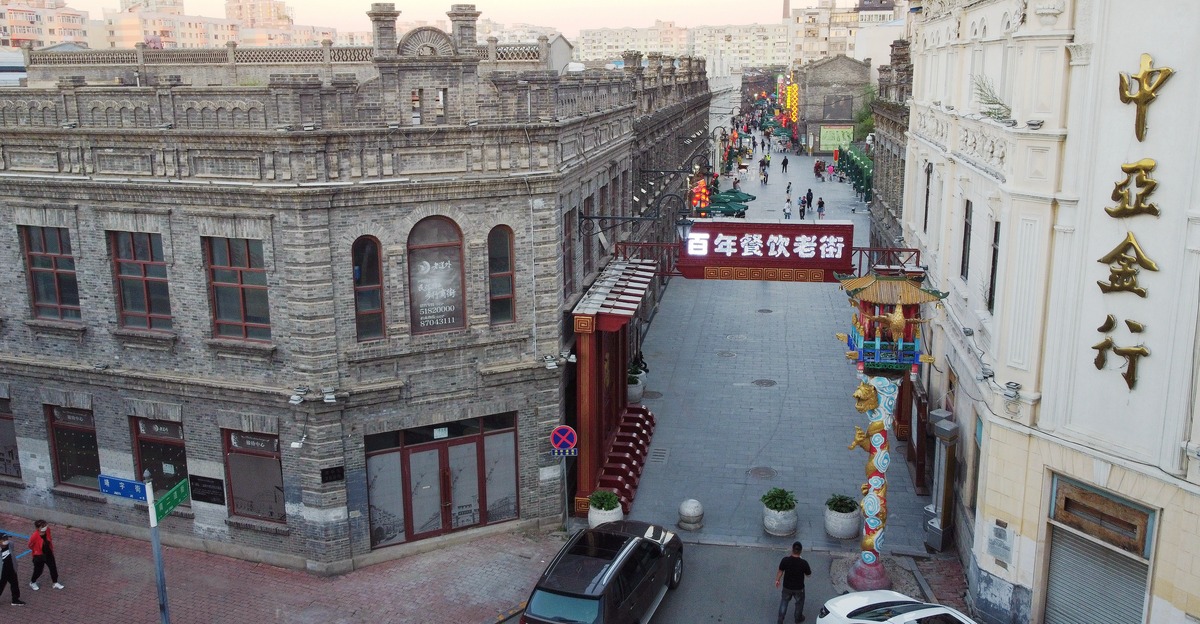
Read it as a row of stage sets. The ornament is borrowed from a European pattern book and applied by local builders, so the proportions are wrong in ways more interesting than a correct copy: columns that carry nothing, pediments too heavy for the wall behind them, decoration that stops dead at the corner because the neighbour was never finished.
- The Story: The merchants wanted the prestige of a foreign facade without giving up the Chinese plan behind it. That compromise is the style, and it has a name in Chinese — Chinese Baroque.
- What to Look For: Stand back on the opposite pavement and take one building at a time. Up close it reads as decoration; from across the street the compositions appear.
🏮 The Courtyard Behind It
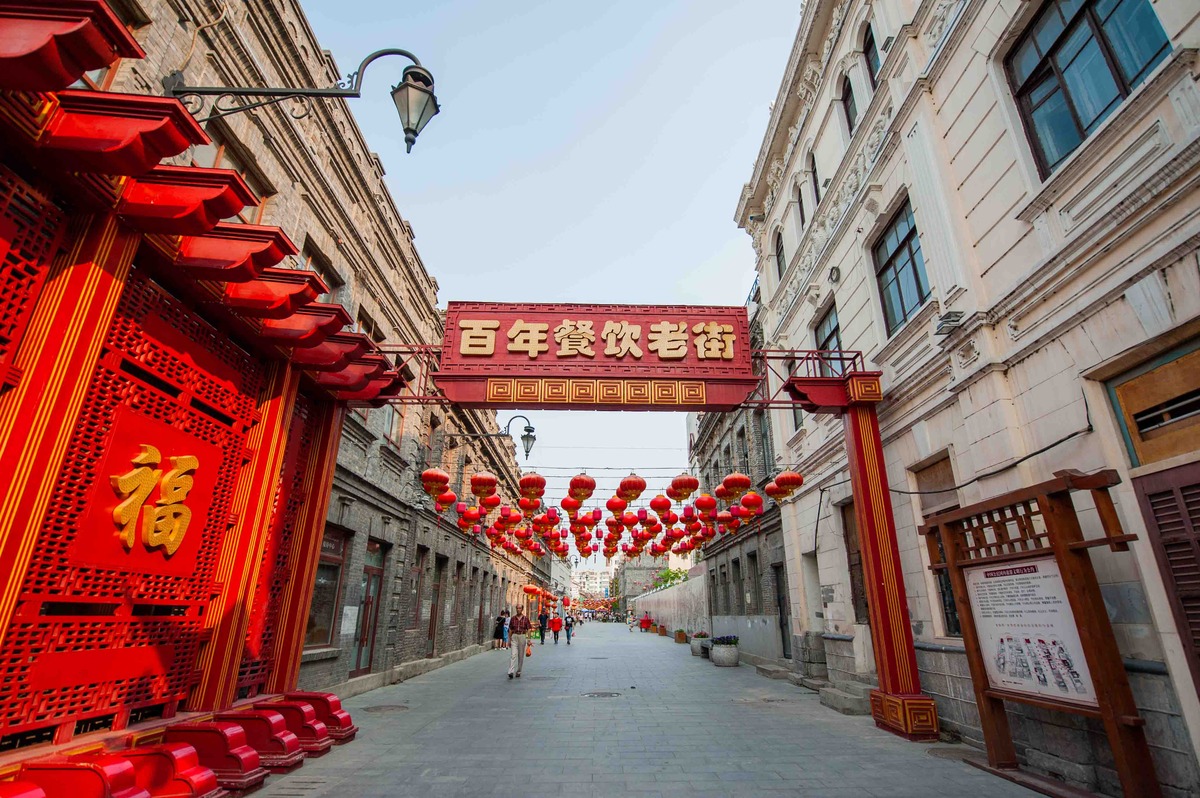
Several restored compounds are open to walkers — go in wherever a gate stands open. Gate, court, hall, rear yard: the standard northern Chinese sequence, with two-storey timber galleries around the court. Nothing about the inside is European except that it is behind a European front.
🥟 The Food
This is why locals come. The district’s old restaurants serve Harbin’s own cooking — guoba rou (sweet-and-sour pork), dumplings, steamed buns — in plain rooms, in large portions, at local prices. The signs are largely Chinese-only, so point at whatever the next table ordered.
3. Cultural Contrast: The Other Harbin
Central Street is European and curated. Daowai is Chinese and lived in. Visitors who only walk Daoli leave thinking Harbin is a Russian city; it was never only that. Half of it was built by Chinese merchants living a Chinese life behind a European mask, and that is the more surprising half.
- It is three to four kilometres from Central Street. Not a stroll-by — plan it as its own block of the day.
- Commercialisation has arrived. The main lanes are snack stalls and souvenir shops now; the side alleys still have residents, washing lines and bicycles.
- Parts of the district are still under repair. Fences and closed sections change with the season, so what you can walk through is whatever is open on the day.
- Manage the “undiscovered” expectation. This is a restored heritage street, not a slum, and it is busy at weekends.
4. Practical Essentials: Tickets, Transit & Scam Alerts
Tickets & Passport Booking
- The street is free and open around the clock. No ticket, no booking, no ID to walk in.
- Shops and the small exhibition halls set their own prices and hours. No figures are quoted here because they differ building by building and change with the season.
- The old restaurants close early in the afternoon, which is the one scheduling fact that actually matters.
How to Get There
- Location: Daowai District (道外区), around Jingyu Street and Nan Erdao Street, south bank of the Songhua east of the old town.
- Taxi: “师傅,去【老道外中华巴洛克】(靖宇街),谢谢!” — show the bracketed name to the driver.
- Metro: a line serves the district, but check the station against a map before you go underground; the walk from the exit is not obvious.
- From Central Street: three to four kilometres. Take a taxi or the metro; do not plan to walk it in winter.
Inside Tips & Scam Alerts
- Anyone selling an “entry ticket” is selling a walking tour. The quarter itself is free and has no gate.
- Antique and curio shops ask tourist prices for reproductions. Assume everything on the shelf is a copy unless you know the trade.
- Come for lunch, not for sightseeing. The architecture takes an hour; the eating is the reason to schedule it at midday.
- The pavement is uneven — smooth on the restored main lanes, stepped in the side alleys.
- Complaints or overcharging: call 12345. It is free from any local phone and has English-speaking operators.
Quick Answers
The 6 things visitors ask before setting out, answered from the same verified record used across this page.
- How much does it cost to visit Laodaowai Chinese Baroque Quarter?
- Free; shops and museums extra. Free. Individual shops and the small museums charge their own prices.
- What are the opening hours at Laodaowai Chinese Baroque Quarter?
- Streets open 24h; shops roughly 09:00-19:00, many closed by 18:00 in winter.
- Is Laodaowai Chinese Baroque Quarter wheelchair accessible?
- Not fully. Old stone and concrete lanes with kerbs, steps into shopfronts and patches of ice in winter. Not accessible with wheels; watch your footing.
- How do I tell a taxi driver to take me to Laodaowai Chinese Baroque Quarter?
- Copy this line into DiDi or show it to the driver: 师傅,请带我到老道外中华巴洛克街区(靖宇街一带),谢谢!
- Can I leave my luggage at Laodaowai Chinese Baroque Quarter?
- No storage - the lanes are narrow and uneven.
- Is there anything to watch out for at Laodaowai Chinese Baroque Quarter?
- The quarter is free; anyone selling an 'entry ticket' is selling a walking tour. Antique shops here ask tourist prices for obvious reproductions.
Where to go next
Three short lists, recomputed at build time from the same coordinates and categories as the pages themselves — no paid placement, no hand-picked names. Every card is a published guide.
Next stop in Harbin
Straight-line distance from this spot, so you can judge what is walkable and what needs a taxi.


More like this, elsewhere in China
If historic district is what you came for, these are the closest equivalents you can reach in another city — ordered by distance, one city per card.


Change the subject
Deliberately a different category, for when one more temple or garden would blur into the last one.


Lists are derived from coordinates and category alone. Fix a wrong pin or re-tag a place and every list that mentions it moves with it.
Before you go · arrival essentials
Practical guides that pair with this kind of place — picked by category, not sponsored placement.
- Pay with Alipay & WeChat PayPayment · Set up Alipay or WeChat Pay on a foreign card — needed at almost every counter.
- Claim your tourist tax refundTax refund · Get 11% VAT back on what you buy here, at the airport on departure.
- Book China train tickets (12306)Trains · Buy high-speed rail tickets with a foreign passport, for getting here and back.