
China Naval Administration Museum
ℹ️ Free. Passport required; ⚠️ some buildings in the 船政文化景区 charge separately - confirm at the gate.

Free entry. The riverside 'cruise' and the old dockyard buildings are separate and some are closed - check what is actually open before paying for anything.
Taxi & Street Navigation Help
师傅,请带我到马尾中国船政文化博物馆,谢谢!
Opening Hours & Best Time
Tuesday-Sunday about 09:00-17:00; closed Mondays.
💡 Pro Tip: This is the most underrated museum in Fujian. Mawei is 40 minutes from downtown on metro line 1 plus a short taxi, or 30 minutes by direct bus. The story - China building its own modern navy in 1866, then losing it in 1884 - is the hinge of the whole 19th century, and almost no foreign visitor goes. Allow two hours.
Accessibility & Luggage Lockers
Accessibility: ♿ Wheelchair & Stroller Friendly
Modern hillside museum with a lift from the entrance plaza to all floors and a ramped approach. Accessible toilets.
🧳 Luggage Storage: Free lockers at the desk.
Nearby Landmarks & A Short Train Ride
The 4 places worth pairing with this spot — each one opens straight into Apple Maps or Amap, with the Chinese name you can show a driver. One pick sits in Xiamen (HSR ~58 min) — a short high-speed ride, not a walk. Fuzhou's own list came out one short of a pair, and this is the nearest pick that fills it.
Chinese names and pins are matched against each city's own map data at build time; a place only gets Directions once its pin has been verified, otherwise the button searches by name. Cards with an amber city tag are in another city — the ride time shown is the fastest train of the day.
About China Naval Administration Museum
1. Historical Origins: 1866, and the Fleet That Was Lost
In 1866 Zuo Zongtang and Shen Baozhen founded the Fujian Naval Administration at Mawei, on a bend of the Min River downstream of Fuzhou. It was not a dockyard with a school attached; it was an attempt to build an entire modern navy — shipyard, ironworks, academy, and the engineers to run them — inside a country that had no industry to speak of.
The academy produced a generation of Chinese naval officers and translators. The fleet it built was destroyed in a single afternoon in 1884, when French squadrons attacked the anchored ships at Mawei at the start of the Sino-French War. That is the hinge: the same riverbank holds both the ambition and the proof that ambition was not enough.
2. What to Spot: Models, the Yard, the Water
⚓ The Ship Models
Scale models of the vessels built here are the core of the collection — hulls, engines, rigging — and they are what makes the technical story legible to a visitor who does not read Chinese.
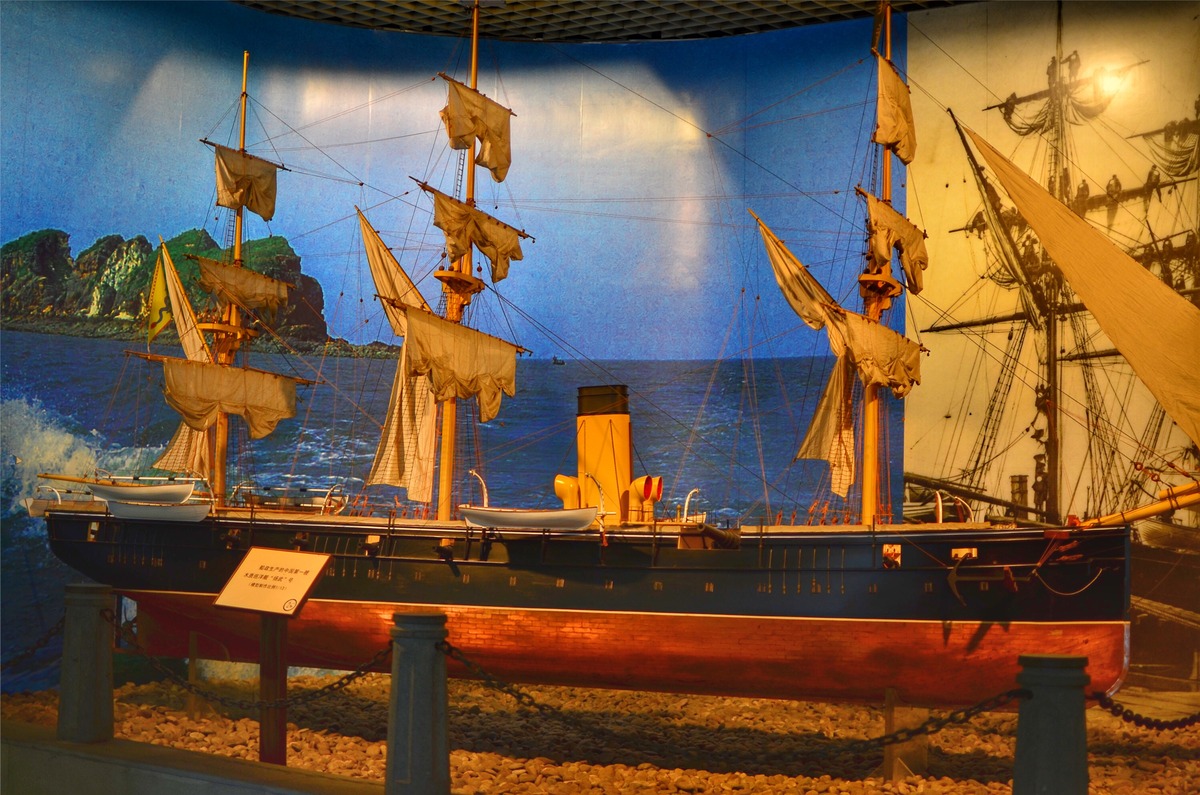
- The Story: The yard built wooden-hulled steam warships with imported engines and French instructors, then tried to move to steel. The models let you see the gap between those two generations.
- What to Look For: The plates and labels on the earliest ships are the clearest evidence of how much was bought in rather than made.
🏛️ The Building and the Site
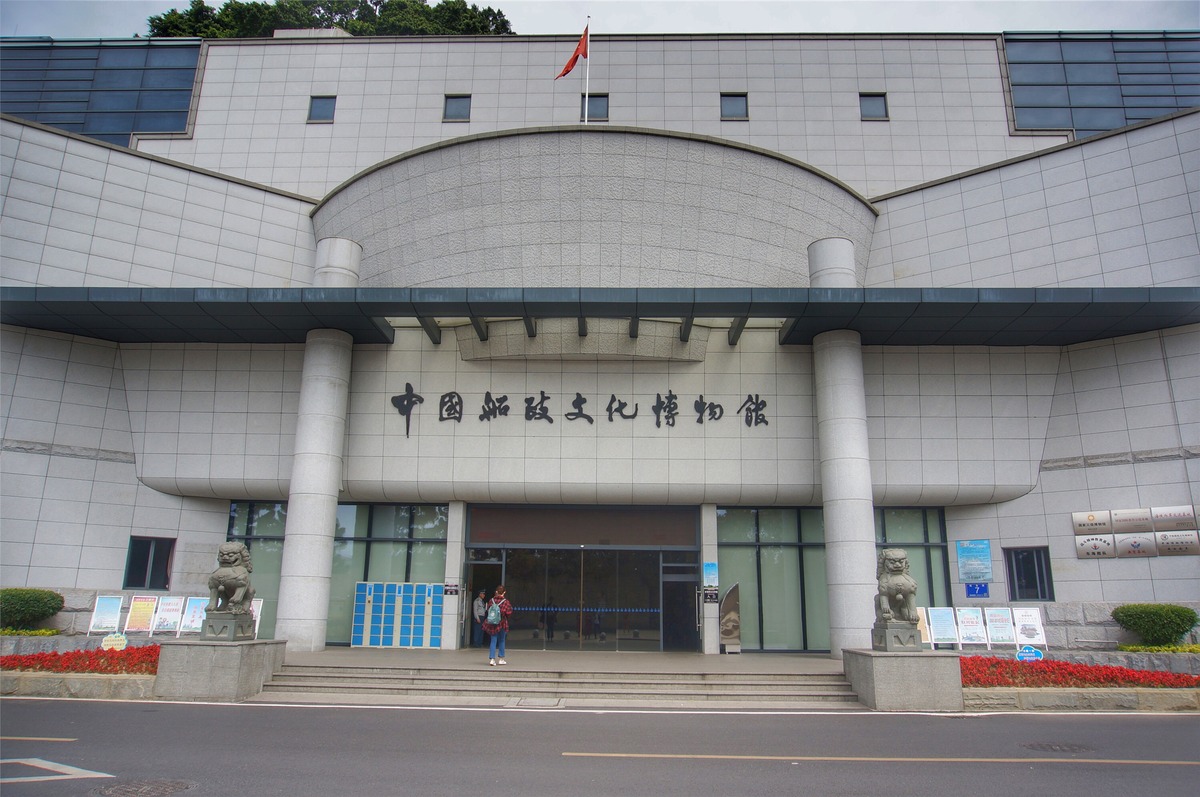
The museum is modern and sits at the edge of the old yard area, not inside a preserved historic hall. The reason to go outside afterwards is the riverbank itself: the dock area, the surviving yard structures, and the water where the fleet was moored.
🗼 Luoxing Pagoda
A short walk away, the pagoda marks the point where the Min River meets the sea approach. It was a navigation mark before it was a monument, and it makes the naval geography obvious: a yard placed where deep water and a defended river mouth met.
3. Cultural Contrast: The Hinge Almost No Foreign Visitor Sees
Most foreigners in Fuzhou do Sanfang Qixiang, eat, and leave. This museum explains the century that produced the city they are standing in — the self-strengthening effort, the foreign instructors, the defeat — and it does so with almost no English-language interpretation, which is both the problem and the reason it is still quiet.
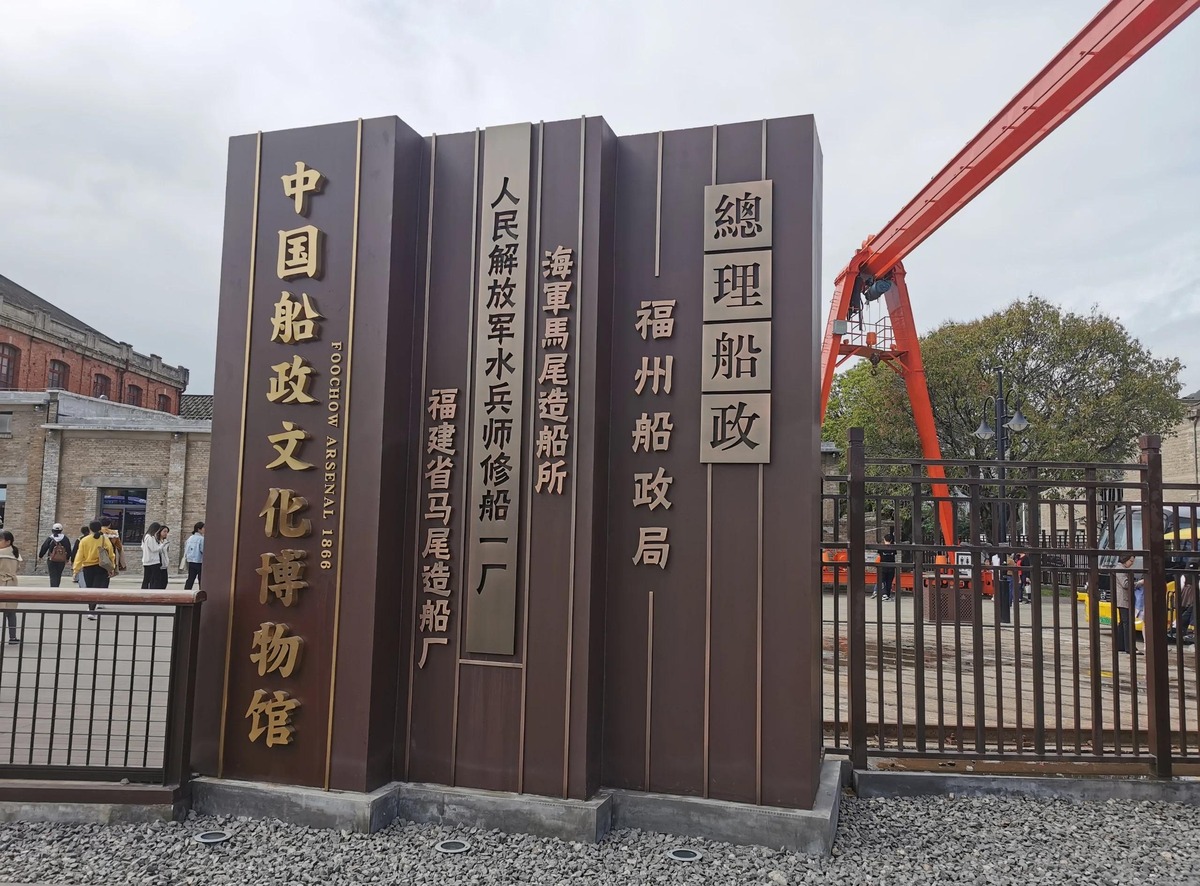
- Bring a translation app, not expectations of an audio guide. Captions are Chinese-first; camera translation of the room panels works well enough to follow the chronology.
- Read the date 1884 before you go. Half an hour of background turns a room of models into a story with an ending.
- This is a half-day in Mawei, not a stop. The pagoda, the yard, and the old street are all here; downtown is a separate trip.
4. Practical Essentials: Tickets, Transit & Scam Alerts
Tickets & Passport Booking
- Entry is free, but you need a timed slot booked in advance through the museum’s own official channel. Third-party listings priced in the hundreds of yuan are guided packages, not tickets.
- Passport required. The booking system is built for Chinese ID numbers; a passport usually works at the desk but not in the self-service machines, so arrive a little early and expect to talk to a person.
- Closed Mondays (public holidays excepted), and last entry is well before the stated closing time — assume you need to be inside by mid-afternoon.
- Some buildings in the wider naval heritage area charge separately, and some are shut. There is no official combined ticket or reliable list of what is open; check at the gate before paying for anything.
How to Get There
- Address: No. 53 Lian’an Branch Road, Mawei District (马尾区联安支路 53 号).
- Taxi: “师傅,去马尾中国船政文化博物馆” is the line to show. From downtown it is the better part of an hour in traffic.
- Metro plus taxi: Line 1 reaches the Mawei direction, but the last stretch is not walkable to the museum — take a short taxi from the station.
- Direct bus from the city centre is the simplest option if you are not in a hurry; it takes roughly half an hour longer than the metro route.
Inside Tips & Scam Alerts
- Nothing here needs a paid “guide”. Anyone selling a tour at the gate is selling interpretation you can get from a translation app for free.
- The riverside boat trips are a separate business and run on their own schedule. Check that the boat is actually operating before you pay.
- Card payment is unreliable. Bring RMB cash for taxis in Mawei; the museum itself takes no money at all.
- Toilets and storage are inside the main building; the wider yard area has few facilities.
- Complaints or overcharging: the 12345 hotline is free from any local phone and has English-speaking operators.
Quick Answers
The 6 things visitors ask before setting out, answered from the same verified record used across this page.
- How much does it cost to visit China Naval Administration Museum?
- Free; some sites charge. Free. Passport required; ⚠️ some buildings in the 船政文化景区 charge separately - confirm at the gate.
- What are the opening hours at China Naval Administration Museum?
- Tuesday-Sunday about 09:00-17:00; closed Mondays.
- Is China Naval Administration Museum wheelchair accessible?
- Yes. Modern hillside museum with a lift from the entrance plaza to all floors and a ramped approach. Accessible toilets.
- How do I tell a taxi driver to take me to China Naval Administration Museum?
- Copy this line into DiDi or show it to the driver: 师傅,请带我到马尾中国船政文化博物馆,谢谢!
- Can I leave my luggage at China Naval Administration Museum?
- Free lockers at the desk.
- Is there anything to watch out for at China Naval Administration Museum?
- Free entry. The riverside 'cruise' and the old dockyard buildings are separate and some are closed - check what is actually open before paying for anything.
Where to go next
Three short lists, recomputed at build time from the same coordinates and categories as the pages themselves — no paid placement, no hand-picked names. Every card is a published guide.
Next stop in Fuzhou
Straight-line distance from this spot, so you can judge what is walkable and what needs a taxi.


More like this, elsewhere in China
If museum is what you came for, these are the closest equivalents you can reach in another city — ordered by distance, one city per card.


Change the subject
Deliberately a different category, for when one more temple or garden would blur into the last one.


Lists are derived from coordinates and category alone. Fix a wrong pin or re-tag a place and every list that mentions it moves with it.
Before you go · arrival essentials
Practical guides that pair with this kind of place — picked by category, not sponsored placement.
- Pay with Alipay & WeChat PayPayment · Set up Alipay or WeChat Pay on a foreign card — needed at almost every counter.
- Get online with a China eSIMConnectivity · Maps and messaging that work without a VPN, the moment you land.
- Book China train tickets (12306)Trains · Buy high-speed rail tickets with a foreign passport, for getting here and back.