
Humble Administrator's Garden

Anyone at the gate offering to 'get you in without a reservation' is bluffing or a scalper. Suzhou's world-heritage gardens are real-name, advance-reservation only; a paid 'queue-skip' guide is not a substitute for your own booking.
Taxi & Street Navigation Help
师傅,请带我到拙政园(苏州市东北街178号),谢谢!
Opening Hours & Best Time
Mar–Oct 07:30–17:30; Nov–Feb 07:30–17:00; ticket and entry checks stop 30 min before close.
💡 Pro Tip: Arrive for the 07:30 opening. This is the hardest of the Suzhou gardens to see without a crowd, and the first 40 minutes — before the coach groups land — is the only window when the central pond is clear of people. Lock your slot exactly 7 days ahead.
Accessibility & Luggage Lockers
Accessibility: ⚠️ Step thresholds, limited access
A classical garden of stone thresholds, stepped bridges, narrow roofed corridors and rockwork paths. Not wheelchair-friendly; step-free circulation has not been verified.
🧳 Luggage Storage: No left luggage at the garden — leave bags at your hotel.
Nearby Landmarks
The 2 places within reach of this spot — each one opens straight into Apple Maps or Amap, with the Chinese name you can show a driver.
Chinese names and pins are matched against each city's own map data at build time; a place only gets Directions once its pin has been verified, otherwise the button searches by name.
About Humble Administrator's Garden
1. Historical Origins: A Civil Servant’s Exit Plan
Humble Administrator’s Garden is the greatest of the Suzhou classical gardens and, since 1997, a UNESCO World Heritage site. It is also, at its origin, a story of resignation. In 1509, in the Ming dynasty’s Zhengde era, a censor named Wang Xianchen was dismissed from office after court intrigue. He bought the former grounds of a Tang-dynasty poet’s house and the site of a Yuan temple, and built a garden to retire into. He took its name from a line in the Jin writer Pan Yue’s Essay on Idleness: “for a clumsy man, this is how to govern” — zhuo zhe zhi wei zheng. The “humble administrator” is the owner himself, joking that gardening was the only office left to him.
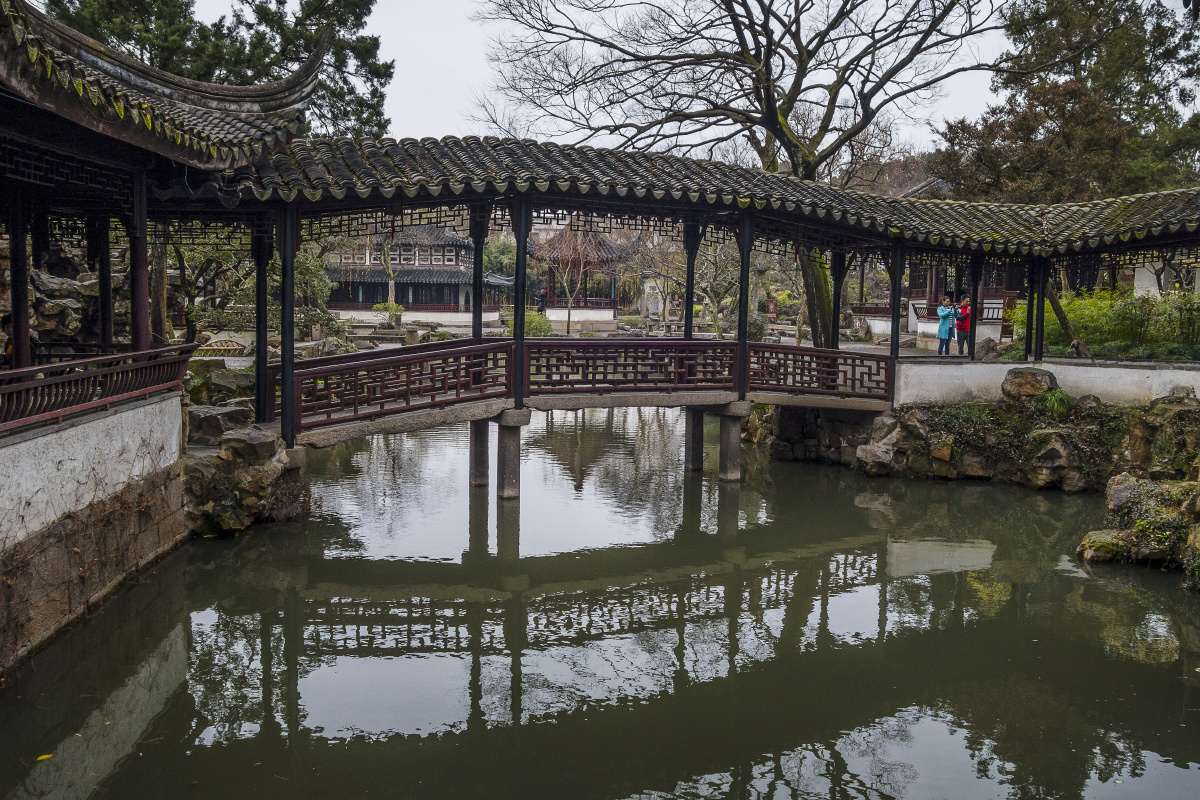
The artist Wen Zhengming — one of the era’s great masters and a friend of the owner — is traditionally said to have helped design it and painted its scenes. The garden passed through many hands over the following centuries, splitting and merging, and today reads as three zones: a bright, open eastern section; a middle section that is the core, where water dominates; and a western section built around an L-shaped pond.
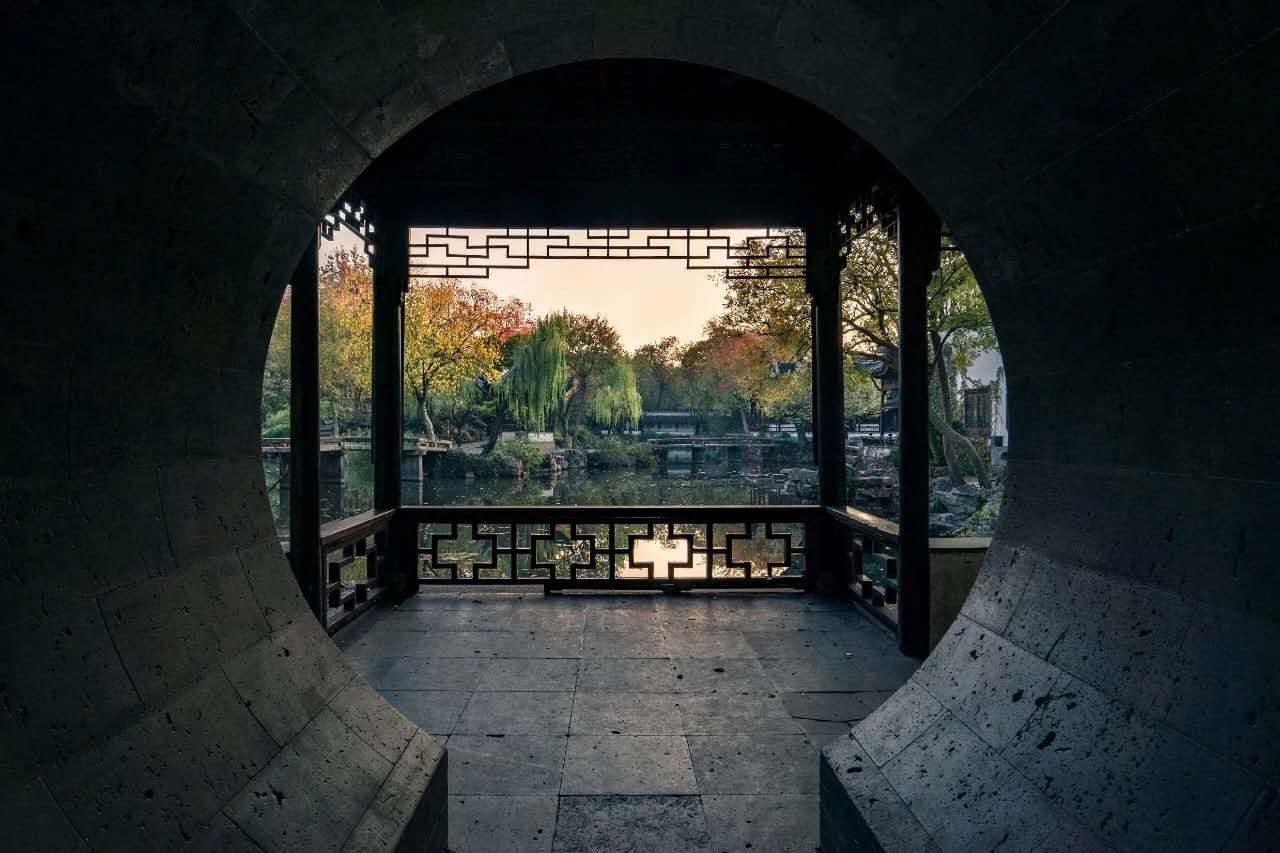
2. What to Spot: Water, Pavilions and a Pond of Lotuses
🌊 The Central Pond
- The Story: The middle section is organised around water — the pond fills about a third of the whole garden, and every building is positioned to look onto it or across it.
- What to Look For: Yuanxiang Hall, the principal building, sits on the south bank with a near-square opening framing the pond. In summer it faces straight into the lotus — the hall’s name (“remote fragrance”) is itself about the smell of lotus carried on the wind.
🌸 Seasonal Displays
- The Story: Since 1996 the garden has run an azalea festival each spring and a lotus festival in summer; the flower shows are timed to the beds around the middle section.
- What to Look For: The west-section water corridors and the islets of the central pond are where the lotus reads best; come early to catch them before the light flattens and the crowds thicken.
🏛️ The House That Became a Museum
- The Story: The residential quarter that fronts the garden is now used as exhibition halls on Suzhou’s gardens.
- What to Look For: It is a quiet counterweight to the packed gardens — a place to understand the layout you are standing inside before you go back out.
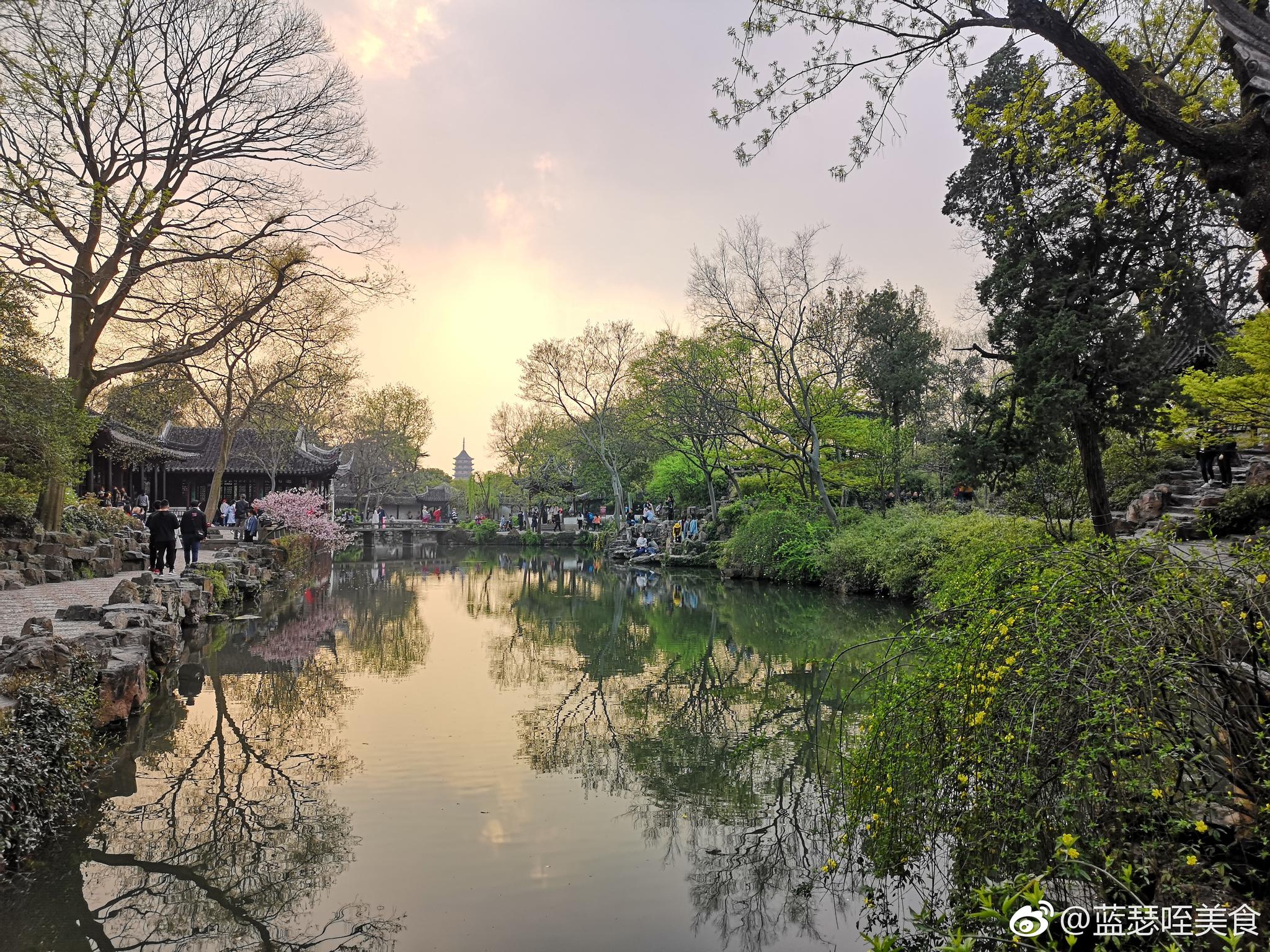
3. Cultural Contrast: The Famous One You Must Book
Every guide lists Humble Administrator’s as Suzhou’s number-one garden, and on that basis visitors treat it as the obvious choice. That reputation is exactly the problem. Because it is the flagship, its 7-day reservation quota runs out first, and at midday you are shuffling through pavilions shoulder-to-shoulder — the opposite of what a “garden for retreat” was built to be.
Here the honest comparison is with the smaller world-heritage gardens a short walk away. Master of the Nets is tinier and far calmer; the Ou Garden is quiet and sits on a canal; Lingering Garden is denser and more architectural. If your goal is to understand the Suzhou garden, the Humble Administrator’s is unmatched — it is the type site, and the central pond explains the whole genre. If your goal is to enjoy one without a crowd, book a lesser garden instead, or accept that this one is only peaceful at 07:30.
It is worth the effort, but on the garden’s own terms, not the tour bus’s: water, borrowed views and the slow reveal of one framed scene behind the next.
4. Practical Essentials: Tickets, Transit & Scam Alerts
Tickets & Passport Booking
- Price: Official peak ¥80 / off-peak ¥70 (half-price tickets also exist). Prices are set by the Suzhou Garden Administration and are quoted here as of the late-2026 official table — confirm on the day before you plan around them.
- The counter-intuitive seasons: peak months are 4, 5, 7, 8, 9, 10; off-peak are 1, 2, 3, 6, 11, 12. March and June are off-peak — that surprises most visitors and changes the price you should budget for.
- How to Book: Real-name advance reservation, opening up to 7 days ahead, through the official garden ticketing platform and the Suzhou gardens WeChat accounts. Foreign visitors buy with a passport on the official platform or at the on-site service window; the turnstiles accept a passport scan. A third-party OTA ticket is not a reservation — if it does not carry your own real-name slot, you can be turned away.
- Hours: Mar–Oct 07:30–17:30, Nov–Feb 07:30–17:00; ticket and entry checks stop 30 minutes before closing. Ticket hotline 0512-962015 (07:30–17:30).
How to Get There
- Where it is: 178 Dongbei Street (东北街), in the north-east of the old city, in the same cluster as Suzhou Museum and Lion Grove Garden — the three are walkable together.
- Show Your Driver: 师傅,请带我到拙政园(苏州市东北街178号),谢谢!
- Note on drive times: there is no published official transfer time from the stations or airport, so this guide deliberately does not guess one — build in slack and confirm the day’s traffic.
Inside Tips & Scam Alerts
- Book 7 days out, then arrive at opening. The reservation quota, not the ticket price, is the real barrier here. A “no-reservation entry” offer at the gate is a scalper’s bluff.
- One ticket, one garden. The neighbouring gardens each need their own separate real-name reservation — do not assume a Humble Administrator’s ticket admits you next door.
- No left luggage and no lockers — this is a 1.5–2 hour stop with a day bag, not a big-suitcase arrival.
- Complaints or lost items: the 12345 hotline is free from any local Chinese number.
Quick Answers
The 6 things visitors ask before setting out, answered from the same verified record used across this page.
- How much does it cost to visit Humble Administrator's Garden?
- ¥80 peak / ¥70 off-peak.
- What are the opening hours at Humble Administrator's Garden?
- Mar–Oct 07:30–17:30; Nov–Feb 07:30–17:00; ticket and entry checks stop 30 min before close.
- Is Humble Administrator's Garden wheelchair accessible?
- Not fully. A classical garden of stone thresholds, stepped bridges, narrow roofed corridors and rockwork paths. Not wheelchair-friendly; step-free circulation has not been verified.
- How do I tell a taxi driver to take me to Humble Administrator's Garden?
- Copy this line into DiDi or show it to the driver: 师傅,请带我到拙政园(苏州市东北街178号),谢谢!
- Can I leave my luggage at Humble Administrator's Garden?
- No left luggage at the garden — leave bags at your hotel.
- Is there anything to watch out for at Humble Administrator's Garden?
- Anyone at the gate offering to 'get you in without a reservation' is bluffing or a scalper. Suzhou's world-heritage gardens are real-name, advance-reservation only; a paid 'queue-skip' guide is not a substitute for your own booking.
Where to go next
Three short lists, recomputed at build time from the same coordinates and categories as the pages themselves — no paid placement, no hand-picked names. Every card is a published guide.
Next stop in Suzhou
Straight-line distance from this spot, so you can judge what is walkable and what needs a taxi.


More like this, elsewhere in China
If park or garden is what you came for, these are the closest equivalents you can reach in another city — ordered by distance, one city per card.


Change the subject
Deliberately a different category, for when one more temple or garden would blur into the last one.


Lists are derived from coordinates and category alone. Fix a wrong pin or re-tag a place and every list that mentions it moves with it.
Before you go · arrival essentials
Practical guides that pair with this kind of place — picked by category, not sponsored placement.