
Canglang Pavilion

No special ticket games here — the trap is expectation, not fraud. Canglang is quieter and less 'wow' than the famous flags; go for its scholarly calm and you won't feel short-changed the way a first-timer chasing Instagram ponds might.
Taxi & Street Navigation Help
师傅,请带我到沧浪亭(苏州市姑苏区,城南人民路三元坊一带),谢谢!
Opening Hours & Best Time
Mar–Oct 07:30–17:30; Nov–Feb 07:30–17:00; sales stop 30 min before close.
💡 Pro Tip: Stand outside, on the Fengxi stream bank, before you go in — the garden famously borrows that water *as* its foreground, so the best single view of Canglang is the one you get for free from the public lane before you buy anything. Then enter the Hall of Five Hundred Worthies for the stone-carved biographies.
Accessibility & Luggage Lockers
Accessibility: ⚠️ Step thresholds, limited access
Old garden with a covered corridor, stone bridges and stepped paths among rockwork; level access unverified.
🧳 Luggage Storage: No left luggage on site.
Nearby Landmarks
The 2 places within reach of this spot — each one opens straight into Apple Maps or Amap, with the Chinese name you can show a driver.
Chinese names and pins are matched against each city's own map data at build time; a place only gets Directions once its pin has been verified, otherwise the button searches by name.
About Canglang Pavilion
1. Historical Origins: The Oldest Garden in Suzhou
Canglang Pavilion is the oldest of Suzhou’s surviving classical gardens, and it is in the 1997 UNESCO listing. It was founded in the Qingli era of the Northern Song, when the poet Su Shunqing — a reforming official who fell afoul of court politics — bought the site and built a pavilion by the water. He took its name from the old Chu Ci fisherman’s song: “When the water of Canglang is clear, I wash my cap-strings” — a line about retiring clean from a corrupt world. The garden has been a byword for principled withdrawal ever since.
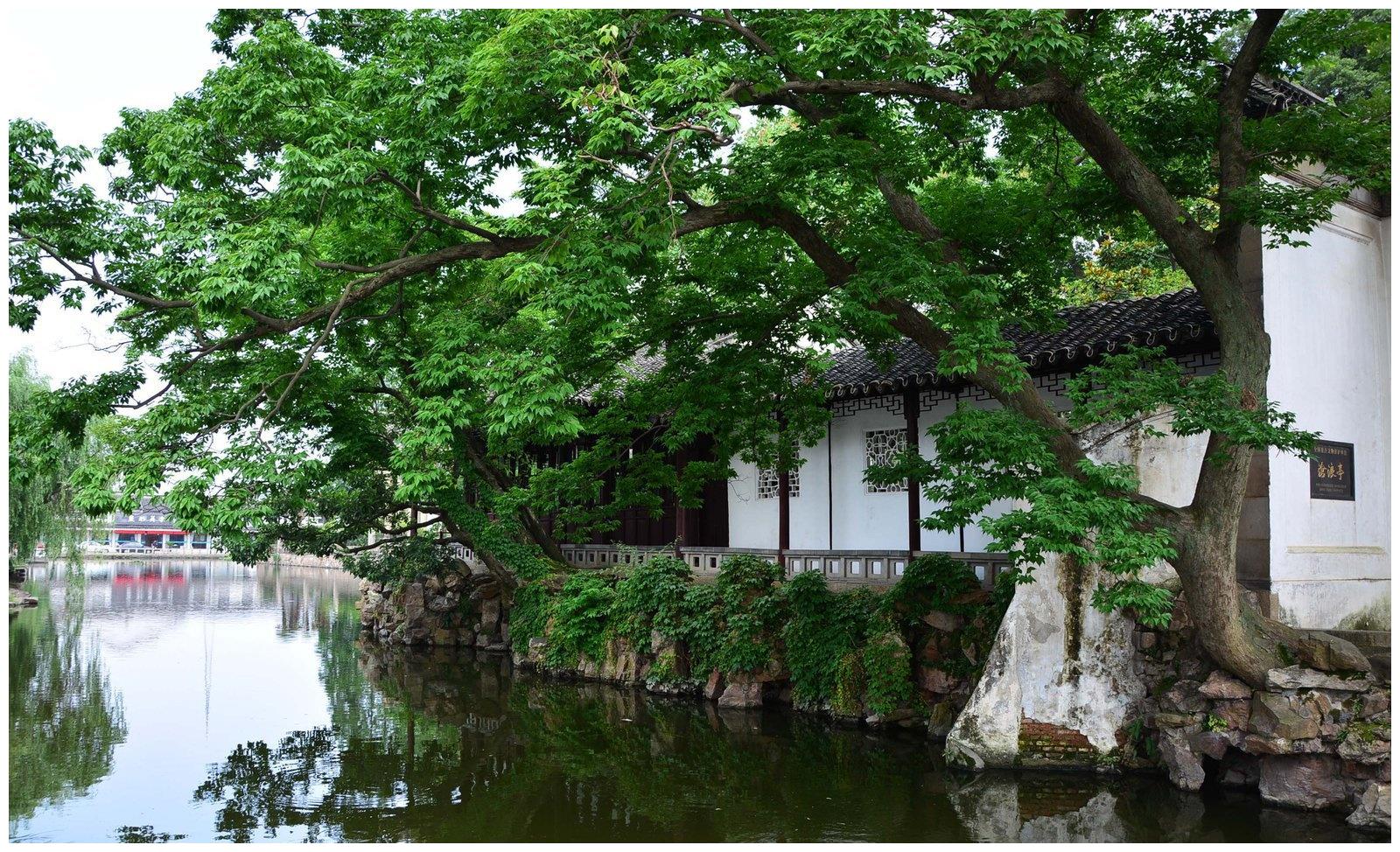
Where later gardens enclose their water inside walls, Canglang does the opposite: it makes the Fengxi stream outside the garden part of the composition, so the design reads as borrowing the world beyond, not walling it out. That single idea is why garden historians give it a place apart.
2. What to Spot: Borrowed Water and a Wall of Famous Names
💧 The Borrowed Stream
- The Story: Uniquely, the garden’s front is not a wall but a public waterway; the covered corridor along it lets the outside stream count as the garden’s own foreground.
- What to Look For: The “double-corridor” (复廊) that divides inner garden from outer water while framing both — the physical mechanism of the borrowing.
🧭 The Hall of Five Hundred Worthies
- The Story: A hall lining its walls with stone-carved portraits and biographies of around five hundred notable figures connected to Suzhou across the centuries.
- What to Look For: It’s a garden within a garden of names — the best single argument that Canglang is the “scholar’s” garden, more about literacy and memory than showy rocks.
🎋 The Bamboo and Rock Courtyards
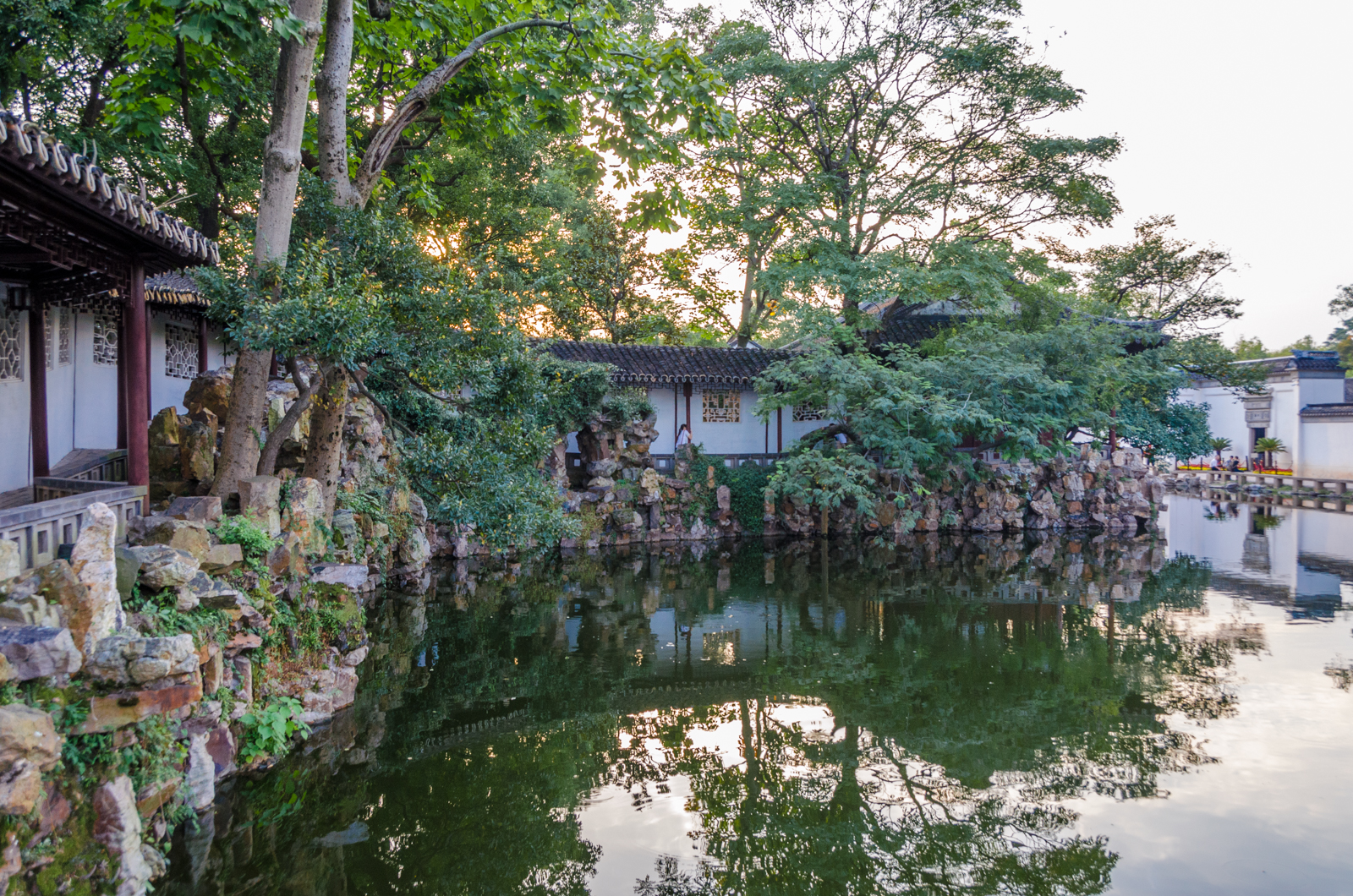
- The Story: Areas like Cui Long Long (“Emerald Delicacy”) are planted with bamboo and arranged for a green, quiet atmosphere rather than drama.
- What to Look For: The shift in mood from the open borrowed-water front to the enclosed, contemplative interior — Canglang works in calm, not spectacle.
3. Cultural Contrast: The Scholarly One, and the Quietest
Compared to the Humble Administrator’s splashy pond or Lion Grove’s rock maze, Canglang is a deliberately quieter, more intellectual place — you are meant to walk a scholar’s retreat, read a wall of names, and look at water that isn’t technically even inside the property. Visitors who rate gardens by how much they see in ten minutes find it understated; visitors who came to feel the original “retire clean” idea find it the most authentic of them all.
Its advantage is crowd: it sits in the southern old city, off the north-east garden cluster, so it is usually one of the calmest world-heritage gardens in Suzhou at any given hour. Pair it with the nearby Confucius Temple and stele collections for a literati half-day that avoids the ticket scramble entirely. For the price — the lowest of the grand gardens — it is arguably the best value in the city.
4. Practical Essentials: Tickets, Transit & Scam Alerts
Tickets & Passport Booking
- Price: Official peak ¥20 / off-peak ¥15, from the late-2026 table — confirm on the day. Peak months 4, 5, 7, 8, 9, 10; off-peak 1, 2, 3, 6, 11, 12.
- How to Book: Real-name reservation up to 7 days ahead via the official garden platform / WeChat accounts; passport buying at the official platform and on-site service window, turnstile reads a passport scan.
- Hours: Mar–Oct 07:30–17:30, Nov–Feb 07:30–17:00; sales stop 30 minutes before close. Hotline 0512-962015.
How to Get There
- Where it is: In the southern old city, off the Renmin Road / Sanyuanfang area — a different quarter from the north-east gardens. An exact official number was not re-verified this pass, so the guide locates it by district.
- Show Your Driver: 师傅,请带我到沧浪亭(苏州市姑苏区,城南人民路三元坊一带),谢谢!
Inside Tips & Scam Alerts
- See the stream from outside first — the free bank view is the garden’s best composition.
- A 1-hour garden, easy to combine south-of-town stops with. No lockers. Complaints / lost property: 12345, free from a local number.
Quick Answers
The 6 things visitors ask before setting out, answered from the same verified record used across this page.
- How much does it cost to visit Canglang Pavilion?
- ¥20 peak / ¥15 off-peak.
- What are the opening hours at Canglang Pavilion?
- Mar–Oct 07:30–17:30; Nov–Feb 07:30–17:00; sales stop 30 min before close.
- Is Canglang Pavilion wheelchair accessible?
- Not fully. Old garden with a covered corridor, stone bridges and stepped paths among rockwork; level access unverified.
- How do I tell a taxi driver to take me to Canglang Pavilion?
- Copy this line into DiDi or show it to the driver: 师傅,请带我到沧浪亭(苏州市姑苏区,城南人民路三元坊一带),谢谢!
- Can I leave my luggage at Canglang Pavilion?
- No left luggage on site.
- Is there anything to watch out for at Canglang Pavilion?
- No special ticket games here — the trap is expectation, not fraud. Canglang is quieter and less 'wow' than the famous flags; go for its scholarly calm and you won't feel short-changed the way a first-timer chasing Instagram ponds might.
Where to go next
Three short lists, recomputed at build time from the same coordinates and categories as the pages themselves — no paid placement, no hand-picked names. Every card is a published guide.
Next stop in Suzhou
Straight-line distance from this spot, so you can judge what is walkable and what needs a taxi.


More like this, elsewhere in China
If park or garden is what you came for, these are the closest equivalents you can reach in another city — ordered by distance, one city per card.


Change the subject
Deliberately a different category, for when one more temple or garden would blur into the last one.


Lists are derived from coordinates and category alone. Fix a wrong pin or re-tag a place and every list that mentions it moves with it.
Before you go · arrival essentials
Practical guides that pair with this kind of place — picked by category, not sponsored placement.