
City God Temple of Shanghai (Chenghuangmiao)

Taxi & Street Navigation Help
师傅,请带我去黄浦区方浜中路【城隍庙】正门,谢谢!
Opening Hours & Best Time
08:30 - 16:30
💡 Pro Tip: Incense sticks are included with admission. Dress modestly with shoulders covered as active Taoist worship takes place daily.
Accessibility & Luggage Lockers
Accessibility: ⚠️ Step thresholds, limited access
High wooden and stone thresholds at every temple hall entrance.
🧳 Luggage Storage: Shared lockers with Yu Garden Old Street.
Nearby Landmarks & A Short Train Ride
The 4 places worth pairing with this spot — each one opens straight into Apple Maps or Amap, with the Chinese name you can show a driver. One pick sits in Hangzhou (HSR ~48 min) — a short high-speed ride, not a walk. Shanghai's own list came out one short of a pair, and this is the nearest pick that fills it.
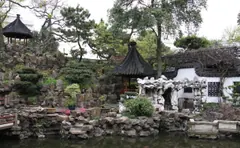
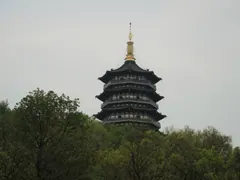
Chinese names and pins are matched against each city's own map data at build time; a place only gets Directions once its pin has been verified, otherwise the button searches by name. Cards with an amber city tag are in another city — the ride time shown is the fastest train of the day.
About City God Temple of Shanghai (Chenghuangmiao)
1. Historical Origins: A Ming Temple Inside a Market
The City God Temple dates from the Yongle reign of the Ming, founded in the same decades as Yu Garden next door, and it is one of the main Zhengyi Daoist temples in Shanghai. The city god — Chenghuang — is a bureaucratic deity rather than a cosmic one: he is the celestial equivalent of the magistrate, responsible for registering the dead of the district, reporting on its weather and its morals, and interceding on behalf of the living.
The figure worshipped here is complicated. The temple honours Huo Guang, a Han dynasty general, alongside two other city gods — a reminder that Chinese folk religion absorbs local candidates into its pantheon rather than insisting on one origin story.
The temple has been rebuilt several times, most recently in the 1990s after decades of other uses. What makes the site unusual is that it was never cleared of commerce: the market grew up against the temple wall, and the incense is burned to the sound of shop tills. It is a working place of worship inside a shopping district, and the two are not separated by more than a doorway.

2. What to Spot: Incense, Roofs, the Zigzag Bridge
🏮 The Incense Courtyard
- The Story: The centre of the temple’s daily life, where worshippers light bundles of sticks in a central burner.
- What to Look For: Watch how it is done — three sticks, held level, bowed in four directions — before you try it yourself. Incense is included with admission.
🐉 The Roof Figures
- The Story: Glazed tile ridges and figures, the part of the temple most photographed from below.
- What to Look For: From the courtyard, look up at the ridge ends and the upturned eaves against the sky; the detail disappears in flat midday light.
🌉 The Nine-Turn Bridge and Mid-Lake Pavilion
- The Story: The zigzag bridge and the teahouse on the pond, free and outside the temple’s ticket gate.
- What to Look For: Cross early in the morning, then take a table at the pavilion. The teahouse is the original of the ‘tea ceremony’ the touts outside try to sell you.


3. Cultural Contrast: Worship and Retail
Foreign visitors usually arrive from Yu Garden and see a tourist bazaar with a temple in the middle; Chinese visitors, especially older ones from the city, come specifically to burn incense, and treat the shops as incidental. Both are present at once, and the contrast is the point: on any morning you will find people praying in the courtyards while a queue forms at a dumpling counter three metres away.
That makes etiquette more important than it sounds. This is an active temple — shoulders covered, voices down, no photographing the images in the inner halls, and no standing in the middle of the courtyard to photograph worshippers. The bazaar outside is fair game for anything; the courtyards are not.

4. Practical Essentials: Tickets, Transit & Scam Alerts
Tickets & Passport Booking
- Price: ¥10, which includes the incense. The bridge, the pond and the bazaar are free.
- How to Book: Buy at the temple gate; no reservation needed and a passport is enough.
- Hours: 08:30–16:30.
How to Get There
- By Metro: Line 10 or Line 14 to Yuyuan Garden; the temple is a few minutes on foot from Yu Garden. The address is 249 Fangbang Middle Road, Huangpu.
- Show Your Driver: 师傅,请带我去城隍庙,黄浦区方浜中路 249 号,谢谢!
Inside Tips & Scam Alerts
- Combine it with Yu Garden — they are adjacent, and doing the garden first then the temple and bazaar fills a morning.
- The Mid-Lake Pavilion teahouse on the bridge is worth sitting down in. It is the real thing, at real prices.
- This is the same tea-house scam district as Yu Garden. Anyone who approaches you — friendly students, a couple wanting a photo — and steers the conversation toward tea is running the script. Decline and walk away.
- Dress modestly. Shoulders covered, and it is enforced during services.
- Complaints: the national 12345 hotline is free to call from any local phone.
Quick Answers
The 6 things visitors ask before setting out, answered from the same verified record used across this page.
- How much does it cost to visit City God Temple of Shanghai (Chenghuangmiao)?
- ¥10 (Incense fee).
- What are the opening hours at City God Temple of Shanghai (Chenghuangmiao)?
- 08:30 - 16:30.
- Is City God Temple of Shanghai (Chenghuangmiao) wheelchair accessible?
- Not fully. High wooden and stone thresholds at every temple hall entrance.
- How do I tell a taxi driver to take me to City God Temple of Shanghai (Chenghuangmiao)?
- Copy this line into DiDi or show it to the driver: 师傅,请带我去黄浦区方浜中路【城隍庙】正门,谢谢!
- Can I leave my luggage at City God Temple of Shanghai (Chenghuangmiao)?
- Shared lockers with Yu Garden Old Street.
- Will English work at City God Temple of Shanghai (Chenghuangmiao)?
- Limited — ticketing and signage are mostly Chinese. Have a translation app with the offline Chinese pack ready, and keep the Chinese name (城隍庙) on screen for staff.
Where to go next
Three short lists, recomputed at build time from the same coordinates and categories as the pages themselves — no paid placement, no hand-picked names. Every card is a published guide.
Next stop in Shanghai
Straight-line distance from this spot, so you can judge what is walkable and what needs a taxi.


More like this, elsewhere in China
If temple is what you came for, these are the closest equivalents you can reach in another city — ordered by distance, one city per card.


Change the subject
Deliberately a different category, for when one more temple or garden would blur into the last one.


Lists are derived from coordinates and category alone. Fix a wrong pin or re-tag a place and every list that mentions it moves with it.
Before you go · arrival essentials
Practical guides that pair with this kind of place — picked by category, not sponsored placement.