
Badaguan: The Eight Passes
ℹ️ Streets free, all day. Individual villas charge separately: Huashi Lou about ¥8.5-20, Princess House about ¥20 - ⚠️ confirm at each gate.

The streets are free and there is no gate. Anyone selling an 'eight passes ticket' at the edge of the district is selling a walking tour you do not need. Wedding photographers will ask you to move - the district is booked solid for wedding shoots on weekends.
Taxi & Street Navigation Help
师傅,请带我到八大关风景区(武胜关路一带),谢谢!
Opening Hours & Best Time
Streets 24h; villas about 08:00/08:30-17:00.
💡 Pro Tip: Walk it in this order: 山海关路 south to the sea, then west along 黄海路 past 花石楼 and 公主楼, then up 韶关路. That is 2 km and takes 90 minutes with stops. Early May the paulownia and late October the plane trees are the reason to come.
Accessibility & Luggage Lockers
Accessibility: ♿ Wheelchair & Stroller Friendly
Quiet paved lanes on a gentle hill with kerbs at every crossing; the steepest slope is 韶关路. Wheelchair friendly as a street walk; villa interiors mostly have steps.
🧳 Luggage Storage: No storage.
Nearby Landmarks
The 2 places within reach of this spot — each one opens straight into Apple Maps or Amap, with the Chinese name you can show a driver.
Also worth pairing: Huashi Lou on 黄海路 — real picks, just left off the grid so the cards stay in pairs.
Chinese names and pins are matched against each city's own map data at build time; a place only gets Directions once its pin has been verified, otherwise the button searches by name.
About Badaguan: The Eight Passes
1. Historical Origins: A Suburb Built Street by Street
Badaguan — “the eight passes” — is a residential district laid out in the 1920s and 1930s on the slope between the old town and the second bathing beach, and its streets are named after famous mountain passes of China: Shanhaiguan, Wushengguan, Shaoguan and so on. The naming was a small act of national geography in a city that had been a foreign concession, and the district grew to ten such streets while keeping the name.
The houses are the reason it matters. Merchants, officials and returning emigrants built villas here in the styles they had seen abroad — German, Russian, British, French, American, Japanese — so that a few hectares ended up with buildings borrowed from more than twenty countries. That is where the old description “an exhibition of world architecture” comes from; it is tourist-board language, but it is not wrong.
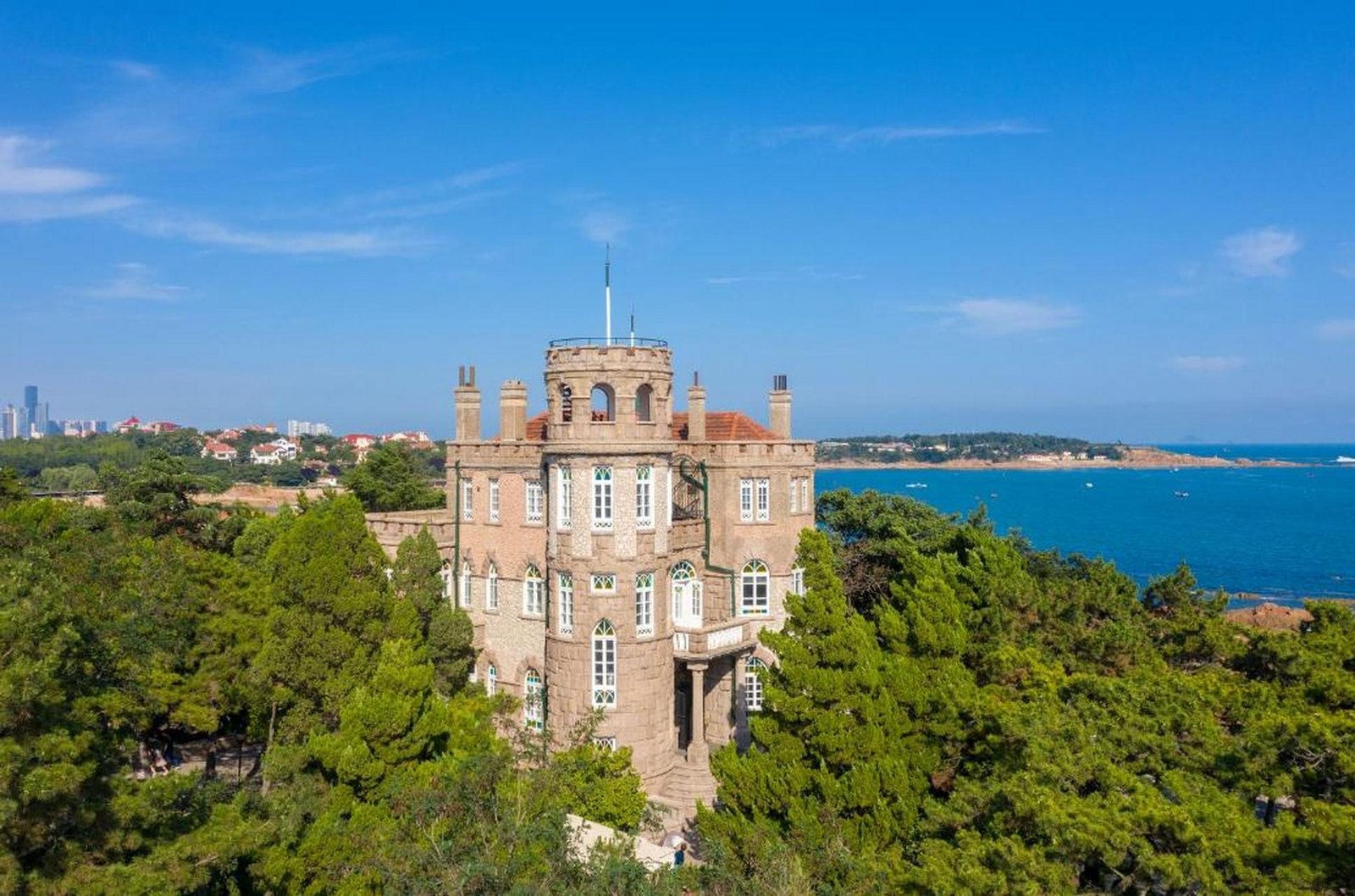
2. What to Spot: Villas, Walls and Trees
🏰 Huashi Lou
The castle-like stone building on the headland is the district’s best-known address and the only one most visitors go inside. It is built of rough granite blocks, with a round tower and a terrace facing the sea — a deliberate piece of romantic medievalism, put up in a Chinese seaside suburb in the 1930s.
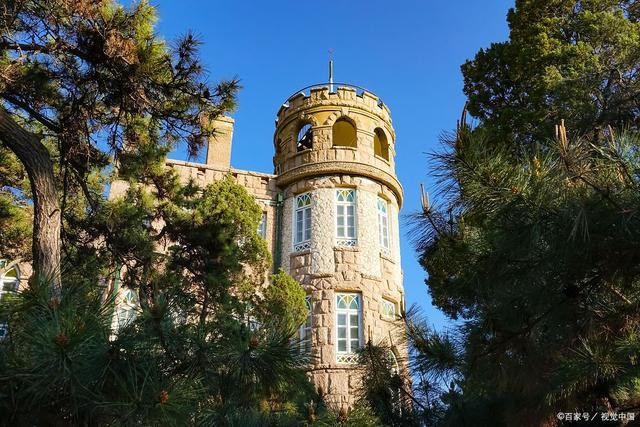
- The Story: It was built as a private house, passed through several owners, and is now open as a small museum of the district’s architecture.
- What to Look For: The stonework. The blocks are left rough-faced and irregular, which is what makes the building read as a castle rather than a villa.
🏡 The Streets Themselves
The pleasure here is not any single building but the walk: high garden walls, gates you cannot see past, and mature trees meeting overhead. Because the villas are mostly still private or institutional, you spend the visit looking at planting, gates and roofs rather than interiors.
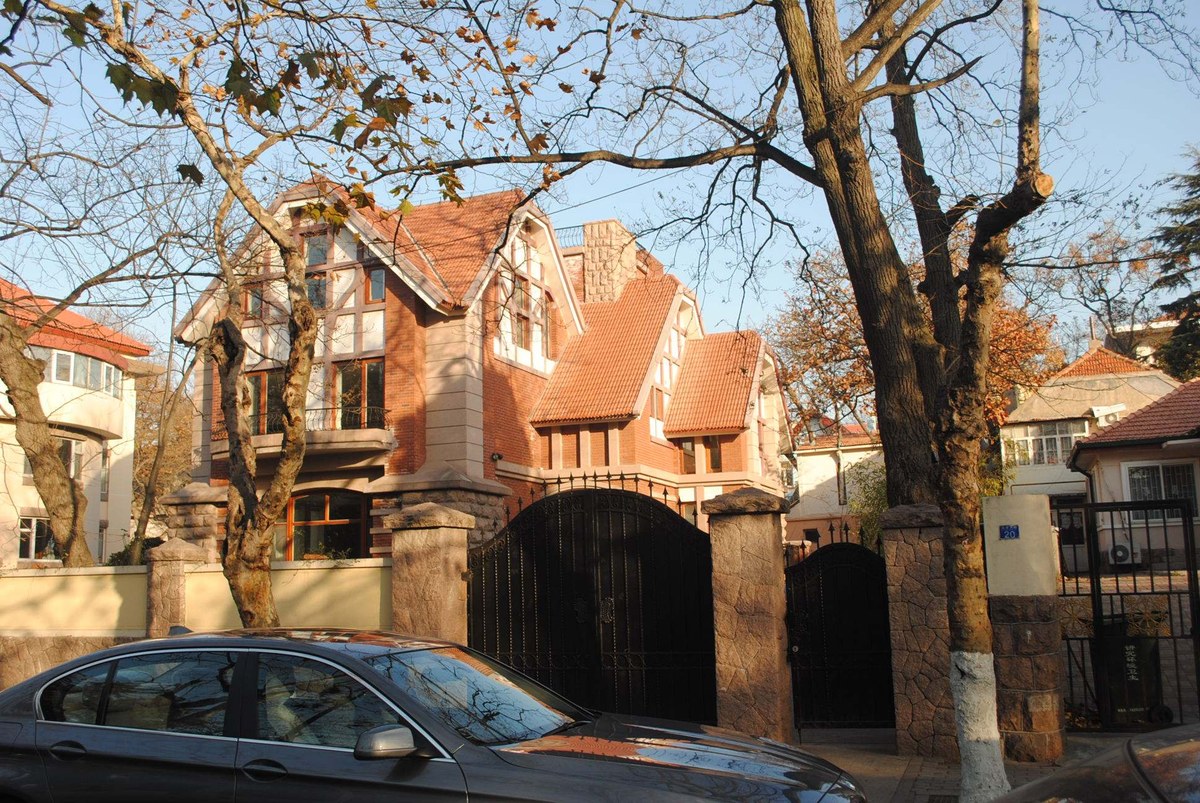
🍂 The Trees
Badaguan is planted like a botanical garden and each street has its own species, which is why the district has two seasons rather than four: late spring, when the paulownia and the flowering trees along the western lanes come out, and late October, when the planes turn.
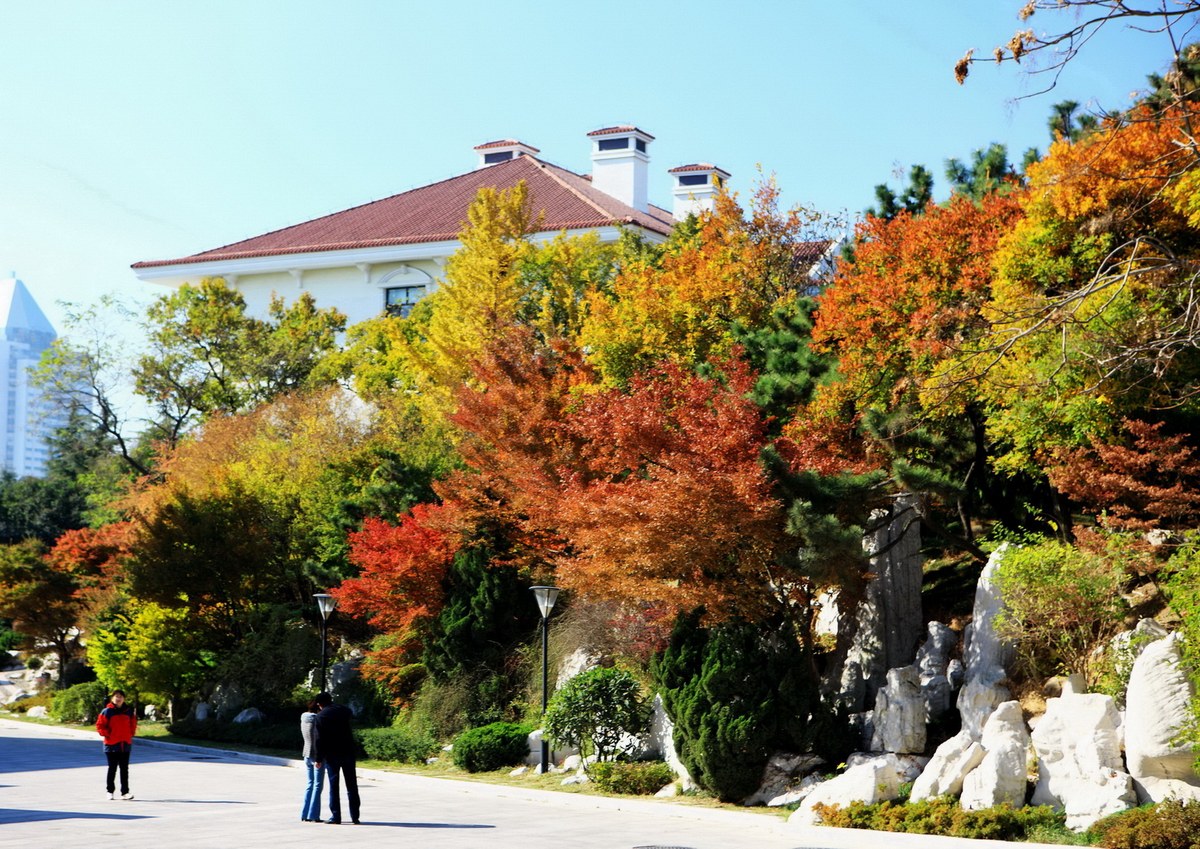
3. Cultural Contrast: Architecture Without an Audience
Badaguan is unusual among Chinese heritage districts in that almost nothing has been converted for visitors. There are no shops, no ticket gate at the edge, no souvenir street. The villas are embassies, guesthouses, offices or still private homes, and the result is a district that feels like a wealthy suburb you happen to be allowed to walk through — which is exactly what it is.
- Walk south, then west, then up. From Shanhaiguan Road down to the sea, west along Huanghai Road past Huashi Lou and the Princess House, then up Shaoguan Road. About two kilometres, ninety minutes with stops.
- Weekends belong to wedding photographers. The district is booked solid for bridal shoots, and you will be asked to move out of the frame; weekdays are quieter.
- The second bathing beach is part of the district, at the bottom of the slope, and it is the natural place to end the walk.
4. Practical Essentials: Tickets, Transit & Scam Alerts
Tickets & Passport Booking
- The streets are free and open all day and night. There is no gate and no ticket for the district itself.
- The villas that open to the public charge separately. Huashi Lou and the Princess House each have their own ticket office and their own hours; no prices are quoted here because the figures on different listings disagree, and the gate price is what applies.
- No booking is needed anywhere in the district. The individual villas sell at the door; a passport is accepted as ID.
- Villa opening hours are daytime only and change with the season.
How to Get There
- Location: the headland north-east of Huiquan Cape, Shinan District (市南区), between the old town and Taiping Cape.
- Taxi: “师傅,去八大关” — or “师傅,去花石楼” if you want to be dropped at the castle.
- By metro: the nearest station leaves a fifteen-minute walk; the district is a residential grid, so check the map before setting off.
- On foot or by bike: this is the best way to see it. Shared bikes are everywhere at the edges of the district.
Inside Tips & Scam Alerts
- Nobody sells an “eight passes ticket”. If someone offers one at the edge of the district, they are selling a walking tour you do not need.
- Check the price board before entering a villa. Several buildings charge separately and some close without notice for events.
- Do not climb the walls or gates. These are protected buildings and most are still in use.
- Early morning beats the afternoon. Light through the plane trees and no photographers in the way.
- Rain plan: the naval museum and the beer museum are both a short ride away.
- Complaints or overcharging: the 12345 hotline is free from a local phone and takes calls in English.
Quick Answers
The 6 things visitors ask before setting out, answered from the same verified record used across this page.
- How much does it cost to visit Badaguan: The Eight Passes?
- Streets free; villas ~¥8.5-20. Streets free, all day. Individual villas charge separately: Huashi Lou about ¥8.5-20, Princess House about ¥20 - ⚠️ confirm at each gate.
- What are the opening hours at Badaguan: The Eight Passes?
- Streets 24h; villas about 08:00/08:30-17:00.
- Is Badaguan: The Eight Passes wheelchair accessible?
- Yes. Quiet paved lanes on a gentle hill with kerbs at every crossing; the steepest slope is 韶关路. Wheelchair friendly as a street walk; villa interiors mostly have steps.
- How do I tell a taxi driver to take me to Badaguan: The Eight Passes?
- Copy this line into DiDi or show it to the driver: 师傅,请带我到八大关风景区(武胜关路一带),谢谢!
- Can I leave my luggage at Badaguan: The Eight Passes?
- No storage.
- Is there anything to watch out for at Badaguan: The Eight Passes?
- The streets are free and there is no gate. Anyone selling an 'eight passes ticket' at the edge of the district is selling a walking tour you do not need. Wedding photographers will ask you to move - the district is booked solid for wedding shoots on weekends.
Where to go next
Three short lists, recomputed at build time from the same coordinates and categories as the pages themselves — no paid placement, no hand-picked names. Every card is a published guide.
Next stop in Qingdao
Straight-line distance from this spot, so you can judge what is walkable and what needs a taxi.


More like this, elsewhere in China
If historic district is what you came for, these are the closest equivalents you can reach in another city — ordered by distance, one city per card.


Change the subject
Deliberately a different category, for when one more temple or garden would blur into the last one.


Lists are derived from coordinates and category alone. Fix a wrong pin or re-tag a place and every list that mentions it moves with it.
Before you go · arrival essentials
Practical guides that pair with this kind of place — picked by category, not sponsored placement.
- Pay with Alipay & WeChat PayPayment · Set up Alipay or WeChat Pay on a foreign card — needed at almost every counter.
- Claim your tourist tax refundTax refund · Get 11% VAT back on what you buy here, at the airport on departure.
- Book China train tickets (12306)Trains · Buy high-speed rail tickets with a foreign passport, for getting here and back.