
Nanluoguxiang Hutong (Yuan Dynasty Lane Grid)

Crowded pedestrian lanes attract pickpockets—keep phones and wallets in front pockets. Weekend crowds are extreme; visit on weekday mornings.
Taxi & Street Navigation Help
师傅,请带我去南锣鼓巷,谢谢!
Opening Hours & Best Time
Always open; shops ~10:00 - 22:00
💡 Pro Tip: Escape the main street's crowds by ducking into the side hutongs—Mao'er, Yu'er, and Ju'er lanes hold the real courtyard-house Beijing, with almost no tourists. The street is a perfect lunch stop between the Drum Tower and Shichahai.
Accessibility & Luggage Lockers
Accessibility: ♿ Wheelchair & Stroller Friendly
The main lane is flat and paved; side hutongs are passable but rougher. Crowds on weekends make wheelchair movement slow.
🧳 Luggage Storage: No official storage; travel light.
Nearby Landmarks
The 2 places within reach of this spot — each one opens straight into Apple Maps or Amap, with the Chinese name you can show a driver.
 什刹海·后海Shichahai & Houhai lakesHistoric district15-min walk west1.56 km
Also worth pairing: Yonghe Temple (20-min walk east) — real picks, just left off the grid so the cards stay in pairs.
Chinese names and pins are matched against each city's own map data at build time; a place only gets Directions once its pin has been verified, otherwise the button searches by name.
About Nanluoguxiang Hutong (Yuan Dynasty Lane Grid)
1. Historical Origins: A Fishbone of Yuan Streets
The lane grid here was laid out in the Yuan dynasty, in the thirteenth century, when Beijing was called Dadu. The plan was a spine running north–south with sixteen lanes branching east and west on alternating sides, each closed at the end — a fishbone, as planners describe it. It is the only largely intact Yuan street pattern left in the city, and it is why the neighbourhood still feels enclosed rather than through-routed.
What saved it was poverty, then fashion. The courtyards were too small for institutional use in the twentieth century, so they survived demolition, and from the 2000s the main lane filled with cafés and souvenir shops. The side lanes have kept their older mix: primary-school gates, bicycle repair, a few courtyard houses still lived in by the same families. UNESCO does not list it; the value is in the layout rather than in any single building.

2. What to Spot: The Lane, the Side Alleys, the Courtyards
🚩 The main lane
- The Story: 800 metres of shops in a street that was residential until about 2005.
- What to Look For: The northern half, beyond the mid-point, where the chains thin out and the lane narrows.
🐟 Mao’er and Yu’er lanes
- The Story: Two of the sixteen, running east off the spine, with courtyard houses and almost no shops.
- What to Look For: Grey brick walls, red doorways, bicycles against the wall — the ordinary texture the main lane has lost. Walk in, keep your voice down, and do not photograph doorways with people behind them.
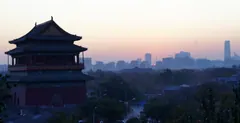
🏯 The Drum and Bell Towers
- The Story: The northern anchor of the whole area, and what the lanes originally led to.
- What to Look For: The drum performance times posted at the entrance; climb for the view back down the roofscape.
🍢 Street food, honestly
- The Story: The main lane sells the standard circuit of skewers, yoghurt and novelty drinks at tourist prices.
- What to Look For: Read the price per portion rather than the headline sign, and eat in the side lanes where the same food is cheaper.


3. Cultural Contrast: The Street Everyone Warns You About
Ask a Beijing resident about Nanluoguxiang and you will get a sigh: it is where they take visiting relatives once, and where they themselves never eat. The complaints are specific — overpriced snacks, identical souvenir shops, crowds so dense at weekends that you are carried rather than walking. All of that is true between about 11:00 and 20:00 on a Saturday.
It is also the most convenient introduction to the hutongs that exists, and the fix is simple: come on a weekday morning, walk the spine once for the picture, then spend your time in the side lanes. Two hundred metres east you are in courtyard Beijing with a primary school and a repair shop; the contrast within one block is the actual attraction. Then walk north to the drum towers or west to Shichahai and the day assembles itself.

4. Practical Essentials: Tickets, Transit & Scam Alerts
Tickets & Passport Booking
- Price: Free; no ticket and no reservation.
- How to Book: Nothing to book. Shops generally run from about 10:00 to 22:00, and the lane itself never closes.
How to Get There
- By Metro: Line 6 or Line 8 to Nanluoguxiang station, Exit E, which opens directly onto the south end of the lane.
- Show Your Driver: 师傅,请带我去东城南锣鼓巷,谢谢!
Inside Tips & Scam Alerts
- Watch for pickpockets in the crush. Weekend crowds are extreme and the lane is a known spot; keep phones and wallets in front pockets.
- The side lanes are the visit. Mao’er, Yu’er and Ju’er hold the real courtyard neighbourhood — quieter, cheaper, and far more photogenic than the spine.
- Eat before or after, not on the main lane. Prices are tourist-tier and the menus are near-identical; the same snacks cost less one lane over.
- Accessibility: the main lane is flat and paved, fine for strollers and wheelchairs; the side hutongs are narrower with door thresholds and parked bicycles.
- Complaints: the national 12345 hotline is free to call from any local phone.
Quick Answers
The 6 things visitors ask before setting out, answered from the same verified record used across this page.
- How much does it cost to visit Nanluoguxiang Hutong (Yuan Dynasty Lane Grid)?
- Free.
- What are the opening hours at Nanluoguxiang Hutong (Yuan Dynasty Lane Grid)?
- Always open; shops ~10:00 - 22:00.
- Is Nanluoguxiang Hutong (Yuan Dynasty Lane Grid) wheelchair accessible?
- Yes. The main lane is flat and paved; side hutongs are passable but rougher. Crowds on weekends make wheelchair movement slow.
- How do I tell a taxi driver to take me to Nanluoguxiang Hutong (Yuan Dynasty Lane Grid)?
- Copy this line into DiDi or show it to the driver: 师傅,请带我去南锣鼓巷,谢谢!
- Can I leave my luggage at Nanluoguxiang Hutong (Yuan Dynasty Lane Grid)?
- No official storage; travel light.
- Is there anything to watch out for at Nanluoguxiang Hutong (Yuan Dynasty Lane Grid)?
- Crowded pedestrian lanes attract pickpockets—keep phones and wallets in front pockets. Weekend crowds are extreme; visit on weekday mornings.
Where to go next
Three short lists, recomputed at build time from the same coordinates and categories as the pages themselves — no paid placement, no hand-picked names. Every card is a published guide.
Next stop in Beijing
Straight-line distance from this spot, so you can judge what is walkable and what needs a taxi.


More like this, elsewhere in China
If historic district is what you came for, these are the closest equivalents you can reach in another city — ordered by distance, one city per card.


Change the subject
Deliberately a different category, for when one more temple or garden would blur into the last one.


Lists are derived from coordinates and category alone. Fix a wrong pin or re-tag a place and every list that mentions it moves with it.
Before you go · arrival essentials
Practical guides that pair with this kind of place — picked by category, not sponsored placement.
- Pay with Alipay & WeChat PayPayment · Set up Alipay or WeChat Pay on a foreign card — needed at almost every counter.
- Claim your tourist tax refundTax refund · Get 11% VAT back on what you buy here, at the airport on departure.
- Book China train tickets (12306)Trains · Buy high-speed rail tickets with a foreign passport, for getting here and back.