
Huangdi Hometown

The real trap is distance and the festival calendar, not a rip-off. The site is in Xinzheng, about 40 km south of Zhengzhou; from the city it takes two transit legs (a long-distance coach to Xinzheng, then a local bus) and roughly 1.5–2 hours, so do not slot it into a 'city sights' morning. And if you visit near the third day of the third lunar month, the Ancestor-Worship Ceremony draws a sea of people — plan around it. Nobody pressures you to buy here; the risk is a misjudged commute or a bad-date arrival.
Taxi & Street Navigation Help
师傅,请带我到新郑·黄帝故里,谢谢!
Opening Hours & Best Time
A daytime window is quoted in the base source but with no official timetable to rely on, so no hours are asserted here — confirm the day's posted opening time. Note the site draws enormous crowds on the annual Ancestor-Worship Ceremony, held on the third day of the third lunar month (its Gregorian date shifts each year); ordinary visitors should avoid that day or book per the year's official notice.
💡 Pro Tip: The legendary birthplace and early capital of the Yellow Emperor (Xuanyuan), the mythic 'cultural ancestor' of the Chinese, worshipped here for over two thousand years. It lays out in three parts: the Worship Zone (memorial statue), the Xuanyuan Temple (a golden seated figure, with consort Leizu — credited with inventing silk — in the east hall), and the Chinese Surnames Plaza, where thousands of surnames are inscribed across the ground around a huge bronze ding cauldron. The plaza is the single best foreign-visitor interactive here: think of a surname (yours, or a companion's Chinese rendering) and go find it — no English commentary needed. Chain it with Xinzheng Museum and the Expo Garden as a Xinzheng half/full day; the airport is on the way back, making it a natural 'last stop before leaving Zhengzhou'.
Accessibility & Luggage Lockers
Accessibility: ⚠️ Step thresholds, limited access
The Surnames Plaza and temple approach are flat and open, the most wheeled-friendly parts of the site; a few thresholds and courtyard edges may need a hand. Broad but largely unshaded — summer midday sun and hydration are the practical concern.
🧳 Luggage Storage: The visitor centre can advise on storage case by case; on a city-origin day trip leave large bags at your hotel or head out with airport drop-off in mind.
Nearby Landmarks
The 2 places within reach of this spot — each one opens straight into Apple Maps or Amap, with the Chinese name you can show a driver.
Also worth pairing: Zhengzhou Xinzheng International Airport, on the return route — real picks, just left off the grid so the cards stay in pairs.
Chinese names and pins are matched against each city's own map data at build time; a place only gets Directions once its pin has been verified, otherwise the button searches by name.
About Huangdi Hometown
1. Historical Origins: The Origin Point of the Chinese
Huangdi Hometown is held to be the birthplace, childhood home and early capital of the Yellow Emperor (Xuanyuan), the mythic cultural ancestor of the Chinese people. A temple to him, the Xuanyuan Temple, has stood here since the Han dynasty, and worship has continued for more than two thousand years — which is why the site reads less like a museum and more like a living ‘origin point’ that overseas Chinese come to pay respects.
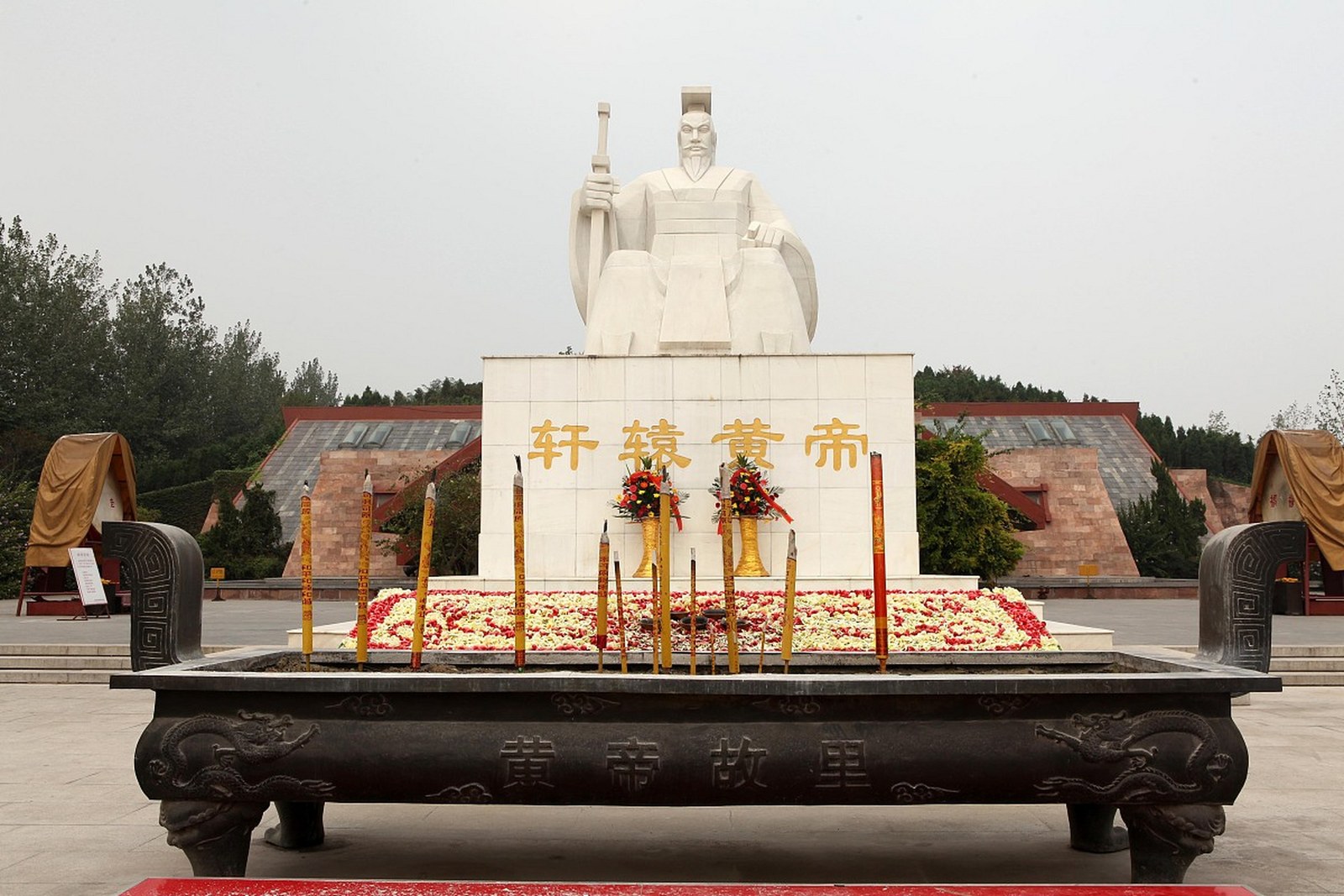
The site’s three parts build a single argument about lineage: the Worship Zone with its memorial statue, the Xuanyuan Temple enshrining a golden seated figure (with Leizu, the consort credited with inventing silk, in the east hall), and the Chinese Surnames Plaza, where thousands of family names are inscribed across the ground around an enormous bronze cauldron. Each year on the third day of the third lunar month, the Ancestor-Worship Ceremony turns the complex into a national pilgrimage.
2. What to Spot: The Temple, the Cauldron, the Surname Walls
🛕 The Xuanyuan Temple
- The Story: The two-thousand-year ritual core, housing a golden seated statue of the Yellow Emperor.
- What to Look For: The main hall and the consort halls; the sense of continuous worship rather than museum display.
🔍 The Chinese Surnames Plaza
- The Story: Thousands of Chinese surnames laid out across the ground around the central ding-cauldron altar, ringed by Han-style gate-towers and metasequoia.
- What to Look For: The standout interactive — find a surname by pinyin and photograph it. Honest caveat: these are Chinese surnames, so a Western name (Smith, Müller) usually won’t appear unless it has an established Chinese rendering.
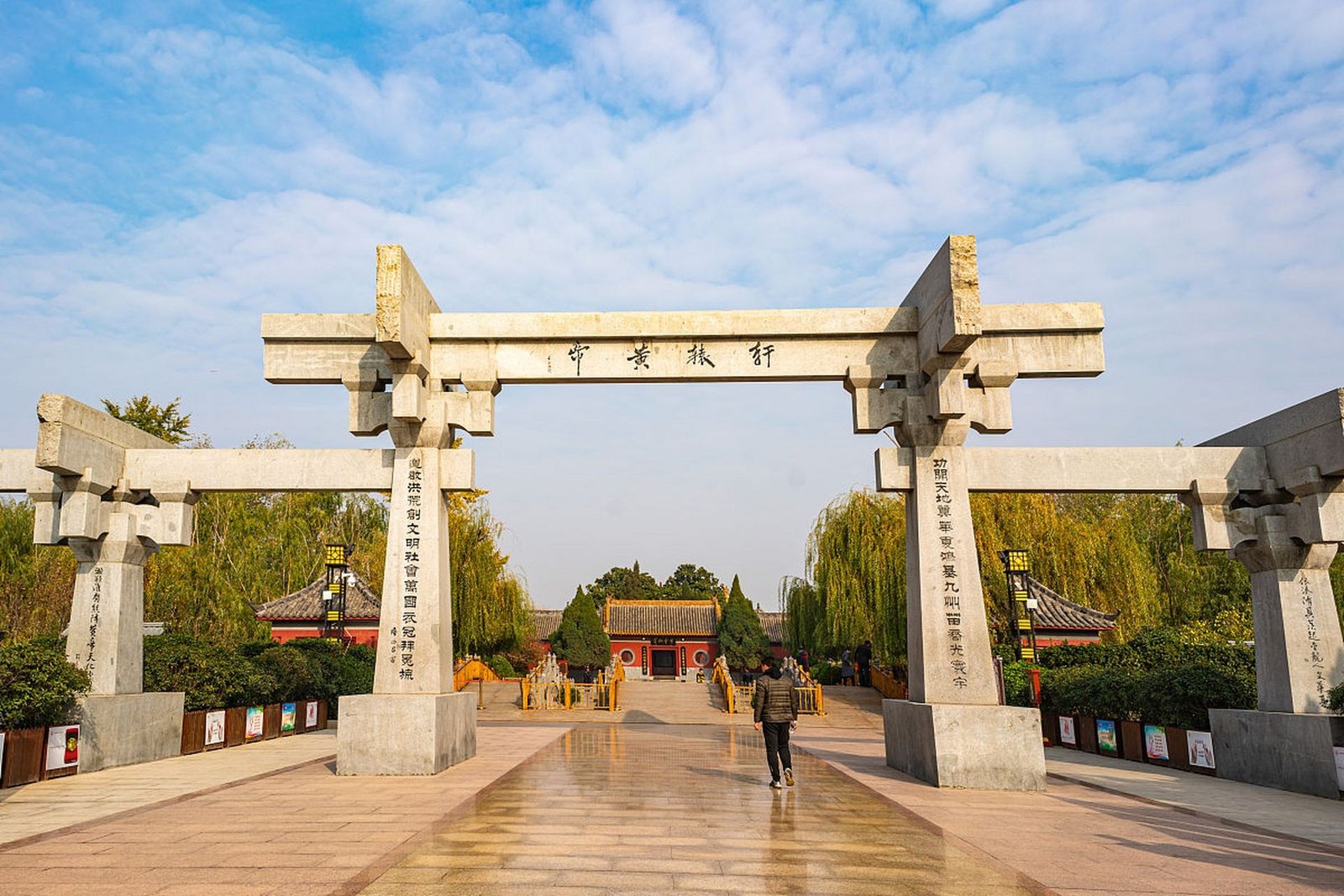
🏺 The Great Bronze Ding & Memorial Statue
- The Story: A colossal cauldron and standing figure anchoring the worship axis.
- What to Look For: The scale of the bronze ding — the site’s visual monument to ‘one people, one ancestor.’
3. Cultural Contrast: Reverence You Can Join Without the Language
For a foreign visitor the emotional core — ancestor veneration of a mythical founder — is culturally remote, and the explanatory signage is Chinese-first. But the Surnames Plaza offers a rare way in: it needs no translation, only that you pick a surname to look for, and it turns the whole ‘one Chinese family’ idea into something you can physically play at with your companions. That single interactive rescues the site for outsiders who would otherwise see grand statues they can’t quite parse.
Be honest about the framing: beyond the surname game, understanding ‘why people bow’ takes a little prior reading, and the complex’s real subject is belief, not spectacle. Pair the visit with nearby Xinzheng Museum and the Expo Garden as a Xinzheng day, and note the airport sits on the return leg — an efficient final stop before flying out of Zhengzhou.
4. Practical Essentials: Tickets, Transit & Scam Alerts
Tickets & Passport Booking
- Price: Listed free in the single base source but not officially confirmable — verify at the entrance, passport handy; no booking fee to quote.
- Hours: Daytime window quoted but unconfirmed; check the day’s notice. Avoid the third-day-of-third-lunar-month Ancestor-Worship Ceremony unless you want the crowd (its Gregorian date shifts yearly).
How to Get There
- Where it is: Xuanyuan Road, Xinzheng, about 40 km south of Zhengzhou. From the city it is a two-leg trip — long-distance coach to Xinzheng, then a local bus — roughly 1.5–2 hours; don’t plan it as a city sight. The airport is on the way back, and it chains neatly with Xinzheng Museum and Expo Garden.
- Show Your Driver: 师傅,请带我到新郑·黄帝故里,谢谢!
Inside Tips & Scam Alerts
- Pick a surname before you arrive so you don’t pace the walls undecided. Budget the commute — distance, not any scam, is the pitfall. Sun protection in summer (little shade). Try Xinzheng’s red-jujube products nearby. Complaints / lost property: 12345, free from a local number.
Quick Answers
The 6 things visitors ask before setting out, answered from the same verified record used across this page.
- How much does it cost to visit Huangdi Hometown?
- Free.
- What are the opening hours at Huangdi Hometown?
- A daytime window is quoted in the base source but with no official timetable to rely on, so no hours are asserted here — confirm the day's posted opening time. Note the site draws enormous crowds on the annual Ancestor-Worship Ceremony, held on the third day of the third lunar month (its Gregorian date shifts each year); ordinary visitors should avoid that day or book per the year's official notice.
- Is Huangdi Hometown wheelchair accessible?
- Not fully. The Surnames Plaza and temple approach are flat and open, the most wheeled-friendly parts of the site; a few thresholds and courtyard edges may need a hand. Broad but largely unshaded — summer midday sun and hydration are the practical concern.
- How do I tell a taxi driver to take me to Huangdi Hometown?
- Copy this line into DiDi or show it to the driver: 师傅,请带我到新郑·黄帝故里,谢谢!
- Can I leave my luggage at Huangdi Hometown?
- The visitor centre can advise on storage case by case; on a city-origin day trip leave large bags at your hotel or head out with airport drop-off in mind.
- Is there anything to watch out for at Huangdi Hometown?
- The real trap is distance and the festival calendar, not a rip-off. The site is in Xinzheng, about 40 km south of Zhengzhou; from the city it takes two transit legs (a long-distance coach to Xinzheng, then a local bus) and roughly 1.5–2 hours, so do not slot it into a 'city sights' morning. And if you visit near the third day of the third lunar month, the Ancestor-Worship Ceremony draws a sea of people — plan around it. Nobody pressures you to buy here; the risk is a misjudged commute or a bad-date arrival.
Where to go next
Three short lists, recomputed at build time from the same coordinates and categories as the pages themselves — no paid placement, no hand-picked names. Every card is a published guide.
Next stop in Zhengzhou
Straight-line distance from this spot, so you can judge what is walkable and what needs a taxi.


More like this, elsewhere in China
If historic district is what you came for, these are the closest equivalents you can reach in another city — ordered by distance, one city per card.


Change the subject
Deliberately a different category, for when one more temple or garden would blur into the last one.


Lists are derived from coordinates and category alone. Fix a wrong pin or re-tag a place and every list that mentions it moves with it.
Before you go · arrival essentials
Practical guides that pair with this kind of place — picked by category, not sponsored placement.
- Pay with Alipay & WeChat PayPayment · Set up Alipay or WeChat Pay on a foreign card — needed at almost every counter.
- Claim your tourist tax refundTax refund · Get 11% VAT back on what you buy here, at the airport on departure.
- Book China train tickets (12306)Trains · Buy high-speed rail tickets with a foreign passport, for getting here and back.