
Gaocheng Observatory

The one real trap is location, not a rip-off: the observatory sits in Gaocheng town, about 12 km southeast of Dengfeng's centre and a further detour from Shaolin and Songyang Academy. Don't drop it into a 'city sights' plan or assume it's next to the other Songshan spots — string it with Zhongyue Temple as a Dengfeng day and reach it by taxi. It is a small, quiet site; nobody will pressure you to buy, the risk is simply wasting a trip by misjudging the distance.
Taxi & Street Navigation Help
师傅,请带我到登封·告成镇·观星台,谢谢!
Opening Hours & Best Time
Hours are not independently verified in any source (only inferred from the wider Songshan scenic-area daytime window) and there is no official posted timetable to rely on here — treat any listing as indicative and confirm the day's notice on arrival.
💡 Pro Tip: The oldest surviving astronomical observation structure in China (per the base source), established here in 1276 by the Yuan-dynasty astronomer Guo Shoujing as the central station of his empire-wide 'Shou Times' calendar programme — one of the most accurate calendars of its age. It is a core component of the 'Center of Heaven and Earth' UNESCO World Heritage listing, and is said to have inspired the crowned-pyramid shape of the Henan Museum main hall in Zhengzhou. Understand the 'measure the shadow, fix the solstice' principle before you look, or it reads as just a brick terrace; 30–60 minutes is enough.
Accessibility & Luggage Lockers
Accessibility: ⚠️ Step thresholds, limited access
The base source describes the level, paved courtyard as wheelchair-reachable — a genuinely flat small site; a threshold or two may need a hand, but it is among the easier Dengfeng sights for wheeled visitors.
🧳 Luggage Storage: A compact site with no left luggage; leave large bags at a Dengfeng or Zhengzhou hotel on a day trip.
Nearby Landmarks
The 2 places within reach of this spot — each one opens straight into Apple Maps or Amap, with the Chinese name you can show a driver.
Also worth pairing: Henan Museum (ancient-astronomy hall), in Zhengzhou city — real picks, just left off the grid so the cards stay in pairs.
Chinese names and pins are matched against each city's own map data at build time; a place only gets Directions once its pin has been verified, otherwise the button searches by name.
About Gaocheng Observatory
1. Historical Origins: Where China Measured Time
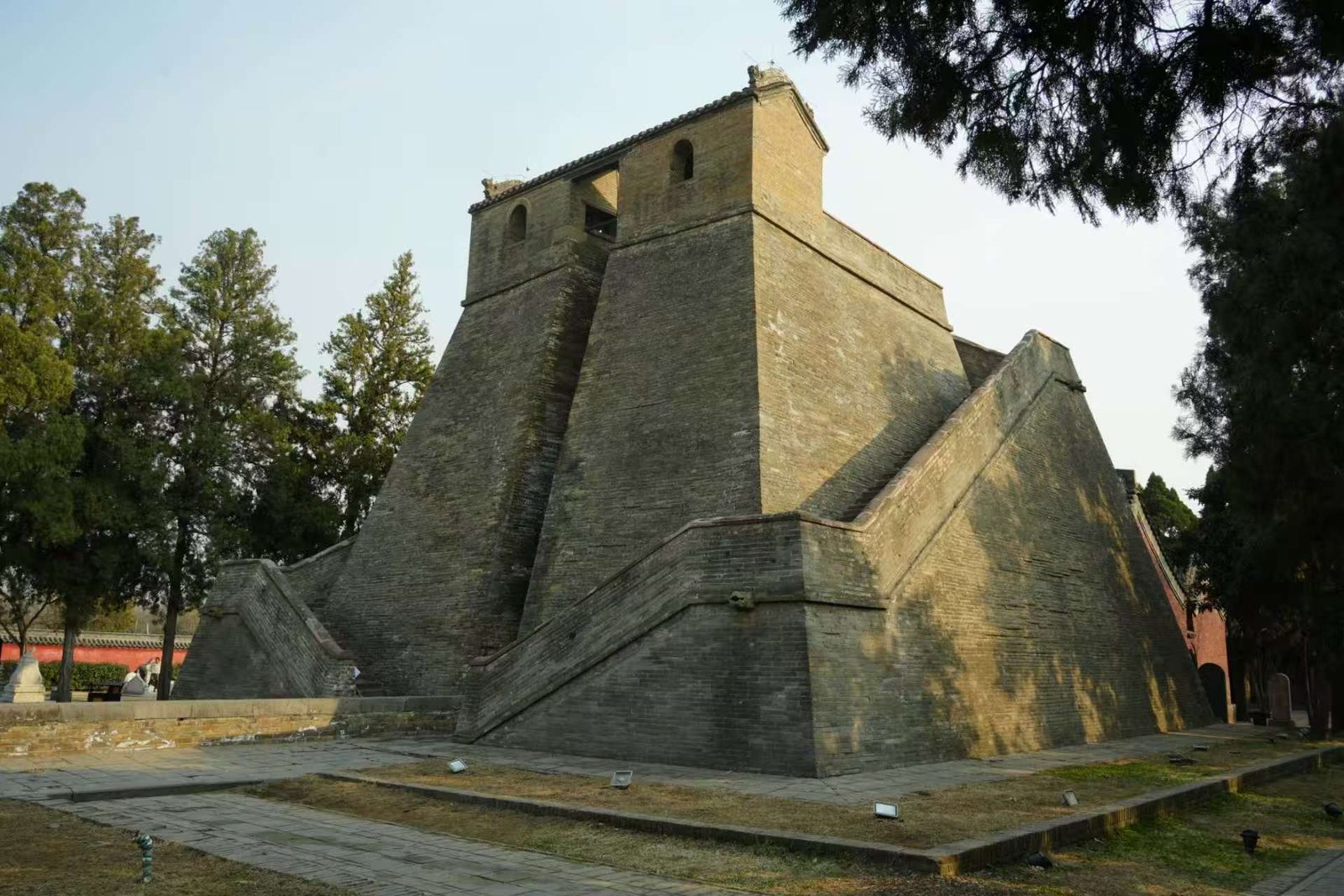
Gaocheng Observatory is described in the base source as the oldest surviving astronomical observation structure in China. In 1276 the Yuan-dynasty astronomer Guo Shoujing made this spot at Gaocheng the central station of a network of shadow measurements running ‘from the sea to the sky’, and from those readings compiled the Shou-shi calendar — one of the most precise calendars of its era, and a landmark in the history of science.
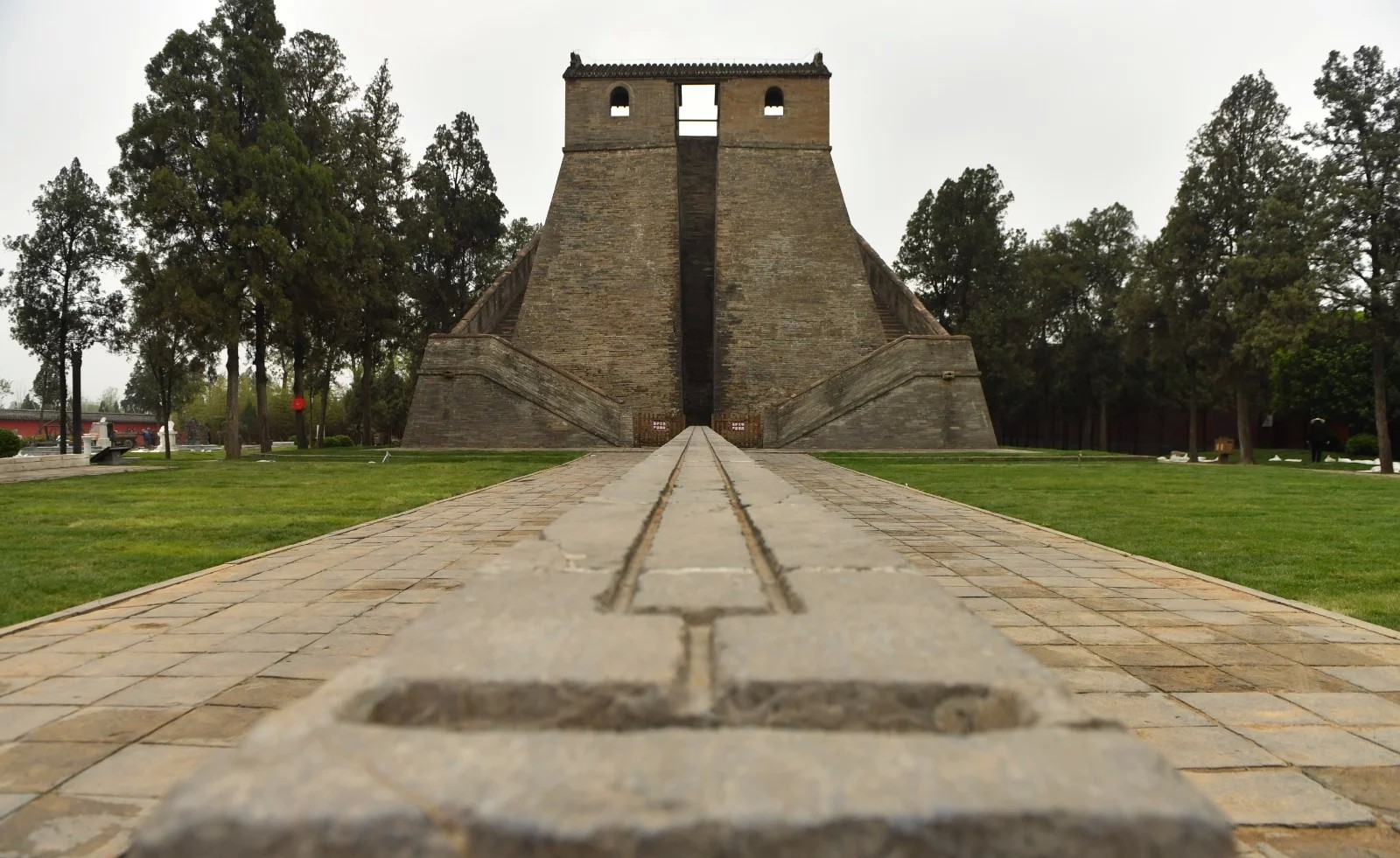
The site is a core component of the ‘Center of Heaven and Earth’ historical-buildings UNESCO World Heritage listing, whose theme is precisely this: Dengfeng was held to be the world’s navel, and measuring the sun’s shadow here was measuring the cosmos from its centre. It is also said to have inspired the crowned-pyramid silhouette of Zhengzhou’s Henan Museum main hall.
2. What to Spot: A Terrace, a Ruler, a Principle
🔭 The Observatory & Stone Gnomon
- The Story: A platform and a long stone ‘shadow-measuring’ ruler used to gauge the sun’s noon shadow and fix the solstices.
- What to Look For: The scale-scribed stone channel running from the terrace — the instrument’s real subject is a method, not ornament.
🧍 The Guo Shoujing Memorial
- The Story: Interpretation of the astronomer who rebuilt Chinese calendrical science from observations like these.
- What to Look For: Statuary and tablets honoring Guo; read them alongside the terrace to grasp why an unremarkable-looking platform is famous.
🏛️ The ‘Center of Heaven and Earth’ Idea
- The Story: The philosophical thread tying observatory, temples and academies into one UNESCO landscape.
- What to Look For: The sense that science and sacred geography shared one location — the point that makes this small site worth the detour.
3. Cultural Contrast: Science as Heritage
Western visitors often expect a heritage site to be beautiful; Gaocheng is instead significant, and that distinction is the whole experience. Stripped of context it is a compact brick terrace and a stone ruler — visually underwhelming. Understood as the instrument behind a world-leading medieval calendar, it becomes a shrine to how Chinese astronomers measured time and space.
That framing matters more here than anywhere else on the Dengfeng circuit because the on-site explanation is Chinese-first and the payoff is intellectual. The most rewarding line is to see the observatory, then return to Zhengzhou’s Henan Museum ancient-astronomy hall (with its replica and the Zhang Heng seismoscope) so the field and the museum echo each other — the best way to read early Chinese science as one connected story.
4. Practical Essentials: Tickets, Transit & Scam Alerts
Tickets & Passport Booking
- Price: Listed in the base source as free, but with an unresolved caveat about the Zhongyue combo ticket and no official published rate — so no amount is quoted; confirm at the window whether a ticket must be validated. Passport handy.
- Hours: Not independently verified; only inferred from the Songshan daytime window — check the day’s posted notice.
How to Get There
- Where it is: Gaocheng town, about 12 km southeast of Dengfeng’s centre and a genuine detour from Shaolin and Songyang Academy. It is not in the city sights ring — chain it with Zhongyue Temple as a Dengfeng day and reach it by taxi; search navigation for ‘Dengfeng Gaocheng Observatory’.
- Show Your Driver: 师傅,请带我到登封·告成镇·观星台,谢谢!
Inside Tips & Scam Alerts
- Mind the distance, not a scam — the risk is planning it as a city sight. Understand the shadow principle first, then it clicks. 30–60 minutes suffices; pair the visit with Henan Museum’s astronomy hall in Zhengzhou. Complaints / lost property: 12345, free from a local number.
Quick Answers
The 5 things visitors ask before setting out, answered from the same verified record used across this page.
- What are the opening hours at Gaocheng Observatory?
- Hours are not independently verified in any source (only inferred from the wider Songshan scenic-area daytime window) and there is no official posted timetable to rely on here — treat any listing as indicative and confirm the day's notice on arrival.
- Is Gaocheng Observatory wheelchair accessible?
- Not fully. The base source describes the level, paved courtyard as wheelchair-reachable — a genuinely flat small site; a threshold or two may need a hand, but it is among the easier Dengfeng sights for wheeled visitors.
- How do I tell a taxi driver to take me to Gaocheng Observatory?
- Copy this line into DiDi or show it to the driver: 师傅,请带我到登封·告成镇·观星台,谢谢!
- Can I leave my luggage at Gaocheng Observatory?
- A compact site with no left luggage; leave large bags at a Dengfeng or Zhengzhou hotel on a day trip.
- Is there anything to watch out for at Gaocheng Observatory?
- The one real trap is location, not a rip-off: the observatory sits in Gaocheng town, about 12 km southeast of Dengfeng's centre and a further detour from Shaolin and Songyang Academy. Don't drop it into a 'city sights' plan or assume it's next to the other Songshan spots — string it with Zhongyue Temple as a Dengfeng day and reach it by taxi. It is a small, quiet site; nobody will pressure you to buy, the risk is simply wasting a trip by misjudging the distance.
Where to go next
Three short lists, recomputed at build time from the same coordinates and categories as the pages themselves — no paid placement, no hand-picked names. Every card is a published guide.
Next stop in Zhengzhou
Straight-line distance from this spot, so you can judge what is walkable and what needs a taxi.


More like this, elsewhere in China
If historic district is what you came for, these are the closest equivalents you can reach in another city — ordered by distance, one city per card.


Change the subject
Deliberately a different category, for when one more temple or garden would blur into the last one.


Lists are derived from coordinates and category alone. Fix a wrong pin or re-tag a place and every list that mentions it moves with it.
Before you go · arrival essentials
Practical guides that pair with this kind of place — picked by category, not sponsored placement.
- Pay with Alipay & WeChat PayPayment · Set up Alipay or WeChat Pay on a foreign card — needed at almost every counter.
- Claim your tourist tax refundTax refund · Get 11% VAT back on what you buy here, at the airport on departure.
- Book China train tickets (12306)Trains · Buy high-speed rail tickets with a foreign passport, for getting here and back.