
Confucius Temple & Qinhuai Scenic Belt

The classic Qinhuai scam is the tea house: a 'free' tea ceremony that ends with a ¥300-800 bill. Accept nothing that is offered free. Boat touts on the bridge sell short loop rides as the full night cruise - buy at the official 秦淮河游船 window only.
Taxi & Street Navigation Help
师傅,请带我到夫子庙(秦淮河景区),谢谢!
Opening Hours & Best Time
Streets 24h. Ticketed halls roughly 09:00-21:30; the boat docks sell until about 22:00 in high season.
💡 Pro Tip: Come twice. Once at 09:00 when the halls are empty, and once after 19:30 when the lanterns come on and the boats run. Between those hours the street is shoulder-to-shoulder.
Accessibility & Luggage Lockers
Accessibility: ♿ Wheelchair & Stroller Friendly
The main pedestrian streets are flat and stone-paved, manageable with a stroller. Boats load across a moving gangway and are not wheelchair accessible. The examination museum has a lift.
🧳 Luggage Storage: No official storage. Several convenience shops near the metro exit hold bags for a fee - agree the price in writing.
Nearby Landmarks
The 2 places within reach of this spot — each one opens straight into Apple Maps or Amap, with the Chinese name you can show a driver.
Chinese names and pins are matched against each city's own map data at build time; a place only gets Directions once its pin has been verified, otherwise the button searches by name.
About Confucius Temple & Qinhuai Scenic Belt
1. Historical Origins: One Street, Two Institutions
The Qinhuai belt is a single kilometre of canal with two very different things built along it: the Confucius Temple on the north bank, and the Jiangnan Examination Hall on the south. One taught the doctrine, the other ran the entrance exam for the entire empire, and between them they made this the most examined piece of ground in China.
The temple was first founded in the Song dynasty and has been rebuilt repeatedly; the examination hall grew into the largest examination compound in the country, with rows of cells where candidates sat for days. The canal in front of them was, for centuries, the city’s pleasure district — the poets, the courtesans and the lantern boats all operated within sight of the exam cells.
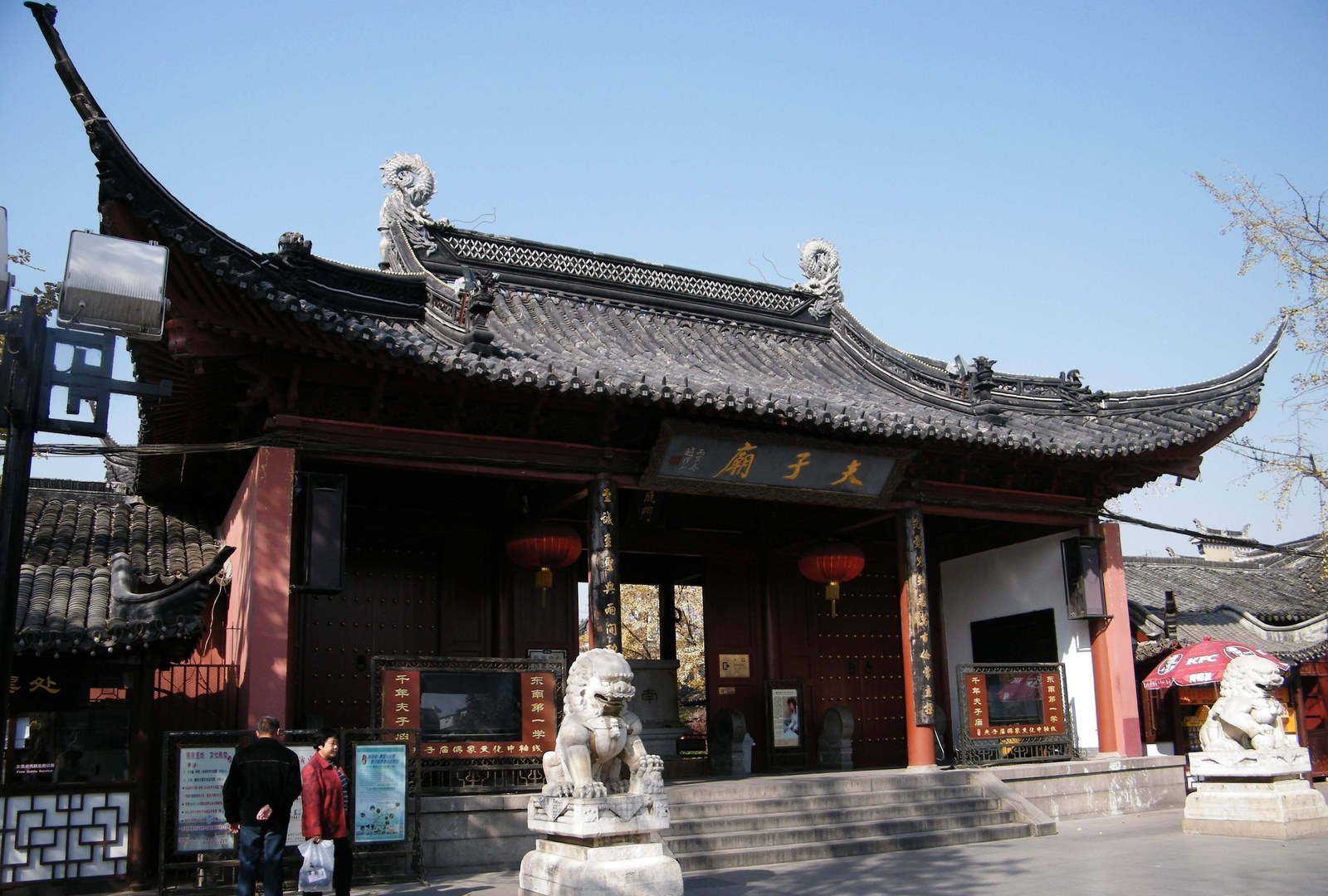
That juxtaposition is the story. Virtue and ambition on opposite banks, with a canal of entertainment in between.
2. What to Spot: Halls, Cells and a Lantern Canal
🏛️ The Temple and the Examination Hall
Dacheng Hall is the temple’s main building, with the standard courtyard in front and the stone balustrade around the pond. The examination hall is now a museum and it is the better visit: the cells are reconstructed at full size, and seeing how small a cubicle was makes the imperial examination system suddenly concrete.
- The Story: The exam was the only route into the bureaucracy, and it ran for days at a time. Candidates entered with food, a chamber pot and a board to write on, and did not come out until it was over.
- What to Look For: The cell dimensions. Everything about the system — the memorisation, the essays, the desperation — follows from how little space a candidate had.
🌉 Wuyi Lane and the Bridge
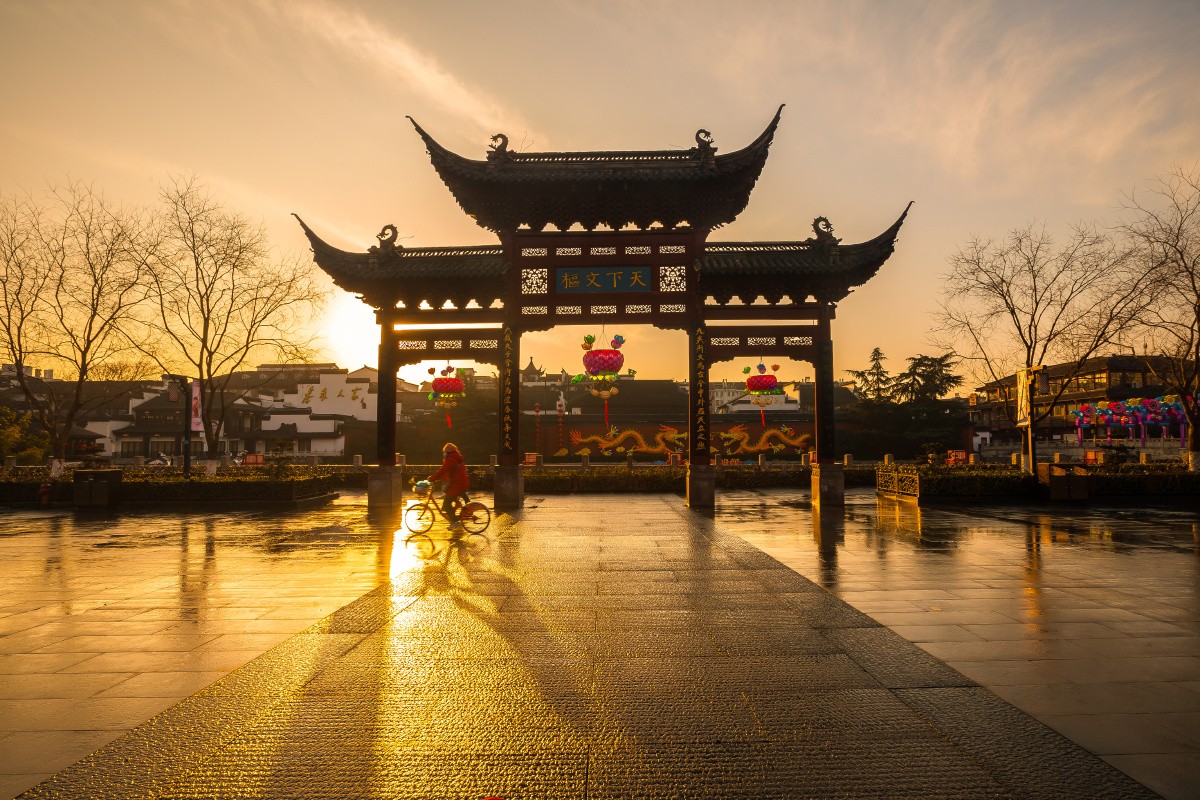
Wuyi Lane is the lane in the Tang poem everybody knows: the swallows that used to nest in the halls of the great families now fly into ordinary houses. It is a short alley with a reconstructed gateway, and the pleasure is recognising the poem rather than the architecture. Wende Bridge is where you stand for the view of the canal in both directions.
🏮 The Canal After Dark
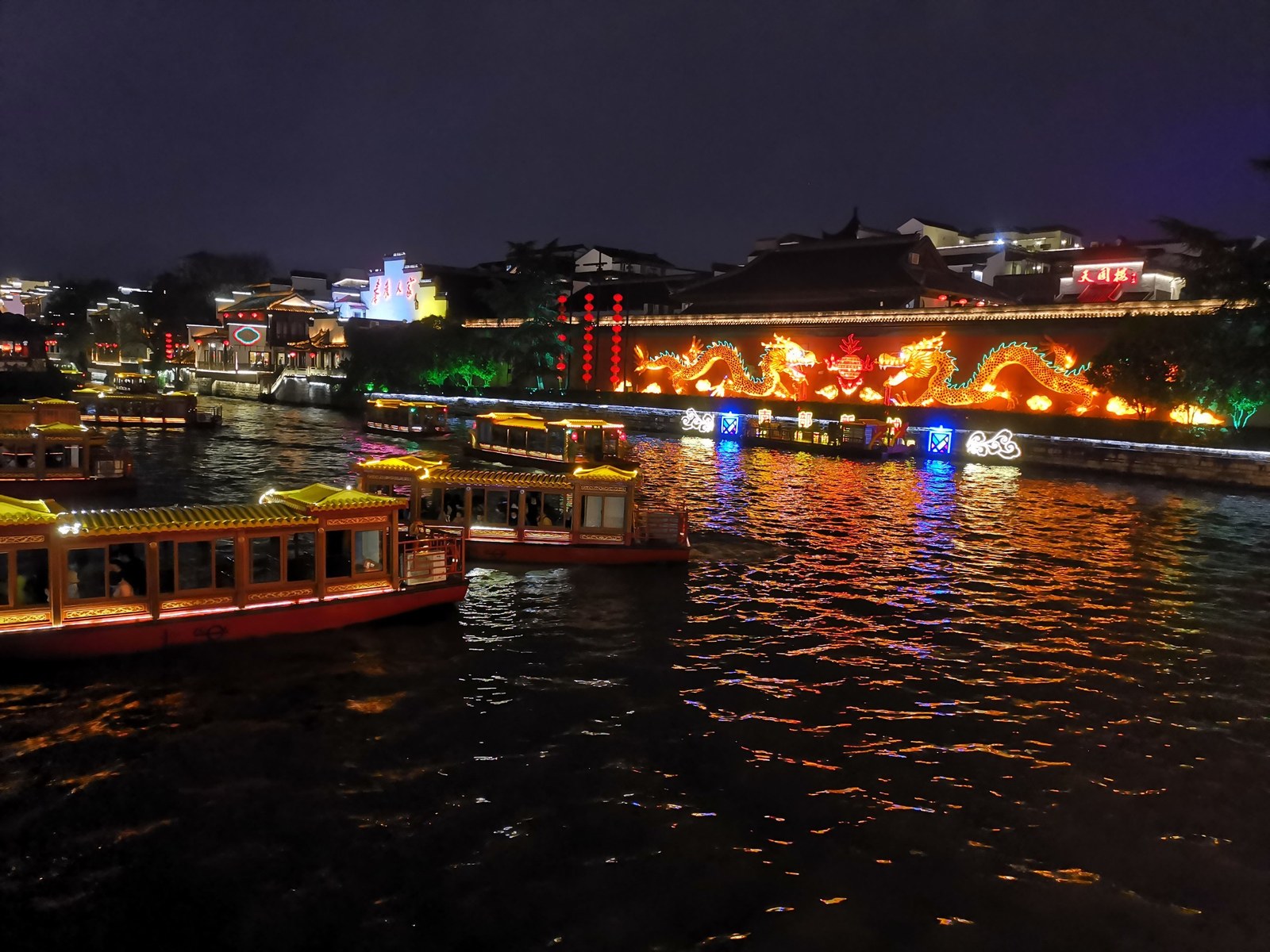
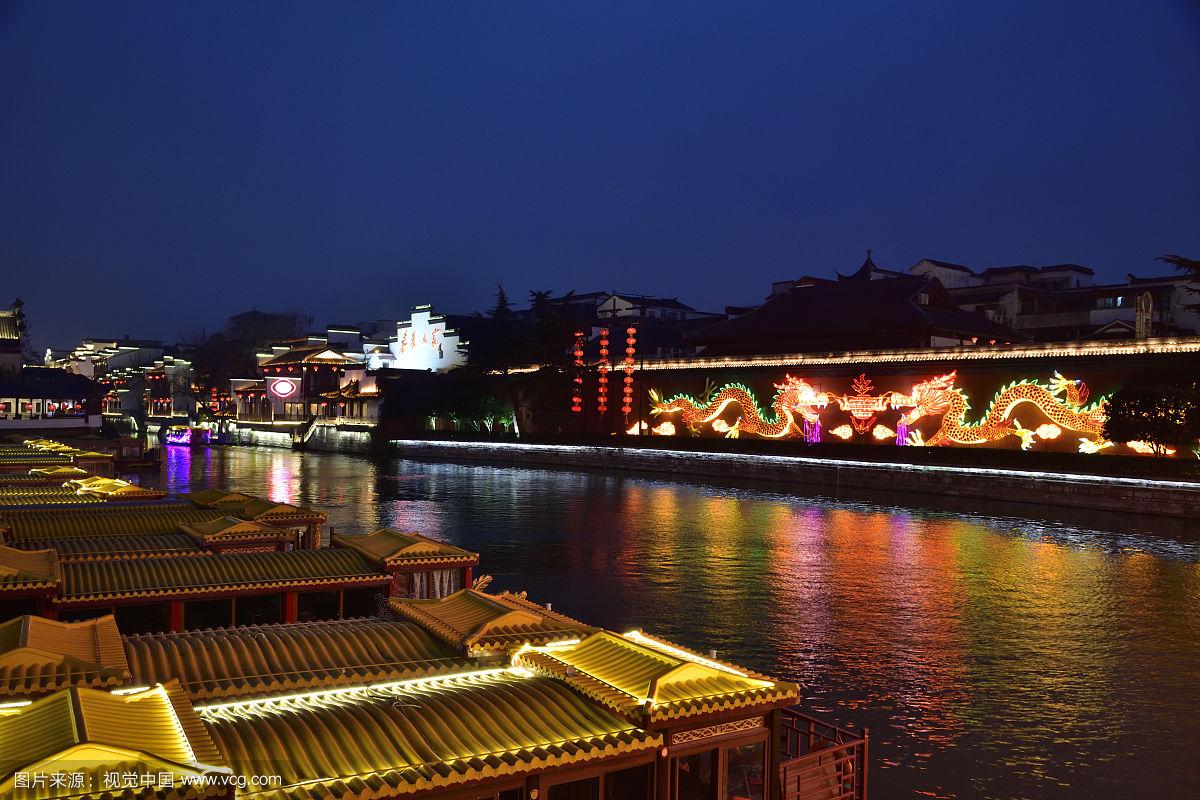
This is why people come. The boats run, the great screen wall on the far bank is lit, the reflections double the buildings, and the whole quarter turns into the picture that has been painted on fans for four hundred years. Two visits are better than one: the halls in the morning when they are empty, the canal after dark.
3. Cultural Contrast: A Red-Light District With a Curriculum
A European city keeps its university quarter and its nightlife district apart. Nanjing put them on opposite banks of the same canal and let them stare at each other for the better part of a millennium. The poetry that came out of this street is largely about that tension, and it is why the place feels like literature rather than heritage.
- The street grid is free and never closes. Only the halls and the boats are ticketed.
- It is a commercial district, not a preserved site. Rebuilt shopfronts, chain snacks, and a great deal of neon.
- The poem is the point at Wuyi Lane. Read it first or the alley is just an alley.
4. Practical Essentials: Tickets, Transit & Scam Alerts
Tickets & Passport Booking
- The streets are free and open all night. No ticket, no booking, no gate.
- The halls and the cruise are separate tickets — the examination museum, Dacheng Hall and the boats all sell individually, and no figures are quoted here because the rates and the day/night differentials change.
- Buy boat tickets at the official Qinhuai cruise window, not from anyone on the bridge.
- Evening cruise times are set locally; check the board at the dock or the official account on the day.
How to Get There
- Location: 152 Gongyuan Street (贡院街), Qinhuai District.
- Metro: Line 1 to Sanshan Street, or Line 3 to Fuzimiao — both are a short walk from the canal.
- Taxi: “师傅,去【夫子庙】(贡院街),谢谢!”
- On foot: Laomendong is about ten minutes south, which is how most people end the evening.
Inside Tips & Scam Alerts
- The tea ceremony is the classic trap here. A “free” tasting ends with a bill in the hundreds; accept nothing offered free on the street.
- Boat touts sell short loop rides as the full night cruise. Only the official window sells the real route.
- Ask the price before ordering snacks, especially on the busiest stretch of the food street.
- Lantern Festival week is managed with crowd controls. Expect one-way streets and no room to stop for photographs.
- The pedestrian streets are level and step-free; the boat docks have steps.
- Complaints or overcharging: call 12345. It is free from any local phone and has English-speaking operators.
Quick Answers
The 6 things visitors ask before setting out, answered from the same verified record used across this page.
- How much does it cost to visit Confucius Temple & Qinhuai Scenic Belt?
- Streets free; halls ¥30-50.
- What are the opening hours at Confucius Temple & Qinhuai Scenic Belt?
- Streets 24h. Ticketed halls roughly 09:00-21:30; the boat docks sell until about 22:00 in high season.
- Is Confucius Temple & Qinhuai Scenic Belt wheelchair accessible?
- Yes. The main pedestrian streets are flat and stone-paved, manageable with a stroller. Boats load across a moving gangway and are not wheelchair accessible. The examination museum has a lift.
- How do I tell a taxi driver to take me to Confucius Temple & Qinhuai Scenic Belt?
- Copy this line into DiDi or show it to the driver: 师傅,请带我到夫子庙(秦淮河景区),谢谢!
- Can I leave my luggage at Confucius Temple & Qinhuai Scenic Belt?
- No official storage. Several convenience shops near the metro exit hold bags for a fee - agree the price in writing.
- Is there anything to watch out for at Confucius Temple & Qinhuai Scenic Belt?
- The classic Qinhuai scam is the tea house: a 'free' tea ceremony that ends with a ¥300-800 bill. Accept nothing that is offered free. Boat touts on the bridge sell short loop rides as the full night cruise - buy at the official 秦淮河游船 window only.
Where to go next
Three short lists, recomputed at build time from the same coordinates and categories as the pages themselves — no paid placement, no hand-picked names. Every card is a published guide.
Next stop in Nanjing
Straight-line distance from this spot, so you can judge what is walkable and what needs a taxi.


More like this, elsewhere in China
If historic district is what you came for, these are the closest equivalents you can reach in another city — ordered by distance, one city per card.


Change the subject
Deliberately a different category, for when one more temple or garden would blur into the last one.


Lists are derived from coordinates and category alone. Fix a wrong pin or re-tag a place and every list that mentions it moves with it.
Before you go · arrival essentials
Practical guides that pair with this kind of place — picked by category, not sponsored placement.
- Pay with Alipay & WeChat PayPayment · Set up Alipay or WeChat Pay on a foreign card — needed at almost every counter.
- Claim your tourist tax refundTax refund · Get 11% VAT back on what you buy here, at the airport on departure.
- Book China train tickets (12306)Trains · Buy high-speed rail tickets with a foreign passport, for getting here and back.