
Hu Xueyan's Former Mansion

Taxi & Street Navigation Help
师傅,请带我到胡雪岩故居(元宝街18号),谢谢!
Opening Hours & Best Time
8:00 - 17:30 (Nov-Mar to 17:00)
💡 Pro Tip: The audio guide (free with deposit or ¥20) is genuinely excellent and covers the rags-to-riches-to-ruin story — take it. The mansion's carved wood is the finest in the city; the 'hundred-year-old nanmu' hall is the peak.
Accessibility & Luggage Lockers
Accessibility: ♿ Wheelchair & Stroller Friendly
Ground-floor circuit is step-free through most halls; the rockery garden stairs are not. A wheelchair route covers the main halls and the garden's lower level.
🧳 Luggage Storage: Lockers at the ticket office.
Nearby Landmarks & A Short Train Ride
The 4 places worth pairing with this spot — each one opens straight into Apple Maps or Amap, with the Chinese name you can show a driver. One pick sits in Shanghai (HSR ~48 min) — a short high-speed ride, not a walk. Hangzhou's own list came out one short of a pair, and this is the nearest pick that fills it.
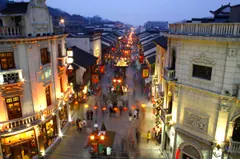 河坊街·清河坊Hefang StreetHistoric districtAbout a 15-min walk0.46 km600 m
 城隍阁Chenghuang PavilionHistoric districtAbout a 15-min walk0.84 km700 m

Chinese names and pins are matched against each city's own map data at build time; a place only gets Directions once its pin has been verified, otherwise the button searches by name. Cards with an amber city tag are in another city — the ride time shown is the fastest train of the day.
About Hu Xueyan's Former Mansion
1. Historical Origins: The Richest Man in China, and 1883
Hu Xueyan was the most conspicuous businessman of the late Qing: a banker who financed the government’s military campaigns, held an official rank, and ran a pharmaceutical chain that still exists under his name. In the 1870s he built this mansion — a walled compound of some ten thousand square metres behind an unremarkable street front, which was itself a statement about how wealth and power worked in the late empire.
In 1883 his fortune collapsed. A squeeze on silk prices, overreach in his banking operations and the withdrawal of official favour wiped him out within months; he died the following year. The house survived him because it was too large for anyone to ignore and too well built to fall down.
So the mansion is a document with an ending. The luxury you walk through — the bronze-wrapped columns, the carved timber, the rockery garden — is the evidence, and the bankruptcy is the moral the site deliberately lets you draw yourself.

2. What to Spot: The Bronze Hall, the Carved Wood, the Rockery
🏛️ The Bronze-Clad Hall
- The Story: The main reception hall is supported by columns clad in bronze — eight tonnes of it — a material choice with no practical justification beyond the ability to pay for it.
- What to Look For: The surface of the columns, worn smooth where generations of hands have touched them. Nobody was allowed to be a merchant and modest about it.
🪵 The Carved Wood
- The Story: The finest joinery and carving in Hangzhou, packed into door panels, screens, balustrades and the nanmu hall behind the main courtyard.
- What to Look For: The nanmu timber itself — dense, dark, and so slow-growing that the frame of one hall represents several centuries of forest. Look up; most visitors only look at the furniture.
⛰️ Feiyun Peak
- The Story: The rear garden’s artificial mountain, one of the largest indoor rockeries in China, built from Taihu limestone.
- What to Look For: Do not turn back at the main hall. The rockery, its caves and the zigzag paths through it are the finale, and a large share of visitors never reach them.


3. Cultural Contrast: A House Built to Be Seen
Chinese visitors come for the story as much as the building — the rise, the arrogance, the collapse — and it is told as a lesson about the relationship between merchants and official power in the late Qing. There is an undercurrent of satisfaction in the telling: the man who clad his columns in bronze went bankrupt two years later.
Foreign visitors come for the interiors, and they are genuinely superb. The audio guide is the difference between walking through expensive rooms and understanding a business model: take it, and take it at the start rather than at the end. The women’s quarters and their concealed passages are the part that surprises people most — a merchant’s household run like a defended compound.
An hour is enough for the house; two if you use the guide properly. It sits ten minutes from Hefang Street, which makes it the natural pairing on the same afternoon.

4. Practical Essentials: Tickets, Transit & Scam Alerts
Tickets & Passport Booking
- Price: ¥20. Buy at the gate or on WeChat; weekday walk-ins are usually fine.
- How to Book: An English audio guide is available at the entrance for about ¥20 with a passport deposit. Hours run 8:00-17:30, closing at 17:00 from November to March.
How to Get There
- By Metro: Line 5 to Jiangcheng Road Station, then 800 metres on foot. From Hefang Street it is a ten-minute walk east. Staff at the gate will watch bags.
- Show Your Driver: 师傅,请带我到胡雪岩故居,元宝街18号。谢谢!
Inside Tips & Scam Alerts
- Do not buy a “photo permit” at the door. Photography inside is free; anyone selling permission is selling nothing.
- Walk to the very back. The rockery garden is the best part and the easiest thing to miss.
- Take the audio guide. Without the story, the building is expensive wood and bronze.
- It is indoor, so weather does not matter — and weekday afternoons are close to empty.
- Complaints: the national 12345 hotline is free to call from any local phone.
Quick Answers
The 6 things visitors ask before setting out, answered from the same verified record used across this page.
- How much does it cost to visit Hu Xueyan's Former Mansion?
- ¥20.
- What are the opening hours at Hu Xueyan's Former Mansion?
- 8:00 - 17:30 (Nov-Mar to 17:00).
- Is Hu Xueyan's Former Mansion wheelchair accessible?
- Yes. Ground-floor circuit is step-free through most halls; the rockery garden stairs are not. A wheelchair route covers the main halls and the garden's lower level.
- How do I tell a taxi driver to take me to Hu Xueyan's Former Mansion?
- Copy this line into DiDi or show it to the driver: 师傅,请带我到胡雪岩故居(元宝街18号),谢谢!
- Can I leave my luggage at Hu Xueyan's Former Mansion?
- Lockers at the ticket office.
- Will English work at Hu Xueyan's Former Mansion?
- Yes — staff used to foreign visitors handle English, and the site scores 4/5 on our foreign-friendliness scale.
Where to go next
Three short lists, recomputed at build time from the same coordinates and categories as the pages themselves — no paid placement, no hand-picked names. Every card is a published guide.
Next stop in Hangzhou
Straight-line distance from this spot, so you can judge what is walkable and what needs a taxi.


More like this, elsewhere in China
If historic district is what you came for, these are the closest equivalents you can reach in another city — ordered by distance, one city per card.


Change the subject
Deliberately a different category, for when one more temple or garden would blur into the last one.


Lists are derived from coordinates and category alone. Fix a wrong pin or re-tag a place and every list that mentions it moves with it.
Before you go · arrival essentials
Practical guides that pair with this kind of place — picked by category, not sponsored placement.
- Pay with Alipay & WeChat PayPayment · Set up Alipay or WeChat Pay on a foreign card — needed at almost every counter.
- Claim your tourist tax refundTax refund · Get 11% VAT back on what you buy here, at the airport on departure.
- Book China train tickets (12306)Trains · Buy high-speed rail tickets with a foreign passport, for getting here and back.