
Three Gorges Museum

Taxi & Street Navigation Help
师傅,请带我到三峡博物馆(人民广场旁),我已预约。谢谢!
Opening Hours & Best Time
09:00 - 17:00 (last entry 16:00); closed Mondays
💡 Pro Tip: Book the free WeChat reservation (search 三峡博物馆) the day before; bring your passport for entry. The two headline halls are the Ba-Mann bronze archaeology and the Three Gorges dam relocation exhibit — if short on time, do those two and the folk customs floor, skip the calligraphy.
Accessibility & Luggage Lockers
Accessibility: ♿ Wheelchair & Stroller Friendly
Fully accessible: ramps, elevators to all floors, wheelchair loans at the entrance.
🧳 Luggage Storage: Free lockers (passport required).
Nearby Landmarks & A Short Train Ride
The 4 places worth pairing with this spot — each one opens straight into Apple Maps or Amap, with the Chinese name you can show a driver. One pick sits in Chengdu (HSR ~1 h 2 min) — a short high-speed ride, not a walk. Chongqing's own list came out one short of a pair, and this is the nearest pick that fills it.
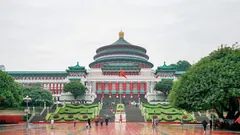 人民大礼堂People's Assembly HallLandmarkAbout a 15-min walk0.27 kmfacing the museum across the square

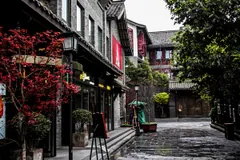
Chinese names and pins are matched against each city's own map data at build time; a place only gets Directions once its pin has been verified, otherwise the button searches by name. Cards with an amber city tag are in another city — the ride time shown is the fastest train of the day.
About Three Gorges Museum
1. Historical Origins: A Museum Built for a Dam
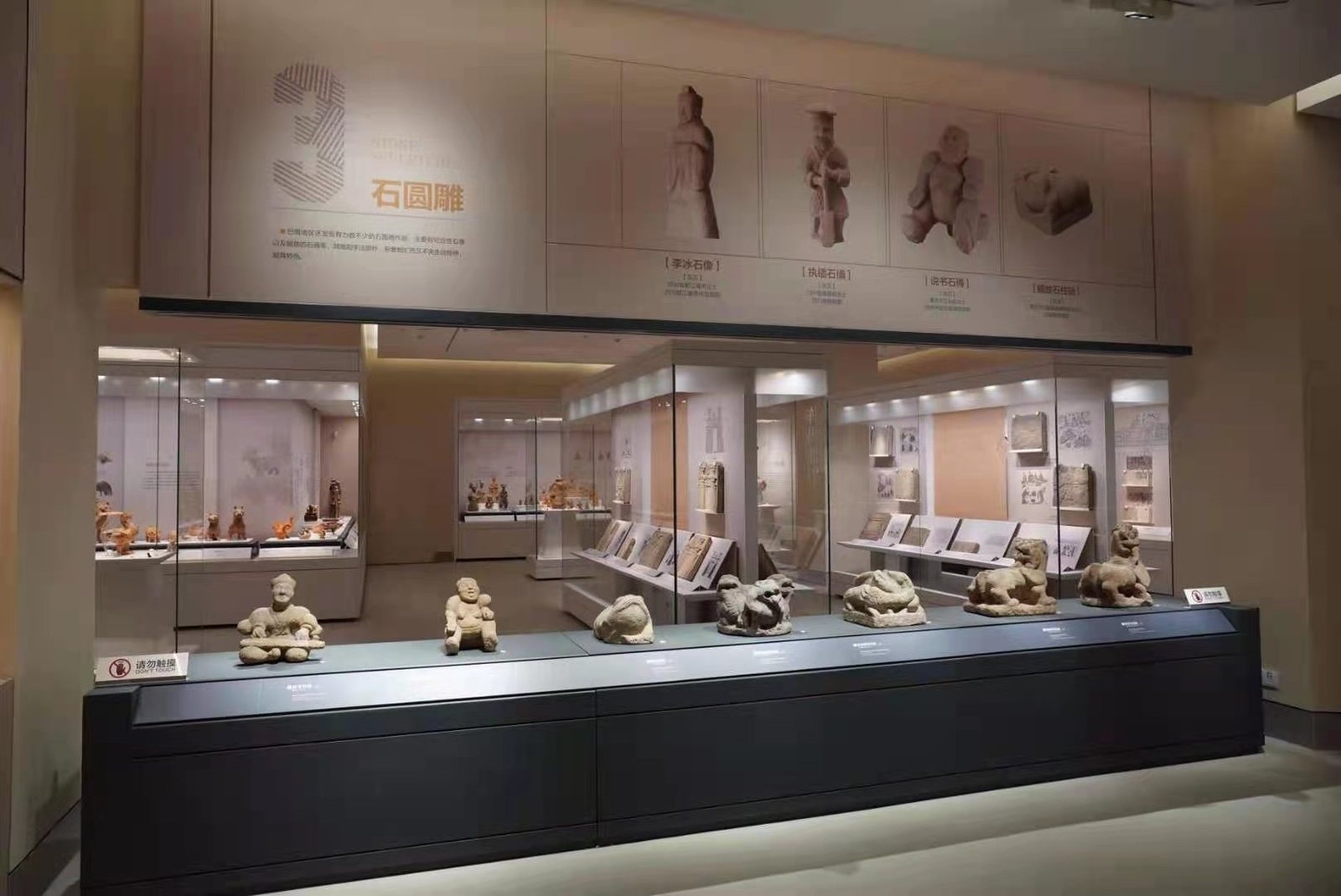
The strangest thing about this museum is why it exists. When the Three Gorges Dam was built, an entire stretch of the Yangtze valley was going under water, and the state required that what could be salvaged be excavated, recorded and moved first. Whole towns, temples, tombs and thousands of objects were documented before the reservoir filled, and this building was constructed to hold the result — it opened alongside the civic axis at Renmin Square, facing the People’s Assembly Hall across the plaza.
That origin explains the shape of the collection. It is not a general antiquities museum with a regional wing; it is an archaeological emergency response that turned into a museum. The relocated-heritage material and the survey work from the reservoir zone are the reason it exists, and they are the strongest part of it.
The building itself is on the monumental scale that 2000s Chinese museums favoured: a great stone mass with a glass atrium, the sort of place designed to be understood from across a square. Inside, it is a straightforward chronological walk from the Bronze Age kingdoms of the Sichuan basin up to the twentieth century.
2. What to Spot: Bronze, Relocation, the War Years
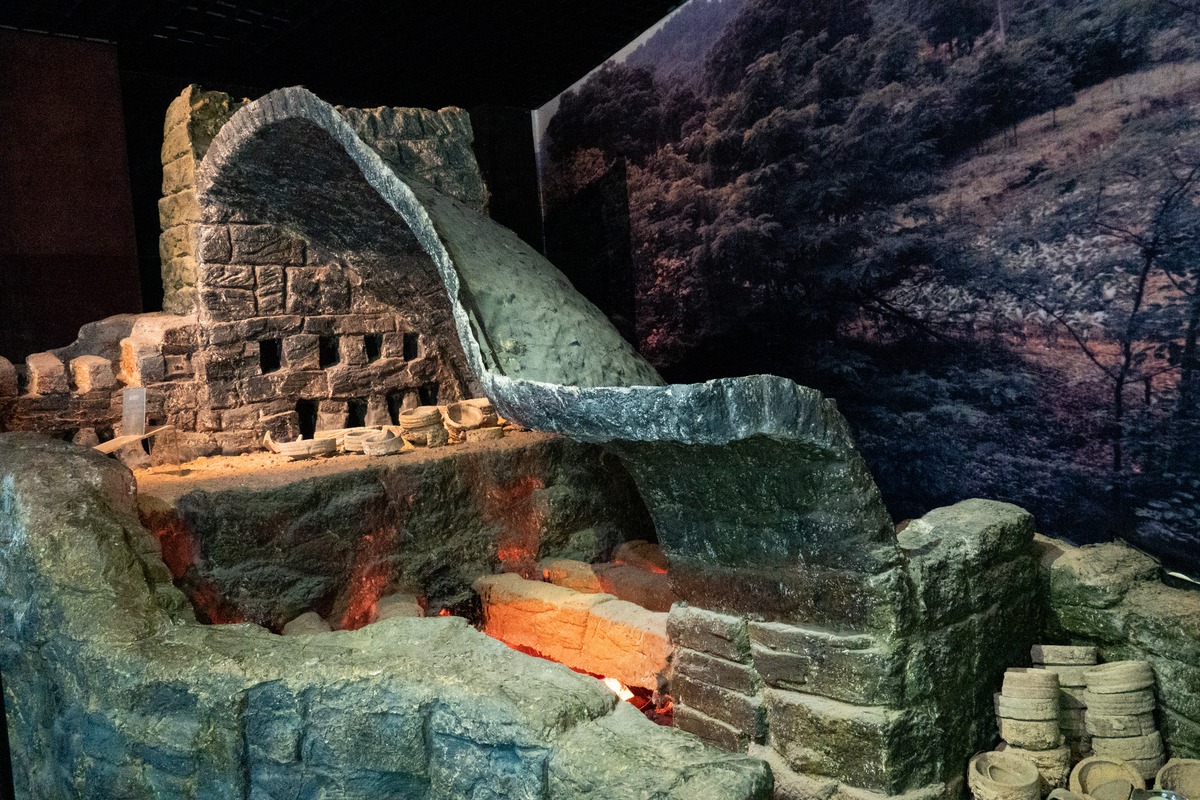
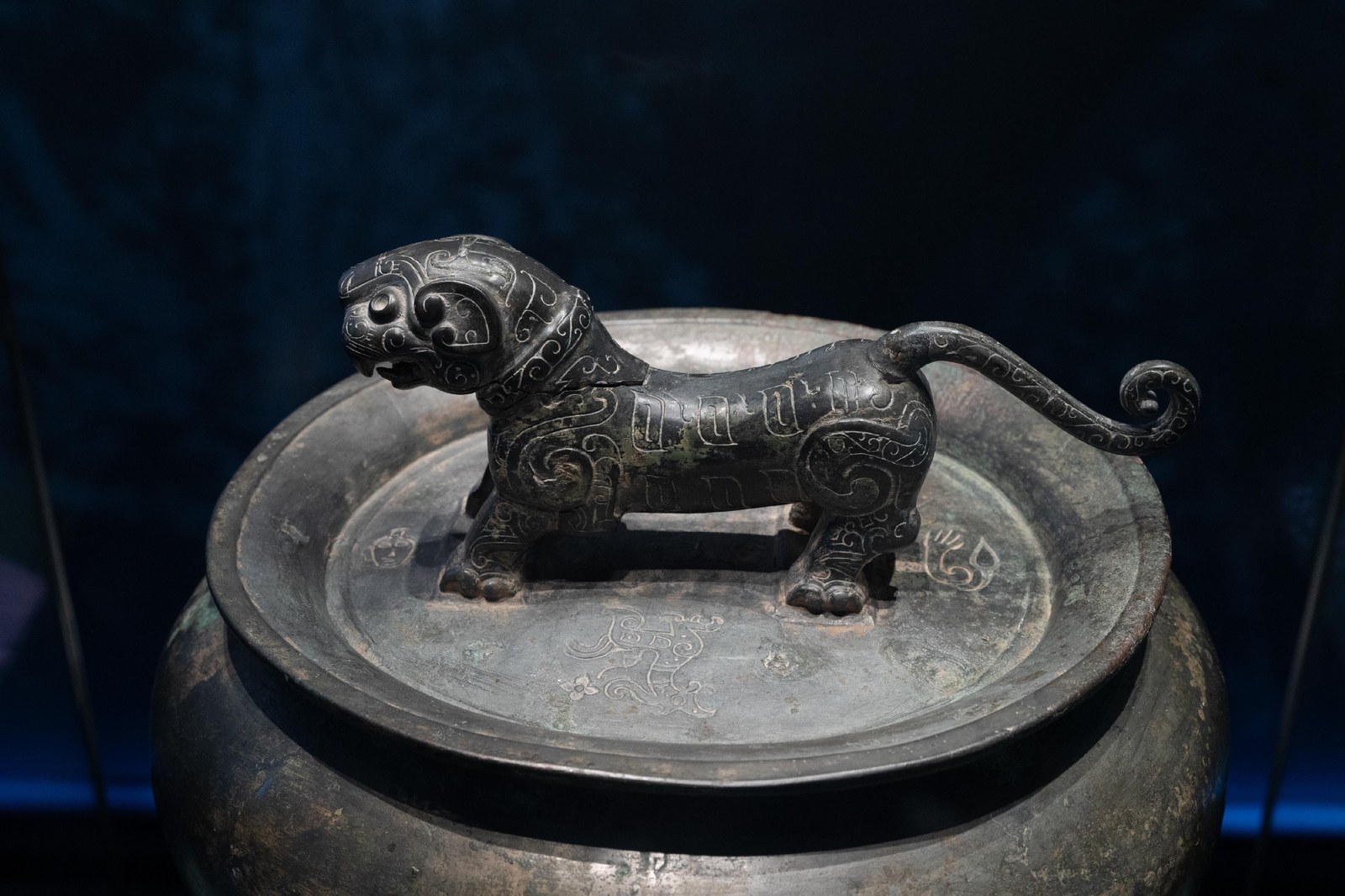
🏺 The Ba Bronzes
- The Story: The Sichuan basin had its own Bronze Age kingdoms, and their material culture — weapons with distinctive blade forms, vessels with local decorative schemes — is not a copy of the central plains tradition.
- What to Look For: The weapons. Ba and Shu bronze blades carry inscriptions and patterns that look unlike anything from the Yellow River civilisations.
🌊 The Relocation Hall
- The Story: The core exhibit: what was moved, what was recorded by photograph and drawing, and what is now under water. Models, maps and rescued objects arranged around the reservoir.
- What to Look For: The photographs. The images of towns being measured before inundation are the most affecting thing in the building.
🏮 The Folk Customs Floor
- The Story: Everyday life in the region: craft, dress, festival, household objects — the material culture of the people who were relocated rather than of the courts that ruled them.
- What to Look For: The contrast of scale with the archaeology below. This floor is about rooms, not kingdoms.
🕯️ The War Years
- The Story: Chongqing spent the war as the wartime capital, and was bombed heavily for it. The museum’s twentieth-century galleries cover the period, including the city’s civil-defence history.
- What to Look For: Read this before you go to Jiefangbei. The monument there will make considerably more sense afterwards.
3. Cultural Contrast: The Free Museum That Explains the Paid Ones
Most visitors arrive in Chongqing, look at a cliff of shops, a bridge and a monument, and leave without ever finding out why the city is where it is. This museum answers that in two hours, for nothing, and it is the single highest-value stop on any itinerary in the city.
The comparison is with the Hu Guang Guild Hall down the road, which tells the migration story intimately and charges for it. The museum tells the same story at regional scale and charges nothing. If you can only do one, do this one; if you do both, do this one first.
The honest caveat is that the displays are Chinese-first. English labelling exists in the main galleries but is thinner in the temporary spaces, and the object labels are brief. Even so — for a traveller who wants the context rather than the spectacle, this is where the context is.
4. Practical Essentials: Tickets & Passport Booking
Tickets & Passport Booking
- Price: Free, but not walk-in. Admission is by real-name reservation through the museum’s official WeChat account, or at the door with your passport. There is no charge either way.
- Opening Hours: Daytime, with last entry an hour or so before closing. Closed on Mondays — confirm the current times and any holiday variations on the museum’s official account, since openings shift for maintenance and public holidays.
- What to bring: Your passport, and a bag small enough to carry. Large backpacks have to go into the cloakroom.
- Extras: There is a separate-fee panoramic cinema inside. Most visitors can skip it without missing anything.
How to Get There
- By Metro: Line 2 to Zengjiayan (曾家岩), then about five minutes on foot across Renmin Square.
- Pair it with the Assembly Hall: They face each other across the square, so one metro ride covers both.
- Show Your Driver: 师傅,去三峡博物馆(人民路、人民广场旁),谢谢!
Inside Tips & Scam Alerts
- Free does not mean unreserved. In peak season and on public holidays the daily quota fills; book the day before rather than turning up at eleven and hoping.
- Monday is the trap. If your only free day is a Monday, the Eling creative park and the Hongyan memorial area stay open and make reasonable substitutes.
- Do the twentieth-century galleries before Jiefangbei. The order matters more than it sounds; the war years explain half the city’s civic furniture.
- Two floors is enough for most people. Bronze archaeology and the relocation exhibit, plus the folk customs floor. The calligraphy galleries are excellent and skippable if you are short of time.
- Complaints or overcharging: the 12345 hotline is free from any local phone and has English-speaking operators.
Quick Answers
The 6 things visitors ask before setting out, answered from the same verified record used across this page.
- How much does it cost to visit Three Gorges Museum?
- FREE (WeChat reservation required).
- What are the opening hours at Three Gorges Museum?
- 09:00 - 17:00 (last entry 16:00); closed Mondays.
- Is Three Gorges Museum wheelchair accessible?
- Yes. Fully accessible: ramps, elevators to all floors, wheelchair loans at the entrance.
- How do I tell a taxi driver to take me to Three Gorges Museum?
- Copy this line into DiDi or show it to the driver: 师傅,请带我到三峡博物馆(人民广场旁),我已预约。谢谢!
- Can I leave my luggage at Three Gorges Museum?
- Free lockers (passport required).
- Will English work at Three Gorges Museum?
- Yes — staff used to foreign visitors handle English, and the site scores 4/5 on our foreign-friendliness scale.
Where to go next
Three short lists, recomputed at build time from the same coordinates and categories as the pages themselves — no paid placement, no hand-picked names. Every card is a published guide.
Next stop in Chongqing
Straight-line distance from this spot, so you can judge what is walkable and what needs a taxi.


More like this, elsewhere in China
If museum is what you came for, these are the closest equivalents you can reach in another city — ordered by distance, one city per card.


Change the subject
Deliberately a different category, for when one more temple or garden would blur into the last one.


Lists are derived from coordinates and category alone. Fix a wrong pin or re-tag a place and every list that mentions it moves with it.
Before you go · arrival essentials
Practical guides that pair with this kind of place — picked by category, not sponsored placement.
- Pay with Alipay & WeChat PayPayment · Set up Alipay or WeChat Pay on a foreign card — needed at almost every counter.
- Get online with a China eSIMConnectivity · Maps and messaging that work without a VPN, the moment you land.
- Book China train tickets (12306)Trains · Buy high-speed rail tickets with a foreign passport, for getting here and back.