
Wuxia in China: Real Places Behind the Films & Legends
Most people who search for “wuxia” want novels, films or games. This page is for the other question: where does that world actually come from? Below are the real temples and mountains the genre borrows from, what you can see at each, and how they connect by train.
What wuxia actually means
Wuxia (武侠) literally means “martial hero”. It is not a place, a religion or a tourism board category — it is a fiction genre. Its characters live in the jianghu (江湖), a parallel society of wandering fighters, sect rivalries, sworn brotherhoods and a code of honour that sits outside the law.
The genre reached Western audiences through Crouching Tiger, Hidden Dragon, and later through film and game adaptations that borrowed the same landscapes: misted karst peaks, cliff-side temples, bamboo forests and mountain gates. That is why “wuxia” and “China mountains” keep appearing in the same searches.
Wuxia vs xianxia — the distinction that matters
Wuxia stays human. Swords, fists, internal energy, sect politics. Xianxia (仙侠) adds cultivation and immortality: people fly on swords, live for centuries and become gods. If you are looking for historical martial arts and real places, you want wuxia. If you are looking for costume-drama fantasy, you want xianxia.
The real places behind wuxia
Four regions carry almost the whole geographic imagination of the genre. None of them is a theme park; all of them are working religious sites.
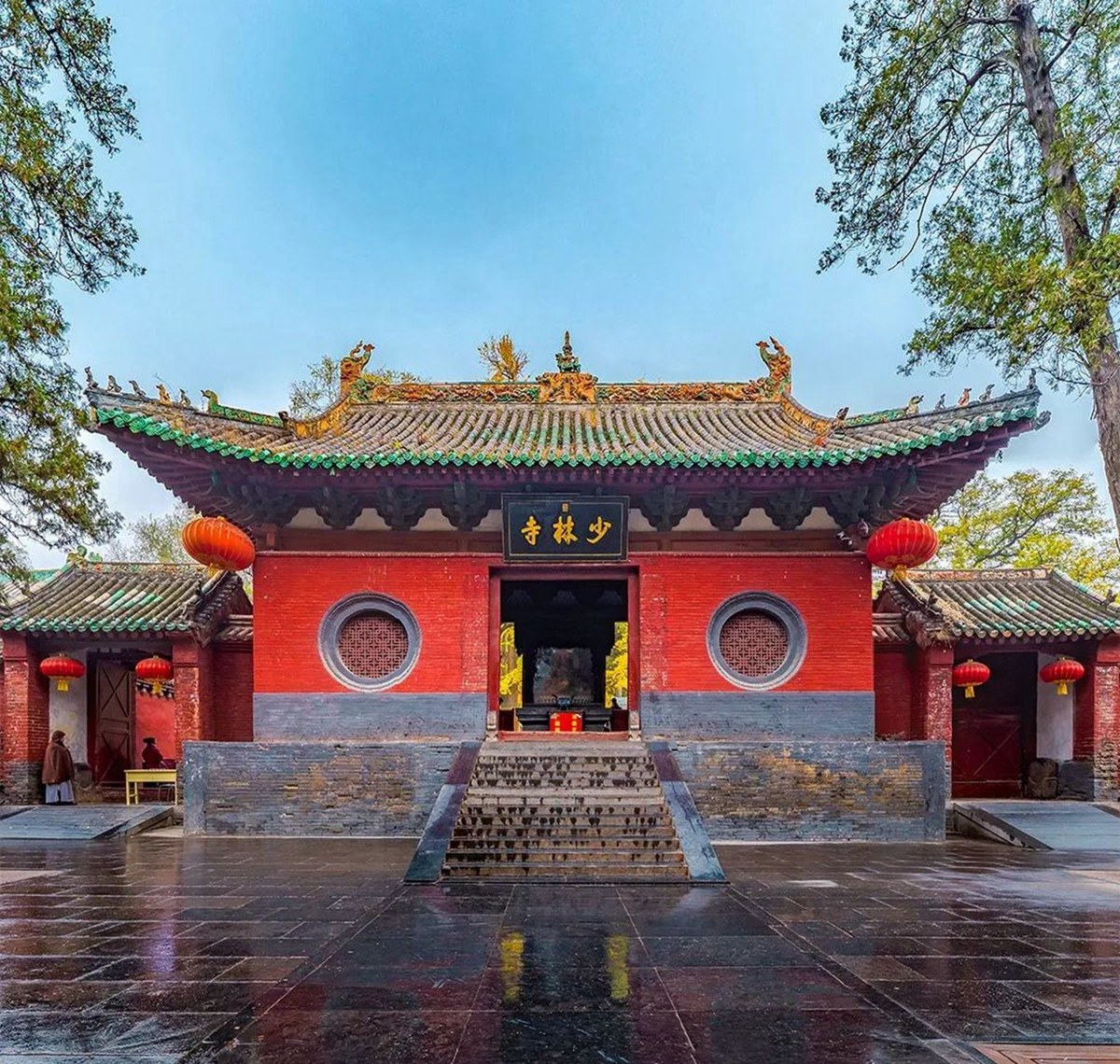
Shaolin Temple, Henan
External school (外家)The ancestral temple of Chan Buddhism and the most famous name in wuxia after the films. What you get is a working temple, a UNESCO-listed complex and a warrior-monk demonstration — not a film set. The Pagoda Forest is the quietest, most rewarding part.
Getting there: In Dengfeng, under Zhengzhou — not Luoyang, despite what many foreign sites say. No high-speed rail to the gate: bus or private car about 1h20 from Zhengzhou.
Practical visitor page →Mount Wudang, Hubei
Internal school (内家) — Tai ChiThe mountain where Tai Chi is traced and where the “internal” half of the wuxia imagination lives: bronze halls on cliff faces, Taoist courtyards, and practitioners running sword forms in the early morning. Crouching Tiger, Hidden Dragon borrowed this landscape.
Getting there: The fastest approach is Luoyang Longmen to Wudangshan West on a direct high-speed train, about 2h10 — no need to detour through Zhengzhou or Wuhan. The mountain is a full day, more if you walk between palaces.
Foshan Ancestral Temple, Guangdong
Southern boxing — Wing Chun & Hung GarThe southern branch of the genre: Ip Man, Wong Fei-hung and the Wing Chun lineage that reached the West through film. The temple is a working shrine first and a martial-arts museum second, with lion dance performances and halls full of children taking class on weekends.
Getting there: About 20–30 minutes from central Guangzhou by metro and taxi. Time the visit around the lion dance, then walk the Wing Chun and Wong Fei-hung halls.
Practical visitor page →Mount Emei & Mount Qingcheng, Sichuan
The other two great schoolsThe two Sichuan mountains that complete the classical sect map: Emei for Buddhism, Qingcheng for Taoism. Both are UNESCO-listed, both are steep, and both appear constantly in wuxia fiction as training grounds.
Getting there: Emei is reached by high-speed rail from Chengdu in about 1h30; Qingcheng is about 1h by rail plus a short bus. Neither has a staged martial-arts show — the draw is the landscape and the working monasteries. The practical Emei page covers the Golden Summit and the buses; Qingcheng has its own <a href="/chengdu/attractions/chengdu-qingcheng-mountain/" class="text-blue-600 underline">Taoist mountain page</a>.
Practical visitor page →Where you can actually watch martial arts
- Shaolin warrior-monk demonstration — inside the Shaolin scenic area in Dengfeng. It is included with the scenic-area ticket, but the showtimes are not fixed to publish; photograph the timetable at the gate and build the day around it.
- Zen Shaolin Music Ceremony — an evening performance staged against Songshan, with warrior-monk martial arts woven into a Zen narrative. Almost no language barrier, which makes it the easiest option for a first visit.
- Foshan Ancestral Temple — lion dance performances plus the Wing Chun and Wong Fei-hung halls. This is the southern-school counterpart and the most compact visit of the four.
- Mount Wudang — Taoist practice at Zixiao Palace, usually early morning. This is not a staged show: keep your distance, do not film inside halls, and treat it as a working religious site.
Can you train, not just watch?
Short courses exist near Shaolin and at Wudang, ranging from a single morning to several weeks. Two rules keep this from becoming a scam story. First, arrange directly with a school or the scenic area — not with someone who approaches you at the gate. Second, agree the total price in writing before you start, including uniform, room and “graduation certificate” extras.
The touts outside Shaolin selling “master classes” are selling a photo opportunity, not training. The temple's own martial-arts hall is inside the paid scenic area and its displays are the real thing.
How the places connect
The classic compact route is Zhengzhou → Dengfeng (Shaolin) → Luoyang → Mount Wudang → Wuhan. The two transport facts that matter: there is no high-speed rail to Shaolin, so Dengfeng is a 1h20 bus or private car from Zhengzhou; and Luoyang Longmen to Wudangshan West is a direct high-speed train of about 2h10, with no detour through Zhengzhou or Wuhan.
Add Luoyang's Longmen Grottoes and the old city before Wudang, and the whole loop fits into ten days without rushing. We have written the full day-by-day version as a 10-day Shaolin and Wudang route. Foshan and the Sichuan mountains are separate southern and western add-ons, not part of this loop.
FAQ
Is wuxia a real place in China? +
No. Wuxia (武侠) is a fiction genre — literally “martial hero” — built around the jianghu, a imagined world of wandering fighters, sect rivalries and moral codes. The places on this page are real temples and mountains that the genre borrows from.
What is the difference between wuxia and xianxia? +
Wuxia stays human: swords, fists, sect politics and a code of honour. Xianxia (仙侠) adds cultivation and immortality — people flying on swords and becoming gods. If you want historical martial arts and real landscapes, you want wuxia.
Where can I actually see kung fu in China? +
Three reliable options for foreign visitors: the warrior-monk demonstration inside the Shaolin scenic area in Henan, the lion dance and Wing Chun halls at Foshan Ancestral Temple in Guangdong, and ordinary Taoist practice at Mount Wudang in Hubei — the last is not a staged show, so watch quietly and do not film inside halls.
Can I train in kung fu on a short trip? +
Short courses exist near Shaolin and at Wudang, but quality varies and “master class” touts outside temple gates are a known upsell. Arrange directly with a school or the scenic area, agree the total price in writing, and treat anything sold on the pavement as entertainment rather than training.
Do I need to speak Chinese to visit these places? +
No, but the further you go from the entrance, the less English you will find. Mount Wudang in particular has almost no English signage on the mountain. Carry the Chinese place name on your phone and use the taxi-card phrases on each attraction page.
Practical pages for these places
Tickets, opening hours and transport for the sites that anchor the wuxia map.