
Yulong River

The fare is per *section* and per *raft*, so a vague 'the river' price means nothing until you're told which stretch and how many ride together — confirm segment and headcount before paying. Small weirs on the route involve a brief lift over the drop; anyone presenting that as dangerous (or as a reason for a private 'safe' boat) is overselling. Book at an official wharf, not from a roadside tout.
Taxi & Street Navigation Help
师傅,请带我到遇龙河·朝阳码头(竹筏漂流),谢谢!
Opening Hours & Best Time
Rafting runs in daylight hours set by the operators and water level; there is no single fixed timetable to reserve against — check the day's operating notice, as levels can pause service.
💡 Pro Tip: The Yulong is the calmer, greener little sister to the Li — poler-driven bamboo rafts, water buffalo, rice paddies and low karst, no engines. You don't need the whole thing: pick one scenic stretch (Chaoyang Wharf to Gongnong Bridge is the popular 'highlight' segment), raft it, and reach the different put-in/take-out points by bike along the riverside greenway, which is the most free-flowing way to combine cycling and drifting.
Accessibility & Luggage Lockers
Accessibility: ⚠️ Step thresholds, limited access
Rafts sit low and boarding means steps and a gangplank at the wharf; there is no seatbelt or cabin. Not suitable for wheelchairs, strollers or non-swimmers without assistance; the drop over small weirs is a genuine jolt.
🧳 Luggage Storage: No left luggage at the wharfs; travel by bike or taxi with a day bag and waterproof your phone/camera — rafts are open to spray.
Nearby Landmarks
The 2 places within reach of this spot — each one opens straight into Apple Maps or Amap, with the Chinese name you can show a driver.
Also worth pairing: West Street (Yangshuo), as your base — real picks, just left off the grid so the cards stay in pairs.
Chinese names and pins are matched against each city's own map data at build time; a place only gets Directions once its pin has been verified, otherwise the button searches by name.
About Yulong River
1. Historical Origins: The Quiet Tributary Behind Yangshuo
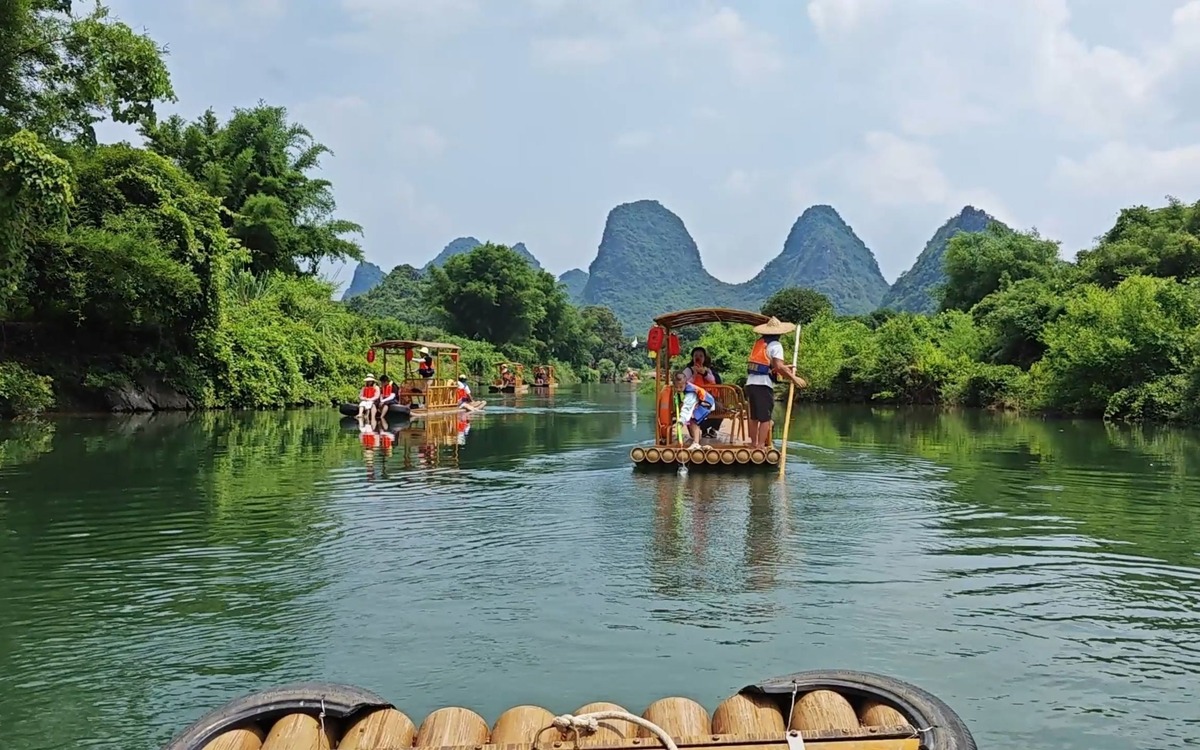
The Yulong (‘Dragon-Nurturing’) River is a small, clear tributary running west of Yangshuo through farmland and low karst, long used by villagers for irrigation and transport and now the region’s signature slow-water experience. Where the Li is grand, commercial and engine-driven, the Yulong is intimate: hand-poled bamboo rafts, stone weirs you glide or lift over, water buffalo at the bank and paddies closing overhead.
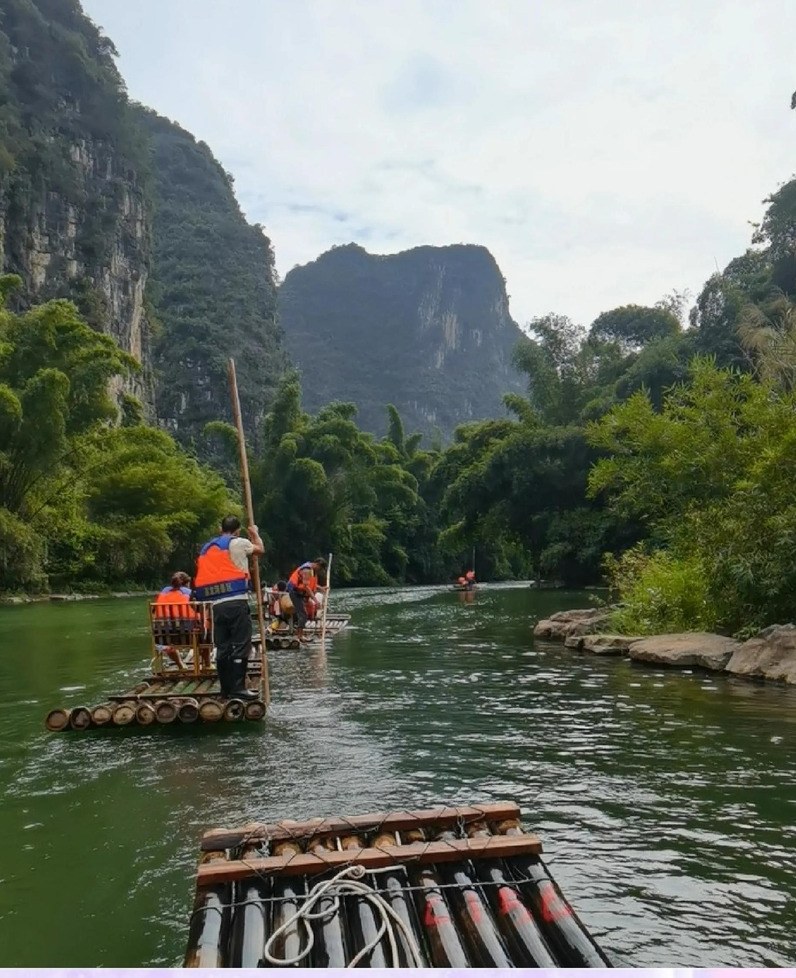
It is experienced as a section of river between two wharfs, which is why fares are per segment, and it pairs naturally with the Ten-Mile Gallery cycling loop just to the east.
2. What to Spot: The Raft, the Weirs, the Greenway
🛶 The Polered Bamboo Raft
- The Story: A boatman punts you downstream on a two-person bamboo raft, silent apart from the pole and water — the classic rural-Guangxi ride.
- What to Look For: The short lift over each low weir is the fun bit; keep feet clear and the camera dry.
🌾 Paddy, Buffalo and Karst
- The Story: The banks are working countryside — rice fields, grazing buffalo, fishing cormorants and a wall of small peaks.
- What to Look For: Morning or late light on the water; this is a ‘slow scenery’ trip, not a checklist.
🚲 The Riverside Greenway
- The Story: Paths and back roads link the wharfs, so bikes let you hop between raft segments on your own schedule.
- What to Look For: Bike the section, raft the section; the combination is the free, uncrowded way to see it.
3. Cultural Contrast: The Antidote to the Big Boat
Foreign visitors arrive braced for the Li’s four-hour cruise and find the Yulong its opposite: small, quiet, human-powered and skiable in short pieces. That contrast is the point. If the Li answers ‘see the famous karst’, the Yulong answers ‘feel the countryside the karst sits in’ — pastoral rather than monumental.
It is the better pick for travellers who dislike crowds and boat-parks and want a hands-on, low-key half day. The honest trade: less thundering scenery than the Li’s headline stretches, and a physical, open, splash-exposed ride that isn’t for those who want seated comfort. For cyclists and slow-travel fans it consistently rates above the big boat.
4. Practical Essentials: Tickets, Transit & Scam Alerts
Tickets & Passport Booking
- Price: Per section, two per raft, each segment priced differently — a multi-value product, so no single amount is quoted here; confirm the day’s section price at an official wharf.
- How to Book: Passport if required at the wharf; buy the specific segment; water level can pause rafting — trust the day’s operating notice.
How to Get There
- Where it is: West/south of Yangshuo town, multiple wharfs (Jinlong Bridge, Chaoyang, Gongnong Bridge and others) — easiest by hired bike or a short taxi from West Street.
- Show Your Driver: 师傅,请带我到遇龙河·朝阳码头(竹筏漂流),谢谢!
Inside Tips & Scam Alerts
- Fix the segment and raft-headcount before paying; book at the wharf, not with a tout.
- Life jacket on, devices in a dry bag, expect the weir drops. Complaints / lost property: 12345, free from a local number.
Quick Answers
The 5 things visitors ask before setting out, answered from the same verified record used across this page.
- What are the opening hours at Yulong River?
- Rafting runs in daylight hours set by the operators and water level; there is no single fixed timetable to reserve against — check the day's operating notice, as levels can pause service.
- Is Yulong River wheelchair accessible?
- Not fully. Rafts sit low and boarding means steps and a gangplank at the wharf; there is no seatbelt or cabin. Not suitable for wheelchairs, strollers or non-swimmers without assistance; the drop over small weirs is a genuine jolt.
- How do I tell a taxi driver to take me to Yulong River?
- Copy this line into DiDi or show it to the driver: 师傅,请带我到遇龙河·朝阳码头(竹筏漂流),谢谢!
- Can I leave my luggage at Yulong River?
- No left luggage at the wharfs; travel by bike or taxi with a day bag and waterproof your phone/camera — rafts are open to spray.
- Is there anything to watch out for at Yulong River?
- The fare is per *section* and per *raft*, so a vague 'the river' price means nothing until you're told which stretch and how many ride together — confirm segment and headcount before paying. Small weirs on the route involve a brief lift over the drop; anyone presenting that as dangerous (or as a reason for a private 'safe' boat) is overselling. Book at an official wharf, not from a roadside tout.
Where to go next
Three short lists, recomputed at build time from the same coordinates and categories as the pages themselves — no paid placement, no hand-picked names. Every card is a published guide.
Next stop in Guilin
Straight-line distance from this spot, so you can judge what is walkable and what needs a taxi.


More like this, elsewhere in China
If park or garden is what you came for, these are the closest equivalents you can reach in another city — ordered by distance, one city per card.


Change the subject
Deliberately a different category, for when one more temple or garden would blur into the last one.


Lists are derived from coordinates and category alone. Fix a wrong pin or re-tag a place and every list that mentions it moves with it.
Before you go · arrival essentials
Practical guides that pair with this kind of place — picked by category, not sponsored placement.