
Reed Flute Cave

Little to be scammed on if you go straight to the ticket window — the classic gotcha here is redundancy, not fraud: Reed Flute and Silver Cave are the same 'walk a lit cavern' genre, so a full itinerary that does both is paying twice for one experience. Pick one cave and spend the difference on something different.
Taxi & Street Navigation Help
师傅,请带我到芦笛岩,谢谢!
Opening Hours & Best Time
Broad daytime visiting hours; sources give no single fixed posted range, so check the day's notice. Interior is a constant cool temperature regardless of the weather outside.
💡 Pro Tip: Reed Flute has been the state-guest show-cave for decades, so its lit path, colour-lit formations and English-facing signage are polished — a good 'first karst cave' if you want one comfortable one. Go early on a weekday to get the light-and-crowd-free chambers, wear shoes with grip (the walkways are damp), and bring a thin layer: the cave stays cool even on a hot day.
Accessibility & Luggage Lockers
Accessibility: ⚠️ Step thresholds, limited access
Inside the cave the route has steps, slopes and permanently damp, slippery walkways; it is not a level, wheeled path. Move slowly and hold the rails.
🧳 Luggage Storage: No left luggage — small cave site; carry day-bag only.
Nearby Landmarks
The 2 places within reach of this spot — each one opens straight into Apple Maps or Amap, with the Chinese name you can show a driver.
Also worth pairing: Sun and Moon Twin Pagodas, ~5 km south-east — real picks, just left off the grid so the cards stay in pairs.
Chinese names and pins are matched against each city's own map data at build time; a place only gets Directions once its pin has been verified, otherwise the button searches by name.
About Reed Flute Cave
1. Historical Origins: The ‘State-Guest’ Cave by the Peach-Blossom River
Reed Flute Cave, on the Peach-Blossom River west of the city, takes its name from the reeds at its mouth once made into flutes. It is the archetypal Guilin show-cave: a long, artificially lit cavern of stalactites and stalagmites arranged into named, colour-lit ‘chambers’ — a ‘crystal palace’ under a hill. For decades it was the cave foreign delegations were brought to, which is why its path, lighting and signage are unusually polished compared with rougher local caverns.
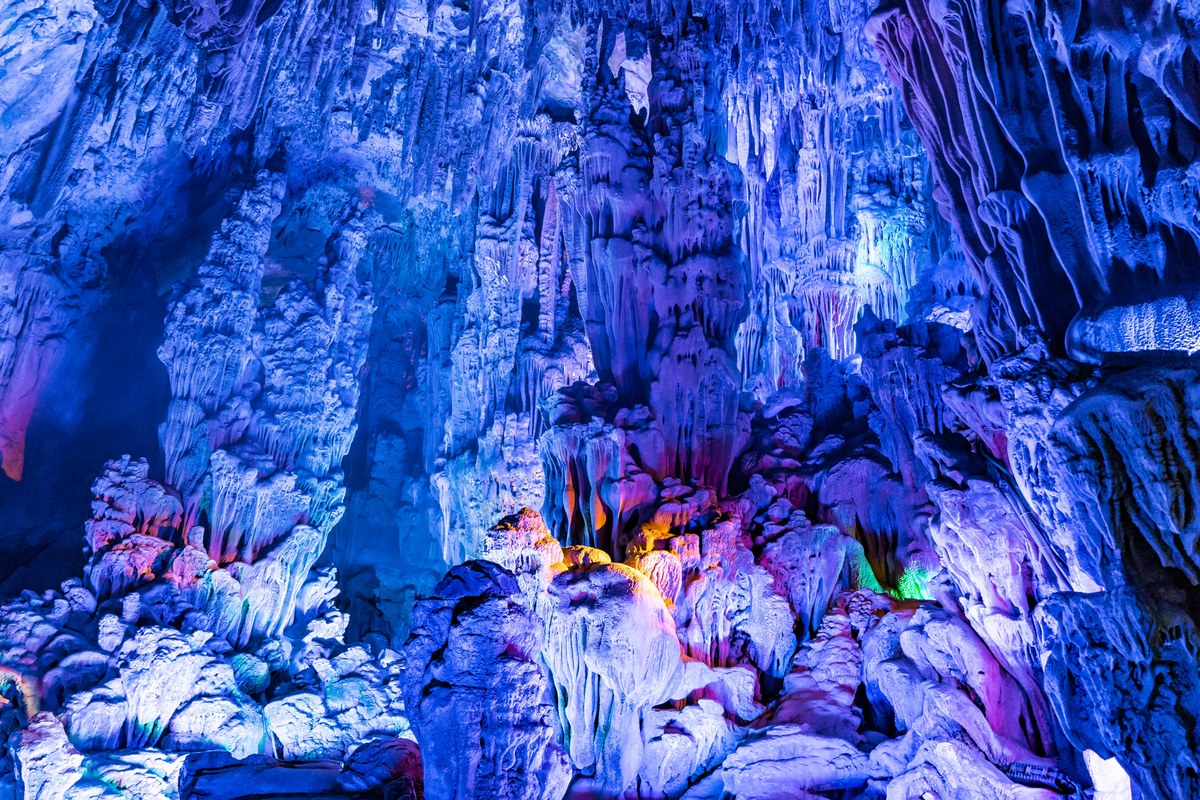
Geologically it is karst underground rather than above: the same limestone the region is famous for, seen from inside, sculpted by slow water over millennia.
2. What to Spot: The Chambers, the Formations, the Light
💎 The Lit Main Chambers
- The Story: Vast vaulted rooms of hanging and rising formations, coloured by placed lighting into the site’s signature ‘palace’ look.
- What to Look For: Follow the one-way marked circuit; the big chambers photograph best away from the group tide, early on a weekday.
🎋 Formations With Names
- The Story: Individual columns and draperies are titled like a gallery — ‘waterfalls’, ‘pagodas’, figures — the old Chinese convention of reading caves as sculpture.
- What to Look For: The ‘pine-cone’/drapery and twin-column formations that anchor the classic photos.
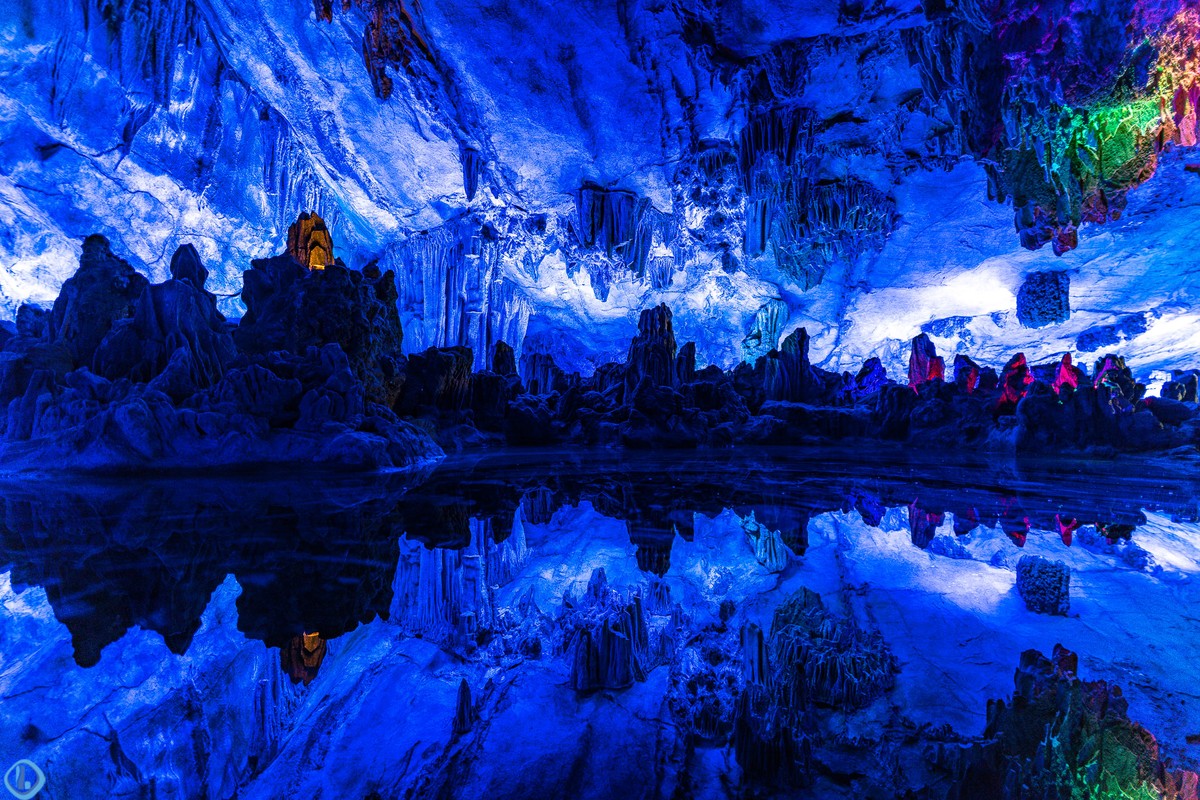
📷 The No-Flash Etiquette
- The Story: The colour scheme is designed lighting, and tripods or long photo stops block a narrow, slippery path.
- What to Look For: Shoot handheld, keep moving with the flow, and skip the tripod — the formations hold up without a setup.
3. Cultural Contrast: The Most Managed, Easiest Cave
Guilin has many caves; Reed Flute is the most curated of them — the state-guest heritage shows in its smooth route, colour design and foreign-visitor-facing signage. For a first-time foreign traveller wary of a dark, confusing cavern, that management is the appeal: it is comfortable, legible and safe to walk on your own.
The trade-off is authenticity: some prefer a rougher, less theatrical cave. And because Silver Cave and Seven Star Cave offer the same ‘lit-stalactite circuit’, the honest planning rule is one cave per trip — choose Reed Flute if you want it closest to the city and most English-friendly, and let that decision remove an option rather than add one.
4. Practical Essentials: Tickets, Transit & Scam Alerts
Tickets & Passport Booking
- Price: Stand-alone cave ticket; no single official figure published — none quoted here, confirm at the window. Overlaps Silver Cave as a genre; choose one.
- Hours: Broad daytime visiting hours per the day’s notice; cool constant interior regardless of season.
How to Get There
- Where it is: On the Peach-Blossom River west of central Guilin — taxi or city bus, no metro; roughly 4–5 km from the downtown landmarks.
- Show Your Driver: 师傅,请带我到芦笛岩,谢谢!
Inside Tips & Scam Alerts
- Do one cave, not two — Reed Flute, Silver and Seven Star are the same experience.
- Damp, stepped walkways + cool interior — grip shoes and a thin layer. Complaints / lost property: 12345, free from a local number.
Quick Answers
The 5 things visitors ask before setting out, answered from the same verified record used across this page.
- What are the opening hours at Reed Flute Cave?
- Broad daytime visiting hours; sources give no single fixed posted range, so check the day's notice. Interior is a constant cool temperature regardless of the weather outside.
- Is Reed Flute Cave wheelchair accessible?
- Not fully. Inside the cave the route has steps, slopes and permanently damp, slippery walkways; it is not a level, wheeled path. Move slowly and hold the rails.
- How do I tell a taxi driver to take me to Reed Flute Cave?
- Copy this line into DiDi or show it to the driver: 师傅,请带我到芦笛岩,谢谢!
- Can I leave my luggage at Reed Flute Cave?
- No left luggage — small cave site; carry day-bag only.
- Is there anything to watch out for at Reed Flute Cave?
- Little to be scammed on if you go straight to the ticket window — the classic gotcha here is redundancy, not fraud: Reed Flute and Silver Cave are the same 'walk a lit cavern' genre, so a full itinerary that does both is paying twice for one experience. Pick one cave and spend the difference on something different.
Where to go next
Three short lists, recomputed at build time from the same coordinates and categories as the pages themselves — no paid placement, no hand-picked names. Every card is a published guide.
Next stop in Guilin
Straight-line distance from this spot, so you can judge what is walkable and what needs a taxi.


More like this, elsewhere in China
If park or garden is what you came for, these are the closest equivalents you can reach in another city — ordered by distance, one city per card.


Change the subject
Deliberately a different category, for when one more temple or garden would blur into the last one.


Lists are derived from coordinates and category alone. Fix a wrong pin or re-tag a place and every list that mentions it moves with it.
Before you go · arrival essentials
Practical guides that pair with this kind of place — picked by category, not sponsored placement.